Relais Chateaux Award
Our verdict
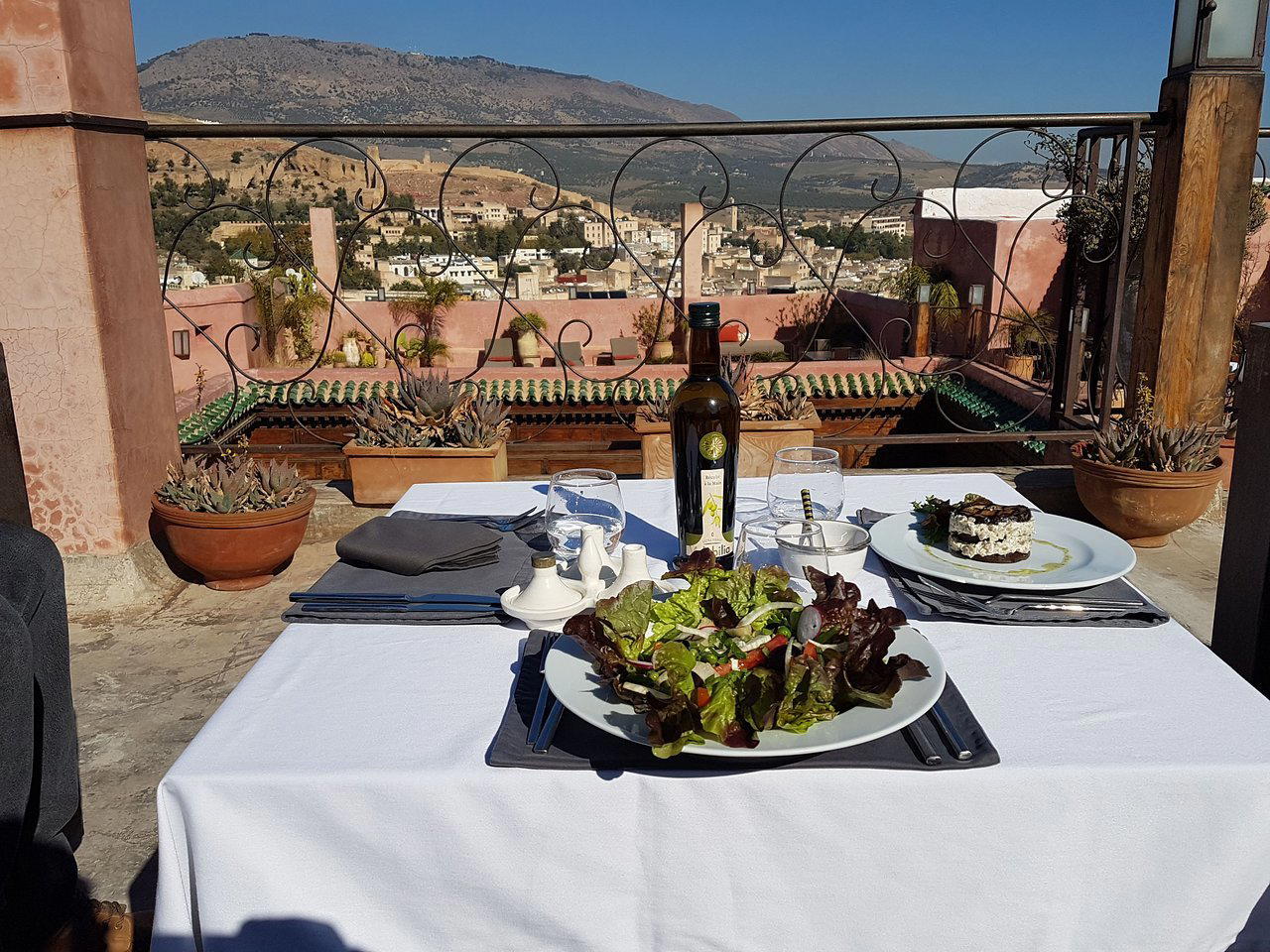
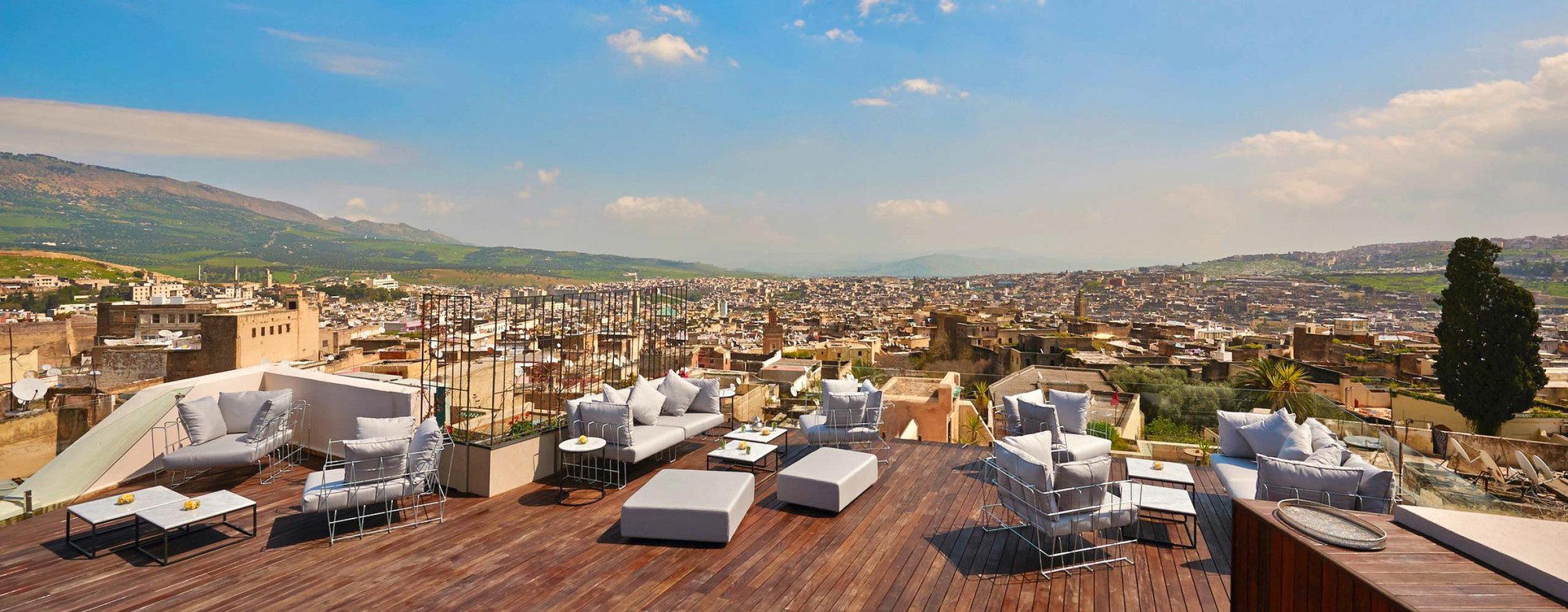
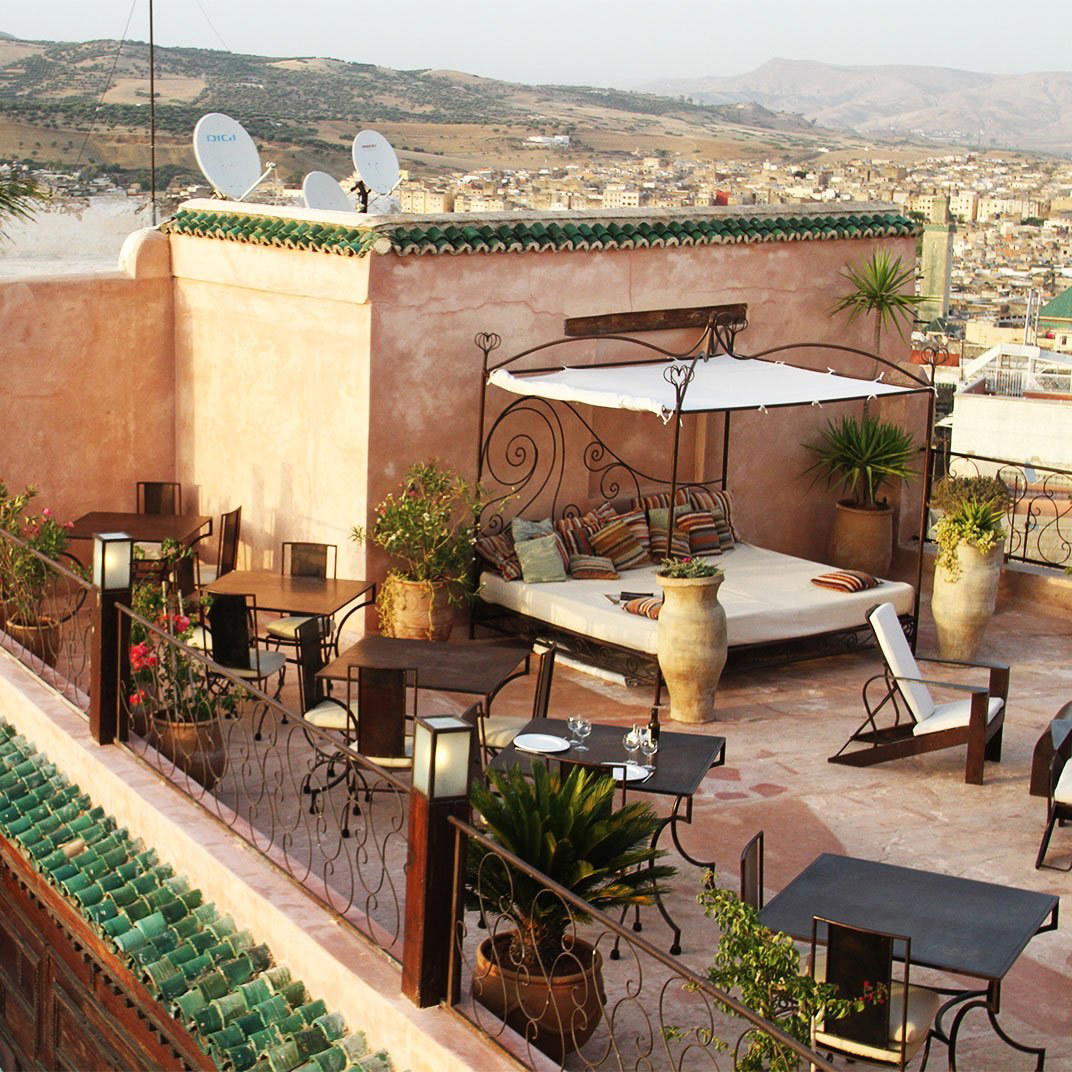
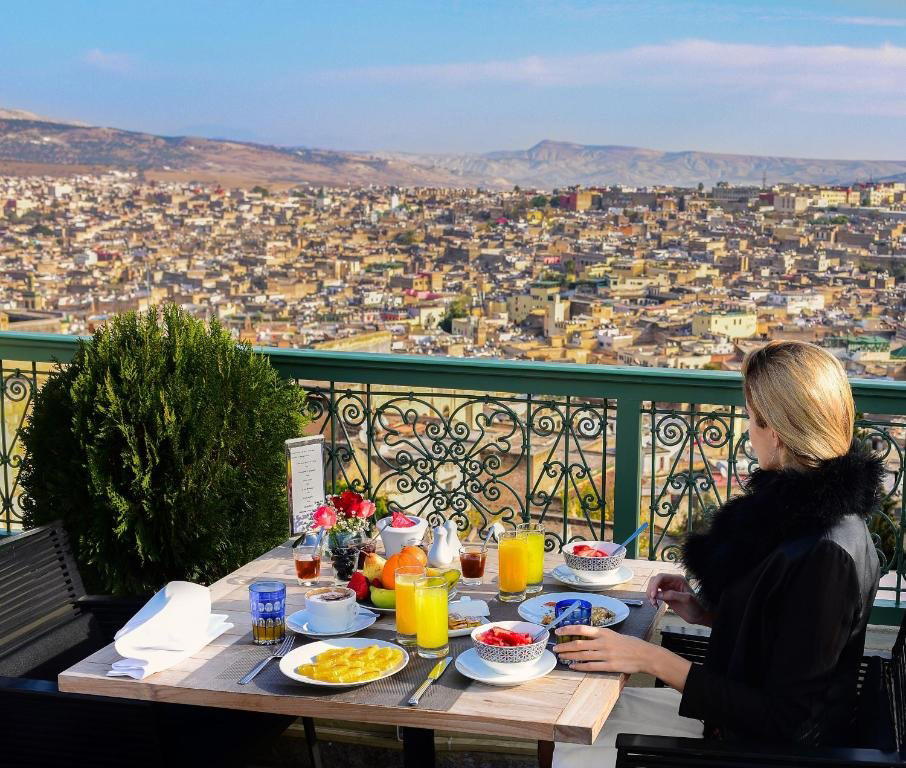
Fès rewards height: from this intimate terrace, the medina reads as a living plan of alleys, minarets and tiled roofs, with the Middle Atlas beyond. Roof Top Bar works as a compact bistro-style stop for Moroccan wine or a cocktail at sunset, when the call to prayer gives the city’s 12-century history a sharper frame.

Pearl is the En Primeur Club membership app, where members save venues, book tables and use the concierge.
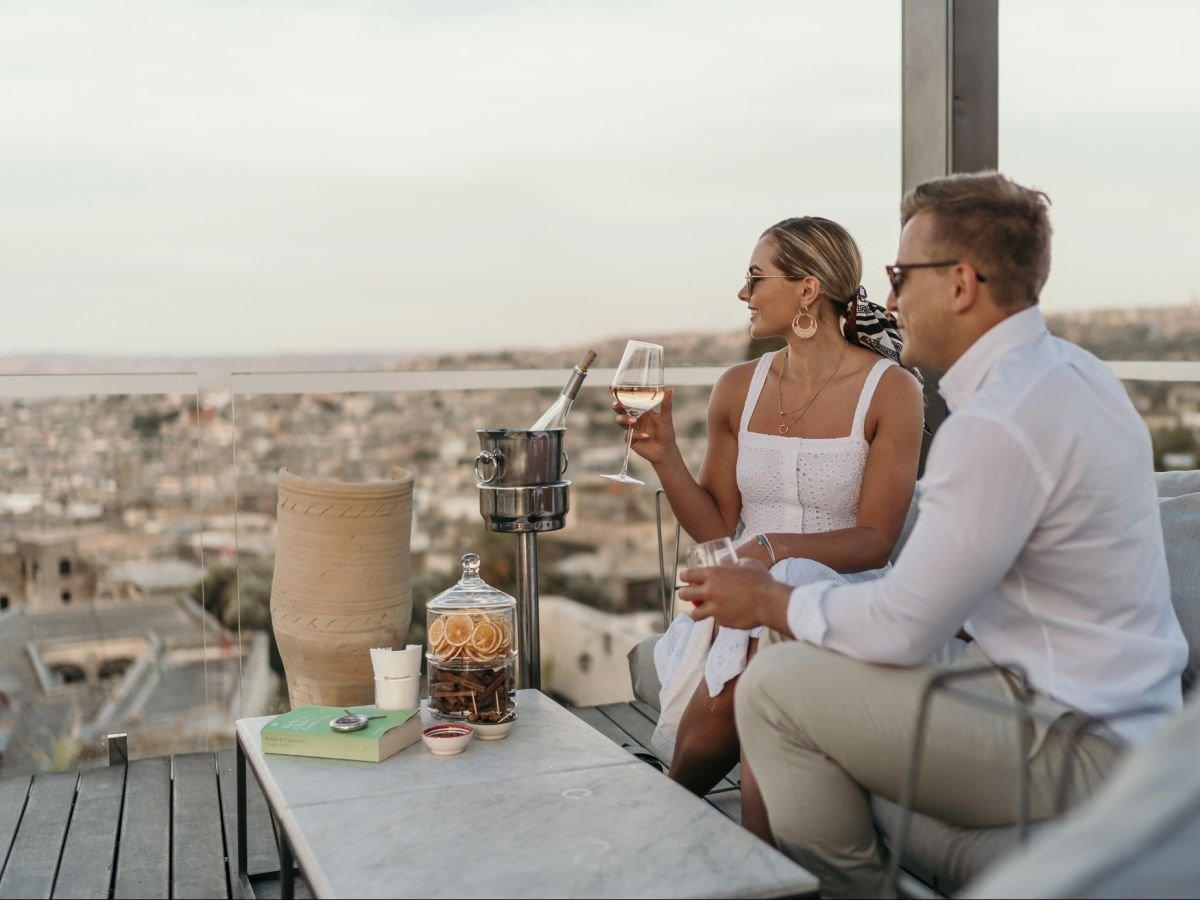
The climb above Fès changes the city’s scale. At street level, the city can feel like pressure and proximity: carved doors, bread ovens, pack animals, brass, cedar and the constant negotiation of narrow lanes. From a terrace, the same city becomes more legible. Roof Top Bar uses that shift well, giving visitors a place to step out of the rush of Fès and let the evening set the pace rather than treating the setting as a decorative afterthought.
That matters in Fès, where dining and drinking are often tied to enclosed interiors and inward-looking hospitality. The rooftop format changes the rhythm. Instead of focusing only on tilework, fountains or the choreography of a formal dining room, the eye and the mood move outward across the city. A drink or a lighter meal makes sense here because the setting is built around pause, altitude and orientation rather than a long formal meal.
A bistro-style terrace shaped by Fès rather than imported spectacle
Bistro-style cuisine in this context should be read as a lighter, more flexible register than the ceremonial Moroccan table. Fès has deep culinary formality, from slow-cooked dishes to layered sweet-savoury preparations associated with family kitchens and feast days. A rooftop bar has a different job: it gives travellers a place to taste the city’s contemporary hospitality culture without turning dinner into a multi-hour commitment.
The provenance angle here is less about named farms or a listed tasting menu and more about regional identity. Moroccan hospitality remains under-discussed by many visitors, despite the country’s long history of exchange, craft and table culture. Choosing a terrace in Fès ties the experience to geography in a direct way: city, climate, trade routes and the long habit of absorbing influences from different communities and traditions.
Chef Lalla Abida’s name gives the kitchen a human anchor, but the stronger editorial point is format. This is not trying to compete with the city’s more immersive restaurant addresses. It sits in the smaller category of view-led dining, where the terrace, the hour and the overall mood carry as much weight as the plate. For a fuller read on the city’s dining range, compare it with other Fès dining rooms and bars, including Sky Bar.
Sunset is the point, and the terrace keeps the scale intimate
The practical decision is simple: this address makes strongest sense when light is changing. Fès can be visually dense by day, then unexpectedly soft as the evening arrives. The terrace format gives the city its own role in the experience, which separates it from generic rooftop culture. The city is not a backdrop; it is the subject.
The terrace format also helps define the visit. Some rooftop venues can flatten old cities into postcard views and volume-driven service. Here, the appeal is more focused and useful: a terrace setting, a bistro-style kitchen and the evening soundscape of Fès. That combination suits a first night in the city, a pre-dinner pause, or a lighter evening after a day spent moving through Fès.
Readers mapping a broader Morocco itinerary can place this terrace against the country’s wider dining and bar spectrum without needing a like-for-like comparison. Within Fès, unnamed contemporary dining rooms and other rooftop settings offer useful context for how the city handles modern restaurant formats while still keeping a strong sense of place.
How to place it in a Fès itinerary
Use Roof Top Bar as a vantage point rather than the entire evening plan. It is strongest when paired with time in Fès before dusk or as a bridge between afternoon sightseeing and dinner. The location places it in Fès, so the choice is less about treating it as a destination detached from the city and more about timing arrival while the evening still has definition.
For planning beyond this terrace, the wider EP Club Morocco index is useful: the full Fès restaurants guide, the full Fès hotels guide, the full Fès bars guide, the full Fès wineries guide and the full Fès experiences guide. For a wider bistro-style reference outside Morocco, use the cuisine category as a loose point of comparison rather than a claim that these places share the same setting or purpose.
Frequently asked questions
Is Roof Top Bar okay with children?
It reads more as an adult terrace stop than a family dining room. The setting in Fès points to a relaxed rooftop experience rather than child-focused service.
What kind of setting is Roof Top Bar?
Roof Top Bar is a terrace-style venue in Fès. The menu is bistro-style cuisine, with the setting framed around a lighter, flexible stop rather than a formal long meal.
What awards or recognition does Roof Top Bar have?
Roof Top Bar is listed by Relais & Châteaux with chef Lalla Abida and bistro-style cuisine.
Is Roof Top Bar focused on a specific cuisine style?
Roof Top Bar serves bistro-style cuisine.
Where is Roof Top Bar located?
Fès.
Is Roof Top Bar chef-led?
The chef associated with Roof Top Bar is Lalla Abida.
Comparison Snapshot
Comparable venues by cuisine and price in the same metro.
| Venue | Cuisine | Awards |
|---|---|---|
| Roof Top BarThis venue (the venue you are viewing) | Other | Relais Chateaux Award |
| Sky Bar | Bistro-style cuisine | Not listed |
Recognition history
Dated appearances from independent guides and award organizations, with the underlying list record or original source where available.
Relais Chateaux Award
Relais Chateaux
Continue exploring