Romanella Cucina Romana
Our verdict
Roman trattoria cooking occupies a specific, underserved lane in San Diego's dining mix, and Romanella Cucina Romana on Clairemont Drive fills it with the kind of commitment that builds a repeat clientele rather than a first-visit novelty. The kitchen works from the cucina romana canon, the format is neighbourhood-first, and the address places it firmly outside the tourist circuit, which is exactly why regulars keep coming back.

Pearl is the En Primeur Club membership app, where members save venues, book tables and use the concierge.
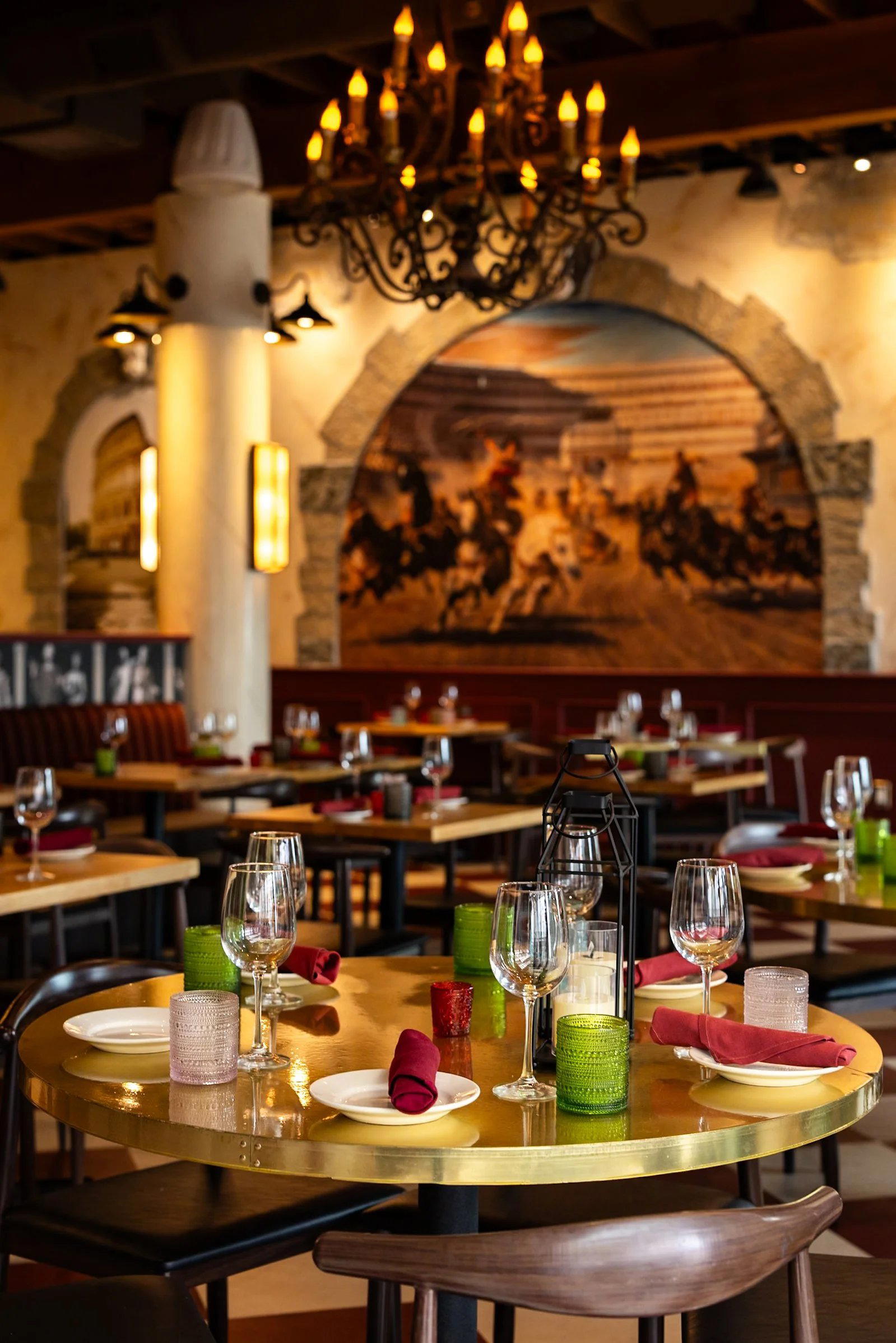
The menu
What to order
- Oxtail Meatballs
- Cacio e Pepe
- Pappardelle Bolognese
What Clairemont's Regulars Already Know
San Diego's Italian dining scene has long clustered around two poles: the white-tablecloth rooms of the Gaslamp Quarter angling for special occasions, and the fast-casual pasta counters serving the lunch crowd near the waterfront. Genuine cucina romana, the working trattoria tradition built on offal-inclusive classics, cured pork, and long-braised sauces rather than crowd-pleasing carbonara facsimiles, occupies a smaller, quieter tier in between. Romanella Cucina Romana at 3055 Clairemont Drive sits in that tier, drawing the kind of clientele that arrives already knowing what they want and rarely needs to consult the menu for long.
The Clairemont address is significant. This is a residential corridor rather than a dining destination in the conventional sense, which filters the room toward locals by design. The people eating here on a Tuesday are not passing through on their way to something else. They have made a specific decision to drive or walk to this address, which tells you something about what kind of place Romanella operates as in practice, regardless of how it describes itself on paper.
The Roman Kitchen as a Repeating Proposition
What defines the cucina romana tradition and makes it a reliable framework for a neighbourhood restaurant is its internal logic. The canon is narrow and specific: cacio e pepe, coda alla vaccinara, carciofi alla giudia, abbacchio, and the full suite of pasta al sugo dishes built from Pecorino Romano rather than Parmigiano. These are dishes with documented preparation standards stretching back generations in Rome's trattorie, which means a kitchen committed to the tradition is benchmarked against something concrete rather than improvising around a vague Italian aesthetic.
That specificity is what regulars at this type of restaurant are actually buying. The customer who returns four times in a month for the same braised dish is not returning because the dish is new or surprising. They are returning because the execution is consistent and the product is hard to replicate at home. Roman cooking, particularly the pasta and braise categories, rewards daily practice in ways that more technically complex or ingredient-driven cuisines do not always sustain at the neighbourhood level.
For context, San Diego's higher-end dining tier is anchored by rooms like Addison, the city's only Michelin-starred property, and the austere Japanese omakase counter at Soichi. Romanella operates in a completely different register, closer in spirit to the neighbourhood proposition of 1450 El Prado than to the tasting-menu tier. Places like 94th Aero Squadron or 94th Aero Squadron San Diego draw on nostalgia and setting; Romanella draws on culinary specificity. That distinction matters when you're deciding whether a place earns return visits.
How Regulars Use the Menu
At a trattoria operating in the Roman tradition, the unwritten menu is at least as important as the printed one. Regulars at this type of restaurant typically arrive with a shortlist already fixed: a pasta, possibly a secondo, and bread to run through the pan drippings at the end. The pace is unhurried by design. Roman trattoria culture does not move tables quickly, and the clientele that gravitates toward these rooms is not looking for it to.
The signifiers of a genuine neighbourhood following, tables of two that arrive without fanfare, solo diners comfortable enough to eat without a phone to stare at, groups that clearly know the staff by name, are the real credibility markers at a place like this. These are harder to manufacture than awards or press citations, and they take longer to build.
Across the wider American dining scene, Roman-focused kitchens have found their strongest footings in cities with large Italian-American communities or in neighbourhoods with enough residential density to sustain a regulars-driven model. San Diego's Clairemont district, with its mid-century residential fabric and lack of heavy tourist infrastructure, offers the right conditions for exactly this kind of operation. The comparison to destination-driven dining in other cities, Le Bernardin in New York City, Emeril's in New Orleans, Lazy Bear in San Francisco, or Alinea in Chicago, is instructive not because these places are peers, but because they illustrate how different the metrics of success are at the neighbourhood level. A trattoria is not trying to earn what Single Thread Farm in Healdsburg, The French Laundry in Napa, or Providence in Los Angeles earns. It is trying to be indispensable to a smaller number of people in a specific postcode.
That is a different and, in many ways, more demanding standard. Places like Blue Hill at Stone Barns in Tarrytown, The Inn at Little Washington, Bacchanalia in Atlanta, and Atomix in New York City operate with institutional backing and critical apparatus. The neighbourhood trattoria survives or fails on word of mouth alone. See also 8 1/2 Otto e Mezzo Bombana in Hong Kong for how the Italian fine-dining model translates internationally, a contrast that sharpens what the cucina romana neighbourhood format is actually doing.
Know Before You Go
| Address | 3055 Clairemont Dr, San Diego, CA 92117 |
| Neighbourhood | Clairemont, San Diego, residential corridor, not a tourist district |
| Format | Roman trattoria; neighbourhood-first operation |
| Price tier | |
| Reservations | Booking; contact the venue to check availability |
| Hours | ; verify before visiting |
| More San Diego dining | Our full San Diego restaurants guide |
Frequently asked questions
What should I order at Romanella Cucina Romana?
The cucina romana canon gives a reliable ordering framework: prioritise pasta over pizza, and look for preparations rooted in the classic Roman quartet of cacio e pepe, amatriciana, carbonara, and gricia rather than cream-based interpretations. If the kitchen offers a braised secondo, coda alla vaccinara or abbacchio among the traditional options, that is where the separation between a genuine Roman kitchen and a generic Italian room becomes clearest. Regulars at this type of trattoria tend to anchor on one or two dishes they trust and repeat rather than ranging widely across the menu on each visit.
Is Romanella Cucina Romana reservation-only?
As a neighbourhood trattoria in a residential San Diego corridor rather than a high-traffic dining district, it likely operates with more walk-in flexibility than a comparable city-centre room, but this should be verified directly. In San Diego's higher-demand tier, Michelin-recognised rooms like Addison or the counter at Soichi, advance reservations are essentially mandatory; at the neighbourhood level, the dynamics differ, though contacting the venue ahead of a visit remains the practical approach.
How does Romanella Cucina Romana fit into San Diego's Italian dining scene?
San Diego has a fragmented Italian dining mix weighted toward broadly crowd-pleasing Italian-American formats, which makes a kitchen committed to the specific cucina romana tradition a comparatively rare proposition in the city. The Clairemont address places it outside the tourist-facing restaurant corridors of Little Italy or the Gaslamp Quarter, positioning it as a cuisine-first room for residents rather than a venue built around visibility or foot traffic. For diners familiar with the Roman trattoria model from travel or other cities, that focus on the canonical dishes rather than a generalised Italian menu is the distinguishing factor worth tracking when choosing between San Diego's Italian options.
A Tight Comparison
Comparable venues nearby, for context on price, style, and recognition.
| Venue | Cuisine | Price | Notes |
|---|---|---|---|
| Romanella Cucina RomanaThis venue (the venue you are viewing) | Roman Cucina Romana | $30–50 | Not listed |
| Cardellino | Italian Chophouse | $50–100 | Uptown, Italian Chophouse |
| Lala | Modern Italian | $50–100 | Downtown, Modern Italian |
| Romanissimo | Authentic Roman Italian Cuisine | $30–50 | Downtown, Authentic Roman Italian Cuisine |
| CUCINA sorella | California-Inspired Italian | Not listed | Mid-City:Kensington-Talmadge, California-Inspired Italian |
| Monello | Modern Milanese Italian | $30–50 | Downtown, Modern Milanese Italian |
Continue exploring
More in San Diego
Restaurants in San Diego
All restaurants in San Diego →
Bars in San Diego
All bars in San Diego →
Details
- Cozy
- Rustic
- Intimate
- Classic
- Date Night
- Family
- Celebration
- Brunch
- Open Kitchen
- A La Carte
- Vegetarian Friendly
Current opening hours
- Monday
- 4–9 PM
- Tuesday
- 4–9 PM
- Wednesday
- 4–9 PM
- Thursday
- 4–9 PM
- Friday
- 4–10 PM
- Saturday
- 9 AM–3 PM, 4–10 PM
- Sunday
- 9 AM–3 PM, 4–9 PM
Hours can change for holidays and private events. Hours as of .
Charming and delightful with warm Italian hospitality, moderate noise level.