Where It Sits in Los Angeles's Upper Tier
The premium end of Los Angeles dining has compressed into a recognizable cluster of formats: omakase-style Japanese counters, New Taiwanese tasting menus, and French-adjacent progressive kitchens. Hayato set a standard for Japanese kaiseki seriousness in the city; Kato brought Taiwanese-American precision to a format that had rarely been attempted at this price tier on the west coast. Both operate in the $$$$ bracket and both require booking windows measured in weeks, not days.
Rokusho belongs to the same general tier and faces the same reader question: what does it offer that the existing comparable set does not? In Los Angeles, where Providence anchors contemporary seafood at the summit of the Michelin table and Somni occupies the molecularly inventive corner, the market for tasting-menu formats is genuinely competitive. A new entrant on Sunset earns its position through format discipline, team coherence, and consistency, not novelty alone.
The Team Dynamic: Where the Room Actually Runs
The key question in the current Los Angeles counter format is how the kitchen, floor, and cellar function as a coordinated unit. In the leading examples of this model, Single Thread Farm in Healdsburg being the northern California benchmark, the sommelier's sequencing and the front-of-house's knowledge of timing work as extensions of the kitchen rather than separate departments. The room does not feel serviced; it feels conducted.
This is the standard against which counter-format restaurants in the current Los Angeles market are increasingly being measured. Diners who have eaten at Blue Hill at Stone Barns in Tarrytown or The French Laundry in Napa bring expectations formed by those rooms. They notice whether the wine arrives before the dish or after. They notice whether the person explaining a course actually understands its sourcing or is reciting a script. They notice whether the pacing is set by the kitchen or by the table.
At the upper tier of Hollywood dining, that coordination is the product. The food is the occasion; the team dynamic is the experience. Addison in San Diego operates on this model at a large scale with Michelin recognition to match. Rokusho's version of the same discipline, operating on Sunset rather than in a resort setting, answers a different version of the question: can a compact Hollywood room sustain that level of team coherence without the physical infrastructure of a destination property?
The Competitive Frame: What the comparable set Reveals
Comparing across the current American fine-dining tier gives a useful frame. Atomix in New York City demonstrated that a Korean-inflected tasting menu could hold two Michelin stars while operating a front-of-house programme as intellectually rigorous as the kitchen. Lazy Bear in San Francisco built a communal long-table format where the sommelier's engagement with guests is as much a part of the concept as the menu. Bacchanalia in Atlanta showed that seasonal American fine dining could sustain decades of relevance through team stability rather than menu reinvention.
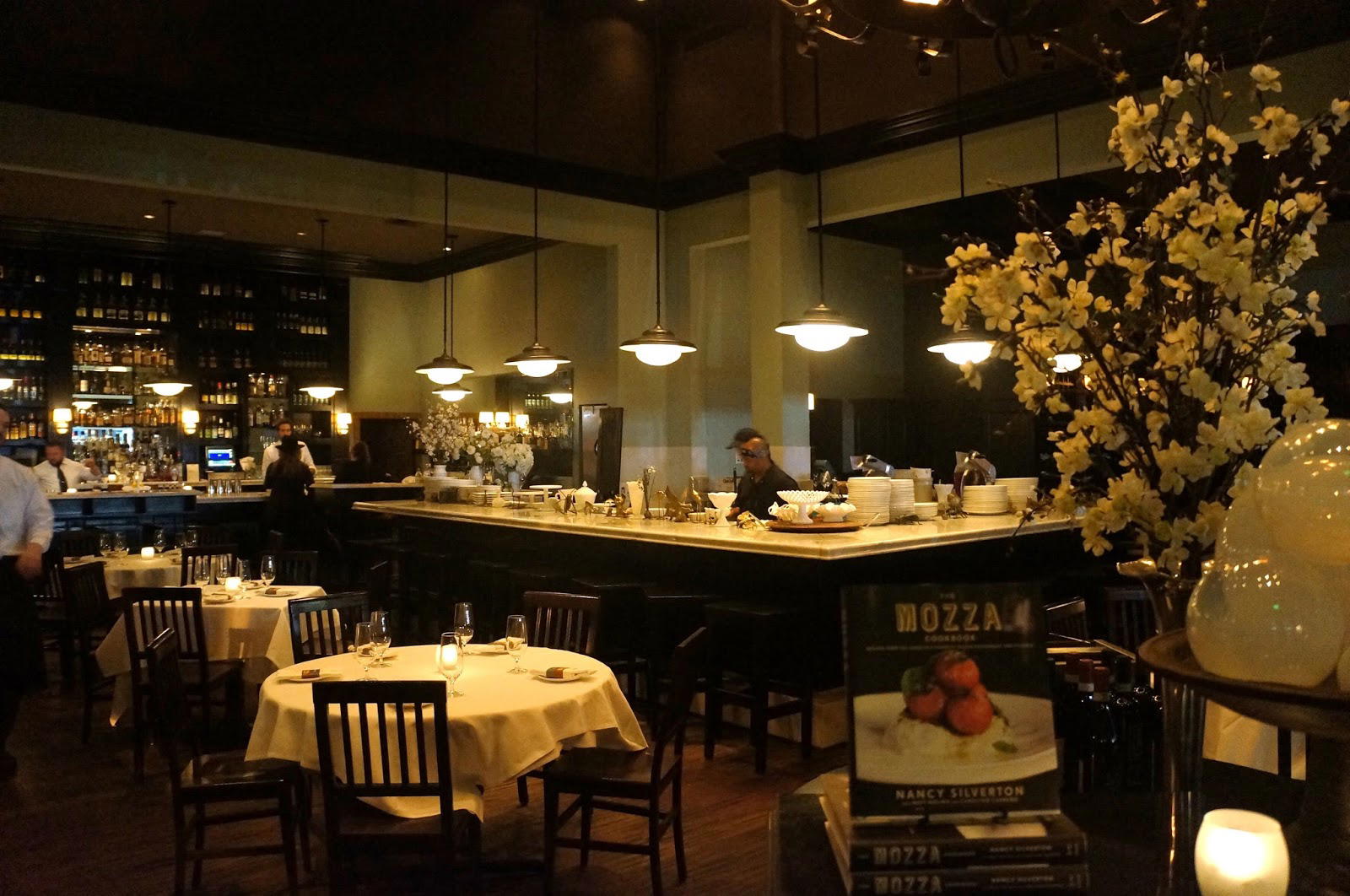
In each case, the restaurant's critical identity is inseparable from how its team functions as a collective. The same analysis applies to the Los Angeles upper tier. Osteria Mozza has held its position for years partly because the floor team's confidence with the wine list matches the kitchen's confidence with pasta. The pattern repeats: kitchens that attract serious attention in this city are almost always backed by floor and cellar programmes that justify the price point independently.
Rokusho on Sunset enters this frame as a counter-format room in a corridor that is increasingly being taken seriously.
How It Compares Across the Country
Zooming out to the national picture: The Inn at Little Washington and Emeril's in New Orleans represent an older model of American fine dining, chef-as-celebrity, room-as-monument. The current generation of counter-format restaurants, including those operating in Los Angeles, is consciously moving away from that model toward something smaller, more technically demanding, and more dependent on team fluency. 8 1/2 Otto e Mezzo Bombana in Hong Kong offers an international reference point: a room where European fine dining discipline has been adapted to a non-European city context, sustained by a front-of-house programme trained to match the kitchen's output.
Los Angeles is doing something analogous, but with Japanese technique as the primary inflection rather than Italian or French. The result is a city dining scene that feels genuinely its own, less indebted to New York precedent than it was fifteen years ago, more willing to let technique speak quietly rather than loudly.
Planning a Visit
Rokusho is located at 6630 Sunset Blvd, Los Angeles, CA 90028, in Hollywood. Advance reservations are recommended; walk-in availability is limited.