Rodizio Grill Brazilian Steakhouse Salt Lake City
Rodizio Grill Brazilian Steakhouse brings the churrascaria format to Salt Lake City's east side, where gaucho-style rotisserie service delivers continuous cuts of fire-roasted meat tableside. The format traces directly to southern Brazil's cattle country, transplanted intact to a city more accustomed to ski lodges than smokewood. For Salt Lake City, it remains one of the few full-rotation rodizio experiences available.
 Discover on Pearl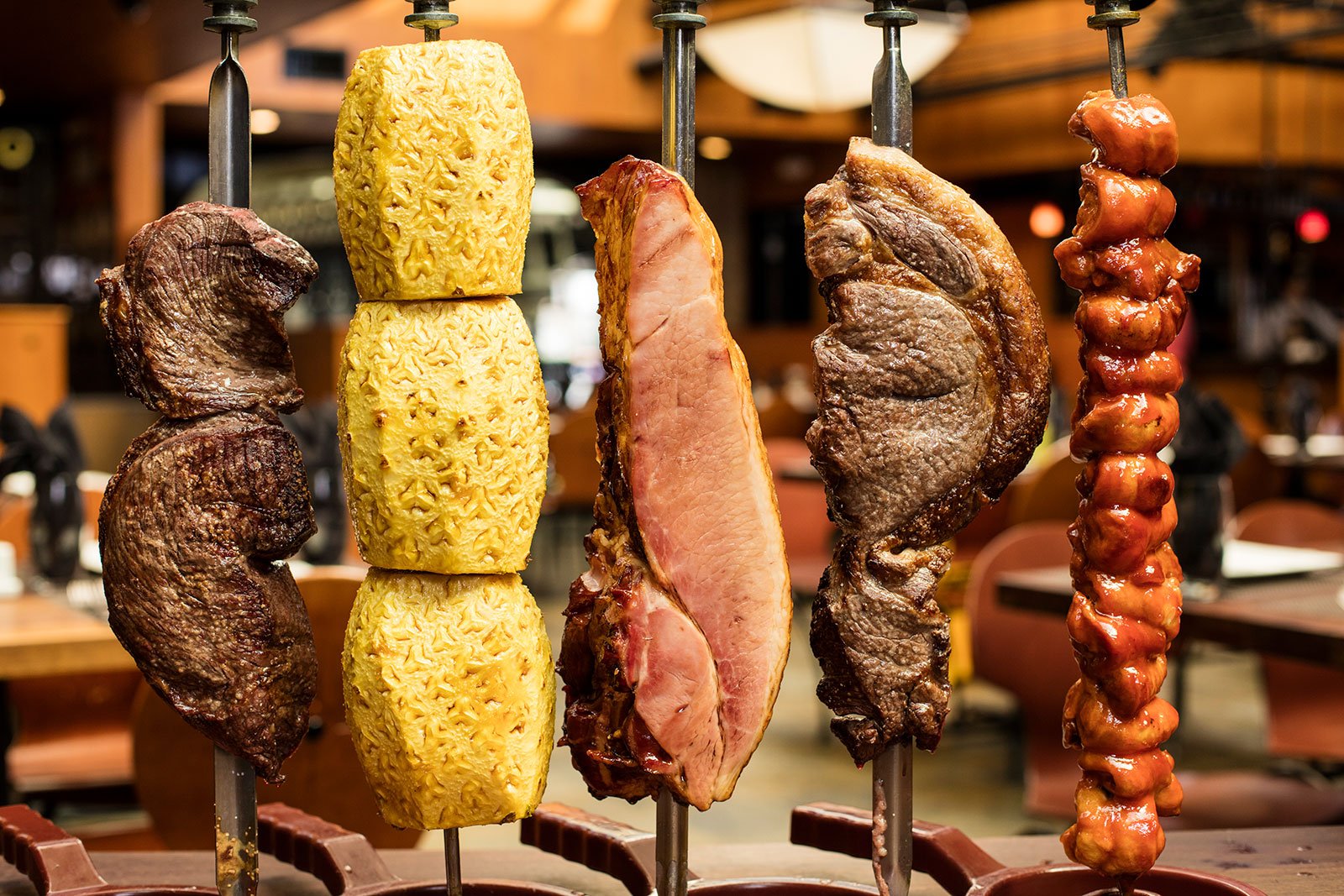
Fire, Rotation, and the Logic of the Churrascaria in the Mountain West
Walk into a Brazilian churrascaria for the first time and the operating logic takes a moment to register. Gauchos move through the dining room carrying metre-long skewers loaded with cuts in various stages of rest, slicing directly onto your plate without ceremony or pause. The restaurant is on the second floor of a building at 600 S 700 E in Salt Lake City's east side, a neighbourhood better known for its walkable blocks and independent cafes than for South American fire traditions. That contrast is part of what makes the format legible here: the churrascaria arrived in American dining not as a fine-dining concept but as a democratic, high-volume expression of Brazilian cattle culture, and Salt Lake City's Rodizio Grill occupies that same position in a city where the format has almost no competition.
The rodizio tradition itself originates in Rio Grande do Sul, the southernmost Brazilian state, where Portuguese and Italian immigrant communities developed a ranching culture centred on open-fire cooking. Cuts were salted heavily with rock salt, skewered, and rotated over coals for hours. The word rodizio simply means rotation, and that describes both the cooking method and the service model: continuous, tableside, and self-regulating through the guest's own appetite. When the format crossed into American dining in the 1990s, the Rodizio Grill chain was among the early movers, bringing the structure largely intact to markets outside the coasts. Salt Lake City's outpost carries that lineage.
The shortlist, unlocked.
Hard-to-book tables, cellar releases, and concierge-planned trips.
Get Exclusive Access →What the Format Requires of the Kitchen
The editorial angle worth pressing here is technique against ingredient, because the churrascaria format demands discipline in both. Southern Brazilian rodizio cooking applies minimal intervention to the meat itself: rock salt, heat, time, and rotation. The skill is in managing the fire and reading the cut. When that method is applied to American beef, which carries different fat distribution and grain structure than Brazilian nelore cattle, the kitchen must calibrate differently. Cuts like picanha, the cap of rump that sits at the centre of any serious rodizio, behave distinctively depending on the animal's breed and finish. American picanha, cut from grain-finished cattle, renders faster and requires shorter rotation times to avoid overcooking the fat cap.
This intersection of imported technique and domestic product is precisely what defines the American churrascaria category. Venues like Rodizio Grill are not importing Brazilian beef; they are applying Brazilian fire discipline to American product, which is a different editorial proposition from, say, a New York steakhouse sourcing USDA Prime and cooking it à la minute. The comparison is instructive. A chef at Le Bernardin in New York City applies French classical technique to American and imported seafood with similar cross-cultural logic, though in a register several tiers higher. The principle that technique travels independently of ingredient is consistent across formats and price points.
Salt Lake City's dining scene has been developing consistent depth over the past decade, with venues across the east side and downtown building programs that take ingredient sourcing and technique seriously. Arlo Restaurant and Bambara Salt Lake City represent the city's more contemporary fine-dining tier, while Avenues Proper and Blind Rabbit Kitchen fill a neighbourhood-anchor role. Rodizio Grill sits outside that competitive set entirely. Its peer group is not Salt Lake City's creative dining scene but the national churrascaria format, which includes Texas de Brazil, Fogo de Chão, and regional independents. Within that format, the question is not whether the concept is inventive but whether the execution of a disciplined, high-volume rotisserie service holds up.
The Salad Bar as a Structural Argument
One aspect of the churrascaria format that often gets underdiscussed is the cold side. The buffet de frios, the cold bar that anchors Brazilian steakhouse dining, is not incidental: it functions as both pacing mechanism and flavour contrast. In well-run examples, it includes hearts of palm, farofa, vinaigrette, and cured preparations that cut through the fat of continuous meat service. The ratio of cold-bar depth to protein rotation matters more than it might seem. A thin cold bar forces guests into pure protein mode, which fatigues the palate faster. A thoughtfully loaded cold side extends the meal's architecture. This is as true at a Brazilian restaurant in Salt Lake City as it is at a churrascaria in São Paulo.
The broader dining conversation in cities like Salt Lake City has increasingly turned toward sourcing provenance and chef-driven identity, as evidenced by the national recognition that venues at the level of Single Thread Farm in Healdsburg or Blue Hill at Stone Barns in Tarrytown have earned for connecting local agriculture to technique. The churrascaria model does not operate in that register, and it does not pretend to. Its argument is different: that a traditional fire-and-salt method, applied consistently and at scale, produces something worth the trip on its own terms. Adelaide represents Salt Lake City's interest in ingredient-forward dining; Rodizio Grill represents a different value entirely, one grounded in format fidelity and volume rather than sourcing narrative.
Planning Your Visit
Rodizio Grill is located on the second floor at 600 S 700 E, placing it on the east side of downtown, accessible by car with street and lot parking available nearby. The format is all-you-can-eat by nature, so arriving with appetite rather than a light schedule is advisable. For groups, the tableside rotation format handles volume naturally without requiring coordinated ordering, which makes it a practical choice for parties with varied preferences. Confirming current hours and any reservation requirements directly with the venue before visiting is sensible, as operational details are subject to change. For a broader map of where this restaurant fits within the city's dining options, the full Salt Lake City restaurants guide covers the range from neighbourhood staples to the venues competing at national level, including Alinea in Chicago-tier ambition to more grounded local programming like Emeril's in New Orleans style of accessible-but-serious dining. Among the city's current generation, venues like Providence in Los Angeles set benchmarks that inform how Salt Lake City's more ambitious kitchens position themselves, while Lazy Bear in San Francisco, The French Laundry in Napa, Addison in San Diego, The Inn at Little Washington, Atomix in New York City, and 8 1/2 Otto e Mezzo Bombana in Hong Kong represent the international tier against which ambitious American dining increasingly measures itself. Rodizio Grill is not competing in that conversation, which is not a criticism: it is occupying a format niche with clear logic and consistent demand.
Frequently Asked Questions
- What is the signature dish at Rodizio Grill Brazilian Steakhouse Salt Lake City?
- In the churrascaria format, no single dish functions as a signature in the conventional sense. Picanha, the rump cap cut central to Rio Grande do Sul tradition, is the reference point for any serious rodizio program and represents the clearest expression of the salt-and-fire method the format is built around. Ask the gaucho specifically for picanha if you want the cut that most directly reflects Brazilian cattle-country cooking.
- Should I book Rodizio Grill Brazilian Steakhouse Salt Lake City in advance?
- For weekend visits and group dining, confirming availability ahead of time is advisable. The rotisserie format handles high volume efficiently, but second-floor dining rooms with fixed service rhythms can fill quickly on Friday and Saturday evenings. Contact the venue directly for current reservation policy.
- What is the defining idea at Rodizio Grill Brazilian Steakhouse Salt Lake City?
- The defining idea is format fidelity: the continuous tableside rotation of fire-roasted cuts, served by passing gauchos, traces directly to southern Brazilian ranching tradition. The kitchen applies that rotisserie discipline to American beef, which requires calibration but preserves the structural logic of the original format. The experience is defined less by any individual dish than by the rhythm of the service itself.
- What if I have allergies at Rodizio Grill Brazilian Steakhouse Salt Lake City?
- The all-you-can-eat format involves continuous tableside service and a shared cold bar, which creates complexity for guests managing allergies or dietary restrictions. Contact the restaurant directly before visiting to discuss specific requirements. Phone and website details are leading confirmed through a current search, as operational information is subject to change.
- Is Rodizio Grill Brazilian Steakhouse Salt Lake City worth the price?
- The all-you-can-eat rotisserie format typically prices at a fixed per-person rate that covers the full protein rotation and cold bar access. Within the national churrascaria category, that pricing structure is consistent across comparable venues. The value calculation depends on appetite and engagement with the format: guests who move through multiple cuts and use the cold bar fully will extract considerably more than those who treat it as a standard sit-down dinner.
- How does Rodizio Grill Salt Lake City compare to other Brazilian steakhouses in Utah?
- Full-rotation churrascaria venues are sparse in Utah, which places Rodizio Grill in an effectively uncontested position within the state for the format. The national chain's established operational model means the Salt Lake City location carries the structural consistency of a proven system rather than the variable quality of a first-generation independent. For diners specifically seeking the gaucho-service rodizio format, it represents one of the only options in the region.
A Credentials Check
Comparable venues for orientation, based on our database fields.
| Venue | Awards | Cuisine | Notes |
|---|---|---|---|
| Rodizio Grill Brazilian Steakhouse Salt Lake City | This venue | ||
| Cosmica | Italian | Italian | |
| Fresco Italian Cafe | |||
| Bambara Salt Lake City | |||
| Emigration Brewing Co. | |||
| Feldman's Deli |
Need a table?
Our members enjoy priority alerts and concierge-led booking support for the world's most difficult tables.
Get Exclusive AccessThe shortlist, unlocked.
Hard-to-book tables, cellar releases, and concierge-planned trips.
Get Exclusive Access →