On Via Santa Maria, the pedestrian artery connecting Pisa's university quarter to the Campo dei Miracoli, Ristoro Pecorino occupies a position that reflects how Tuscan trattoria culture persists in one of Italy's most tourist-dense corridors. The name signals the kitchen's orientation: pecorino, the sheep's milk cheese that anchors so much of central Italian cooking, is a statement of regional loyalty rather than a menu afterthought.
Pearl is the En Primeur Club membership app — saves, bookings, and concierge access live there. Same editors, same standards.
- Address
- Via Santa Maria, 157, 56126 Pisa PI, Italy
- Phone
- +39 050 554567
- Website
- ristoropecorino.com
- Directions
- Get directions
 Saves & bookings on Pearl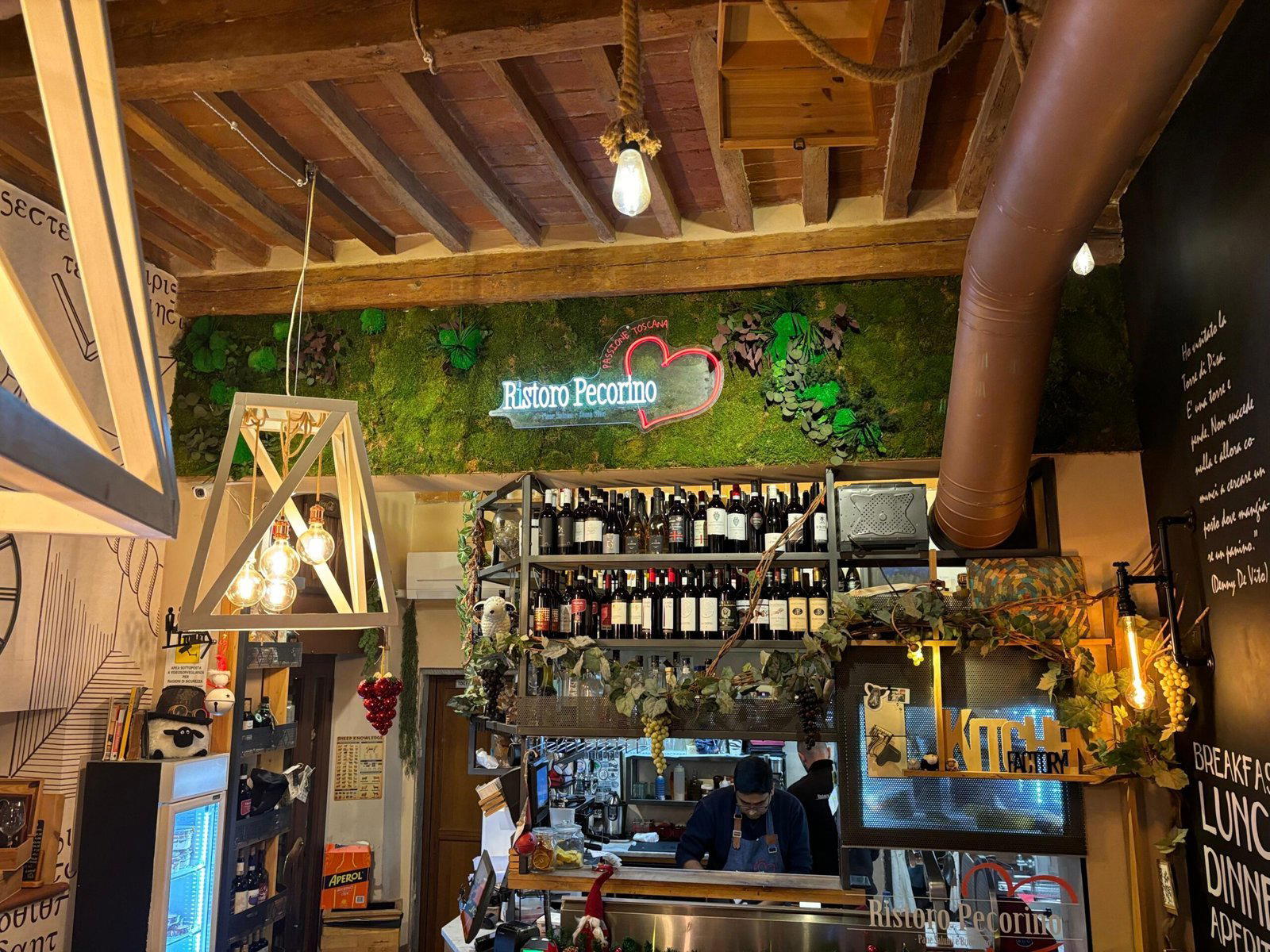
Where Via Santa Maria Meets the Tuscan Table
The stretch of Via Santa Maria that runs south from the Piazza del Duomo is one of the most walked streets in Tuscany, yet it remains underread as a place to eat seriously. Tour groups move through it quickly, their eyes on the Leaning Tower at one end and the Arno at the other. That transit pattern has shaped the dining offer along the street in two directions: toward the obvious and expedient, or toward the quietly committed. Ristoro Pecorino, at number 157, falls into the second category. The name itself is a small manifesto. Pecorino, the sheep's milk cheese produced across the hills of Tuscany, Lazio, and Sardinia, is not a glamorous ingredient. It does not appear on tasting menus at Enoteca Pinchiorri in Florence or anchor the progressive Italian frameworks of Le Calandre in Rubano. It is, instead, the cheese of shepherds and farmers, of the Crete Senesi and the Maremma, of a food culture that predates the restaurant as a format by several centuries.
Ingredient Provenance and the Central Italian Tradition
Central Italian cooking, at its most coherent, is a cuisine of the land rather than the sea, even in a coastal city like Pisa. The Arno valley produces its own agricultural rhythms: legumes, cured meats from the Garfagnana, olive oil pressed from the groves of the Apuan foothills, and cheeses that carry the flavour of specific pastures. This is the sourcing logic that defines the trattoria tradition across Tuscany and Umbria, and it stands apart from the more elaborate sourcing narratives attached to destination restaurants like Piazza Duomo in Alba or Atelier Moessmer Norbert Niederkofler in Brunico. Those kitchens tell provenance stories through tasting-menu architecture and a language of fine dining. The trattoria tradition communicates the same thing through the ingredient itself: when the cheese is named in the restaurant's title, the sourcing statement has already been made before you sit down.
Pecorino's presence across the Tuscan table varies considerably by age and origin. Fresh pecorino toscano has a milky, yielding texture suited to antipasto; aged versions develop the granular bite and concentrated salinity that pair with local honeys or broad bean preparations in the spring. The cheese bridges courses and seasons in a way few other ingredients can, which explains its structural importance to regional kitchens. Ristoro Pecorino's decision to anchor its identity to this ingredient places it firmly within a tradition of honest regional specificity, at some distance from the creative Italian menus of places like Reale in Castel di Sangro or the multi-starred ambition of Osteria Francescana in Modena.
Pisa's Dining Scene in Context
Pisa is not a city that commands the same culinary attention as Florence or Modena, and that gap is partly structural. The city's tourism is concentrated and brief, its university population large and budget-conscious, and its most celebrated restaurants have historically been located in the surrounding countryside rather than within the city itself. That context matters when reading any restaurant operating on Via Santa Maria. The street's footfall is enormous, but converting that footfall into a loyal, return dining audience requires something more than location. The trattorias that hold their ground in Pisa's centre tend to do so through a commitment to regional product and consistent execution rather than through seasonal innovation or tasting-menu theatre.
For readers building a broader picture of serious Italian dining, the contrast is instructive. The kitchen discipline behind a three-Michelin-star experience at Dal Pescatore in Runate or the technical ambition of Enrico Bartolini in Milan operates in a different register entirely from the neighbourhood trattoria. Both are legitimate expressions of Italian food culture. The trattoria does not aspire to be the tasting-menu restaurant, and the tasting-menu restaurant cannot replicate what the trattoria offers: immediacy, familiarity, and an ingredient-first simplicity that the format of fine dining tends to mediate away. See also Erbaluigia for a more contemporary Pisan kitchen operating in a different register.
The Street, the Setting, and What to Expect
Via Santa Maria 157 sits close enough to the Campo dei Miracoli to catch overflow foot traffic from the tower, but the address also places it within the daily circulation of the university quarter, which runs along the street's southern half. That dual audience shapes the atmosphere at most addresses on this stretch: a mix of visitors wanting to eat Tuscan food without ceremony, and locals eating because the kitchen is direct and the price is right. The physical environment on Via Santa Maria is characteristically Pisan, meaning narrow, pale-stoned, and dense, with the ambient noise of a city that has not softened its urban texture for the benefit of tourism.
Readers planning a longer stay in Pisa should consult our full Pisa restaurants guide for broader context on how the city's dining options distribute across neighbourhoods and price points. For comparable commitments to regional sourcing in other Italian cities, the approaches taken by Uliassi in Senigallia and Quattro Passi in Marina del Cantone offer a point of comparison for what it means to build a kitchen identity around a specific territory's produce, even at very different price points. International reference points, such as Le Bernardin in New York City or Atomix in New York City, illustrate how ingredient focus can operate at the highest tier of fine dining, but the principle of letting sourcing define the menu speaks equally to a Tuscan trattoria named after a sheep's milk cheese.
Planning Your Visit
Ristoro Pecorino is located at Via Santa Maria, 157, in the northern section of Pisa's historic centre, a short walk from the Piazza dei Miracoli and accessible on foot from most of the city's main accommodation areas. The address is in a pedestrian zone, so arriving by car requires parking at the city perimeter and continuing on foot. For Pisa more broadly, midweek visits and lunches outside peak tourist hours tend to offer a more relaxed experience at restaurants in this zone. For high-end comparison dining in Tuscany's wider region, Villa Crespi in Orta San Giulio, Casa Perbellini 12 Apostoli in Verona, and Da Vittorio in Brusaporto offer reference points at the starred end of the Italian spectrum, while La Pergola in Rome represents the benchmark for Italian fine dining within the broader peninsula.
How Ristoro Pecorino Pisa compares with similar nearby venues.
| Venue | Cuisine | Price |
|---|---|---|
| Erbaluigia | Contemporary | €€ |
| Locanda Sant'Agata | Contemporary | €€€ |
| Osteria Vecchia Noce | Tuscan | €€ |
| Foresta | Seafood | €€€ |
Continue exploring
More in Pisa
Restaurants in Pisa
Browse all →
Bars in Pisa
Browse all →
Hotels in Pisa
Browse all →

At a Glance
- Rustic
- Cozy
- Classic
- Casual Hangout
- Family
- Group Dining
- Date Night
- Terrace
- Standalone
- Beer Program
- Local Sourcing
Current opening hours
- Monday
- 10 AM–11:30 PM
- Tuesday
- 10 AM–11:30 PM
- Wednesday
- 10 AM–11:30 PM
- Thursday
- 10 AM–11:30 PM
- Friday
- 10 AM–11:30 PM
- Saturday
- 10 AM–11:30 PM
- Sunday
- 10 AM–11:30 PM
Hours can change for holidays and private events. Last verified .
Warm and welcoming with rustic charm, decorated with sheep drawings and whimsical touches; comfortable and beautifully decorated with a cozy dehor (outdoor seating area).
Know Before You Go
- Getting there
- Via Santa Maria, 157, 56126 Pisa PI, Italy