Albergo Pietrasanta

Small Luxury Hotels of the World Member
A 17th-century palazzo in the marble-sculpting capital of Tuscany, Albergo Pietrasanta occupies two historic buildings laced with 18th-century frescoes and a sunlit courtyard. The property sits at the intersection of serious architectural heritage and a contemporary art collection, placing it inside a small category of Italian hotels where the building itself is the primary cultural argument for staying.

Pearl is the En Primeur Club membership app — saves, bookings, and concierge access live there. Same editors, same standards.
- Address
- Via G. Garibaldi, 35, 55045 Pietrasanta LU
- Phone
- +39 0584 793726
- Website
- albergopietrasanta.com
- Directions
- Get directions
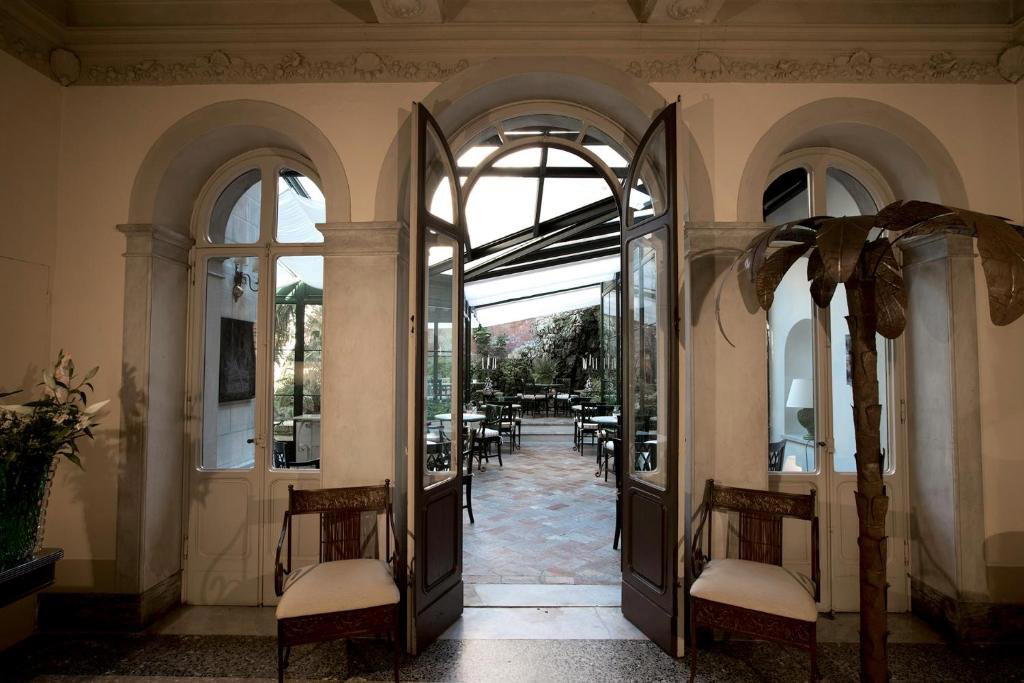
A Palazzo in the Town That Stone Built
Pietrasanta earns its reputation not through scenery alone but through material culture. For centuries, the town has drawn sculptors — and the stone carvers, bronze foundries, and marble workshops that serve them — making it one of the few places in Italy where fine art production is still a working, daily reality rather than a museum exhibit. Arriving at Via G. Garibaldi, the street context does much of the persuasion before you reach the door: the medieval centre is dense with galleries and studios, and the built fabric of the town reads as an argument for craft at every turn.
Albergo Pietrasanta occupies a 17th-century palazzo across two connected buildings, and the architecture places it in a specific category of Italian accommodation where the physical shell is the primary point of difference. This is not the kind of property that compensates for an ordinary building with a large pool or an imported spa brand. The proposition is the structure itself, the frescoes, the courtyard, and the art collection that animates the interiors.
Architecture as Argument
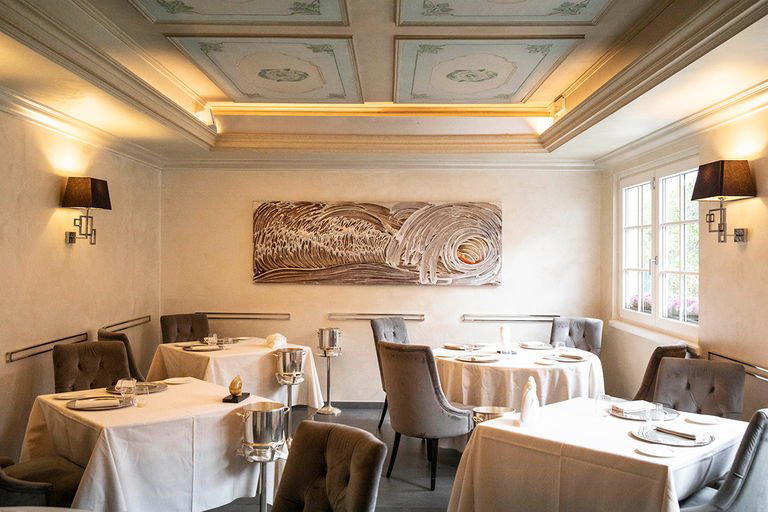
The two buildings that make up the property carry 18th-century frescoes throughout their interiors. Fresco cycles of that period were commissioned as permanent statements of patronage and civic ambition, and they read differently from acquired art: they belong to the walls, not to the inventory. In the current Italian hotel market, properties that hold intact frescoes of this quality occupy a genuinely narrow band. The comparison set includes places like the Four Seasons Hotel Firenze in Florence, which occupies a 15th-century convent and palazzo with similar structural gravitas, or Aman Venice, whose 16th-century palazzo on the Grand Canal positions historic architecture as the central luxury credential. Albergo Pietrasanta operates on the same principle at a smaller civic scale, in a town where the cultural argument for the building is reinforced by the street outside.
The sunlit courtyard functions as the structural heart of the property. Courtyards in buildings of this period were designed as controlled environments, transitional spaces between the public street and private interior, and the best-preserved examples retain a quality of stillness that is architectural rather than merely decorative. The courtyard here does exactly that: it provides a physical pause that the rest of the town, busy with workshops and foot traffic, does not.
Art Inside a Working Art Town
Property's collection of modern art is not incidental. In a town defined by sculpture and the visual trades, a hotel that holds serious contemporary work is participating in the local cultural logic rather than simply decorating its walls. Pietrasanta's galleries operate year-round, but the summer months, roughly June through September, bring an intensification of openings, residencies, and international collector traffic that makes the town's art ecology particularly dense. The hotel's collection positions it inside that conversation.
This model, where a historic property pairs architectural heritage with a curated contemporary collection, appears across the upper register of Italian independent hotels. Castello di Reschio in Lisciano Niccone takes a comparable approach in Umbria, pairing a restored medieval fortress with a design sensibility that engages with craft traditions. Il Pellicano in Porto Ercole operates on a different coastal register but shares the principle that the physical and cultural identity of a property should do more work than any amenity list. At Albergo Pietrasanta, the art collection and the building work in the same direction, and the town outside reinforces both.
Pietrasanta as Context
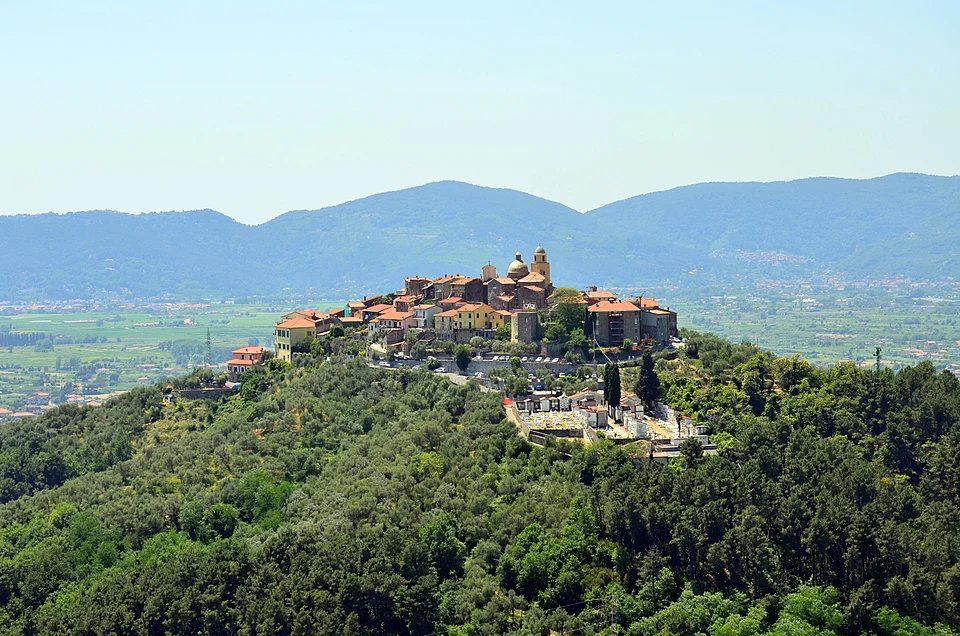
Understanding why this hotel works requires understanding what Pietrasanta is and is not. It is not a resort town, not a beach destination in the conventional sense, and not a day-trip village that empties after 6pm. The Versilian coast is nearby, and Lucca is within comfortable reach, but Pietrasanta itself functions as a working cultural centre with a resident international art community. That gives it a different energy from the postcard hill towns further east: there is activity here that is not primarily tourist-facing.
For travellers who have already worked through the major Tuscan itineraries, Florence, Siena, the Chianti corridor, Pietrasanta represents a different kind of engagement with the region. Rosewood Castiglion Del Bosco in Montalcino and Castelfalfi in Montaione offer the Tuscan countryside in a large-scale resort format. Albergo Pietrasanta makes a different case: a small-town palazzo stay that connects directly to a living art and craft tradition, without the mediated estate experience. See our full Pietrasanta restaurants guide for where to eat around the property.
Planning a Stay
The property sits at Via G. Garibaldi 35 in the medieval centre of Pietrasanta, walkable from the town's main piazza and the concentration of galleries clustered around it. The nearest major transport hub is Pisa International Airport, roughly 40 kilometres to the south, with Pietrasanta also accessible by train on the Genoa-Rome coastal line. The summer season is the most active period culturally, with gallery programming and the marble and sculpture fair drawing international visitors; spring and early autumn offer the same architectural and artistic character with considerably less foot traffic. For travellers building a wider northern Tuscany and Liguria itinerary, the position on the coastal rail corridor makes Pietrasanta a logical base that connects to Lucca, the Cinque Terre, and the broader Versilian coast without requiring a car.
Across Italy's independent hotel sector, properties at this scale and character, palazzo buildings with genuine historic interiors, set in towns with active cultural identities, sit in a tier that rewards advance planning. Comparable properties in different Italian contexts, from Borgo San Felice Resort in Castelnuovo Berardenga to Castel Fragsburg in Merano, tend to book out in their peak cultural seasons well ahead. The same logic applies here.
Comparison Snapshot
Comparable venues nearby, for context on price, style, and recognition.
| Venue | Cuisine | Price | Awards | Notes |
|---|---|---|---|---|
| Albergo PietrasantaThis venue — the venue you are viewing | Historic palazzo hotel blending 17th-century architecture with contemporary art curation and classical furnishings. | $200–300 | Small Luxury Hotels of the World Member | Not listed |
| Hotel Viminale | Refined historic hotel blending timeless elegance with contemporary design. | $200–300 | Michelin Selected | Monti |
| Terme di Vulci Glamping & Spa | Luxury glamping resort blending safari-camp aesthetics with contemporary Italian minimalism and thermal wellness focus. | $200–300 | Michelin Selected | Canino |
| Villa Lena Agriturismo | Contemporary classic with rustic earth tones and locally sourced custom furniture; a hybrid creative residence and agritourism hotel. | Not listed | Michelin Selected | Palaia |
| Villa Roma Imperiale | Classic Italian villa in private park | $500–750 | Virtuoso Luxury Hotel Partner | Roma Imperiale |
| Villa Monty Banks | Restored 1939 historical villa with British Liberty and Art Deco influences. | $100–200 | Michelin Selected | hills of Cesena |
Recognition history
Dated appearances from independent guides and award organizations, with the underlying list record or original source where available.
Small Luxury Hotels of the World Member
Small Luxury Hotels of the World
Continue exploring
More in Pietrasanta
Hotels in Pietrasanta
Browse all →
Bars in Pietrasanta
Browse all →
Restaurants in Pietrasanta
Browse all →

Details
- Romantic
- Elegant
- Classic
- Sophisticated
- Romantic Getaway
- Anniversary
- Weekend Escape
- Honeymoon
- Historic Building
- Garden
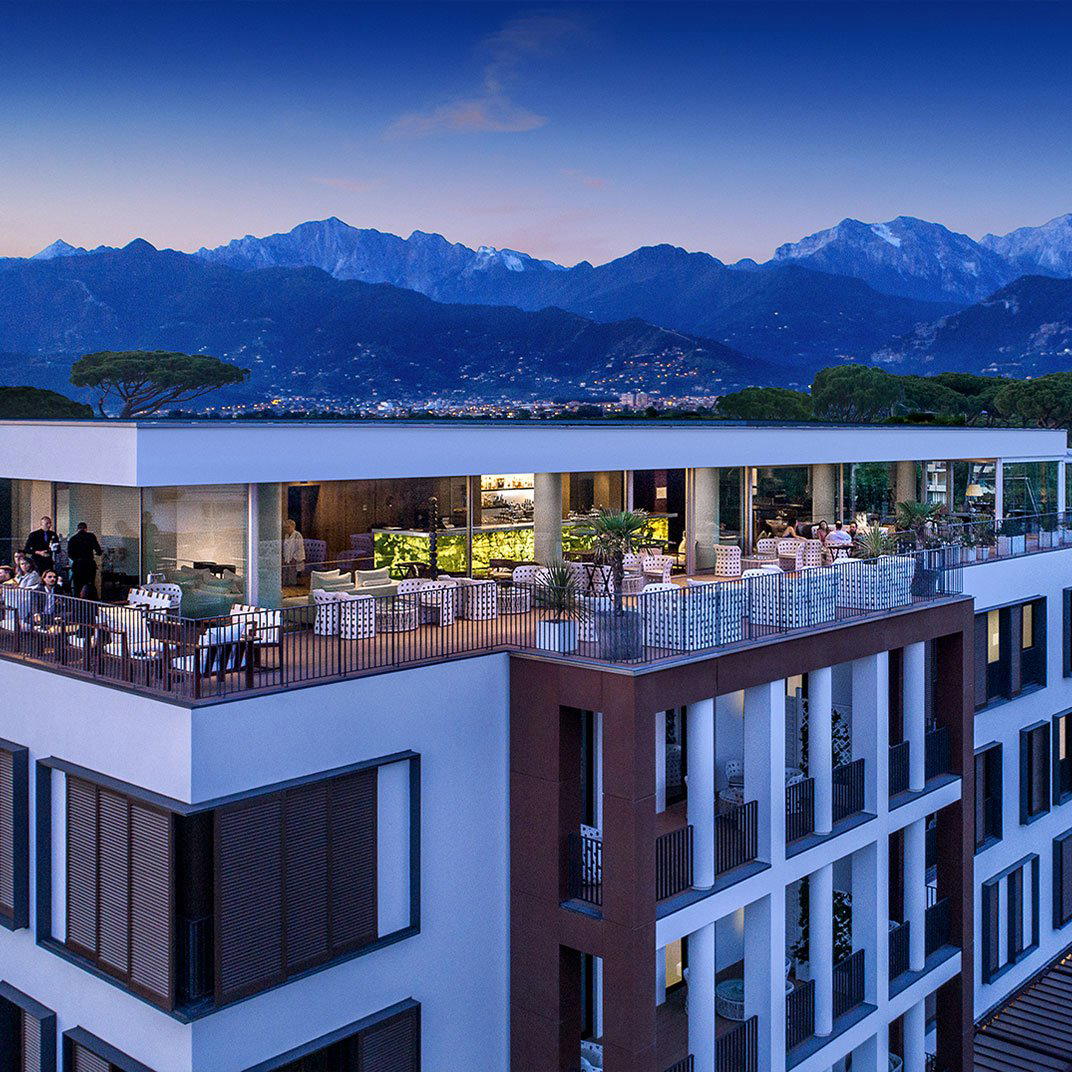
- Terrace
- Design Destination
- Private Dining
- Wi Fi
- Bicycle Rental
- Business Center
- Concierge
- Room Service
- Valet Parking
- Garden
- Garden
- Wheelchair Accessible
- Elevator
- Accessible Restroom
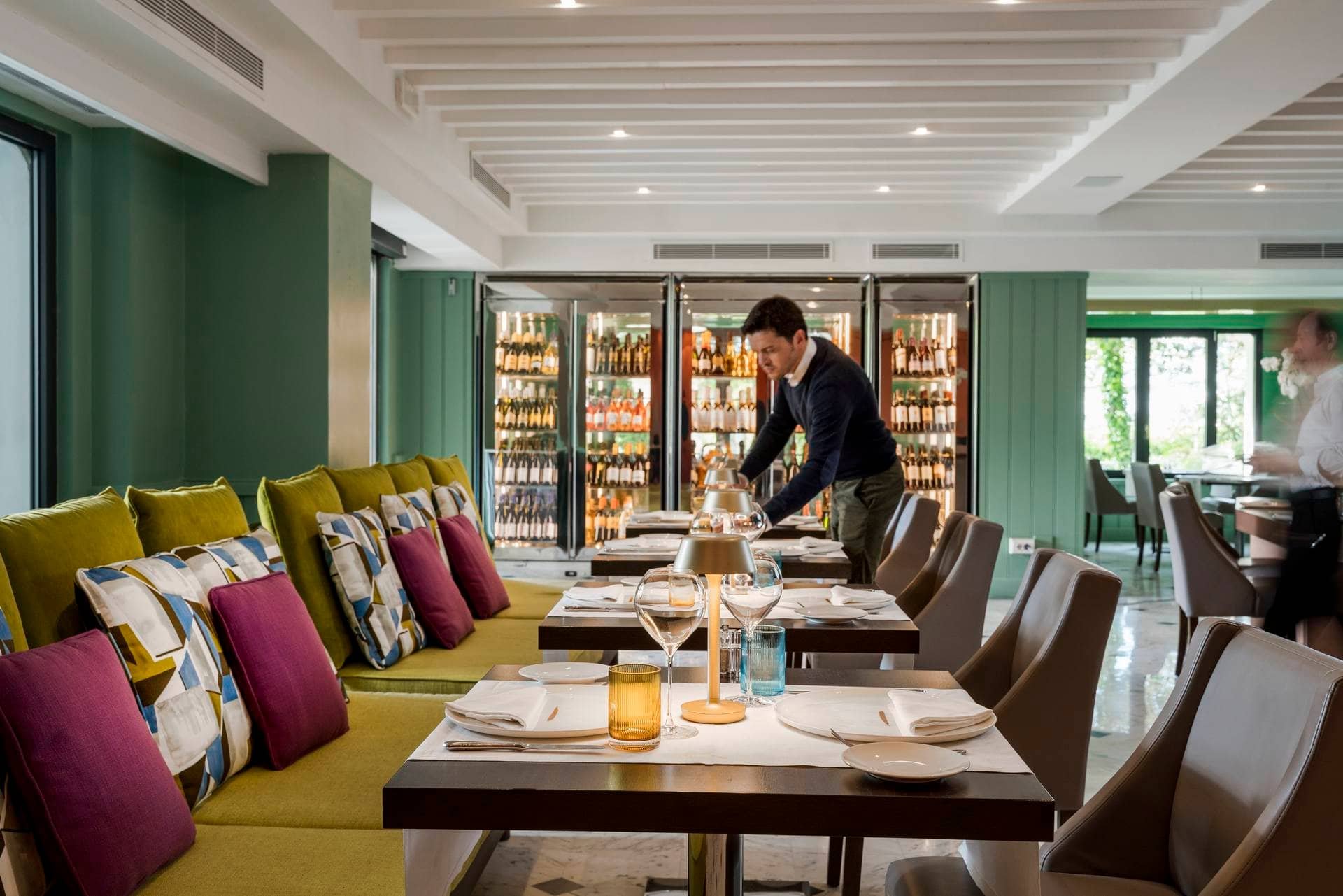
Serene and refined with period-correct furnishings, hand-painted frescoes, and a sunlit courtyard with century-old palm trees creating a peaceful, intimate atmosphere reminiscent of a fine private home.