Bar Shelley
Bar Shelley sits on Largo P. B. Shelley in San Giuliano Terme, a Tuscan spa town where aperitivo culture is shaped as much by piazza rhythm as by destination drinking. With no published awards, menu details, or booking data in the record, its value is best read through setting: a local bar address in a historic thermal town between Pisa and Lucca, suited to a low-ceremony drink rather than a formal cocktail pilgrimage.
Pearl is the En Primeur Club membership app — saves, bookings, and concierge access live there. Same editors, same standards.
- Address
- Largo P. B. Shelley, 18, 56017 San Giuliano Terme PI, Italy
- Directions
- Get directions
 Saves & bookings on Pearl
The piazza bar as the real Tuscan drinking format
Approaching Largo P. B. Shelley, the first clue is not a velvet rope or a laboratory-style backbar but the civic scale of a small Tuscan town: stone, traffic, errands, conversation, and the slow change of light that makes the aperitivo hour feel less like a scheduled service than a daily reset. San Giuliano Terme is not a capital of theatrical cocktail culture. Its drinking life belongs to a quieter register, shaped by spa-town pauses, local routines, and the short distance between Pisa, Lucca, and the hills. Bar Shelley belongs to that register, and that matters. In places like this, the bar is not judged by the same criteria as a Milan hotel lounge or a Rome cocktail address with a published drinks list and international awards. It is judged by whether it fits the tempo of the town.
The Italian bar carries a broader meaning than the English word suggests. It can be a morning coffee counter, an after-work aperitivo stop, a place for a spritz before dinner, or a neutral meeting point where nobody needs to announce an occasion. That elasticity is central to understanding San Giuliano Terme’s casual drinking culture. A bar here is not required to perform luxury; it has to absorb daily use. The address, Largo P. B. Shelley, 18, places the venue in the town rather than outside it, which gives the experience a different center of gravity from rural Tuscan estates or resort bars with destination pricing. The draw is proximity, cadence, and the Italian habit of letting a drink sit inside the day rather than dominate it.
For readers mapping the area, this is a useful counterpoint to the city-led cocktail circuit. Rome has a deep aperitivo and amaro tradition, Milan often pushes technical bar formats into design-forward rooms, Florence blends tourist demand with a growing appetite for polished mixed drinks, and Naples keeps a strong relationship with classic service and nocturnal ease. San Giuliano Terme is smaller and less performative. That does not make it less relevant; it means expectations should shift. The bar’s public record does not list awards, a chef, a cuisine type, prices, hours, phone, website, or signature drinks. In editorial terms, that absence is information. It points away from a destination cocktail temple and toward a local bar format where the setting and timing carry much of the value.
What the cocktail programme can, and cannot, be read from the record
The assigned lens here is the cocktail programme, but the responsible reading starts with restraint. That means no claims about clarified drinks, barrel ageing, local botanicals, vermouth selection, or house infusions can be made without inventing detail. What can be said is more useful for a traveler: Bar Shelley should be approached through the Italian aperitivo framework first, not through the expectation of a documented international cocktail programme.
That distinction changes the order. In a major city cocktail bar, the drink often comes first: the technique, the glassware, the listed ingredients, the awards circuit. In a Tuscan town bar, the social purpose comes first. A Negroni, spritz, Americano, bitter-led aperitivo, beer, or glass of wine may function less as a statement of mixology than as a bridge between afternoon and dinner.
That does not mean the drinks are secondary. It means the right question changes from “What is the signature cocktail?” to “What kind of drinking occasion does this place serve?” In San Giuliano Terme, the likely occasion is local and unfussy: a stop before a meal, a pause after the thermal-town circuit, or a meeting point before continuing toward Pisa or Lucca. When a venue publishes no booking method, no drinks list, and no price range, the reader should avoid building a night around a single order. The safer plan is to treat it as a flexible stop and read the room on arrival.
This is where Italy remains instructive. Cocktail culture in the country has expanded sharply over the past decade, but the aperitivo remains its grammar. Bitter, citrus, soda, vermouth, and low-ABV drinking have long made Italian bars comfortable with appetite, timing, and conversation. Technical cocktail bars may reinterpret that grammar; town bars preserve it in everyday form. Bar Shelley, by the evidence available, sits closer to the latter. That can be a strength for travelers who want the daily texture of San Giuliano Terme rather than a staged drinks performance.
San Giuliano Terme context: spa-town rhythm over destination theatre
San Giuliano Terme’s identity has long been tied to its thermal setting and its position near Pisa. That geography matters for drinking. The town does not need to compete with the late-night density of larger Italian cities; it functions as a slower base, a place where the evening can begin with a short walk rather than a reservation war. For a visitor staying locally, a bar on Largo P. B. Shelley offers the type of practical anchor that rarely appears in award lists but often defines a trip: somewhere central enough to fold into the day.
That local role separates it from the more documented Italian cocktail addresses EP Club readers may know. Salotto 42 in Rome belongs to a capital-city tradition where aperitivo meets design, politics, and tourism in a high-visibility setting. Moebius Milano in Milan sits in a market where dining, music, and drinks often blur into hybrid formats. Gucci Giardino` in Florence is shaped by fashion-house context and the international gaze on the city. Those comparisons clarify what San Giuliano Terme is not: it is not a stage for brand-led cocktail spectacle. Its stronger appeal is human scale.
The same distinction holds across the wider Mediterranean bar circuit. Lost & Found in Nicosia represents the specialist cocktail bar as a destination in its own right. L'Antiquario in Naples points to classic cocktail culture in a city with deep nocturnal habits. B Bar in Venice reflects the hotel and visitor economy of a city built on ceremony. Café La Trova in Miami operates in a different tradition again, where Cuban bar culture, live music, and American hospitality intersect. Against those references, Bar Shelley reads as a smaller, less mediated expression of local drinking culture. The comparison is not a demotion; it is a category correction.
This category correction is especially useful in Tuscany, where travelers often over-plan meals and under-plan the hour before them. The aperitivo slot can reveal more about a town than another high-pressure dinner reservation. In San Giuliano Terme, a casual bar stop can make the place legible: who is out, what time the square fills, whether the evening leans toward a quick drink or a longer sit. Those observations are part of the experience, even when the venue has no published accolades to cite.
How to read the absence of awards, prices, and published details
Travel editorial often treats missing data as a problem to solve. Here it should be treated as a signal. For a luxury traveler, that does not automatically mean the place is weak; it means the decision should be framed differently. This is not a venue to rank against award-winning cocktail rooms. It is a local address to use with flexibility.
The lack of a published price range also affects expectation. In larger cities, cocktail pricing often tells the reader whether a bar sits in a casual, hotel, or specialist tier. Without that marker, assumptions should be avoided. Italy’s town bars can be accessible compared with high-design urban bars, but prices vary by location, service model, and time of day. The practical move is simple: check the menu or posted prices before ordering if cost sensitivity matters, especially when ordering beyond coffee, beer, wine, or standard aperitivo serves.
The absence of a listed website or phone number in the record matters for planning. It suggests that online pre-arrival research may be thin and that same-day confirmation is prudent. Since no opening hours are supplied, the safest rhythm is to treat the bar as an opportunistic stop rather than the fixed center of an evening. This is particularly relevant in smaller Italian towns, where seasonal changes, holidays, and weekly closures can affect service patterns. Travelers arriving from Pisa or Lucca should avoid assuming metropolitan continuity.
There is also a positive reading. Bars that are not built around awards, reservations, or global visibility can be more revealing of a town’s actual social life. That is a different kind of trust signal: contextual authority rather than trophy authority. In the EP Club hierarchy, Michelin stars, World’s 50 Best placements, and named editorial awards carry strong weight when they exist. For Bar Shelley, the available trust signal is location-based and cultural: a central address in San Giuliano Terme’s everyday circuit, suitable for readers who want the town’s drinking rhythm rather than a documented cocktail destination.
Where it fits in a San Giuliano Terme itinerary
Bar Shelley makes sense as a hinge rather than a headline. Use it between activities, before dinner, or as a low-pressure stop when staying in or passing through San Giuliano Terme. The town’s appeal often lies in its calm proximity to larger Tuscan routes: Pisa is the obvious urban neighbor, Lucca sits within the broader regional orbit, and the hills pull itineraries toward villas, thermal stays, and day trips. A local bar near the center gives that kind of itinerary a useful pause point.
For a full read on the area, EP Club’s city pages help separate categories that are often blurred in smaller destinations. Dining sits in Our full San Giuliano Terme restaurants guide, while accommodation context belongs in Our full San Giuliano Terme hotels guide. Readers comparing evening options should use Our full San Giuliano Terme bars guide, and those extending the trip into vineyard territory can scan Our full San Giuliano Terme wineries guide. For non-dining planning, Our full San Giuliano Terme experiences guide frames what to do around the town rather than treating every stop as a meal.
The practical advice is deliberately modest. With no verified hours, booking method, phone, or website in the record, do not anchor a tight schedule around guaranteed service. If already nearby, walk past and confirm the day’s rhythm in person. If planning a formal evening, pair this kind of stop with a restaurant reservation elsewhere rather than expecting a bar to carry the whole night. If looking for a technical cocktail programme with documented credentials, choose a larger city address instead. If looking for the way a Tuscan spa town actually drinks, this is the more honest category.
Editorial assessment
The strongest case for Bar Shelley is not prestige. It is placement. A central bar in San Giuliano Terme offers a view into local drinking culture that polished destination bars can obscure. The cocktail programme, based on available data, should be treated as undocumented rather than assumed. That limits what can be claimed, but it also clarifies the visit: this is a casual, town-based aperitivo stop, useful for travelers who value context over ceremony.
Trade-off is equally clear. Readers seeking awards, named bartenders, published signature drinks, or a reservation-led experience will not find supporting evidence in the current record. That makes the venue a poor fit for a cocktail pilgrimage and a better fit for the soft edges of a Tuscan itinerary: the hour before dinner, the pause after a thermal-town walk, the drink that belongs to a place because it is folded into ordinary life. In a region where hospitality is often sold through villas, cellars, and long lunches, the local bar remains an under-examined format. This one should be read through that lens.
Planning notes
Confirmed address is Largo P. B. Shelley, 18, 56017 San Giuliano Terme PI, Italy. That absence should shape planning. Treat the venue as casual unless the room indicates otherwise on arrival, verify hours locally, and avoid relying on online booking. For a smoother evening, use it as a flexible aperitivo or coffee-bar stop within San Giuliano Terme rather than as the sole planned destination.
Continue exploring
More in San Giuliano Terme
Bars in San Giuliano Terme
Browse all →
Restaurants in San Giuliano Terme
Browse all →
Hotels in San Giuliano Terme
Browse all →

At a Glance
- Quiet
- Classic
- Cozy
- Elegant
- After Work
- Date Night
- Casual Hangout
- Special Occasion
- Historic Building
- Design Destination
- Hotel Bar
- Standalone
- Seated Bar
- Lounge Seating
- Classic Cocktails
Current opening hours
- Monday
- 10:30 AM–11:30 PM
- Tuesday
- 10:30 AM–11:30 PM
- Wednesday
- 10:30 AM–11:30 PM
- Thursday
- 10:30 AM–11:30 PM
- Friday
- 10:30 AM–11:30 PM
- Saturday
- 10:30 AM–11:30 PM
- Sunday
- 10:30 AM–11:30 PM
Hours can change for holidays and private events. Last verified .
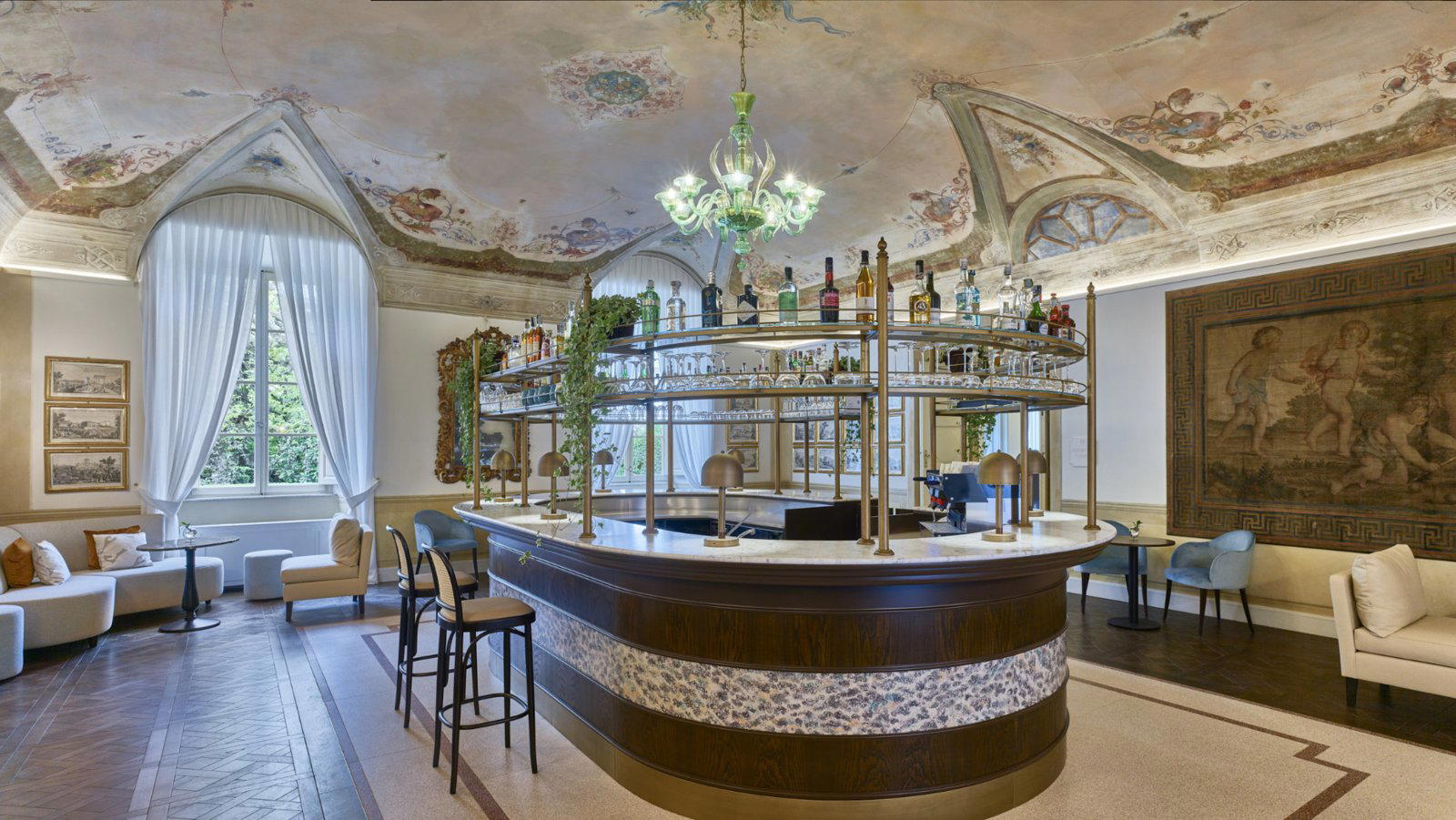
Refined and elegant, with charming décor, restored frescoes, and a calm atmosphere.