Google: 3.6 · 16 reviews
Rikū ’s Counter

Rikū's Counter brings a precision counter-dining format to Woodstock, one of Cape Town's most creatively active neighbourhoods. Chef Rikkū O'Donnchu leads the kitchen in a city where small-format tasting counters have become the preferred vehicle for serious South African culinary ambition. For those tracking where Cape Town fine dining is moving, this address on Mill Street is worth attention.
 Discover on Pearl
Pearl is the En Primeur Club membership app — saves, bookings, and concierge access live there. Same editors, same standards.
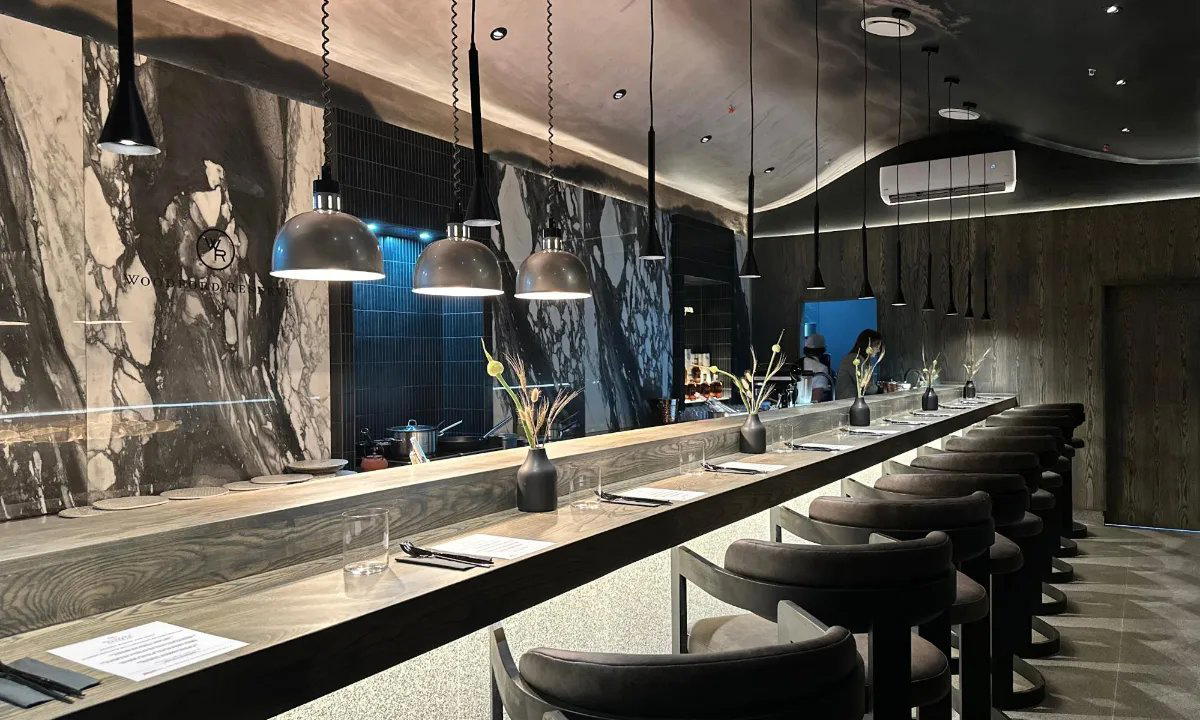
Counter Dining in Cape Town: The Format That Changed the Room
The counter format arrived in Cape Town's fine dining scene relatively recently, but it has taken hold with a conviction that reflects something deeper than trend-following. Across the city, the restaurants earning serious critical attention have moved away from large dining rooms and toward configurations where the distance between kitchen and guest is measured in centimetres rather than metres. Rikū's Counter, on Mill Street in Woodstock, operates within this shift. The address places it in a neighbourhood that has absorbed much of Cape Town's creative energy over the past decade, sitting between the older industrial character of the lower Woodstock strip and the more residential blocks climbing toward Devil's Peak.
Woodstock's dining identity has been assembled piece by piece through exactly this kind of small, independently driven operation. It is not a neighbourhood defined by a single anchor institution the way the V&A Waterfront or the Constantia wine corridor are. Its credibility is earned incrementally, which is precisely why a counter-format venue led by a named chef reads as a genuine stake in the ground rather than a calculated location choice.
Chef Rikkū O'Donnchu and the Question of Critical Standing
In the context of Cape Town's fine dining tier, the conversation about recognition tends to track a small number of chefs whose names function as orientation points. The city's most discussed kitchens — The Test Kitchen, Fyn, La Colombe, Salsify at the Roundhouse, and Beyond — each represent a different take on what South African fine dining can mean, and each has accumulated awards or critical consensus that places it within a legible peer set.
Rikkū O'Donnchu is the chef attached to this counter, and the name carries enough weight in the city's food conversation to anchor the project's positioning. The award entry in the record is spare , the data confirms O'Donnchu as the chef, without specifying which awards or in what category , but the structure of Cape Town's recognition ecosystem is narrow enough that chefs operating at this level do so within an audience that tracks credentials closely. Counter formats in particular tend to attract the kind of repeat attention from critics and serious diners that makes reputation accumulate faster than in a conventional dining room setting.
South Africa's broader fine dining geography offers useful context here. Outside Cape Town, addresses like Le Quartier Français in Franschhoek, Wolfgat in Paternoster, and Dusk in Stellenbosch demonstrate that the country's most thoughtful cooking does not cluster exclusively in the city. But the counter format, with its dependence on a consistent, concentrated audience and a reliable supply infrastructure, tends to anchor itself in urban centres. Mill Street, Woodstock, is a credible choice for that model.
What the Counter Format Signals About the Menu
Counter dining as a format is not neutral. It makes a set of commitments that shape everything from sourcing to service pacing. The guest at a counter is not browsing a menu in the conventional sense; they are entering a sequence the kitchen has already decided. Spontaneity shifts from the guest's side of the transaction to the chef's: what arrives is determined by what is at peak quality on a given day, and the conversation across the pass , when the format is working , becomes part of the experience rather than incidental to it.
This is the model that refined venues like Atomix in New York City to sustained critical relevance, and it is the same logic that underpins the serious counter operations at the leading of Seoul, Tokyo, and San Francisco's fine dining hierarchies. At the format's most rigorous end, as seen at addresses like Le Bernardin in New York City in its own way, the precision of delivery becomes the argument for the price point. In Cape Town's local context, it places Rikū's Counter in a different conversation from the large-format tasting menu rooms, even those operating at a comparable price tier.
The cuisine type is not specified in the available data, which means the editorial emphasis here cannot responsibly land on a specific flavour direction. What can be said is that the counter format in Cape Town, across the small number of venues operating in it, has tended to draw on a mix of local ingredient intelligence and international technique , a pattern visible at Fyn's Japanese-South African approach and at various stages of The Test Kitchen's evolution.
Woodstock as a Dining Address
Mill Street runs through the eastern edge of Woodstock's more established commercial strip. The neighbourhood has a texture that some Cape Town visitors find surprising: it is not polished in the way of the Atlantic Seaboard, and it does not carry the wine-country languor of the Southern Suburbs. Its dining credibility derives from a concentration of independently operated kitchens that have chosen it precisely because it was not already defined by fine dining infrastructure. That absence of prior expectation has turned out to be an asset.
For those building a Cape Town itinerary around serious eating, Woodstock now functions as a necessary stop rather than a detour. Our full Cape Town restaurants guide maps the city's dining geography in detail, and the picture that emerges is one where Woodstock sits alongside the City Bowl and the V&A Waterfront as a district with its own distinct register rather than a suburb of the centre. Visitors planning around Rikū's Counter should also consult our full Cape Town hotels guide, our full Cape Town bars guide, our full Cape Town wineries guide, and our full Cape Town experiences guide for a fuller picture of what the city offers at this level.
Comparative Context: Where Rikū's Counter Sits in the City's Fine Dining Tier
The venues against which Rikū's Counter is most usefully measured are not the large-footprint hotel dining rooms or the group-operated brasserie formats that have expanded across Cape Town over the past several years. The relevant peer set is smaller and more precise: independently operated, chef-driven, small-capacity rooms where the reputation of the kitchen is inseparable from the reputation of the person running it.
In that tier, comparisons extend beyond South Africa's borders. The conversation about where Cape Town's most ambitious cooking sits internationally has been growing since Wolfgat and others drew sustained international press. Venues like Ellerman House in Bantry Bay and Esiweni Luxury Safari Lodge serve as reminders that South Africa's premium dining geography extends well beyond Cape Town's city limits, and that the country's most serious food conversation now reaches internationally. In Johannesburg, Gigi represents a different urban register from what Cape Town's counter-format scene is building.
Rikū's Counter, based on the available data, belongs to the concentrated, credential-led end of Cape Town's independent dining tier. The specifics of booking window, seat count, and service format are not confirmed in the current record, which means direct logistical comparison with the city's other small counters would be speculative. What the address, the chef name, and the counter format together signal is consistent with a venue operating at the serious end of the city's independently driven fine dining scene , the tier where reputation precedes the reservation.
Planning Your Visit
Rikū's Counter is located at Mill Street, Woodstock, Cape Town, 7915. Given the counter format and the chef's profile in Cape Town's dining conversation, advance booking is the sensible approach; small-capacity venues at this level in the city typically fill several weeks ahead, and arriving without a reservation is rarely productive. The Woodstock address is accessible by car from both the City Bowl and the Atlantic Seaboard in under fifteen minutes outside peak traffic, and Uber coverage across central Cape Town is consistent. Neither phone nor website details are confirmed in the current record; the most reliable booking path is through direct contact confirmed through current listings.
Price Lens
A small comparison set for context, based on the venues we track.
| Venue | Price | Awards | Notes |
|---|---|---|---|
| Rikū ’s Counter | Chef: Rikkū O’Donnchu document.addEventListener("DOMContentLoaded", f… | This venue | |
| The Test Kitchen | World's 50 Best | South African | |
| Fyn | World's 50 Best | Japanese Fusion | |
| La Colombe | World's 50 Best | South African | |
| Salsify at the Roundhouse | World's 50 Best | South African | |
| OneEighty | South African |
Continue exploring
More in Cape Town
Restaurants in Cape Town
Browse all →
Bars in Cape Town
Browse all →
Hotels in Cape Town
Browse all →

At a Glance
- Intimate
- Modern
- Sophisticated
- Minimalist
- Date Night
- Special Occasion
- Solo
- Chefs Counter
- Open Kitchen
- Sake Program
- Sommelier Led
- Local Sourcing
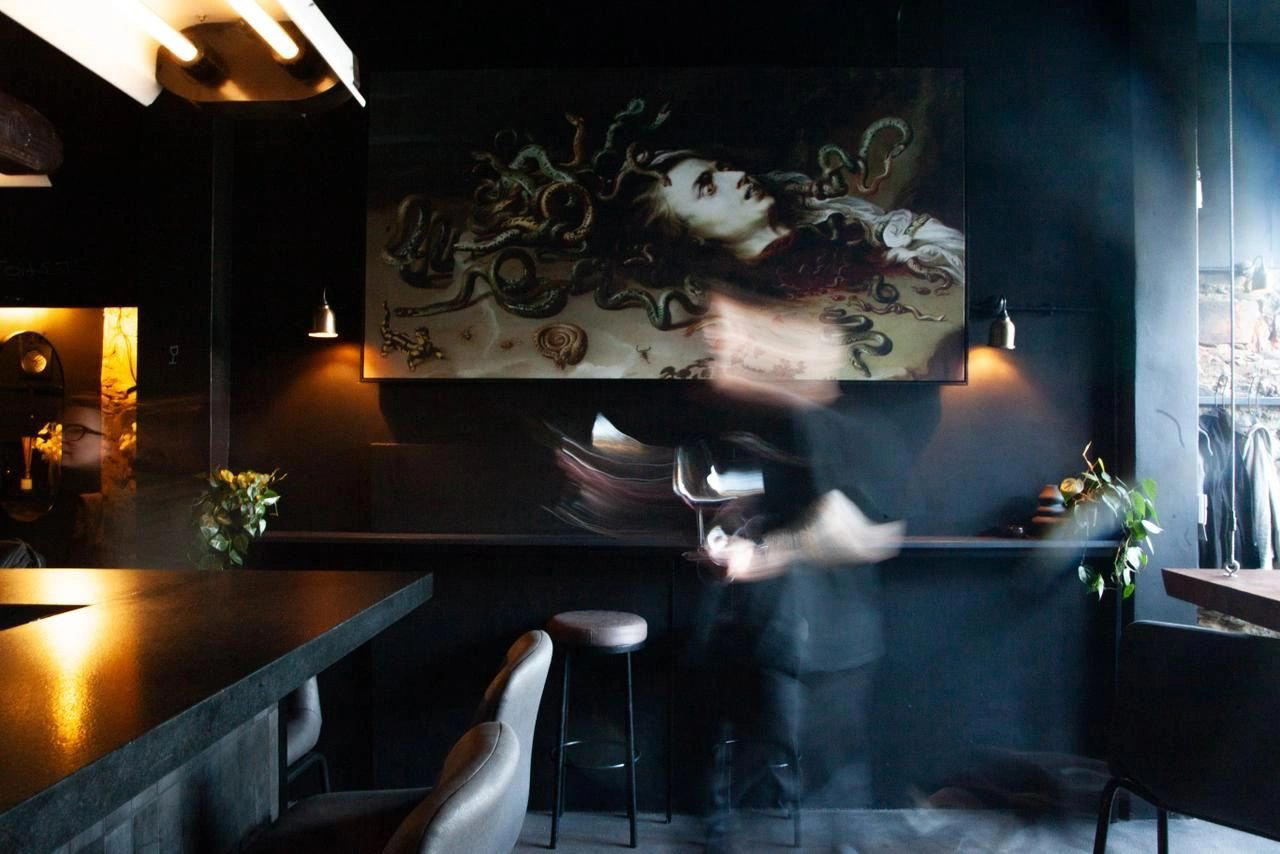
Dimly lit, serene counter seating with focused spotlighting on the chef's precise movements, creating an intimate and reverent atmosphere.