Richeese Factory Tenggarong
Richeese Factory in Tenggarong brings its cheese-forward fast food format to Kutai Kartanegara's main commercial stretch, offering a recognisable Indonesian chain experience in a town more often associated with the Kutai Kingdom's cultural heritage than its dining scene. For travellers passing through East Kalimantan, it represents a reliable, familiar stop in a region where consistent chain options are sparse.
Pearl is the En Primeur Club membership app — saves, bookings, and concierge access live there. Same editors, same standards.
- Address
- Jl. K.H. Ahmad Muksin No.70, Timbau, Kec. Tenggarong, Kabupaten Kutai Kartanegara, Kalimantan Timur 75513, Indonesia
- Website
- richeesefactory.com
- Directions
- Get directions
 Saves & bookings on Pearl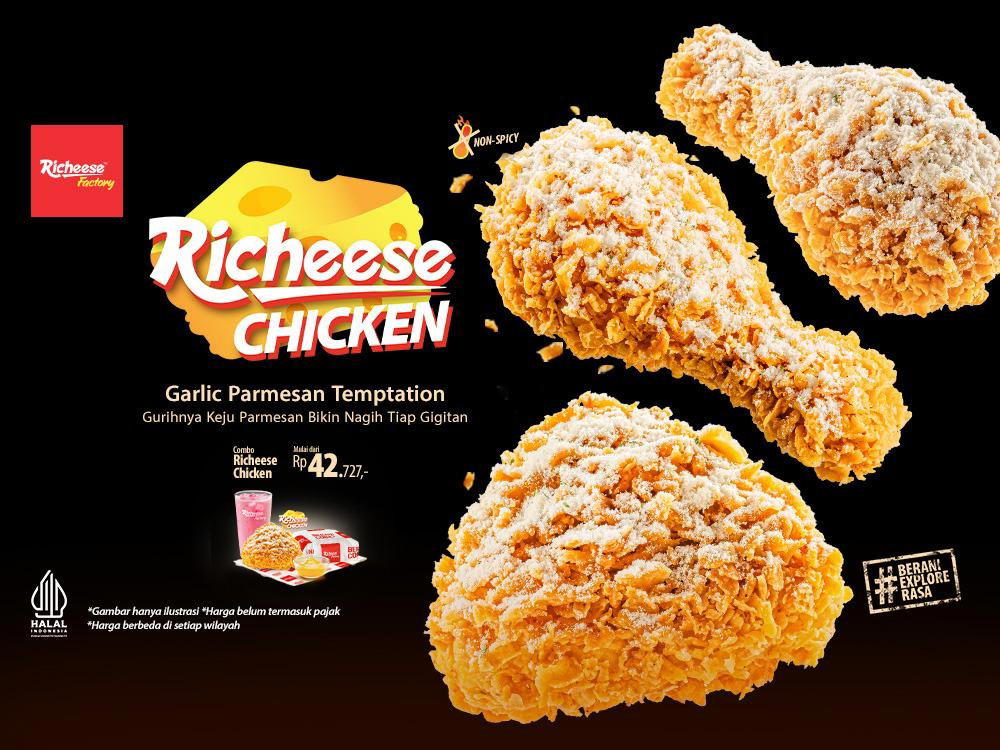
Fast Food in a River Town: Chain Dining on the Mahakam
Tenggarong sits on the western bank of the Mahakam River, roughly an hour by road from Samarinda and the administrative heart of Kutai Kartanegara regency. Most visitors arrive for the Sultan's palace museum or the annual Erau festival rather than for the food, and the town's dining scene reflects that dynamic: warung culture dominates, local specialities lean toward Mahakam River fish, and chain restaurants appear at the edges rather than the centre of daily life. Richeese Factory on Jalan K.H. Ahmad Muksin slots into that context as one of the few recognisable national chains operating at this distance from Kalimantan's larger urban centres.
What Richeese Factory Is, and Why It Landed Here
Richeese Factory is an Indonesian quick-service chain owned by the Richeese Foods division of Garudafood Group, built around a signature nacho cheese sauce applied across fried chicken, burgers, and side dishes. The format targets a younger urban demographic, and its expansion into secondary and tertiary cities like Tenggarong follows a pattern seen across Indonesian fast food development: brands prove the model in Jabodetabek, move into Java's secondary cities, then gradually push into Sumatra, Sulawesi, and Kalimantan as infrastructure and purchasing power allow. Tenggarong, as the regency capital of one of Indonesia's historically wealthiest resource regions, made a plausible next step.
The cheese-forward positioning distinguishes it from the standard fried chicken chains that already cover most of Indonesia's smaller towns. Processed cheese sauces of this kind are sourced through industrial dairy supply chains rather than local or artisanal producers, a practical reality of operating at scale across an archipelago where cold-chain logistics remain inconsistent. That supply model is what makes consistent delivery possible at a Tenggarong address. The sauce arrives the same as it does in Surabaya or Makassar, and that consistency is, for this format, the product.
Ingredient Logic in East Kalimantan
Understanding what goes into the food at a Richeese Factory outlet in Tenggarong requires understanding the supply geography of East Kalimantan. The province's interior is river-connected rather than road-connected across significant stretches, and fresh produce logistics remain heavily dependent on what comes overland through Samarinda or flies in through Balikpapan's Sultan Aji Muhammad Sulaiman Airport. Local food culture compensates for this through an emphasis on river fish, fermented preparations, and ingredients that hold well: smoked and dried proteins, root vegetables, palm products. Chain restaurants operating here largely bypass that local ingredient economy, importing standardised inputs through regional distribution networks.
This contrasts sharply with what the more produce-driven Indonesian restaurant scene has built elsewhere. Operations like Bikini Restaurant Bali in Badung and Jungle Fish Bali in Gianyar operate in an environment where fresh local sourcing is both possible and commercially expected. In Tenggarong, the calculus is different. A traveller wanting to eat what the region actually produces would do better at the riverfront warungs serving grilled baung or patin from the Mahakam, prepared simply with local sambal. Richeese Factory answers a different question: reliable, familiar, climate-controlled, and available without local language navigation.
The Format on the Ground
Richeese Factory outlets follow a recognisable spatial template: tiled floors, open kitchen with visible fry stations, branded signage in yellow and orange, and seating arranged for group throughput rather than lingering. The Tenggarong address on Jalan K.H. Ahmad Muksin is in the Timbau subdistrict, positioning it on one of the town's more commercially active corridors. Families, students, and younger couples make up the typical afternoon and evening crowd across Richeese Factory locations in comparably sized Indonesian towns. The environment is louder and more energetic than the warung alternative, reflecting the brand's deliberate pitch toward a demographic that responds to the visual intensity of its marketing.
For visitors used to more structured dining, the reference point is not Jakarta's Kita Restaurant and Bar in Kecamatan Menteng or the dim sum precision of Hwang Fu Dimsum in Tangerang. It is closer in spirit to the mass-market hotpot chains operating in Indonesian cities: sociable, volume-driven, and priced for frequent visits rather than occasion dining. Comparable dynamics play out at operations like Hai Di Lao in Central Jakarta and Chongqing Liuyishou Hotpot in South Jakarta, though those operate at a considerably larger footprint and higher average spend.
Tenggarong in the Wider Indonesian Chain Expansion Story
The arrival of national chains in towns like Tenggarong represents one of the more consequential shifts in Indonesian food culture over the past decade. As Java-born chains expand eastward, they carry with them taste preferences calibrated in Jakarta and Bandung: sweeter, richer, more processed. This is not distinctive to Indonesia: the same pattern plays out across Southeast Asia, where national chains moving into smaller markets gradually reshape local palates and create commercial pressure on independent operators. The contrast is visible in Indonesian cities at multiple scales, from the warung pressure in Yogyakarta's tourist zones to the fast food density in Manado's malls, where Kimukatsu Manado Town Square operates alongside local Manadonese specialists. The regional dining guides in places like Bandung track this dynamic closely, and venues like Kunyit Restaurant in Bandung represent one response to it: a deliberate return to local ingredients and technique as a counterpoint to chain standardisation.
Tenggarong has not yet developed a comparable restaurant-class pushback. The town's culinary identity remains rooted in home cooking and warung culture, with chains occupying a separate lane that locals and visitors use for specific purposes rather than as a primary expression of the region's food.
Planning a Stop Here
Tenggarong is most practically reached from Samarinda, roughly 45 kilometres to the southwest, by car or shared transport along the Trans-Kalimantan road corridor. Most travellers combine a Tenggarong visit with the Mulawarman Museum or the broader Mahakam River basin itinerary that extends toward Melak and Long Bagun. Richeese Factory on Jalan K.H. Ahmad Muksin sits in the Timbau commercial area and is walkable from the river-facing parts of town. It functions as a useful practical stop for travellers who need air conditioning, predictable pricing, and a menu that requires no local knowledge to order from.
For travellers building a broader Indonesian itinerary around food with real sourcing depth, the comparison references are elsewhere: Gudeg Yu Djum in Yogyakarta for Javanese tradition, Agreya Coffee Bogor for a sense of West Java's café culture, and Kynd Community in Bali for a different segment of the Indonesian dining conversation. Richeese Factory Tenggarong occupies a narrower, more functional role, and understanding that role clearly is what makes it useful rather than disappointing.
Comparable Spots, Quickly
Comparable venues nearby, for context on price, style, and recognition.
| Venue | Cuisine | Price | Notes |
|---|---|---|---|
| Richeese Factory TenggarongThis venue — the venue you are viewing | Cheese Fried Chicken Fast Food | $ | Not listed |
| Bakso Babi Alang-alang | Indonesian Pork Meatballs (Bakso Babi) | $ | Makale |
| Gudeg Yu Djum | Traditional Javanese Gudeg | $ | Kraton |
| Gindaco | Japanese Takoyaki & Okonomiyaki | $ | Menteng |
| İstanbul kebab | Turkish Kebab | $ | Gili Indah |
| Imperial Kitchen & Dimsum | Chinese Dim Sum | $$ | Tangerang |
At a Glance
- Casual Hangout
- Family
Current opening hours
- Monday
- 10 AM–10 PM
- Tuesday
- 10 AM–10 PM
- Wednesday
- 10 AM–10 PM
- Thursday
- 10 AM–10 PM
- Friday
- 10 AM–10 PM
- Saturday
- 10 AM–10 PM
- Sunday
- 10 AM–10 PM
Hours can change for holidays and private events. Last verified .
Comfortable and clean dining space with indoor and outdoor seating options.