Restaurante Renascer
Our verdict
Vila Franca de Xira sits in the agricultural corridor north of Lisbon, where the Tagus floodplain has fed kitchens for centuries. Restaurante Renascer, on Rua José Dias da Silva, operates in that tradition: a neighbourhood address drawing on the produce-rich surrounds of Ribatejo rather than the polish of a capital-city dining room. For readers tracking Portuguese regional cooking beyond the Michelin-mapped coastal belt, it merits attention.
- Address
- R. José Dias da Silva 4, 2600-169 Vila Franca de Xira, Portugal
- Directions
- Get directions
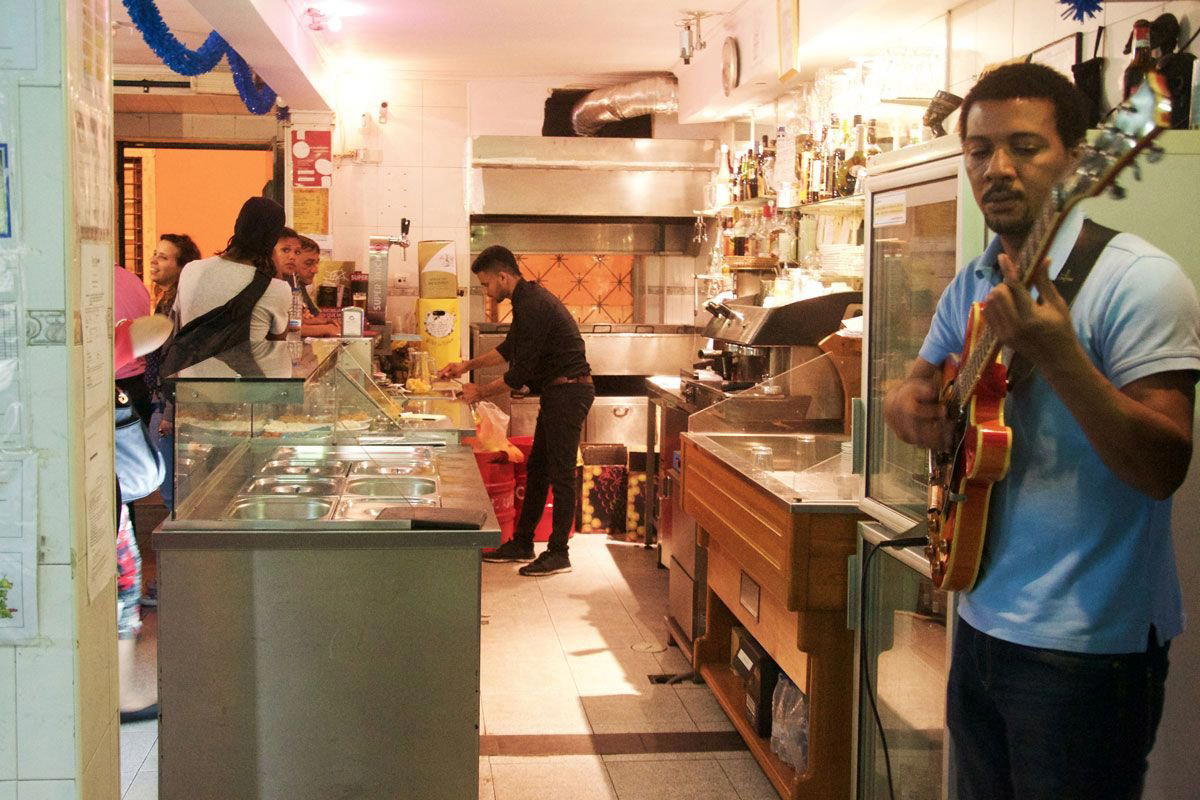
The menu
What to order
- Cachupa
- Moamba
The Ribatejo Table: Eating Where the Produce Begins
Portugal's most decorated dining rooms tend to cluster along its coastlines and in Lisbon. Belcanto in Lisbon, Vila Joya in Albufeira, and Casa de Chá da Boa Nova in Leça da Palmeira each built their reputations against Atlantic backdrops, with seafood and coastal terroir as their primary argument. The interior, by contrast, is a different story about Portuguese cooking: one written in beef cattle, free-range pork, wild herbs from the Tagus plain, and the kind of seasonal vegetable culture that has supplied Lisbon's markets for generations without attracting much critical attention.
Vila Franca de Xira sits at the heart of that story. The town, roughly 30 kilometres north of Lisbon along the Tagus, is more associated with the running of bulls during its famous Colete Encarnado festival than with destination dining. That cultural identity is not incidental to how the town eats: Ribatejo's cattle-rearing history has long shaped its kitchen priorities, and the surrounding floodplain agriculture means that the ingredient base here is built on proximity rather than import. Restaurants in this corridor have access to raw materials that their Lisbon counterparts often pay a premium to source.
What the Address Tells You
Restaurante Renascer occupies a street-level address on Rua José Dias da Silva in the town centre. In a Portuguese market town of this scale, that placement signals a particular kind of restaurant: not the glass-and-concrete format of a capital tasting room, but the deeply local dining room that sustains a neighbourhood over years rather than trending over seasons. These are the spaces that keep regional cooking alive between the more visible poles of fine dining — places like Ocean in Porches or The Yeatman in Vila Nova de Gaia — and the anonymous tourist trade.
Approaching a restaurant like this in a working Portuguese town, you read the room before you sit down: the clientele skewing local, the wine list built around regional producers rather than international prestige labels, the menu reflecting what arrived from nearby farms that week rather than what a purchasing department ordered months in advance. Whether Renascer fits that description precisely requires on-the-ground verification, but the address and the town's character make it the likeliest frame.
Ribatejo as an Ingredient Region
The editorial case for paying attention to Vila Franca de Xira's dining scene is largely an ingredient argument. Ribatejo, the sub-region surrounding the Tagus basin north of Lisbon, has historically been one of Portugal's most productive agricultural zones. Beef from Ribatejo's Campino-raised cattle carries a regional specificity comparable to the Alentejo black pig, though it attracts considerably less international press. The area's market gardens supply a range of allium, brassica, and legume crops that form the backbone of traditional Portuguese cozinha de tacho cooking: the slow, pot-based preparations that define inland menus at their most honest.
For context, consider how differently ingredient sourcing shapes a restaurant's identity at the top of the Portuguese market. Mesa de Lemos in Passos de Silgueiros built its recognition partly on the argument that interior Portugal's land-based produce deserved the same critical framework as coastal seafood. Antiqvvm in Porto applies a similar logic to Northern Portuguese tradition. A neighbourhood restaurant in Vila Franca de Xira operates without those platforms or profiles, but within the same ingredient geography, which means the raw material quality can be significant even when the format is modest.
This matters for readers who track Portuguese cooking beyond the Michelin-mapped southern and coastal belt. The restaurants that actually preserve regional technique are rarely the ones attracting international travel press. Ó Balcão in Santarém, a short drive west along the Tagus, has received recognition for exactly this kind of regional commitment. Renascer operates in the same geographic pocket, even if its profile sits at a different register.
Placing Renascer in the Wider Portuguese Scene
Portugal's restaurant hierarchy has sharpened significantly since the mid-2010s. The country now hosts a wider spread of Michelin-starred addresses than at any point in its history, from Il Gallo d'Oro in Funchal to Fortaleza do Guincho in Cascais, Gusto by Heinz Beck in Almancil, and Palatial in Braga. That expansion has been good for Portuguese cooking's international reputation, but it has also created a two-tier perception problem: the award-tracked tier gets written about obsessively, while the broader substrate of regional restaurants that actually carry Portuguese culinary tradition receives almost no critical infrastructure.
Restaurante Renascer exists in that second tier, not as a consolation but as a category. The comparison set is not Lab by Sergi Arola in Sintra or Al Sud in Lagos. It is the network of town-centre dining rooms across Portugal's interior that keep regional recipes in rotation and local producers in business. Internationally, the equivalent dynamic plays out in cities like San Francisco, where format-driven destinations such as Lazy Bear attract the critical gaze while neighbourhood institutions do the quieter work of sustaining food culture, or in New York, where Le Bernardin defines the ceiling while hundreds of unremarked rooms define the floor.
Vila Franca de Xira also has other dining options worth knowing about. Royal Tandoori represents the town's immigrant food culture, a strand that sits alongside the Ribatejo tradition rather than competing with it. For a fuller picture of where to eat in the area, the our full Vila Franca de Xira restaurants guide covers the broader field.
Planning a Visit
Vila Franca de Xira is accessible from Lisbon by Fertagus or CP rail services in under 40 minutes, making it viable as a lunch destination from the capital without requiring an overnight stay. The town centre is compact enough to walk between the station and Rua José Dias da Silva. As with most neighbourhood restaurants in Portuguese market towns, lunch service tends to be the primary session, with the kitchen oriented around the working-week clientele rather than late-evening tourism patterns. Visitors arriving from Lisbon would do well to time arrival for the midday service rather than assuming evening hours match capital-city norms.
Frequently asked questions
Is Restaurante Renascer suitable for children?
Vila Franca de Xira operates as a working Portuguese market town rather than a tourist destination, and street-level restaurants in town centres of this scale tend to run as family-oriented local addresses. Nothing in the venue's profile indicates a formal or adults-only environment. As with any unconfirmed detail, contacting the restaurant directly before visiting with young children is advisable.
What kind of setting is Restaurante Renascer?
Renascer occupies a street-level address on Rua José Dias da Silva in Vila Franca de Xira's town centre. In a Portuguese market town of this scale, that placement puts it squarely in the category of neighbourhood restaurant rather than destination dining room — the kind of address locals use regularly rather than one designed around inbound tourism.
Is Restaurante Renascer worth visiting as a day trip from Lisbon?
Vila Franca de Xira is reachable from Lisbon via Fertagus or CP rail services in under 40 minutes, which makes Renascer a practical lunch destination from the capital rather than an overnight commitment. The Ribatejo region surrounding the town supplies some of Portugal's most significant beef, freshwater fish, and agricultural produce, giving a meal here a regional specificity that Lisbon's restaurant scene rarely replicates at the same proximity.
What dish is Restaurante Renascer famous for?
Given its location in the Ribatejo sub-region — one of Portugal's primary zones for beef cattle, river fish, and market vegetables — the menu context points toward ingredient-driven, regionally grounded cooking. Confirming the current menu directly with the restaurant will give the clearest picture.
In Context: Similar Options
| Venue | Cuisine | Price | Awards | Notes |
|---|---|---|---|---|
| Restaurante RenascerThis venue — the venue you are viewing | Cape Verdean Portuguese | Not listed | Not listed | Not listed |
| Belcanto | Contemporary Portuguese Fine Dining | $200–300 | 2 Michelin Stars · World's 50 Best #42 | Modern Portugese, Creative |
| Casa de Chá da Boa Nova | Modern Portuguese Seafood | $50–100 | 2 Michelin Stars · La Liste Top Restaurants | Portugese, Seafood |
| Ocean | Modern Portuguese Fine Dining | $200–300 | 2 Michelin Stars · La Liste Top Restaurants | Contemporary European, Creative |
| Lab by Sergi Arola | Modern Mediterranean Fine Dining | $200–300 | 1 Michelin Star | Progressive Spanish, Creative |
| Midori | Japanese-Portuguese Fusion | $150–200 | 1 Michelin Star | Japanese |
Continue exploring
More in Vila Franca De Xira
Restaurants in Vila Franca De Xira
Browse all →
Bars in Vila Franca De Xira
Browse all →
Hotels in Vila Franca De Xira
Browse all →


Details
- Rustic
- Cozy
- Family
- Casual Hangout
- A La Carte
Welcoming atmosphere with traditional charm.