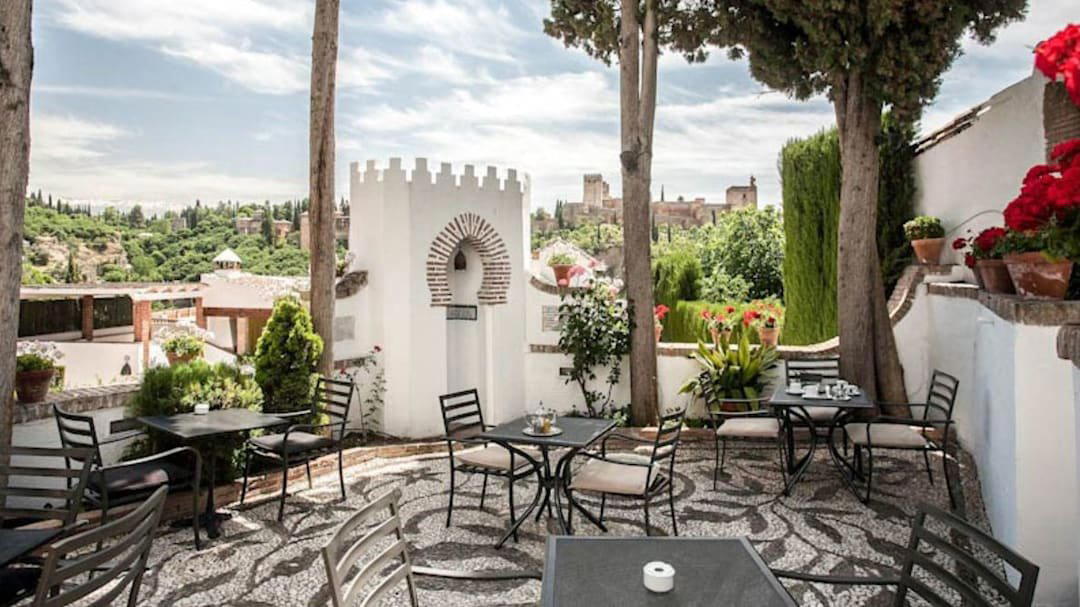
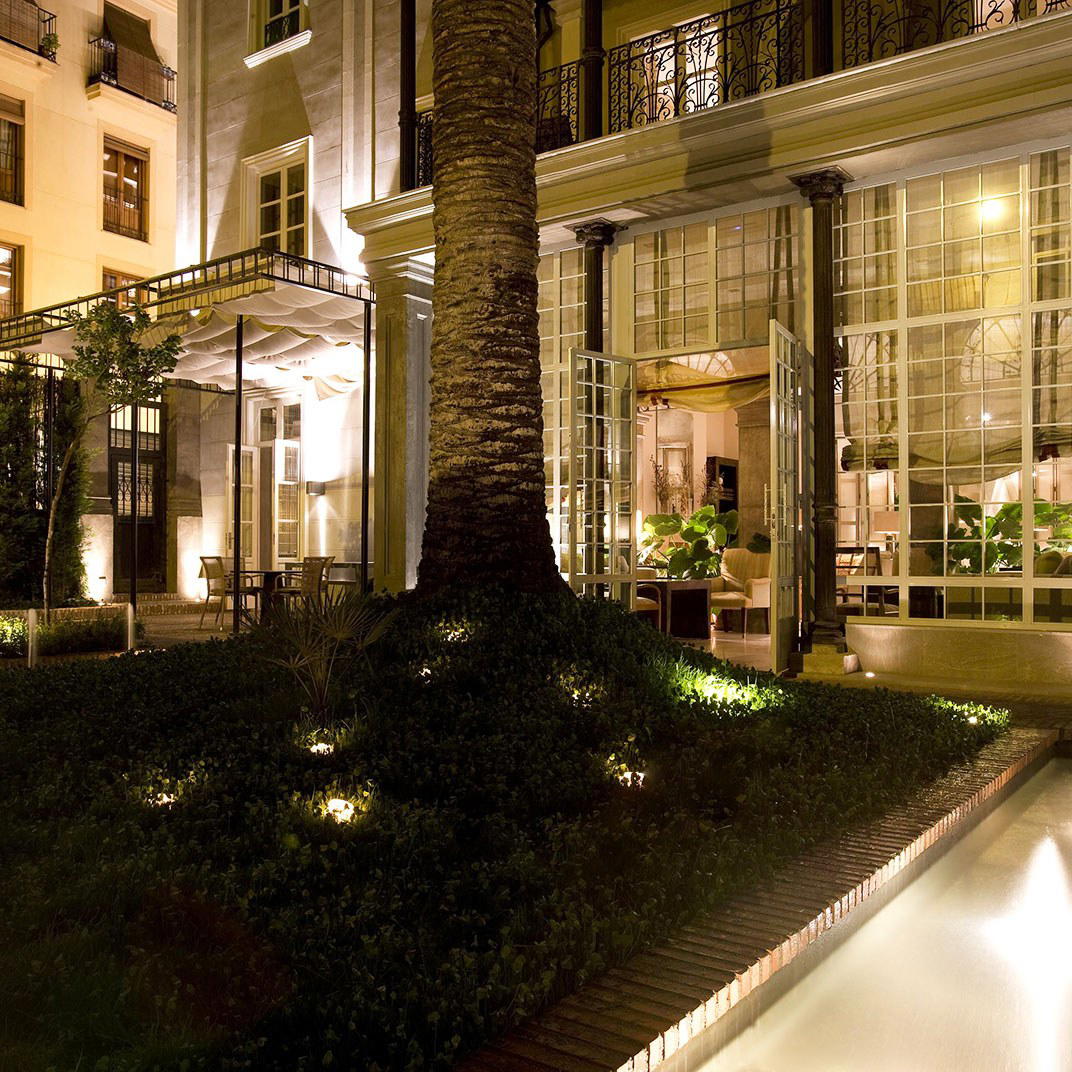
Restaurante Carmen De Aben Humeya sits on the Cuesta de las Tomasas in the Albaicín, Granada's oldest Moorish quarter, where the city's Nasrid and Andalusian culinary inheritance is most legible on a plate. The setting alone, terraced gardens with views toward the Alhambra, places it among a small tier of Granada restaurants where location and cuisine reinforce each other.
 Discover on Pearl
Pearl is the En Primeur Club membership app — saves, bookings, and concierge access live there. Same editors, same standards.
- Address
- Cta. de las Tomasas, 12, Albaicín, 18010 Granada, Spain
- Phone
- +34639120562
- Website
- abenhumeya.com
The Albaicín as Dining Context
Few European cities carry their culinary history as visibly as Granada. The Albaicín quarter still organizes itself around steep lanes, whitewashed carmen houses, and walled garden terraces that defined domestic life under the last Moorish rulers of Iberia. Restaurants that operate inside carmen structures are working within buildings that predate the Spanish reconquest of 1492. That historical density is the first thing a visitor registers, and it sets expectations that purely contemporary dining spaces elsewhere in Spain do not face.
Restaurante Carmen De Aben Humeya sits on the Cuesta de las Tomasas at number 12, in the upper Albaicín. The address places it on one of the neighbourhood's steeper approach paths, above the lower tourist concentration around Calle Calderería Nueva, in a zone where the residential character of the quarter is more apparent. Carmen houses at this elevation typically command the clearest sightlines toward the Alhambra and the Darro valley, which means the outdoor terrace experience operates differently from street-level dining: the Alhambra is present as a fixed backdrop rather than an occasional glimpse.
What the Carmen Format Means for How You Eat
The carmen as a building type deserves a brief explanation, because it shapes everything about how dining here works. A carmen is a private walled house with an interior garden, common in Moorish Granada and largely unchanged in layout across the Albaicín. The inward-looking plan, high exterior walls, garden at the centre, rooms arranged around it, means the dining environment is enclosed and relatively quiet despite proximity to a busy city. Arriving through a doorway set into a plain street wall and then stepping into a planted courtyard or terraced garden is a spatial transition that has no equivalent in a conventional restaurant entrance.
This format creates an inherent tension for any kitchen operating within it: the architecture produces an atmosphere that can carry less technically demanding food than a purpose-built fine-dining room would require, because the setting itself is doing significant work. The strongest carmen restaurants in Granada use that dynamic deliberately, the cuisine needs to be coherent and rooted enough to read as authentic rather than decorative, but the pressure to perform at the same technical register as, say, Arriaga or Atelier Casa de Comidas (Granada's more overtly contemporary dining addresses) is distributed differently.
Granada's Culinary Inheritance
The cuisine of Granada draws from two partially overlapping traditions. The Andalusian mainstream, olive oil, cured meats, salt cod, fried fish, slow-cooked legumes, is present throughout the province and across the tapas circuit centred on bars like Bar Los Diamantes and the long-running wine-house tradition represented by venues such as Bodegas Castañeda. Layered beneath and around this is a Moorish-inflected ingredient vocabulary: almonds, honey, saffron, dried fruits, spice combinations that arrived with North African and Middle Eastern culinary flows during the period of Islamic rule and were never fully displaced by the reconquest. Granada retains more of this dual inheritance than most Andalusian cities, partly because the Nasrid dynasty held the city until 1492, centuries after Córdoba and Seville had reverted, and partly because the Albaicín itself has remained a neighbourhood with cultural continuity.
Restaurants operating in the Albaicín are expected, by location if not always by menu, to engage with this dual tradition. The name Aben Humeya references a historical figure from Granada's post-reconquest Morisco rebellion of the 1560s, a choice that signals deliberate engagement with the city's Moorish inheritance rather than a generic Andalusian positioning. Whether that historical framing extends into the kitchen's actual output is the question a first visit answers.
For visitors interested in how Granada's food culture maps across formats and price points, Albidaya's farm-to-table approach and Bar FM's seafood small-plates format represent two adjacent positions in the city's dining range. Neither operates from a carmen setting, which underlines how site-specific the Aben Humeya experience is within Granada's overall offer.
Spain's Broader Fine-Dining Frame
It is worth placing Granada's restaurant scene in the national context. Spain's highest-profile restaurant addresses are distributed heavily toward the Basque Country, Catalonia, and Valencia: Arzak in San Sebastián, El Celler de Can Roca in Girona, Mugaritz in Errenteria, DiverXO in Madrid, Azurmendi in Larrabetzu, Martin Berasategui in Lasarte-Oria, Quique Dacosta in Dénia, Ricard Camarena in València, and Cocina Hermanos Torres in Barcelona. Andalusia contributes Aponiente in El Puerto de Santa María to that conversation. Granada, despite its cultural weight, does not sit in the same tier of technical fine dining. What the city offers instead is a form of place-embedded eating that is harder to replicate: cuisine consumed inside architecture with eight centuries of continuous habitation behind it.
For international visitors accustomed to the technical ambition of Le Bernardin in New York City or the concept-led precision of Atomix, the proposition at a carmen restaurant is different in kind, not just in degree. The evaluation criteria shift toward coherence of setting, fidelity to regional tradition, and the quality of the immediate physical experience.
Planning Your Visit
The Cuesta de las Tomasas is accessible on foot from the lower Albaicín within fifteen to twenty minutes, though the gradient is steep. Taxis can reach the upper end of the street, and visitors with mobility considerations should confirm drop-off access in advance. Evening bookings during spring and summer capture the long Andalusian dusk from the terrace, which is the moment the Alhambra illumination and the fading light work together most effectively. Advance reservations are advisable for terrace tables specifically.
Budget and Context
Comparable venues nearby, for context on price, style, and recognition.
| Venue | Cuisine | Price | Awards | Notes |
|---|---|---|---|---|
| Restaurante Carmen De Aben HumeyaThis venue — the venue you are viewing | $$$ | , | ||
| Cala | $$$ | Michelin Plate | Figares, Modern Mediterranean Tasting Menu | |
| Damasqueros | $$$ | , | Realejo, Creative Andalusian tasting menu | |
| María De La O | $$$ | , | Genil, Modern Spanish fine dining in a 19th‑century mansion | |
| Capital Burger | Centro, Modern Gourmet Burgers | $$$ | , | |
| Bar Los Diamantes | $$ | Realejo - San Matias, Traditional Spanish Seafood Tapas |

At a Glance
- Romantic
- Scenic
- Elegant
- Intimate
- Sophisticated
- Date Night
- Special Occasion
- Celebration
- Terrace
- Historic Building
- Panoramic View
- Extensive Wine List
- Local Sourcing
- Mountain
- Skyline
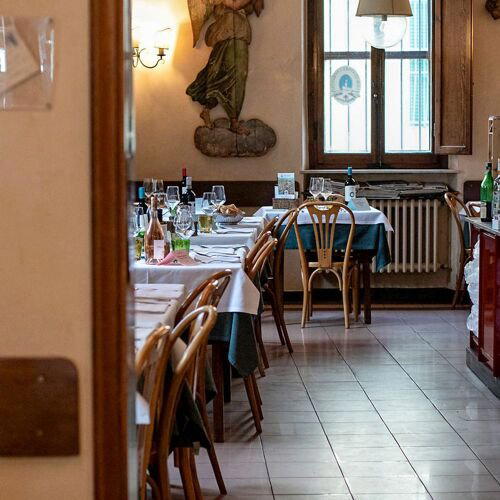
Romantic and elegant with terraced gardens, magical sunset lighting, and charming historic atmosphere.