Michelin Plate
Our verdict
Long March Canteen holds consecutive Michelin Bib Gourmand recognition (2024 and 2025), placing it among a short list of Chinese restaurants in Berlin that have broken through into critical attention. Operating out of Wrangelstraße in Kreuzberg, the kitchen under chef Luis Perez reads as a considered proposition: Chinese cooking priced at €€, in a neighbourhood that rewards exactly that kind of value-anchored seriousness.

Pearl is the En Primeur Club membership app, where members save venues, book tables and use the concierge.
The menu
What to order
- Aubergine
- Shrimp balls
- Duck pancakes
- Caramelised bananas
Kreuzberg's Appetite for Serious Chinese Cooking
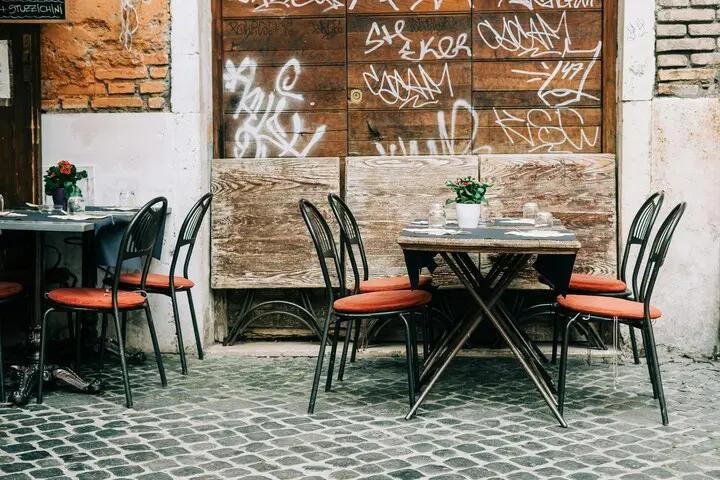
Wrangelstraße is a street that has always moved faster than the postcodes around it. Kreuzberg's eastern edge, where Turkish grocers, Vietnamese canteens, and low-lit bars have coexisted for decades, has a specific tolerance for restaurants that forgo ceremony in favour of substance. Long March Canteen sits inside that tradition. The approach from the street gives nothing away: no marquee signage, no architectural gesture. What draws people in is almost entirely word-of-mouth credibility, now formalised by back-to-back Michelin Bib Gourmand awards in 2024 and 2025.
That Bib Gourmand classification matters here more than it might elsewhere. Berlin's Michelin-recognised Chinese dining is thin. The city's starred tier, occupied by restaurants like Restaurant Tim Raue, leans heavily on individual chef identity and tasting-menu architecture. The Bib Gourmand is a different signal entirely: it marks places where quality and price sit in unusual alignment, where the cooking earns attention on culinary terms without the pricing structure of a special-occasion room. Long March Canteen occupies that bracket alone, or close to it, in the Chinese category across Berlin.
Menu Architecture as Editorial Statement
The structure of a Chinese restaurant's menu is its argument. At the broadest level, Chinese menus reveal their allegiances quickly: regional specificity or crowd-pleasing generalisation, technique-forward or flavour-forward, long and encyclopaedic or tight and edited. The menus that Michelin's Bib Gourmand panel notices tend toward the edited end. They are not offering a dim sum hall's span of choices or a hotpot restaurant's theatre of assembly. They are making selections, which is a form of culinary point of view.
What Long March Canteen signals through its category placement is a kitchen that has chosen definition over breadth. Chef Luis Perez operates at the €€ price tier, which at Berlin's current rates positions the meal well below what neighbouring starred restaurants charge. Compare this to the €€€€ pricing of contemporaries like CODA Dessert Dining, Rutz, or Nobelhart & Schmutzig, and the value proposition becomes clear. The Bib Gourmand was, in effect, Michelin making that price-to-quality observation official.
In Chinese cooking specifically, menu architecture often reflects the chef's regional training and hospitality logic. A kitchen anchored in, say, Sichuan technique will build differently from one drawing on Cantonese or Shanghainese precedent. The format, shared dishes versus individual portions, cooking to order versus pre-prepared components, tells you almost as much as the ingredient list. That is a more useful signal than any individual dish description.
Where Long March Canteen Sits in Berlin's Chinese Dining Picture
Berlin's Chinese restaurant scene covers an unusually wide range. At one end, Chinatown-adjacent operations in Mitte and Charlottenburg run on volume. At the other, a handful of restaurants have made claims to critical recognition. Golden Phoenix represents one version of that ambition. Long March Canteen represents another: embedded in a residential neighbourhood, priced for regular use, and recognised not for luxury positioning but for consistent quality.
The Kreuzberg context shapes the restaurant's identity in ways that a Mitte address would not. Kreuzberg diners have high tolerance for informality and low tolerance for performance. Restaurants that succeed here, over multiple years and across critical cycles, tend to do so because the cooking earns its reputation without the scaffolding of a designed room or a PR-managed profile. That Long March Canteen has held Bib Gourmand status across two consecutive years, rather than a single-year recognition, suggests the kitchen is not coasting.
Internationally, the Chinese restaurant category has undergone substantial critical reappraisal in the past decade. In North America, Mister Jiu's in San Francisco repositioned Chinese-American cooking as a legitimate fine-dining subject. In Japan, VELROSIER in Kyoto operates at a different register entirely. Berlin's version of this critical recognition is quieter, more pragmatic, but no less real. The Bib Gourmand is Michelin's mechanism for acknowledging cooking that does not fit the starred-restaurant model but deserves a place on the serious dining map.
The Broader German Context
Germany's Michelin map is dominated by destination restaurants in smaller cities and spa towns: Schwarzwaldstube in Baiersbronn, Aqua in Wolfsburg, Vendôme in Bergisch Gladbach, ES:SENZ in Grassau. Even the Hamburg tier, where Restaurant Haerlin holds its position, tends toward the formal and the European. Berlin is the outlier in this picture: a city where the Michelin footprint includes not just starred European rooms but neighbourhood restaurants earning recognition for Chinese cooking at accessible price points.
That outlier status is worth noting for readers planning across Germany. If the itinerary includes starred dining in Munich at JAN, the Long March Canteen visit offers a different register entirely: lower spend, neighbourhood setting, Asian culinary tradition. These are not competing choices but complementary ones that map out the actual range of serious eating available in Germany right now.
Planning a Visit
Long March Canteen is at Wrangelstraße 20 in Kreuzberg, a ten-minute walk from the Schlesisches Tor U-Bahn station on the U1 line. The €€ price point makes it a realistic option for multiple visits rather than a single reserved occasion. Arriving early or booking ahead where the restaurant permits it is the sensible approach, particularly on weekend evenings when Kreuzberg foot traffic is highest.
For context on what else the city offers across price tiers and formats, EP Club's full Berlin restaurants guide maps the range. If the visit extends across a longer stay, the Berlin hotels guide, bars guide, wineries guide, and experiences guide cover the surrounding city in the same editorial register.
Frequently asked questions
Would Long March Canteen be comfortable with kids?
Long March Canteen's €€ pricing and Kreuzberg address on Wrangelstraße 20 suggest a relaxed neighbourhood setting rather than a formal dining room, which generally works for families. That said, the restaurant's focus on considered Chinese cooking may suit older children more than very young ones.
Is Long March Canteen formal or casual?
The €€ price band and Kreuzberg location both point to a casual register. This is a Michelin Bib Gourmand recipient for 2024 and 2025, a distinction awarded for quality cooking at moderate prices rather than for formal service or white-tablecloth presentation. Dress expectations align with the neighbourhood: come as you are.
Is Long March Canteen Michelin-listed?
Long March Canteen has received recognition including: Michelin Bib Gourmand (2025); Michelin Bib Gourmand (2024).
What's the signature dish at Long March Canteen?
What is documented is a Michelin Bib Gourmand in both 2024 and 2025, which signals the inspectors found consistent, distinctive cooking across the menu rather than a single showpiece. The cuisine type is Chinese, under chef Luis Perez.
What style of cooking does Long March Canteen do?
Reputation First
Comparable options at a glance, pulled from our tracked venues.
| Venue | Cuisine | Price | Awards | Notes |
|---|---|---|---|---|
| Long March CanteenThis venue (the venue you are viewing) | Modern Cantonese Dim Sum | $30–50 | Michelin Plate | Not listed |
| CODA Dessert Dining | Dessert-Inspired Fine Dining | $200–300 | 2 Michelin Stars · World's 50 Best #79 | Creative |
| Rutz | Modern German Fine Dining | $200–300 | 3 Michelin Stars · La Liste Top Restaurants | Modern European, Modern Cuisine |
| Nobelhart & Schmutzig | Hyper-Local Modern German Fine Dining | $100–150 | 1 Michelin Star · World's 50 Best #59 | Modern German, Creative |
| FACIL | Modern Fusion Fine Dining | $200–300 | 2 Michelin Stars · La Liste Top Restaurants | Contemporary European, Creative |
| Horváth | Modern Austrian Vegetable Cuisine | $200–300 | 2 Michelin Stars · La Liste Top Restaurants | Modern Austrian, Creative |
Recognition history
Dated appearances from independent guides and award organizations, with the underlying list record or original source where available.
Michelin Plate
Michelin · 2026 Michelin Plate
Full recognition history (3 entries)
Michelin Bib Gourmand
Michelin
Michelin Bib Gourmand
Michelin