Restaurant by Hasung Lee
Our verdict
Oh-yacht sits in the smaller tier of New York's serious tasting-menu rooms: an eight-course contemporary seasonal format from chef Hasung Lee, operating at a remove from the city's more publicized fine-dining circuit. The format rewards patience and attention rather than spectacle, placing it closer in sensibility to the restrained, counter-focused dining rooms that have redefined the category over the past decade.

Pearl is the En Primeur Club membership app — saves, bookings, and concierge access live there. Same editors, same standards.
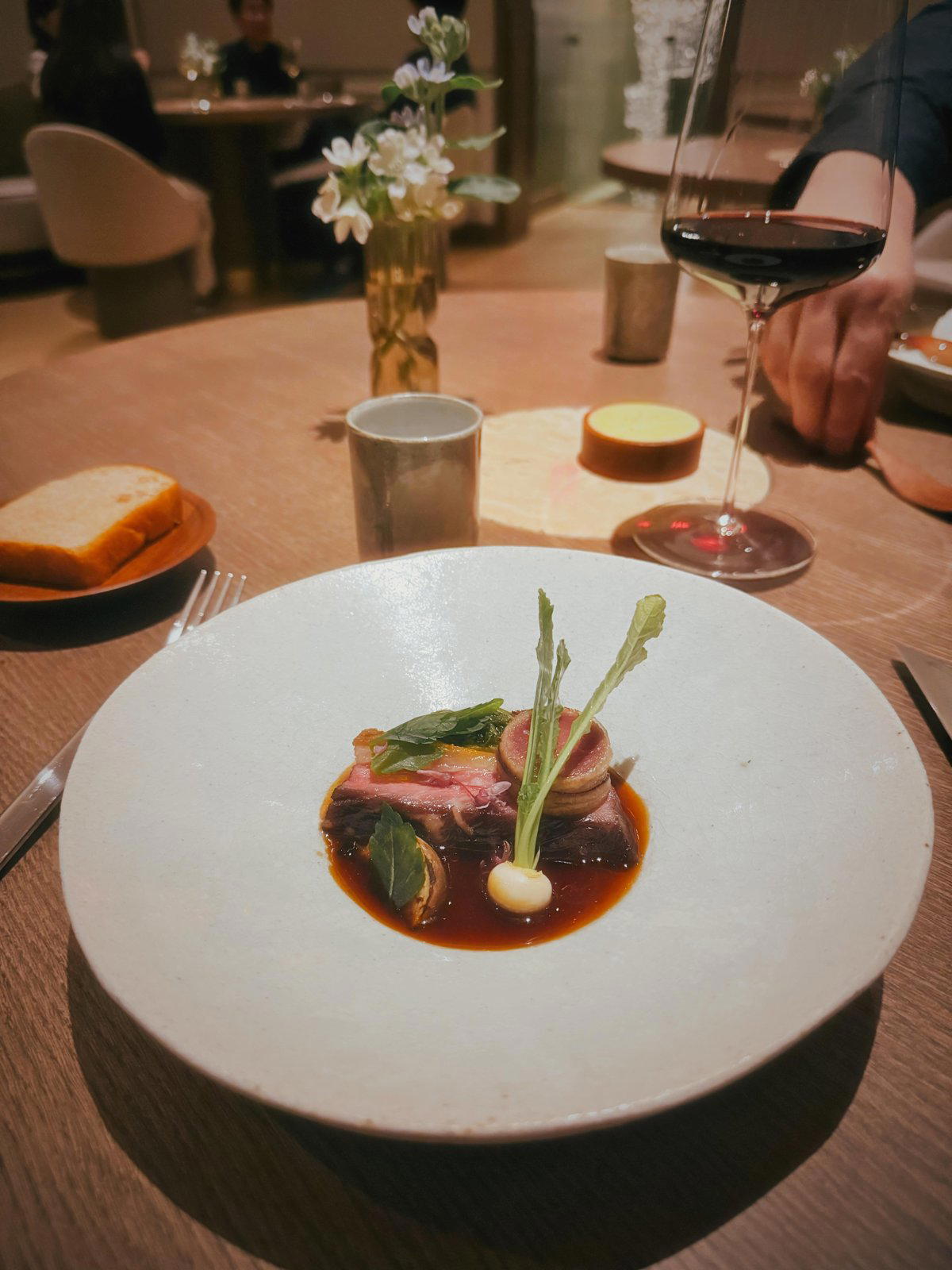
A Tasting Menu Built Around Restraint
New York's tasting-menu tier has spent the better part of a decade sorting itself into legible camps. At one end sit the long-established French-lineage rooms: Le Bernardin, Per Se, and their institutional peers, where the architecture of the meal is as rehearsed as the cooking. At the other end, a smaller cohort of contemporary seasonal rooms has emerged, operating with lower public profiles but drawing from a defined core audience that tracks chef lineage and seasonal sourcing more closely than tablecloth count. Restaurant by Hasung Lee, which its founder spells phonetically as oh-yacht, occupies a position in that second camp.
The eight-course format is the primary structural signal here. In a city where the tasting menu has expanded toward maximalism at some addresses and contracted toward four-course accessibility at others, a fixed eight-course contemporary seasonal sequence represents a considered middle register. It is long enough to build a coherent argument through produce and technique, short enough to avoid the kind of pacing fatigue that longer menus sometimes produce. Comparably positioned rooms like Saga and César operate in related formats, and the market for this type of serious but not monumental progression has deepened considerably in New York over the past five years.
The Physical Container
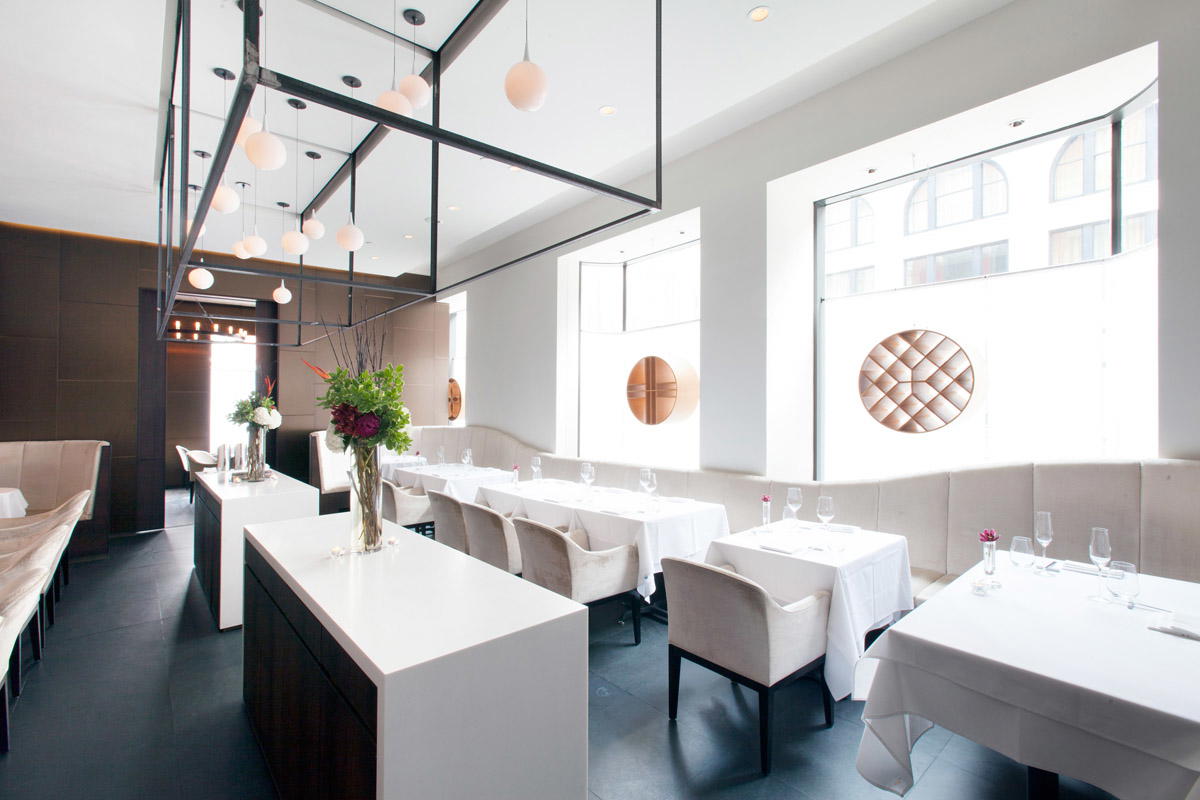
In New York's fine-dining category, the room is often the first editorial statement a restaurant makes. The city has moved through several waves of dining-room philosophy: the grand banquette era, the stripped-back downtown loft period, the intimate counter moment that followed the rise of Japanese omakase culture. What each of these phases shared was an architecture that communicated something clear about the meal before a single dish arrived.
Oh-yacht's contemporary seasonal format suggests a room designed to keep the focus on the plate rather than on spectacle. The spaces that work leading for this kind of cooking tend toward small capacity, controlled acoustics, and a seating arrangement that keeps the diner oriented toward the food rather than the scene. Rooms of this type in New York, from Masa's famously spare hinoki counter to the more intimate corners of the city's chef-driven tasting rooms, have consistently demonstrated that reduction in visual noise correlates with heightened attention to what arrives on the table.
The design logic of a serious tasting-menu room also shapes the service dynamic. When the architecture strips away distraction, the interaction between the kitchen and the guest becomes more legible. Courses arrive in a sequence that reads as deliberate, and the physical proximity of a small room to its kitchen tends to create a transparency about timing and preparation that larger, more theatrical rooms cannot easily replicate. This is a different kind of dining experience than what Alinea in Chicago pursues through spatial drama, or what The French Laundry in Napa achieves through its garden-estate setting. The intimacy here is of the pared-back urban variety, where the meal itself does the architectural work.
Seasonal Cooking in a City That Tests It
New York is one of the harder cities in which to anchor a menu to genuine seasonality. The urban supply chain is long, the temptation to source globally is constant, and the city's dining audience is sophisticated enough to notice when seasonal positioning is performative rather than structural. The restaurants that have made seasonality a genuine organizing principle, rather than a menu descriptor, tend to be the ones where the kitchen is changing its approach frequently enough that a return visit three months later delivers a meaningfully different experience.
At those addresses, the menu's relationship to the calendar is built into the sourcing model, and the kitchen's vocabulary shifts accordingly. Whether oh-yacht operates at that level of sourcing discipline is a question the room's track record will answer as its public profile develops, but the format signals an intention to compete in that register rather than the more static prix-fixe world.
For context, the American tasting-menu conversation has been shaped significantly by how chefs with Asian training backgrounds have reoriented the seasonal argument: not always toward French produce hierarchies, but toward different ingredient relationships, fermentation timelines, and textural contrasts that carry their own internal logic. Providence in Los Angeles has demonstrated how a serious seasonal commitment can coexist with a strong Pacific identity; internationally, rooms like 8½ Otto e Mezzo Bombana in Hong Kong and Alain Ducasse at Louis XV in Monte Carlo show how differently the tasting-menu form can be deployed across culinary traditions. Oh-yacht's positioning as a contemporary seasonal room with a Korean-named chef suggests its own synthesis is worth watching as the format matures.
Where It Sits in the New York Dining Map
The New York fine-dining market is not short of eight-course fixed menus, but it is short of ones that operate outside the established reputation infrastructure. Rooms that carry Michelin recognition, James Beard nominations, or sustained press cycles have a legibility that newer entrants must work to build. Oh-yacht, at this stage, belongs to the category of rooms that serious diners track ahead of institutional recognition: addresses where the cooking is the discovery rather than the credential.
That position in the market has its own logic. Diners who found early tables at rooms that later accumulated awards know that the period before recognition often produces the most attentive service and the most accessible booking windows. The tasting-menu rooms that later earned three Michelin stars, including addresses in New York's own competitive set, were once exactly this kind of low-profile, format-serious operation. The parallel is not a prediction, but it is a reason to pay attention now rather than later.
For a fuller map of where oh-yacht sits among New York's restaurant options, the EP Club New York City restaurants guide covers the range from casual to tasting-menu serious. Those planning a longer stay should also consult the New York City hotels guide, the bars guide, the wineries guide, and the experiences guide for a broader picture of the city's offering. Beyond New York, comparable tasting-menu formats worth benchmarking include Emeril's in New Orleans for its long-running seasonal American approach.
Know Before You Go
- Format: Eight-course contemporary seasonal tasting menu
- Name pronunciation: Oh-yacht
- Cuisine: Contemporary seasonal
- Booking: Reservation details; check the venue's current channels
- Dress code: Not specified; tasting-menu context suggests smart casual at minimum
- Location: New York City; specific address not publicly listed at time of publication
Frequently asked questions
What do regulars order at Restaurant by Hasung Lee (pronounced 'oh-yacht')?
The format removes that choice entirely. Restaurant by Hasung Lee operates as a fixed 8-course contemporary seasonal tasting menu, meaning every guest at the table follows the same progression. There is no à la carte selection, so the kitchen controls the arc of the meal from first course to last.
Can I walk in to Restaurant by Hasung Lee (name pronounced 'oh-yacht')?
Reservations are recommended for Restaurant by Hasung Lee (name pronounced 'oh-yacht') in New York City. Confirm current policy via the venue's official channels.
Comparable Venues
Comparable venues nearby, for context on price, style, and recognition.
| Venue | Cuisine | Price | Awards | Notes |
|---|---|---|---|---|
| Restaurant by Hasung LeeThis venue — the venue you are viewing | Modern Korean Fine Dining | Not listed | Not listed | Not listed |
| NUBIANI | Modern Korean BBQ | $50–100 | Not listed | Midtown South-Flatiron-Union Square |
| Jung Sik Dang | Modern Korean Fine Dining | $200–300 | 3 Michelin Stars · World's 50 Best #18 | Tribeca-Civic Center |
| Cote | Korean Steakhouse | $50–100 | 1 Michelin Star · Star Wine List | Flatiron |
| Osamil | Modern Korean Gastropub | $50–100 | Not listed | Midtown South-Flatiron-Union Square |
| Unidentified Flying Chickens - JH | Korean Fried Chicken | $20–30 | Not listed | Elmhurst |
Continue exploring
More in New York City
Restaurants in New York City
All restaurants in New York City →
Bars in New York City
All bars in New York City →
Hotels in New York City
All hotels in New York City →
Wineries in New York City
All wineries in New York City →
Restaurant by Hasung Lee
The wine
- Wine program
- Curated wine list
Details
- Elegant
- Sophisticated
- Modern
- Intimate
- Special Occasion
- Date Night
- Celebration
- Open Kitchen
- Standalone
- Farm To Table
- Local Sourcing
- Sustainable Seafood
- Tasting Menu
- Vegetarian Friendly
- Allergy Accommodating
Refined and minimalist, reflecting the restaurant's philosophy of restraint and clarity with an emphasis on ingredient-focused dining.