
Ramen Jinsei JET belongs to Osaka’s compact, high-turnover ramen culture rather than its long-form dining circuit. Its Tabelog 100 - Ramen - OSAKA - 2025 selection, counter-led room, and focus across ramen, tsukemen, abura-soba, and maze-soba place it in the serious noodle tier of Fukushima Ward.
Pearl is the En Primeur Club membership app — saves, bookings, and concierge access live there. Same editors, same standards.
- Address
- 7 Chome-12-2 Fukushima, Fukushima Ward, Osaka, 553-0003, Japan
- Phone
- +81 6-6345-7855
- Website
- twitter.com
 Saves & bookings on Pearl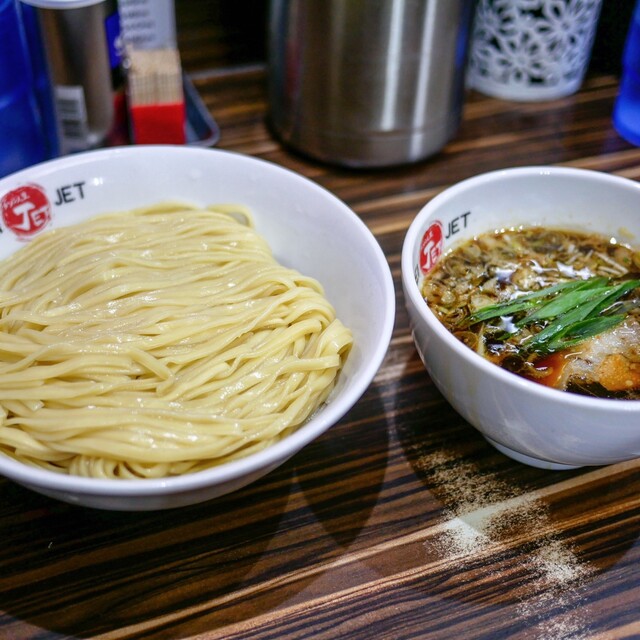
Approaching a serious ramen shop in Osaka often means reading the room before reading the menu: the meal-ticket machine, the counter rhythm, the quick turnover, the small decisions made before sitting down. In Fukushima Ward, where rail-side streets move from office lunch to after-work eating without much ceremony, Ramen Jinsei JET fits the city’s noodle grammar: compact, direct, and built around a bowl rather than a prolonged evening.
Osaka ramen does not carry the same singular shorthand as Sapporo miso or Hakata tonkotsu, which makes its stronger shops more interesting. The city rewards variety, from dipping noodles to soup ramen to oil-based bowls, and the local audience is quick to separate daily-use comfort from destination-level precision. A Tabelog 100 - Ramen - OSAKA - 2025 selection gives this address a useful signal inside that crowded field, especially because ramen rankings in Japan tend to reflect repeated local scrutiny rather than luxury markers.
Fukushima's ramen counter culture, measured by speed and repetition
Fukushima’s dining identity is broader than ramen. The area can support casual noodle counters, coffee rooms, bistros, and higher-spend dinner addresses within a few blocks, which is why the neighbourhood works well for visitors trying to understand Osaka beyond Dotonbori shorthand. For a wider local map, Our full Fukushima restaurants guide gives the better overview, while nearby categories such as Our full Fukushima hotels guide, Our full Fukushima bars guide, Our full Fukushima wineries guide, and Our full Fukushima experiences guide show how dense the ward has become for short-stay planning.
The useful comparison is not with white-tablecloth Osaka, but with the neighbourhood’s own spending bands. Sakenameshi Brio and Sumiyaki Kobou Gen sit in a dinner bracket many times higher, while Mitsuboshi Seimenjo Fukushima honten occupies the low-cost noodle lane. Ramen Jinsei JET belongs to the latter conversation in format, but its repeated award recognition pushes it into a more selective ramen subset. That matters because ramen in Japan is often judged on repeatability: whether the bowl can sustain attention through regular visits, not whether it can stage a special occasion.
The category spread also says something about contemporary Osaka noodle dining. Ramen, tsukemen, abura-soba, and maze-soba cover four related but distinct habits: soup, dipping, oil-dressed noodles, and mixed noodles. A shop working across those forms enters a competitive space where texture, temperature, and seasoning balance carry as much weight as broth identity. This is not the long tasting-menu language of modern Japanese fine dining; it is a more compressed discipline, closer to the calibration of a coffee bar or sushi counter than to a restaurant built around leisurely pacing.
Why the Tabelog 100 signal matters for a low-cost bowl
Japan’s ramen culture is unusually democratic in price and unusually severe in judgment. A small counter can attract serious attention without changing into a luxury product, and that is part of the category’s appeal. The Tabelog 100 selection places this shop among Osaka ramen addresses that have drawn sustained user attention and editorial sorting, but the experience remains rooted in the everyday mechanics of the genre: tickets, counter seats, tight service choreography, and little need for extra theatre.
The room format reinforces that reading. With counter seating and a small number of table seats, the experience is closer to an efficient noodle bar than a linger-and-order setting. That distinction is important for travellers used to equating recognition with formality. Here, recognition points to execution within a casual Japanese dining structure. Children are welcomed, which gives the address a different profile from many cramped counter-only ramen shops, though the tempo remains urban and meal-focused.
There are practical cultural cues worth understanding before arrival. Meal tickets are used, hard noodles are not accepted, and payment is cash-led rather than card-led. None of these details is unusual in Japan’s ramen world; they are part of a system designed to keep the line moving and the kitchen focused. The absence of a restroom inside the shop is another reminder that high-functioning ramen counters often operate with minimal spatial surplus. The comfort comes from efficiency, not from hotel-style amenities.
Reading it within Osaka's broader food map
For visitors building a wider Osaka itinerary, this is the kind of stop that explains the city’s appetite for specialization. Nearby and citywide alternatives move in different directions: age, Agu Buta Shabushabu Senmon Ten Toriou Bettei, Asia Shokudo Chouku, Bistro Mikasa, CAFE BAHNHOF, and.cafe in Osaka each point to a different rhythm of eating. The ramen counter sits at the faster, more concentrated end of that spectrum.
Japan’s casual dining strength is that modest formats can carry serious technique without asking the diner to perform ceremony. That pattern appears far beyond Osaka, from -Grilled beef Sukiyaki- KAMAKURA TANUKIAN 鎌倉 たぬき庵 in Kamakura to. 鮪と炭火焼き うお炭 秋葉原店 in Tokyo.know in Kumamoto, (Shoku) Vietnam in Kawasaki, and [Curry Senmon Ten] Maruyama Kyoju. in Sapporo. Outside Japan, places such as Jōdo Saké Bar in Los Angeles and Onigiri Time in Pasadena show how Japanese casual formats travel, though Osaka’s ramen counters remain tied to a local expectation of speed, value, and repeat precision.
The editorial case for Ramen Jinsei JET is therefore not grandeur. It is the way a small Fukushima noodle shop sits inside one of Japan’s clearest food traditions: low-cost, high-frequency eating judged by a demanding audience. The award signal helps filter the city’s crowded ramen field, but the better reason to pay attention is cultural. Osaka’s food reputation is built as much on compact, everyday rooms like this as on celebratory restaurants, and ramen remains one of the cleanest ways to see that hierarchy in action.
Booking and Cost Snapshot
Comparable venues by cuisine and price in the same metro.
| Venue | Cuisine | Price | Notes |
|---|---|---|---|
| Ramen Jinsei JET | Fukushima, Japanese Ramen | $ | Not listed |
| KANNOSUKE | Not listed | $ | Fukushima, Yoshoku (Japanese-style Western cuisine) & Hamburg steak |
| Spice Curry Tairiku | Fukushima, Osaka-style spice curry | $ | Not listed |
| Resshi Shoyu Menkobo Sanku | Fukushima, Niboshi shoyu ramen shop | $ | Not listed |
| Shoku Pan Kobo Rami Fukushima honten | Fukushima, Japanese shokupan bakery | $ | Not listed |
| Ponshuya Santoku Rokumi Fukushima honten | Not listed | $$ | Fukushima, Standing Japanese sake bar & izakaya |
Recognition history
Dated appearances from independent guides and award organizations, with the underlying list record or original source where available.
Tabelog 100 #62 · No. 62
Tabelog · Tabelog 100 - Ramen - OSAKA - 2025
Continue exploring
More in Fukushima
Restaurants in Fukushima
Browse all →




Bars in Fukushima
Browse all →




Hotels in Fukushima
Browse all →



Wineries in Fukushima
Browse all →
At a Glance
- Energetic
- Classic
- Well Known
- Cozy
- Solo
- Casual Hangout
- Group Dining
- Standalone
- Beer Program
Current opening hours
- Monday
- 11 AM–3 PM, 6–10 PM
- Tuesday
- 11 AM–3 PM, 6–10 PM
- Wednesday
- 11 AM–3 PM, 6–10 PM
- Thursday
- 11 AM–3 PM, 6–10 PM
- Friday
- 11 AM–3 PM, 6–10 PM
- Saturday
- 11 AM–3 PM, 6–10 PM
- Sunday
- 11 AM–3 PM, 6–10 PM
Hours can change for holidays and private events. Last verified .
Busy, no-frills ramen shop atmosphere with a focused, high-energy feel centered on the counter and quick turnover.