Our verdict
Raskolnikoff occupies a storied address on Böhmische Strasse in Dresden's Neustadt quarter, a neighbourhood that has long functioned as the city's counterculture corridor. The venue draws from a tradition of unhurried, deliberate dining that resists the tempo of tourist-facing restaurants, placing it in a distinct tier within Dresden's eating scene. Regulars return for the ritual of the meal as much as the food itself.

Pearl is the En Primeur Club membership app, where members save venues, book tables and use the concierge.
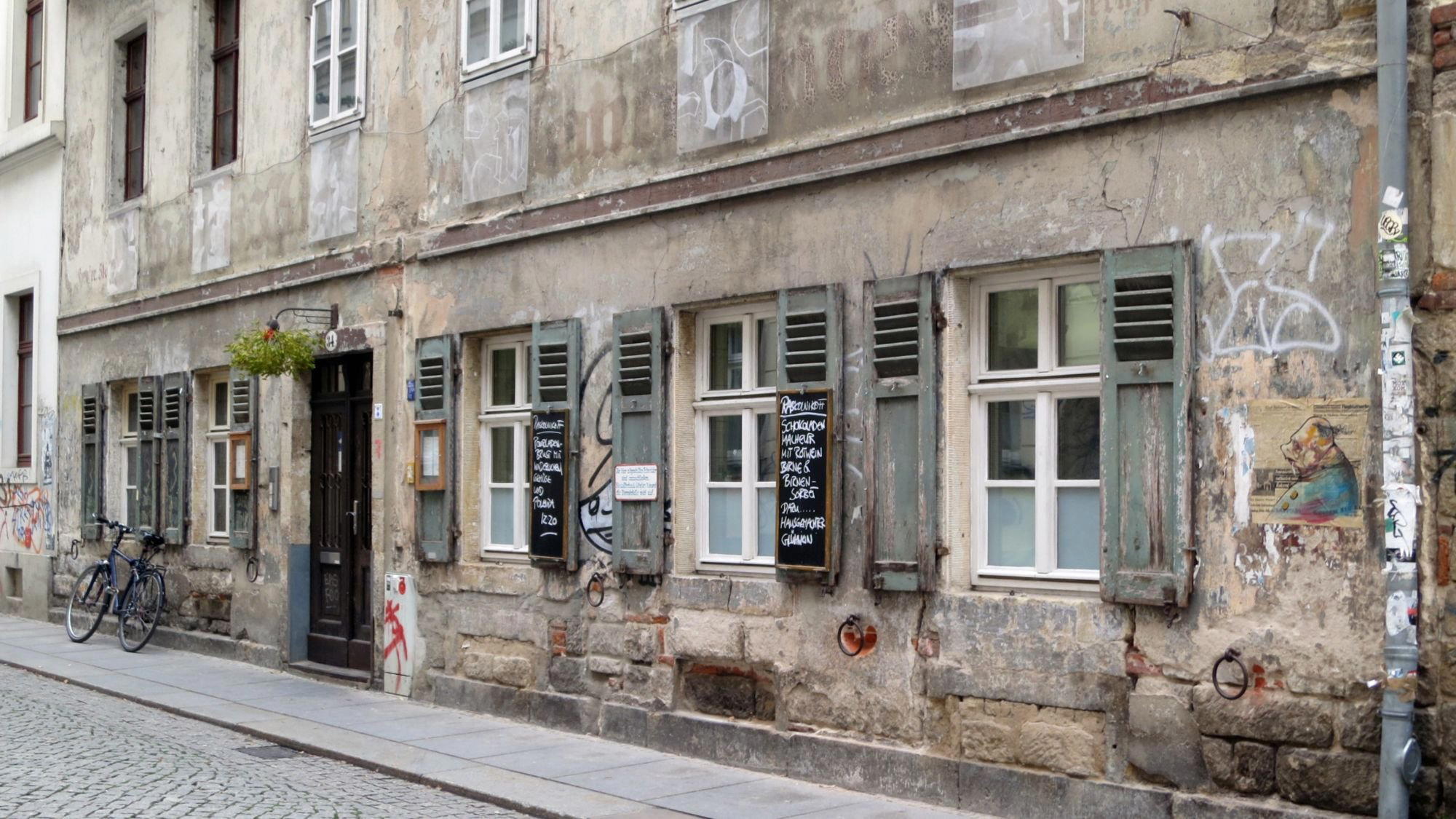
Böhmische Strasse and the Neustadt Dining Ritual
Dresden's Neustadt district operates on a different register than the baroque reconstruction across the Elbe. Böhmische Strasse, where Raskolnikoff sits at number 34, is one of the neighbourhood's quieter residential threads, the kind of address that filters out casual foot traffic and rewards those who arrive with intent. In cities where dining culture has depth, certain streets function as landmarks not because of volume but because of accumulated character, and this stretch of the Neustadt has that quality.
The name itself signals something. Dostoevsky's tortured protagonist, guilt and moral weight compressed into a single word above a door, it frames the register of what follows before you've crossed the threshold. That kind of literary self-positioning is common in Central European café and restaurant culture, where the room is expected to carry intellectual weight alongside its food and drink. Raskolnikoff leans into that tradition rather than treating it as mere decoration.
How Dresden's Neustadt Frames the Meal
Dresden's dining scene divides along a clear axis. On one side sit the formal fine-dining addresses, several of them carrying serious recognition: venues like elements and Genuss-Atelier operate within the modern European tasting-menu format, with structured progression, wine pairings, and the tempo that comes with a multi-course choreography. Heiderand and [m]eatery occupy other registers within the city's offer. On the other side sit the Neustadt's neighbourhood rooms, which operate by different rules, where the pacing is set by the guest, not by a kitchen's tasting structure, and where the ritual of a long evening is the product being sold as much as any individual dish.
Raskolnikoff belongs to that second category, and within it, it occupies a position shaped by three decades of neighbourhood presence. That kind of longevity in a restaurant district creates its own trust signal: guests return not because the room has been recently refurbished or a new chef has been appointed, but because the experience has proven consistent across years of visits. In German dining culture, particularly outside the formal fine-dining tier, this durability carries weight.
For comparison, the formal end of Dresden's spectrum, venues like Bülow Palais with its German fine-dining approach, operates within an entirely different set of expectations around dress, booking, and course structure. Raskolnikoff and its Neustadt peers represent a parallel tradition: the serious neighbourhood room where the meal unfolds at its own pace, driven by conversation and appetite rather than service choreography.
The Customs of the Long Meal
Central European café-restaurant culture has its own distinct dining ritual, one that differs meaningfully from both French brasserie habits and Scandinavian new-wave tasting formats. The expectation is that you arrive, settle, and stay. Tables are not turned on a schedule. The gap between courses is not managed by the room, it belongs to the guest. This is the tradition that Raskolnikoff operates within, and it shapes the entire experience from the moment you take a seat.
In this format, the role of the menu is different. Rather than a curated progression designed to build and resolve, it functions as a set of options from which a meal is assembled according to mood, hunger, and the rhythm of the evening's conversation. That places greater weight on the individual dish's integrity and on the depth of the drinks list, since both will be interrogated across a longer timeline than a two-hour tasting format would permit.
This approach to dining has its counterparts across German-speaking Europe, and its logic becomes clear when placed against the more tightly structured formats at venues like Aqua in Wolfsburg, JAN in Munich, or Schwarzwaldstube in Baiersbronn. Those rooms ask the guest to surrender to a predetermined arc. The Neustadt tradition inverts that relationship, and Raskolnikoff's longevity suggests there is consistent demand for exactly that inversion in Dresden.
Dresden Within Germany's Broader Fine Dining Map
Germany's serious dining scene extends well beyond its major metropolitan centres. Venues such as CODA Dessert Dining in Berlin, Vendôme in Bergisch Gladbach, ES:SENZ in Grassau, Victor's Fine Dining by christian bau in Perl, Waldhotel Sonnora in Dreis, Restaurant Haerlin in Hamburg, and Schanz in Piesport demonstrate that the country's highest-recognition dining is distributed across regions rather than concentrated in a single capital. Dresden's contribution to that map sits at the neighbourhood and mid-tier level more than at the Michelin-starred end, but that reflects the city's dining culture as much as any gap in ambition.
For visitors accustomed to the precision formats at Le Bernardin in New York City or the tasting-card ritual at Atomix in New York City, the shift to a Neustadt neighbourhood room requires a recalibration of expectation. The metrics are different. Success here is measured in the quality of two hours spent over food and drink without any obligation to vacate, not in the precision of a sauce or the geometry of a plated course.
Planning a Visit
Raskolnikoff is located at Böhmische Strasse 34, 01099 Dresden, in the heart of the Neustadt quarter. The address is walkable from the Albertplatz tram hub and from most Neustadt accommodation. Given the neighbourhood's density of bars and restaurants, the area is well-suited to an evening that begins or ends elsewhere, the Neustadt rewards extended, unhurried exploration rather than single-destination visits. For current opening hours, reservation options, and menu information, visiting the venue directly or checking current local listings is the most reliable approach, as operational details are subject to change. Our full Dresden restaurants guide provides broader context on where Raskolnikoff sits within the city's dining offer and which other addresses complement a visit to this part of the Neustadt.
Frequently asked questions
Where do I go for Raskolnikoff?
Raskolnikoff is located at Böhmische Str. 34, 01099 Dresden, Germany, Dresden.
What do regulars order at Raskolnikoff?
Regulars at this type of Central European institution tend to settle in for the long haul, drinks first, a main course timed to conversation, something to finish. The address at Böhmische Strasse 34 puts it within a cluster of similar establishments in Dresden's Neustadt quarter, which means the ordering culture here is shaped as much by the room as by any single dish.
What's the best way to book Raskolnikoff?
For Neustadt addresses of this type, walk-in visits during off-peak hours, mid-afternoon or early evening on weekdays, tend to yield seats without a reservation. Checking directly via a local search or mapping platform for current contact details is the most reliable approach before visiting.
Style and Standing
| Venue | Cuisine | Price | Awards | Notes |
|---|---|---|---|---|
| RaskolnikoffThis venue (the venue you are viewing) | Regional Saxon-Russian Fusion | $20–30 | Not listed | Not listed |
| elements | Modern European-Asian Fusion Fine Dining | $50–100 | 1 Michelin Star · Wine Spectator Award of Excellence | Modern Cuisine |
| Genuss-Atelier | Modern Creative German Fine Dining | Not listed | 1 Michelin Star | Modern Cuisine |
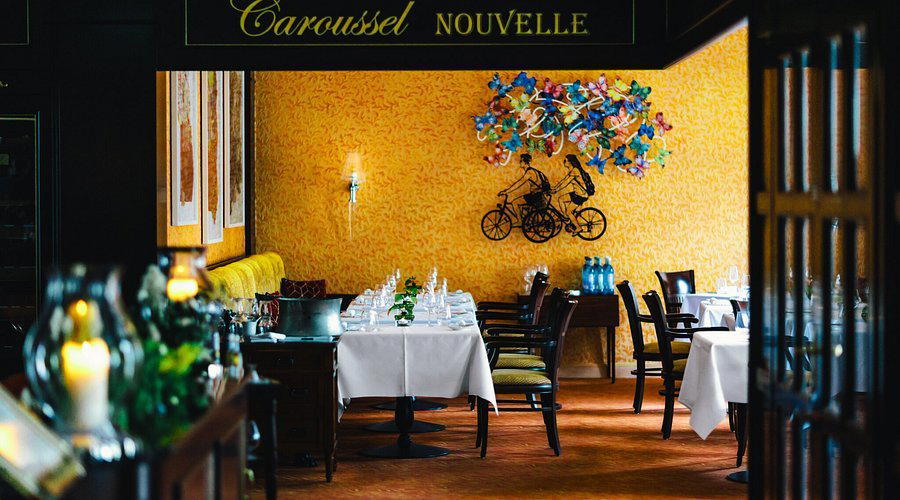
| Caroussel Nouvelle | French Bistro with Saxon Influences | Not listed | Michelin Plate · Relais Chateaux Award | Not listed |
| Schmidt's | Modern German Regional Fine Dining | $30–50 | Michelin Plate | Not listed |
| Bülow Palais | Modern French Fine Dining | $150–200 | Relais Chateaux Award | Not listed |
Continue exploring
More in Dresden
Restaurants in Dresden
All restaurants in Dresden →
Bars in Dresden
All bars in Dresden →

Details
- Cozy
- Rustic
- Intimate
- Casual Hangout
- Group Dining
- Garden
- Open Kitchen
- Historic Building
- Beer Program
- Local Sourcing
- Garden
- A La Carte
- Beer
- Vegetarian Friendly
- Vegan Options
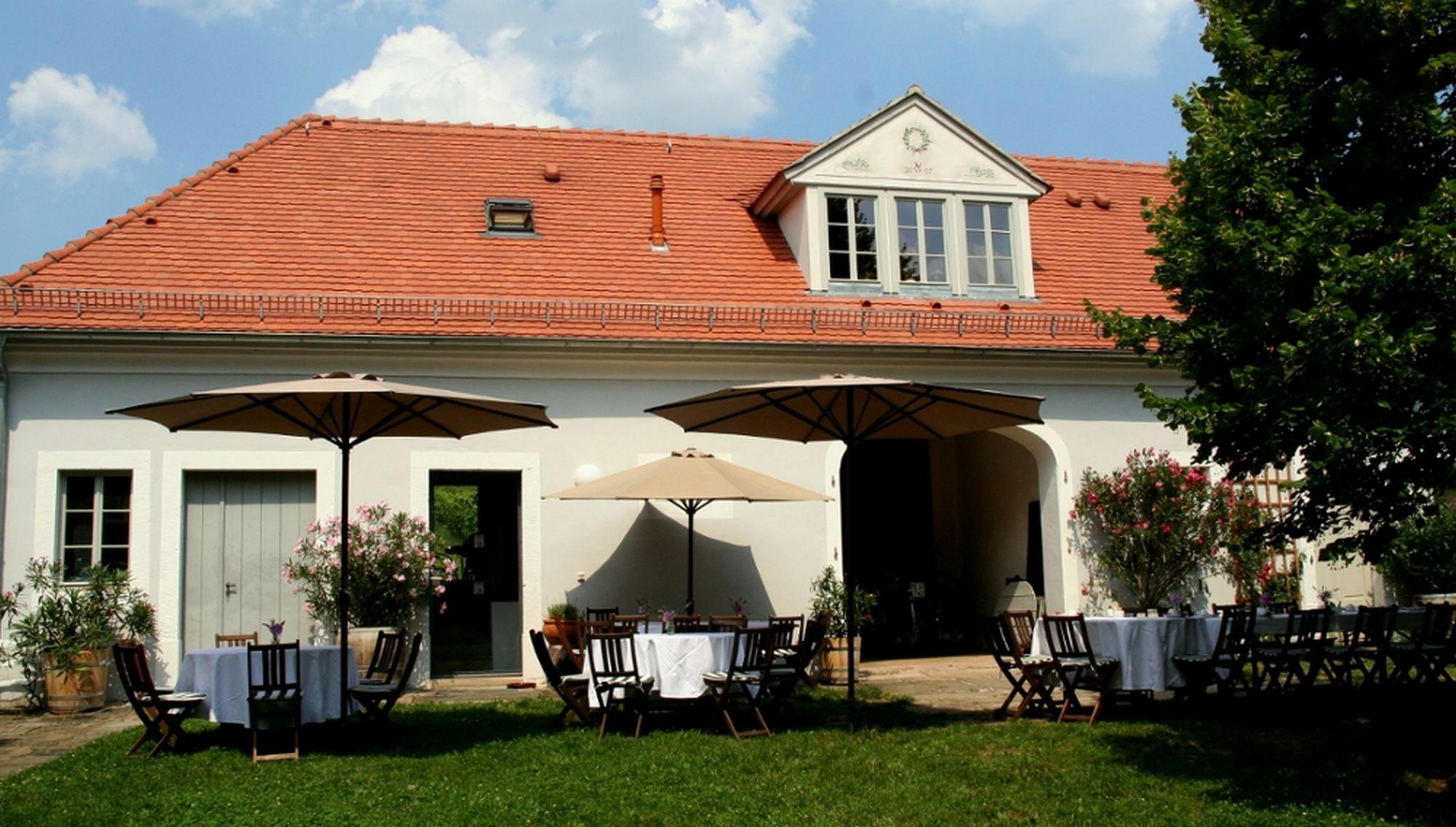
Warm, relaxing pub-like dining room with cozy charm, open kitchen, and a beautiful garden courtyard praised for its romantic and comfortable atmosphere.