RAS Plant Based
Our verdict
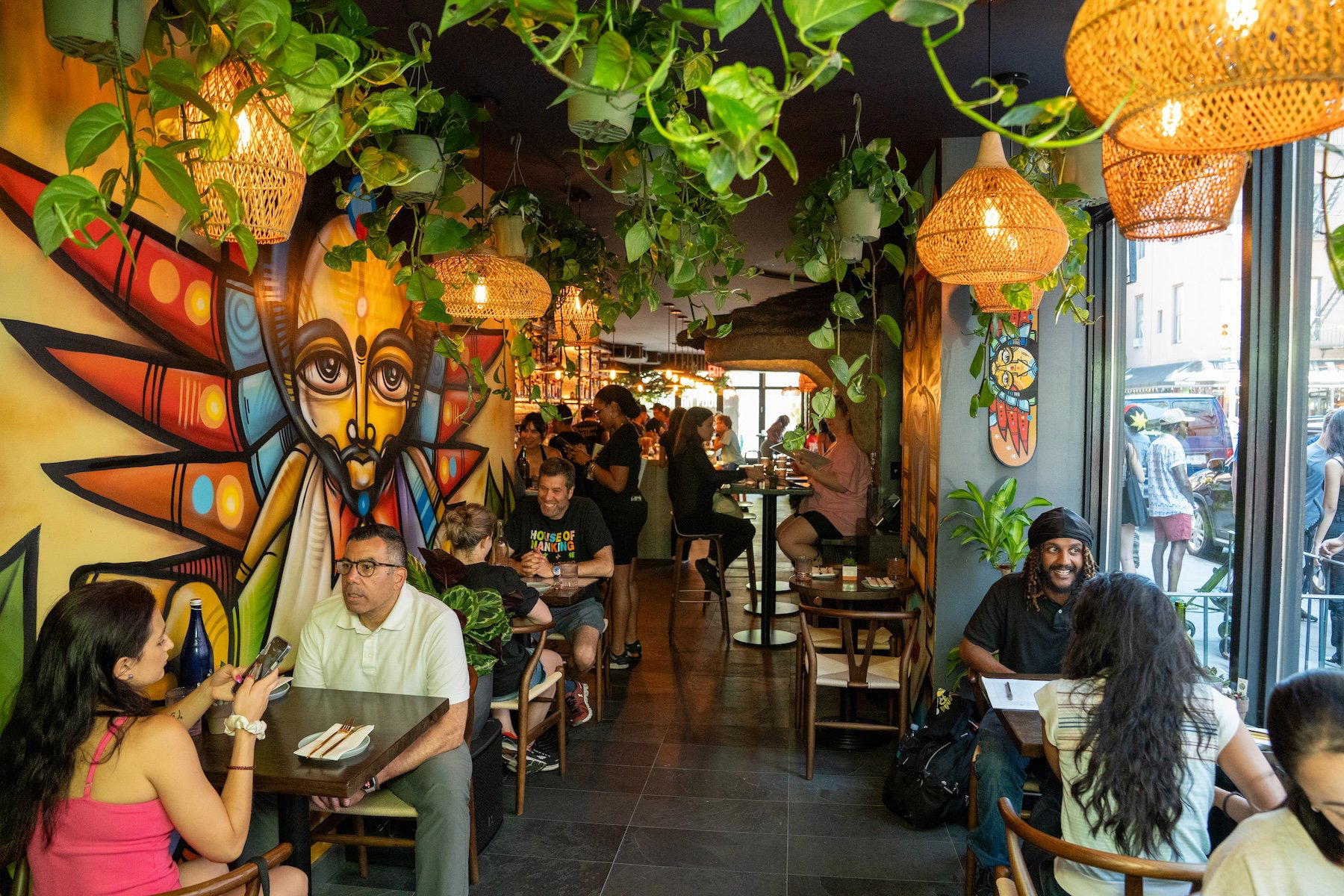
On Franklin Avenue in Crown Heights, RAS Plant Based occupies a corner of Brooklyn's plant-forward dining scene that draws on Ethiopian culinary tradition as its structural backbone. Where many vegan restaurants default to California-coded bowl formats, RAS works from a different reference point, one rooted in spice logic, fermentation, and communal eating that predates the current wellness moment by centuries.

Pearl is the En Primeur Club membership app, where members save venues, book tables and use the concierge.
The menu
What to order
- Grand Mercato Platter
- Mushroom Tibs
- Mama's Tofu
Crown Heights and the Plant-Based Question
Brooklyn's plant-based dining conversation tends to cluster in Williamsburg and Park Slope, where the format often means grain bowls with oat milk on the side. Crown Heights operates differently. The neighbourhood carries a cultural density, Caribbean, East African, and Caribbean-American communities layered across decades, that shapes what gets cooked and how it gets eaten. Franklin Avenue, where RAS Plant Based sits at 739, is part of a corridor that has absorbed new restaurant openings without losing the demographic texture that makes it worth eating in. That context matters for understanding what RAS is doing and why it reads as something other than a wellness-coded plant restaurant.
The broader shift in American plant-based fine dining has produced two distinct currents. One runs through French-technique institutions: Eleven Madison Park rebuilt its entire menu around plant ingredients in 2021, deploying classical French infrastructure to reframe vegetables as luxury objects. The other current, smaller and less discussed in national food media, draws on non-European culinary traditions where plant-forward eating was never a departure, it was the baseline. RAS belongs to the second current.
Ethiopian Foundations as Technique, Not Theme
Ethiopian cuisine is structurally plant-dominant in ways that most Western vegetarian traditions are not. The spice blends, the fermented injera base, the stew-logic of dishes like misir wat and gomen, these are not adaptations of meat-based cooking. They are complete systems built around legumes, greens, and grains that have been refined over centuries. When a restaurant draws on that tradition, it is not applying global technique to local ingredients in the way that, say, a Peruvian-Japanese fusion kitchen does. It is working from a culinary grammar that already knows how to make plant ingredients the full subject of a meal.
This is the editorial angle that distinguishes RAS from the broader Brooklyn plant-based field. The comparison is not to Le Bernardin or Per Se, where classical European frameworks govern the plate. The relevant comparison set is restaurants that treat a non-European culinary tradition as architecture rather than accent, places where the imported method is the local method, and the ingredients are read through that lens rather than through a Manhattan fine-dining filter. In New York, that is a smaller group than the volume of plant-based openings would suggest.
Across American fine dining more broadly, the most interesting plant-forward work is happening where technique and tradition are genuinely fused rather than decoratively combined. Blue Hill at Stone Barns in Tarrytown works from soil-up agricultural logic. Single Thread Farm in Healdsburg draws on Japanese kaiseki structure applied to Northern California produce. Smyth in Chicago uses its own farm as a sourcing anchor. In each case, the plant-forward premise is held up by a specific culinary tradition, not just a dietary category. RAS operates on a comparable logic, with Ethiopian cooking as the structural reference rather than a European one.
The Crown Heights Dining Position
Franklin Avenue's restaurant strip has developed steadily over the past decade, with enough openings to constitute a destination rather than a detour. For visitors oriented around Manhattan's established fine-dining tier, Atomix, Masa, and their peers, Crown Heights represents a different register: neighbourhood-scaled, community-embedded, and priced accordingly. RAS fits within that register. It is not competing for the same reservation window as a $400-per-head omakase counter, nor is it trying to. The value proposition is different and more closely tied to what the neighbourhood actually produces culturally.
For a fuller map of where RAS sits within the city's broader plant-forward and neighbourhood dining picture, the EP Club New York City restaurants guide covers the full range of price tiers and culinary traditions across all five boroughs.
The comparative frame extends beyond New York. Plant-forward restaurants built on non-European culinary traditions are emerging across American cities. Providence in Los Angeles works from a seafood-heavy framework, but the broader LA plant-based scene has absorbed Persian, Korean, and Japanese influence in ways that Manhattan's has not. Addison in San Diego draws on Southern California's proximity to Baja's agricultural output. The question of what counts as plant-based cuisine, and which traditions get credited for inventing it, is one the American restaurant industry is still working out. RAS is part of that argument, making it from Brooklyn rather than from a white-tablecloth room.
What the Format Signals
Restaurants built around communal eating formats, shared plates, injera as the shared surface, dishes meant to be pulled apart at the table, resist the conventions of fine-dining review culture in useful ways. You cannot really evaluate a meal at a place like this by tasting a single dish in isolation. The point is the combination, the order of eating, the way fermented bread interacts with spiced stew, the way one dish cuts the richness of another. That is a different kind of culinary intelligence than what gets rewarded by most American award systems, which tend to favour individual plate composition over systemic meal logic.
Fine-dining destinations that have earned structural recognition for systemic thinking include Lazy Bear in San Francisco, which runs its service as a single communal experience rather than individual-table dining, and The French Laundry in Napa, where the sequence of a meal is treated as the primary creative unit. Both operate at a price tier far above RAS, but the underlying thinking, that a meal is a system, not a collection of dishes, is shared. Frasca Food and Wine in Boulder makes a comparable argument through Friulian hospitality conventions applied to a Colorado context.
Planning Your Visit
RAS Plant Based is located at 739 Franklin Ave in Crown Heights, Brooklyn, accessible via the A/C trains to Franklin Avenue or the S train on the same stop. Crown Heights is a direct neighbourhood to spend a full evening in, with enough adjacent bars and coffee spots to build an itinerary around the meal. Booking details and current hours are best confirmed directly through the restaurant's social channels or via OpenTable and Resy searches, as specific operational data is subject to change. For visitors whose New York dining itinerary also includes European-rooted fine dining at houses like Emeril's or tradition-rooted European references like Atelier Moessmer and Dal Pescatore, RAS offers a genuinely different reference system, worth scheduling on a separate evening from the tasting-menu tier, not as a lesser alternative but as a different argument about what serious plant-based cooking looks like. Dress code is casual. The Inn at Little Washington it is not, and that is the point.
Quick reference: 739 Franklin Ave, Crown Heights, Brooklyn, confirm hours and booking via current online listings before visiting.
Frequently asked questions
What should I order at RAS Plant Based?
RAS draws on Ethiopian culinary tradition, which means the most coherent way to eat there is through the communal format the kitchen is built around: shared stews, fermented injera, and spiced vegetable preparations eaten together rather than sequenced as individual courses. Singling out one dish misses the meal's logic. The kitchen's reference points are legume-based stews and spiced greens, categories that appear across the menu and reflect the cuisine's actual structure rather than a curated highlight reel. Given the absence of verified menu data, the reliable approach is to order broadly and let the combination function as intended.
Do they take walk-ins at RAS Plant Based?
Crown Heights restaurants at this price tier generally accommodate walk-ins more readily than the $$$$ fine-dining tier in Manhattan, where advance reservations are effectively mandatory. That said, weekend evenings on Franklin Avenue draw consistent neighbourhood traffic, and RAS has developed enough of a following that walk-in availability is not guaranteed on peak nights. If your New York schedule is fixed and the meal matters, checking Resy or the restaurant's direct channels before arriving is the pragmatic move. The booking friction is nothing like the three-month window that applies to the city's leading omakase counters.
What's the defining dish or idea at RAS Plant Based?
The defining idea is structural: Ethiopian cuisine is one of the few major culinary traditions where plant-based eating is the default system, not a modification of a meat-centered original. RAS applies that logic in a Brooklyn context, which means the kitchen is not translating vegetables into fine-dining language, it is working from a grammar that already knows how to make them complete. The injera-and-stew format is the clearest expression of that, because it requires eating the way the food was designed to be eaten: communally, in combination, without the European plate conventions that most New York restaurants, including plant-forward ones, default to.
Is RAS Plant Based a good option for Ethiopian food in Brooklyn specifically, or mainly for plant-based dining?
The two are not separable at RAS, and that is precisely the restaurant's editorial position within Brooklyn's dining scene. Crown Heights has a history of East African community presence, and RAS operates within that cultural context rather than at a remove from it. For diners primarily seeking a plant-based meal with no particular interest in Ethiopian culinary tradition, the menu will still deliver, but the kitchen's intelligence is most legible to those who understand the reference system. In that sense, RAS is a more specific argument than the plant-based category label suggests, and it rewards engagement with the cuisine on its own terms rather than as a dietary category.
A Tight Comparison
Comparable venues nearby, for context on price, style, and recognition.
| Venue | Cuisine | Price | Notes |
|---|---|---|---|
| RAS Plant BasedThis venue (the venue you are viewing) | Modern Vegan Ethiopian | $20–30 | Not listed |
| Bar Bête | Seasonal French Bistro | $50–100 | Carroll Gardens, Seasonal French Bistro |
| Sereneco | Italian-influenced New American | $50–100 | Greenpoint, Italian-influenced New American |
| Buona Notte | Traditional Italian Trattoria | $30–50 | SoHo-Little Italy-Hudson Square, Traditional Italian Trattoria |
| La Contenta Greenpoint | Mexican Cantina | $50–100 | Greenpoint, Mexican Cantina |
| TOKIODELIC | Japanese Fusion Kawaii Café | $30–50 | SoHo-Little Italy-Hudson Square, Japanese Fusion Kawaii Café |
Continue exploring
More in New York City
Restaurants in New York City
All restaurants in New York City →
Bars in New York City
All bars in New York City →


Details
- Modern
- Trendy
- Lively
- Casual Hangout
- Date Night
- Group Dining
- Open Kitchen
- Farm To Table
- Organic
- A La Carte
- Small Plates
- Vegan Options
- Vegetarian Friendly
- Organic Focus
Current opening hours
- Monday
- 12–10 PM
- Tuesday
- 12–10 PM
- Wednesday
- 12–10 PM
- Thursday
- 12–10 PM
- Friday
- 12–11 PM
- Saturday
- 11 AM–11 PM
- Sunday
- 11 AM–10 PM
Hours can change for holidays and private events. Hours as of .
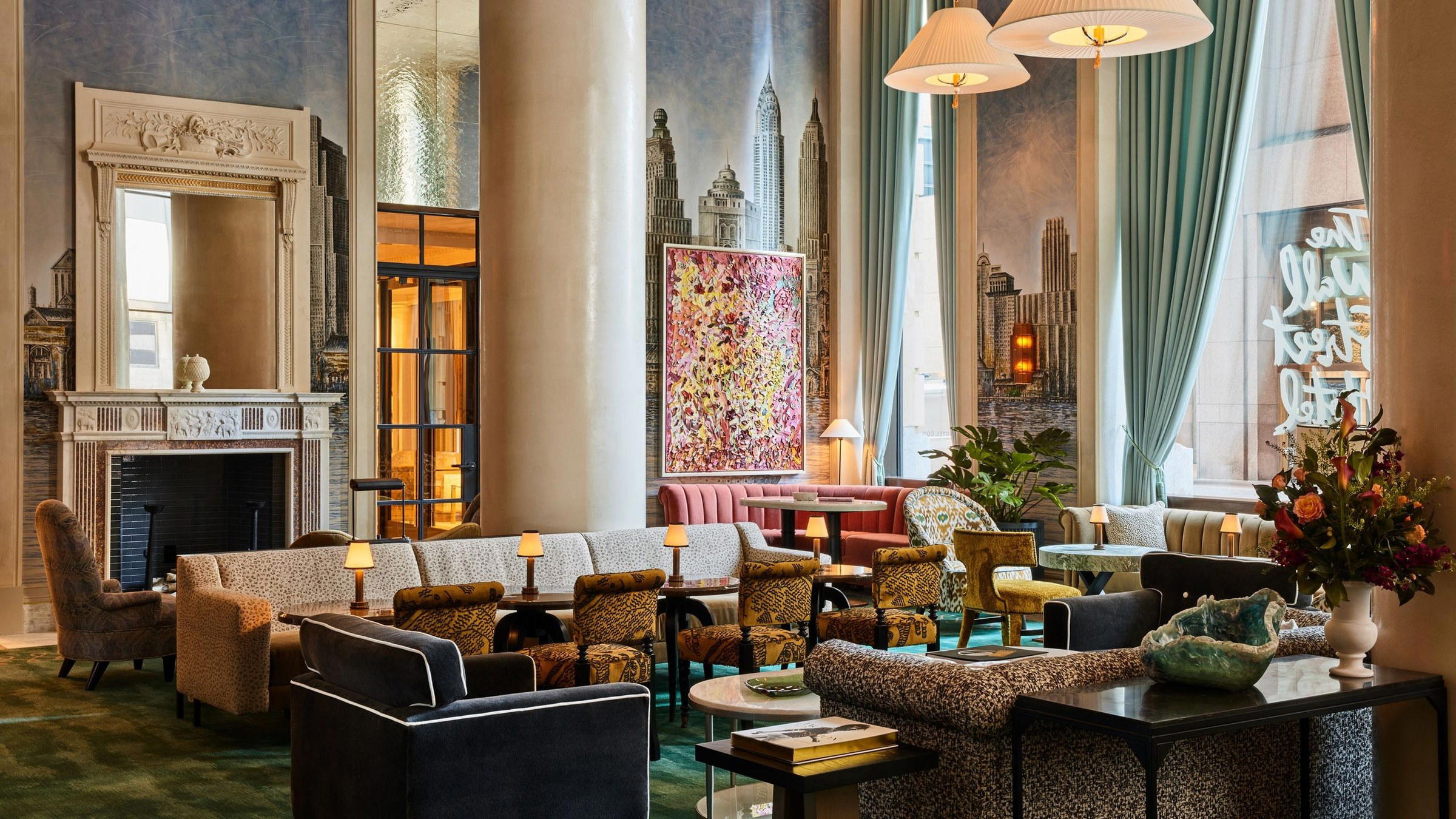
Bright, art-filled space with lively, Brooklyn energy and comfortable seating.