Tabelog 100 #95
Our verdict
Ramen Kanade belongs to Nagoya’s compact, craft-driven ramen tier, where sourcing, broth discipline, and counter turnover matter more than ceremony. The Fukiage shop has Tabelog 100 Ramen AICHI 2025 recognition, a 3.73 Tabelog score, seven seats, and a no-reservations format, placing it in the city’s serious everyday ramen conversation rather than its luxury dining lane.

Pearl is the En Primeur Club membership app, where members save venues, book tables and use the concierge.
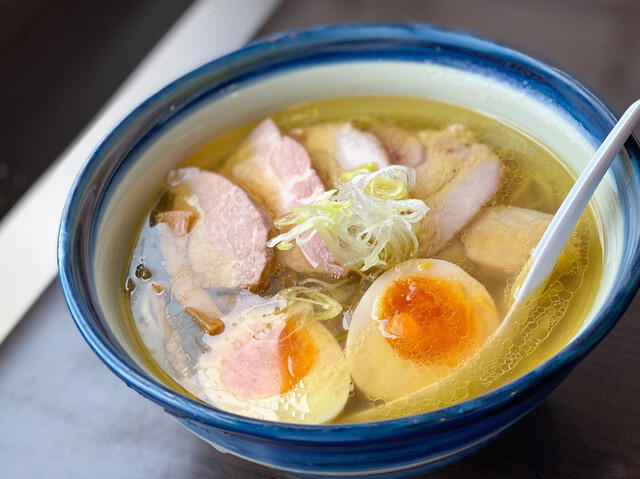
Nagoya is not only the Nagoya of skyline hotels or station-complex dining. It can be quieter, lower to the ground, and well suited to ramen without theatre: direct service, close attention, and people eating with purpose. Here, ramen is judged less by ceremony than by decisions made before the bowl arrives: how the broth is built, how the noodles carry it, and how tightly the meal stays focused.
Nagoya’s ramen culture sits between commuter utility and obsessive specialization. The city has regional noodle habits, yet its strongest contemporary shops compete on signals seen across Japan’s serious ramen scene: documented recognition, clear category identity, practical price bands, and menus that reward focus over breadth. Ramen Kanade fits that pattern. Its Tabelog 100 Ramen AICHI 2025 selection and 3.73 score place it inside a documented local bracket, while the listed ramen category makes the experience closer to category-focused dining than broad casual eating.
Ingredient discipline matters more than ornament in Nagoya's ramen tier
Ramen’s ingredient story is often flattened into broth style, but the better question is where the shop spends its attention. In a ramen setting, sourcing shows through consistency: stock that holds shape across service, noodles selected for the broth rather than generic chew, and toppings used as structure rather than decoration. Without a published chef biography or official menu narrative in the provided information, the safer reading is format-led. This shop’s reputation rests on the ramen category itself, not personality-driven dining.
That matters in Nagoya. The city runs from quick, sub-1,000-yen meals to formal sushi and multi-course rooms, and those categories should not share one grammar. Hama Gen operates in a much higher-priced sushi bracket, while China Hime Hana sits in a higher restaurant price band than a ramen counter. Kourai Dojo and PIERRE PRECIEUSE Honten occupy lower-price casual territory, but ramen’s pressure is different: a bowl must justify the trip quickly, not over a long meal. Ramen Kanade’s place in Tabelog’s Aichi ramen selection is useful because it compares the shop within its own category, not against unrelated formats.
The sourcing angle also explains why ramen shops attract serious diners who might otherwise chase tasting menus. The spend is modest, but the margin for error is narrow. A large dining room can soften a weak course with service and pacing; a ramen meal has fewer hiding places. The bowl is the argument. For a Nagoya itinerary, a recognized ramen shop can be a sharper cultural read than another hotel dining room, especially alongside Our full Nagoya restaurants guide.
A focused ramen stop changes the way the meal behaves
Format is part of the editorial story, not just a planning detail. A ramen meal creates a different rhythm from larger, more generalized restaurant choices. The pace is usually tighter, the decision-making more immediate, and the relationship between diner and bowl becomes the center of the experience. Solo diners and small groups are often the natural fit for this kind of focused stop; large-party planning is better treated with caution unless current details confirm otherwise.
The practical rhythm also changes expectations. This should not be approached like a concierge-managed table with a tasting-menu deposit; it is best understood as a ramen-focused visit whose current operating details should be checked before going. That makes it accessible in price, but not necessarily effortless to plan. In Japan, low price and high recognition often create pressure, especially when demand concentrates around a documented listing. Treat the meal as a focused stop, not a flexible backup plan.
For Nagoya visitors, Ramen Kanade usefully counters the city’s polished hospitality circuits. A stay planned through Our full Nagoya hotels guide can skew toward major transport and commercial zones; a ramen stop in Nagoya pulls the itinerary into a more local register. The same logic applies after dark: Our full Nagoya bars guide and Our full Nagoya experiences guide frame the city beyond one meal, while Our full Nagoya wineries guide is better as a regional planning layer than a direct ramen pairing.
How to place it among Japan's casual specialists
The useful comparison is not luxury versus cheap eats; it is specialization versus sprawl. Japan’s casual dining rewards narrow competence, from curry counters to onigiri shops, cafés, izakaya formats, and sake bars that translate Japanese habits into other contexts. Readers mapping that field can compare Ramen Kanade with other specialist casual dining rooms in Japan. The common thread is not cuisine type, but confidence to keep the offer narrow.
Within Nagoya, that narrowness has value because the city can overwhelm visitors with breadth rather than obvious hierarchy. Its restaurant field stretches across anonymous lunch rooms, specialist counters, department-store dining, and expensive destination meals. The better itinerary mixes registers: one documented ramen selection, one formal reservation, and one neighborhood meal with no ceremony. For nearby context, compare other Nagoya dining rooms as different expressions of the city’s dining spread, not direct substitutes.
Outside Nagoya, Japanese dining formats show the same lesson elsewhere: specialist casual rooms can express very different traditions around set-piece cooking, seafood-led counters, or everyday non-Japanese cuisines. Ramen Kanade belongs to the tighter end of that spectrum: modest spend, clear category identity, Tabelog recognition, and a format where ingredient judgment is exposed quickly.
The editorial case is clear. This is not a long, luxurious meal to build an evening around. It is a focused ramen stop with enough recognition to merit planning and enough constraint to punish vague timing. In a city where premium dining can become a parade of reservations, a documented Nagoya ramen choice keeps the itinerary honest.
Frequently asked questions
What's Ramen Kanade's location?
Nagoya.
What's the pricing like at Ramen Kanade?
Pricing at Ramen Kanade is listed as - JPY 999 - JPY 999, with both dinner and lunch shown at - JPY 999.
Is Ramen Kanade reservation-only?
The provided listing information does not establish a reservation-only format. Treat it as a focused ramen stop in Nagoya and check current details before going.
What has Ramen Kanade built its reputation on?
Its main documented credential is selection for Tabelog 100 Ramen Aichi 2025, with a listed Tabelog score of 3.73. The category is ramen, and the price band is listed at JPY 999 or less.
Can Ramen Kanade accommodate dietary restrictions?
No dietary-restriction program is provided in the available information. The venue is presented as a ramen shop in Nagoya, so diners with restrictions should confirm current details directly before visiting.
Would Ramen Kanade be comfortable with kids?
The provided information does not establish a specific children policy. Because it is a focused ramen shop, smaller, quieter visits are the safest expectation.
Budget and Context
Comparable venues for cuisine and category context.
| Venue | Cuisine | Price | Awards | Notes |
|---|---|---|---|---|
| Ramen KanadeThis venue (the venue you are viewing) | Ramen shop specializing in shio and shoyu | $10–20 | Tabelog 100 #95 | Not listed |
| Takumi Mitsukoshi ten | Japanese Curry Counter by Nagoya Takumi | $10–20 | Tabelog 100 #70 | Naka, Japanese Curry Counter by Nagoya Takumi |
| Kawaguchi Ya | Japanese confectionery shop | Not listed | Tabelog 100 #91 | Naka, Japanese confectionery shop |
| Chuka Soba Ueda Seimen Ten | Japanese Ramen | $1–10 | Tabelog 100 #85 | Naka, Japanese Ramen |
| Chuka Soba Raian | Ramen shop near Nagoya Station | $10–20 | Tabelog 100 #53 | Nakamura, Ramen shop near Nagoya Station |
| Kourai Dojo | Nagoya Kourai-kei ramen | $10–20 | Tabelog 100 #66 | Chikusa, Nagoya Kourai-kei ramen |
Recognition history
Dated appearances from independent guides and award organizations, with the underlying list record or original source where available.
Tabelog 100 #95 · No. 95
Tabelog · Tabelog 100 - Ramen - AICHI - 2025