Tabelog 100 #37
Our verdict
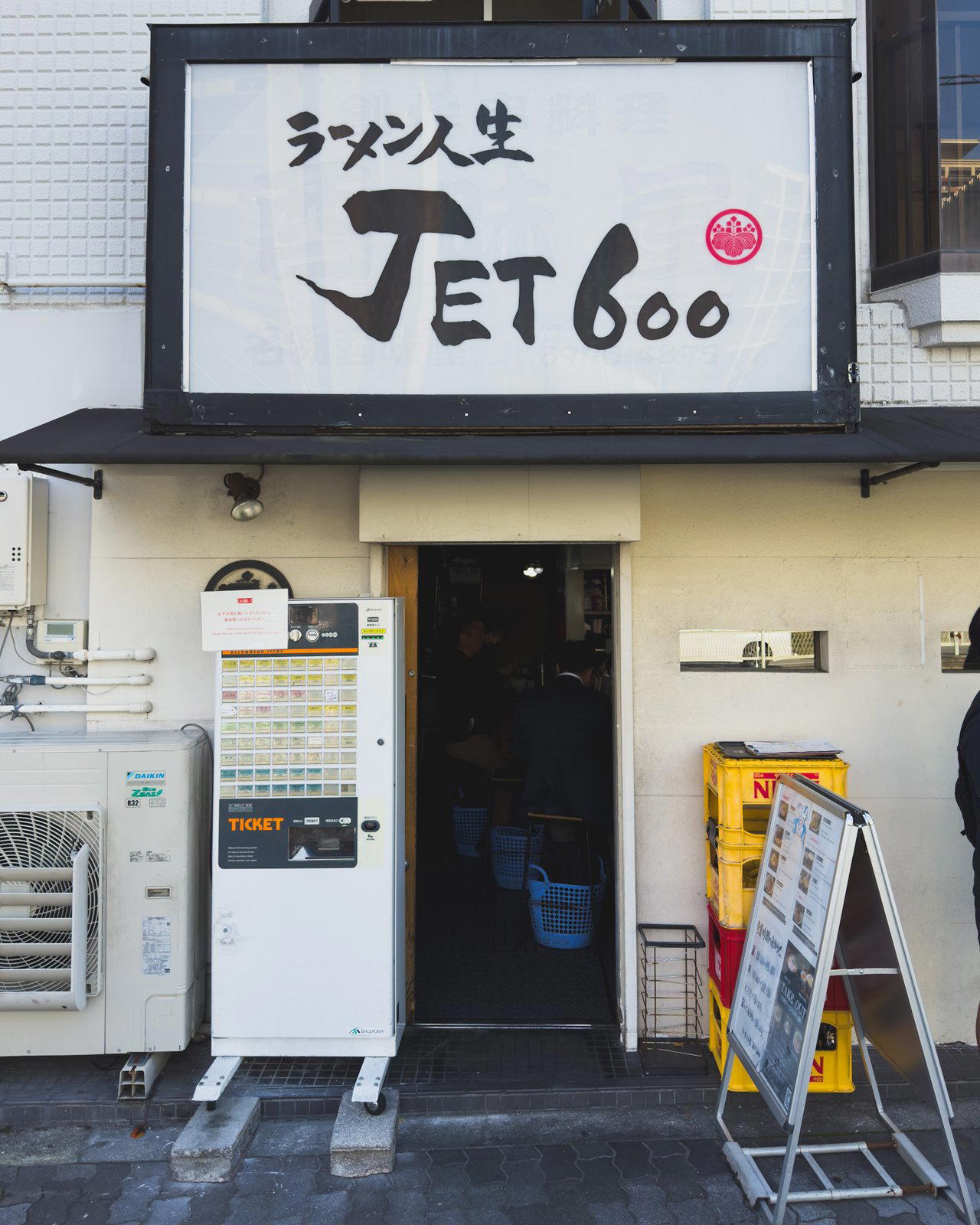
Ramen Jinsei JET 600 belongs to Osaka’s serious everyday-noodle tier: low-cost, compact, and validated by repeated Tabelog 100 Ramen selections. Near Tamatsukuri, it reads as a lunch-and-dinner counter for ramen, tsukemen, abura-soba, and maze-soba rather than a ceremony-driven destination, with value and consistency doing the heavy lifting.

Pearl is the En Primeur Club membership app, where members save venues, book tables and use the concierge.
The menu
What to order
- Chicken ramen
- Tsukemen (dipping noodles)
- Abura soba / maze soba
Osaka ramen is everyday rhythm rather than grand arrival: commuters, neighborhood regulars, small groups, and solo diners moving through casual rooms where the bowl matters more than the view. In that setting, Ramen Jinsei JET 600 fits a category Osaka knows well: the serious everyday shop where the meal is affordable, the pace adds energy, and reputation is earned bowl by bowl, not through ceremony.
Osaka’s noodle culture is often framed through udon, takoyaki, and late-night drinking food, but ramen has its own competitive grammar. The city rewards shops that work at lunch without feeling anonymous and at dinner without becoming occasion restaurants. The useful comparison is not formal Japanese dining such as Terada, but the broader low-cost specialist circuit: Gokuraku Udon TKU for udon, Sobakiri Imose for soba, and Matsushita kitchen for casual everyday value. Ramen Jinsei JET 600 belongs to that practical Osaka register, with a narrower ramen brief.
Lunch has the sharper edge; dinner gives the room more breathing space
The lunch-versus-dinner divide matters because the same bowl reads differently with the room’s tempo. Daytime service is built for decisiveness: choose quickly, eat while the noodles hold texture, and keep the meal moving. Evening can soften the pace, especially for groups using ramen as a casual finish rather than a workday reset. The informal ramen-shop format supports both modes without pretending to be a tasting-menu room.
That split gives this kind of shop more traveler relevance than its price tier suggests. Lunch in Osaka can become a choice between convenience and character; a recognized ramen shop solves that without consuming the day. Dinner suits nights when heavier restaurant options feel too structured, or when a second stop is likely. Udon Izakaya Mugiwara, with its evening izakaya framing, shows the other side of Osaka noodle dining: longer, looser, more drink-adjacent. Here, the appeal is tighter and bowl-focused.
The trust signal is not cosmetic. Selection for Tabelog Hyakumeiten in 2025 places the shop within a heavily scrutinized local field, and its listed score of 3.71 is meaningful in a market where Tabelog ratings tend to be conservative. For travelers sorting dozens of casual noodle options, that matters more than an invented backstory.
Ramen, tsukemen, abura-soba, and maze-soba map the modern Osaka counter
The listed categories tell a useful story about contemporary ramen culture. A shop covering ramen, tsukemen, abura-soba, and maze-soba is not just serving one soup format; it is part of the wider Japanese noodle tradition where noodles can be broth-led, dipping-based, oil-dressed, or mixed. That range is useful in Osaka, where meals often need to fit the day rather than define it. Soup ramen suits the classic quick stop. Tsukemen offers a more deliberate rhythm. Abura-soba and maze-soba shift from broth toward texture, seasoning, and mixing.
Travelers should not treat the category as interchangeable with instant comfort food. Serious ramen shops in Japan often operate with specialist-kitchen discipline: clear decisions, a steady pace, and an expectation that diners respect the format. The ramen-shop setting keeps the distance between kitchen and diner short, and the directness of the meal makes service timing visible. A ramen meal can feel more instructive than a longer dinner because the format exposes priorities quickly.
Within Osaka’s wider eating map, this is the casual counterpoint to more polished dining rooms, quick morning stops, snack-driven institutions, casual dining, or cafe-led pacing elsewhere in the city. The useful itinerary is not to rank them, but to know what each does for an Osaka day: something light in the morning, ramen at lunch, a more expansive dinner after dark.
How to place it in an Osaka eating day
Ramen Jinsei JET 600 works because it respects Osaka’s appetite for value without becoming generic. The listed budget sits at Dinner: - JPY 999; Lunch: - JPY 999, keeping it firmly in the low ramen bracket, and the format keeps the experience focused on the bowl rather than stretched into a long restaurant production. The meal rewards compact plans and quick decisions, a reminder that acclaimed casual dining in Japan often remains operationally straightforward.
The Osaka position changes the calculus. This is not only the obvious tourist shorthand of the city; it is an Osaka stop for travelers moving through a broader eating day. The appeal is that it can be folded into a plan without turning the meal into an elaborate detour.
For readers comparing Japanese casual dining beyond Osaka, the same logic applies: know the format before judging the room. Some specialist noodle shops ask for speed and focus, while other dining rooms are built for a looser tempo or a longer evening. Even outside Japan, Japanese formats travel, adapt, and lose or gain structure by context, which is why the rhythm of a ramen shop should be judged on its own terms.
The editorial verdict is simple: choose this for a focused Osaka ramen stop, not a drawn-out restaurant evening. Lunch gives the format its cleanest expression; dinner works when the night calls for precision, speed, and a bowl-led reset. In a city where casual food can carry as much identity as formal dining, that is a serious advantage.
Frequently asked questions
What does dinner at Ramen Jinsei JET 600 typically cost?
Pricing at Ramen Jinsei JET 600 is listed as - JPY 999 - JPY 999.
Where is Ramen Jinsei JET 600 located?
Osaka.
What are the operating hours at Ramen Jinsei JET 600?
Operating hours for Ramen Jinsei JET 600 are not specified in the provided venue details.
What is Ramen Jinsei JET 600 known for?
Ramen Jinsei JET 600 is known as an Osaka ramen shop listed in the ramen, tsukemen, abura-soba, and maze-soba categories, with Tabelog Hyakumeiten recognition in 2025 and a listed score of 3.71.
Peers Worth Knowing
Comparable venues at a similar level for quick context.
| Venue | Cuisine | Price | Awards | Notes |
|---|---|---|---|---|
| Ramen Jinsei JET 600This venue (the venue you are viewing) | Ramen & Tsukemen Shop | $10–20 | Tabelog 100 #37 | Not listed |
| Gokuraku Udon TKU | Udon & curry udon specialist | $10–20 | Tabelog 100 #7 | JPY 999 - JPY 999 |
| Terada | Modern Kaiseki | $150–200 | 1 Michelin Star · We're Smart World 2 Radishes | Japanese |
| Matsushita kitchen | Japanese café with Western-style sweets and shaved ice | $1–10 | Tabelog 100 #77 | JPY 999 JPY 1,000 - JPY 1,999 View spending breakdown |
| Udon Izakaya Mugiwara | Udon-focused Japanese Izakaya | $10–20 | Tabelog 100 #36 | JPY 2,000 - JPY 2,999 - JPY 999 |
| Sobakiri Imose | Rustic Handmade Soba | $30–50 | Michelin Bib Gourmand · Tabelog 100 #84 | Soba |
Recognition history
Dated appearances from independent guides and award organizations, with the underlying list record or original source where available.
Tabelog 100 #37 · No. 37
Tabelog · Tabelog 100 - Ramen - OSAKA - 2025