Rakiraki Convoy
Rakiraki Convoy sits on one of San Diego's most concentrated strips of Japanese and pan-Asian dining, where ramen counters and izakaya-style spots compete on depth rather than spectacle. The Convoy Street address places it squarely in a neighborhood that rewards return visits over tourist passes. Daytime and evening service each carry a distinct rhythm, making the timing of your visit a genuine decision.
Pearl is the En Primeur Club membership app — saves, bookings, and concierge access live there. Same editors, same standards.
- Address
- 4646 Convoy St 102 - A, San Diego, CA 92111
- Phone
- +18587717254
- Website
- rakirakiramen.com
- Directions
- Get directions
 Saves & bookings on Pearl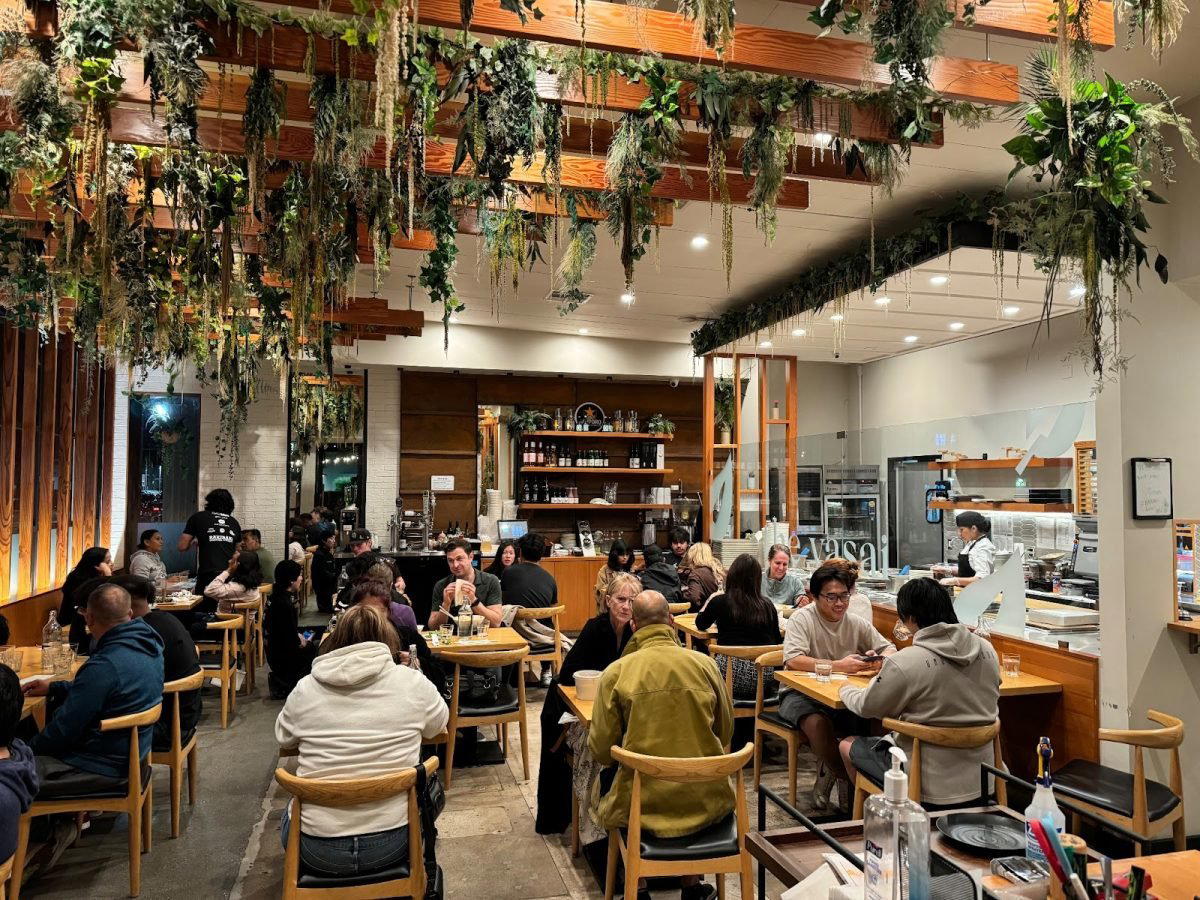
Convoy Street and the Case for Serious Casual Dining
San Diego's Convoy District has spent the last two decades earning a reputation that sits outside the usual Gaslamp-or-La-Jolla binary the city's food coverage tends to default to. The strip running through Kearny Mesa concentrates more Japanese, Korean, Taiwanese, and pan-Asian operators per block than anywhere else in the county, and the competition runs on product quality rather than room design or social media positioning. In that context, Rakiraki Convoy at 4646 Convoy Street occupies a neighborhood that already demands a certain seriousness from anyone opening a bowl-focused concept. The address is, in other words, a credential of its own kind.
This is not the tier of San Diego dining where you find the formality of Addison (French, Contemporary) or the counter intimacy of Soichi (Japanese). Convoy operates in a different register entirely, one where the question is not whether the room is composed but whether the broth is. That distinction matters when reading the neighborhood: Kearny Mesa's dining culture is largely diner-led rather than critic-driven, which tends to produce a more reliable signal about what actually works on repeat visits.
The Lunch and Dinner Divide on Convoy Street
Across Convoy's ramen and noodle-focused segment, daytime and evening service tend to split in ways that carry practical weight for visitors. At lunch, the pace is faster and the crowd skews toward office workers from the surrounding business parks and regulars who treat a midday bowl as a weekly ritual rather than an occasion. Tables turn more quickly, the room runs louder, and ordering tends to be more decisive. There is less lingering, which means the experience concentrates on the food itself.
Evening service across this stretch shifts the dynamic. Groups arrive from further afield, portions of the dining room slow down, and add-ons, extra sides, and second rounds of drinks become more common. The same bowl ordered at noon and at 7 p.m. can feel like two different transactions simply because of who surrounds you and what pace the room is running at. This is a pattern common to the better casual ramen operators in cities like Los Angeles and San Francisco, where concepts like Lazy Bear in San Francisco operate in a different price tier but demonstrate the same principle: time of visit shapes the experience in ways that menu alone cannot account for.
For Rakiraki Convoy specifically, the lunch window on weekdays tends to be more efficient for solo diners or pairs who want the food at the center of the visit. Weekend evenings can mean a wait, which is consistent with Convoy's broader pattern of drawing families and larger groups later in the week.
Where Rakiraki Sits in the Convoy comparable set
The Convoy District's ramen operators compete in a narrow band of the price spectrum. This is not the $$$$ bracket occupied by Soichi or the formality of a tasting-menu room. It is closer in spirit to the casual end of what San Diego's dining culture does well: direct execution of a specific culinary tradition, repeated reliably, at a price point that does not require occasion-setting to justify. Within that comparable set on Convoy itself, the differentiators tend to be broth depth, noodle texture, and the quality of protein add-ons rather than room design or service elaborateness.
Compared to the broader American fine-dining conversation that includes properties like Le Bernardin in New York City, Alinea in Chicago, or The French Laundry in Napa, Rakiraki operates in a category that measures success by entirely different metrics. Repeat customer density, wait times at peak hours, and word-of-mouth on neighborhood forums are more relevant here than award cycles or chef-lineage credentials. The same principle applies to well-regarded casual specialists in other cities, where local dining culture tends to sustain operations long after the initial press attention fades.
San Diego's dining scene has broadened considerably, and Convoy sits alongside other interesting addresses including 1450 El Prado and 94th Aero Squadron, though those operate in quite different registers. For the picture of where Rakiraki fits in the city's dining geography, Internationally, the closest analogues in ambition and format would be the neighborhood ramen specialists that have driven Japan's casual dining reputation globally, a tradition that cities like New York, Los Angeles, and San Diego have absorbed into their own Asian-American dining cultures with varying degrees of fidelity.
What the Neighborhood Context Tells You
Kearny Mesa as a dining destination rewards a different kind of attention than the waterfront or Hillcrest. The area lacks the walkability and ambient foot traffic of those neighborhoods, which means the operators who sustain themselves here are doing so on the strength of return visits rather than tourist capture. That structural fact tends to produce a more curated regular clientele and, over time, a more consistent kitchen. Concepts that survive on Convoy typically do so because the food delivers on a visit-to-visit basis rather than because the room photographs well.
That context is relevant when thinking about how to approach Rakiraki Convoy as a visitor rather than a local. If you are coming from outside the neighborhood, building Convoy into a longer afternoon that includes other nearby operators in the district makes structural sense. The strip has enough concentration that a single trip can cover multiple stops, particularly during the extended afternoon window between the end of lunch service and the start of the evening push, when several spots are quietest and the kitchen is reset.
For comparisons further afield, the model of a neighborhood specialist holding its ground against flashier competition in a nearby district is one that plays out across American cities. Providence in Los Angeles, Blue Hill at Stone Barns in Tarrytown, and Bacchanalia in Atlanta are all examples of dining destinations that benefit from being slightly off the main circuit, each sustaining strong reputations by serving a specific audience rather than chasing the broadest possible reach. Rakiraki operates in a different category and price bracket, but the principle of location-as-signal applies across the spectrum.
Know Before You Go
Comparable Options
Comparable venues nearby, for context on price, style, and recognition.
| Venue | Cuisine | Price | Notes |
|---|---|---|---|
| Rakiraki ConvoyThis venue — the venue you are viewing | Japanese Ramen and Tsukemen | $$ | Not listed |
| Harney Sushi | Sustainable Specialty Sushi | $$ | Old Town San Diego |
| Jasmine Seafood Restaurant | Hong Kong-style Cantonese Seafood | $$ | Kearny Mesa |
| Madi | All-Day Brunch & Diner Cafe | $$ | Mid-City:Normal Heights |
| Ortega's A Mexican Bistro | Authentic Puerto Nuevo Mexican Bistro | $$ | Uptown |
| Chin's Szechwan - Point Loma | Szechwan Chinese | $$ | Midway-Pacific Highway |
Continue exploring
More in San Diego
Restaurants in San Diego
Browse all →
Bars in San Diego
Browse all →
At a Glance
- Modern
- Trendy
- Lively
- Casual Hangout
- Group Dining
- Open Kitchen
- Sake Program
Current opening hours
- Monday
- 11 AM–1 AM
- Tuesday
- 11 AM–1 AM
- Wednesday
- 11 AM–1 AM
- Thursday
- 11 AM–1 AM
- Friday
- 11 AM–1 AM
- Saturday
- 11 AM–1 AM
- Sunday
- 11 AM–1 AM
Hours can change for holidays and private events. Last verified .
Modern atmosphere with moderate noise levels in an intimate setting amid the bustling Convoy district.