Harney Sushi
Our verdict
Harney Sushi serves sustainable specialty sushi with a sake program, conversational pacing, and upscale casual service.

Pearl is the En Primeur Club membership app, where members save venues, book tables and use the concierge.

The menu
What to order
- Rollz Royce
- Pirate roll
- Bruce Lee roll
- Hippie roll
Old Town's Sushi Counter and the Ritual of the Meal
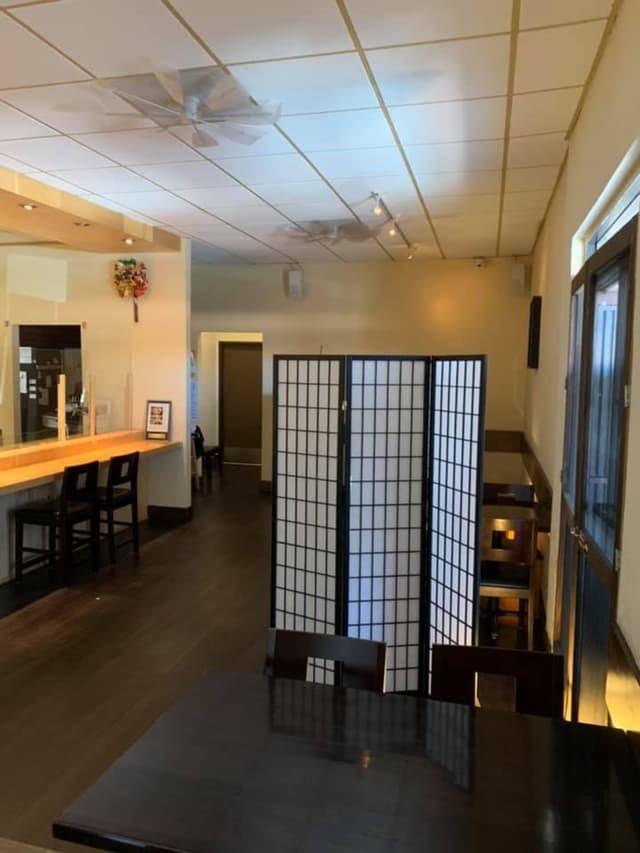
Harney Street in Old Town San Diego carries a different character than the city's waterfront dining corridors. The neighbourhood is one of California's oldest commercial districts, layered with mid-century architecture and pedestrian patterns that belong more to a local community than to a tourist circuit. It is in this context that Harney Sushi sits at 3964 Harney St, occupying a position that reflects Old Town's broader dining identity: accessible but considered, neighbourhood-facing rather than destination-chasing.
San Diego's sushi scene has matured considerably over the past decade. The city now holds a recognisable tier structure, from casual hand-roll counters in Pacific Beach to tightly formatted omakase rooms like Soichi, which operates at the upper end of the market with a reservation window that stretches months out. Harney Sushi occupies a middle register in this hierarchy, one that values craft without requiring the formality or financial commitment of the city's premium omakase tier. That positioning is deliberate, and it shapes how a meal here unfolds from the moment you arrive.
The Dining Ritual at Harney Sushi
The custom at most serious sushi establishments in the United States has been pulled in two directions over the past fifteen years. On one side, the a la carte izakaya model encourages grazing, sharing, and an open-ended timeline. On the other, the omakase format demands surrender: the kitchen sets the pace, the selection, and the duration. Harney Sushi occupies a space between those two poles, where the guest retains choice but the meal still follows a recognisable arc shaped by the kitchen's preferences and the natural progression from lighter to richer fish.
In practice, this means the experience rewards a certain deliberateness. Ordering without a plan tends to produce a less satisfying result than engaging with the menu as a sequence. Lighter preparations, whether lean white fish or delicate shellfish, make more sense at the start of the meal than at the end. The richer cuts, anything fatty or dressed with heavier sauces, read better once the palate has been opened. This is a pattern observed across serious sushi counters in the United States, from Le Bernardin in New York City down to more intimate neighbourhood rooms, and it holds at Harney as much as anywhere.
San Diego's proximity to the Pacific and its position within the broader Southern California seafood supply chain gives kitchens here access to product that most landlocked American cities cannot match on freshness alone. That geography matters to the ritual: when fish moves from dock to counter within a compressed window, the standard preparations, the cuts, the temperature, the minimal seasoning, become more defensible. Over-engineering diminishes rather than enhances. The better rooms in this city, including Harney, understand that restraint is a technique.
Situating Harney in San Diego's Dining Context
Comparing Harney Sushi to the city's premium tier helps clarify what the room actually offers. At Soichi, the format is fully committed omakase, with a price point and booking difficulty that align it with destination-level dining. Addison, San Diego's only Michelin-starred restaurant, operates in French contemporary territory at the top of the local price bracket. Harney positions itself below both without compromising the core proposition of quality fish handled with care.
That middle tier is where most of a city's sushi dining actually happens, and it is often the tier that receives the least critical attention. Publications tend to anchor their coverage at the extremes: the cheapest conveyor belt and the most expensive omakase. The rooms in between, which serve the greatest number of serious fish-eaters on a regular basis, are frequently underwritten. Harney has built its reputation in Old Town partly by being the kind of room that regulars return to rather than the kind that first-time visitors seek out on a special occasion.
Across the United States, the restaurants that earn sustained local loyalty in this category share a few consistent traits: they keep the menu tightly edited, they resist the temptation to chase trends, and they maintain relationships with consistent suppliers. The same pattern is visible at acclaimed American restaurants in other cities and formats, from Lazy Bear in San Francisco to Providence in Los Angeles, though those operate in very different categories. The underlying principle, disciplined sourcing and consistent execution, travels across formats.
Old Town as a Dining Neighbourhood
Old Town San Diego is not the first neighbourhood that comes to mind when serious diners think about the city's restaurant scene. Hillcrest, North Park, and the Gaslamp Quarter each carry more dining density and more critical coverage. But Old Town has a practical advantage: it is accessible by trolley from multiple points across the city, and its pedestrian streets make restaurant visits easier to combine with an evening walk than most San Diego neighbourhoods allow.
For visitors who have already covered the city's most-discussed rooms, or who want a meal that does not require weeks of advance planning, Old Town represents a viable and often overlooked alternative. The neighbourhood is also worth considering for visitors staying near Mission Hills or Point Loma, where the dining options are thinner and Harney's Harney Street address sits within a reasonable distance. For a broader survey of where to eat across the city, our full San Diego restaurants guide maps the dining scene by neighbourhood and category.
Those looking for reference points in other American cities might consider how neighbourhood sushi rooms operate in their wider contexts: the way Atomix in New York City anchors one end of the Korean fine dining spectrum while neighbourhood rooms serve the daily market, or how Bacchanalia in Atlanta sustains reputation through consistency rather than expansion. The principle scales across formats and cities.
Planning Your Visit
Harney Sushi is located at 3964 Harney St, San Diego, CA 92110, in the heart of Old Town. The address is served by the San Diego Trolley's Old Town Transit Center, which connects to downtown and Mission Valley, making it one of the more public-transit-friendly restaurant addresses in the city. For current hours, booking options, and menu pricing, contacting the restaurant directly or checking their current listings is the most reliable approach, as those details shift seasonally. Given the room's neighbourhood following, weekends typically see higher demand than weekdays, and planning ahead on Thursday through Saturday evenings is advisable.
Frequently asked questions
What's Harney Sushi's location?
Harney Sushi is located at 3964 Harney St, San Diego, CA 92110, San Diego.
How does Harney Sushi compare to other sushi options in San Diego's non-central neighbourhoods?
Harney Sushi sits at 3964 Harney St in Old Town, a district more associated with California's Spanish colonial history than its restaurant scene, which means it draws a different crowd than the Hillcrest or North Park sushi bars that serve more food-focused local regulars. For San Diego diners looking for sushi outside the downtown and waterfront circuits, the Old Town Trolley stop makes it one of the more transit-accessible options in the city's mid-tier.
What's the must-try dish at Harney Sushi?
What the Old Town address at 3964 Harney St signals is a counter format where nigiri and rolls share menu space, ask the server what is freshest that day rather than defaulting to a printed recommendation.
What's the best way to book Harney Sushi?
Walk-in availability at the Old Town San Diego location tends to be more accessible mid-week; weekend evenings in a neighbourhood as trafficked as Old Town fill earlier, so arriving before peak service is advisable.
What's the signature at Harney Sushi?
Harney Sushi's identity is shaped by its Old Town San Diego location on Harney Street, a neighbourhood that sits apart from the waterfront dining corridors most visitors default to. The signature is less a single dish and more a format: accessible sushi in a setting that does not perform the ceremony of the city's omakase-only rooms.
Can Harney Sushi accommodate dietary restrictions?
Standard practice at San Diego sushi counters is to flag restrictions at the time of booking or on arrival, the kitchen can typically adjust rolls and avoid specific ingredients with advance notice.
Is Harney Sushi overpriced or worth every penny?
Positioned in Old Town rather than La Jolla or the Gaslamp Quarter, Harney Sushi operates outside the premium-tier pricing corridors of venues like Soichi; the Old Town address and format suggest a mid-range spend rather than an omakase-style outlay.
Budget Reality Check
Comparable venues nearby, for context on price, style, and recognition.
| Venue | Cuisine | Price | Notes |
|---|---|---|---|
| Harney SushiThis venue (the venue you are viewing) | Sustainable Specialty Sushi | $30–50 | Not listed |
| Tsuruhashi Japanese BBQ | Japanese Yakiniku BBQ | Not listed | Kearny Mesa, Japanese Yakiniku BBQ |
| Underbelly North Park | North Park, Japanese Ramen-Ya | $20–30 | Not listed |
| Mikiya Wagyu Shabu House | Premium Wagyu Shabu-Shabu | $50–100 | Kearny Mesa, Premium Wagyu Shabu-Shabu |
| Madi | All-Day Brunch & Diner Cafe | $10–20 | Mid-City:Normal Heights, All-Day Brunch & Diner Cafe |
| Love Letters Pizza | Pizza | $20–30 | College Area, Pizza |