Quinta del Carmen
Quinta del Carmen sits along Bubali Road in Oranjestad, positioned within Aruba's broader dining scene as a destination that draws both residents and visitors seeking something beyond the resort strip. The address places it in the quieter residential belt west of the city center, where several of the island's more considered dining options have taken root away from the tourist corridor.
Pearl is the En Primeur Club membership app — saves, bookings, and concierge access live there. Same editors, same standards.
- Address
- Bubali 119, Oranjestad, Aruba
- Phone
- +297 587 7200
- Website
- quintadelcarmen.com
- Directions
- Get directions
 Saves & bookings on Pearl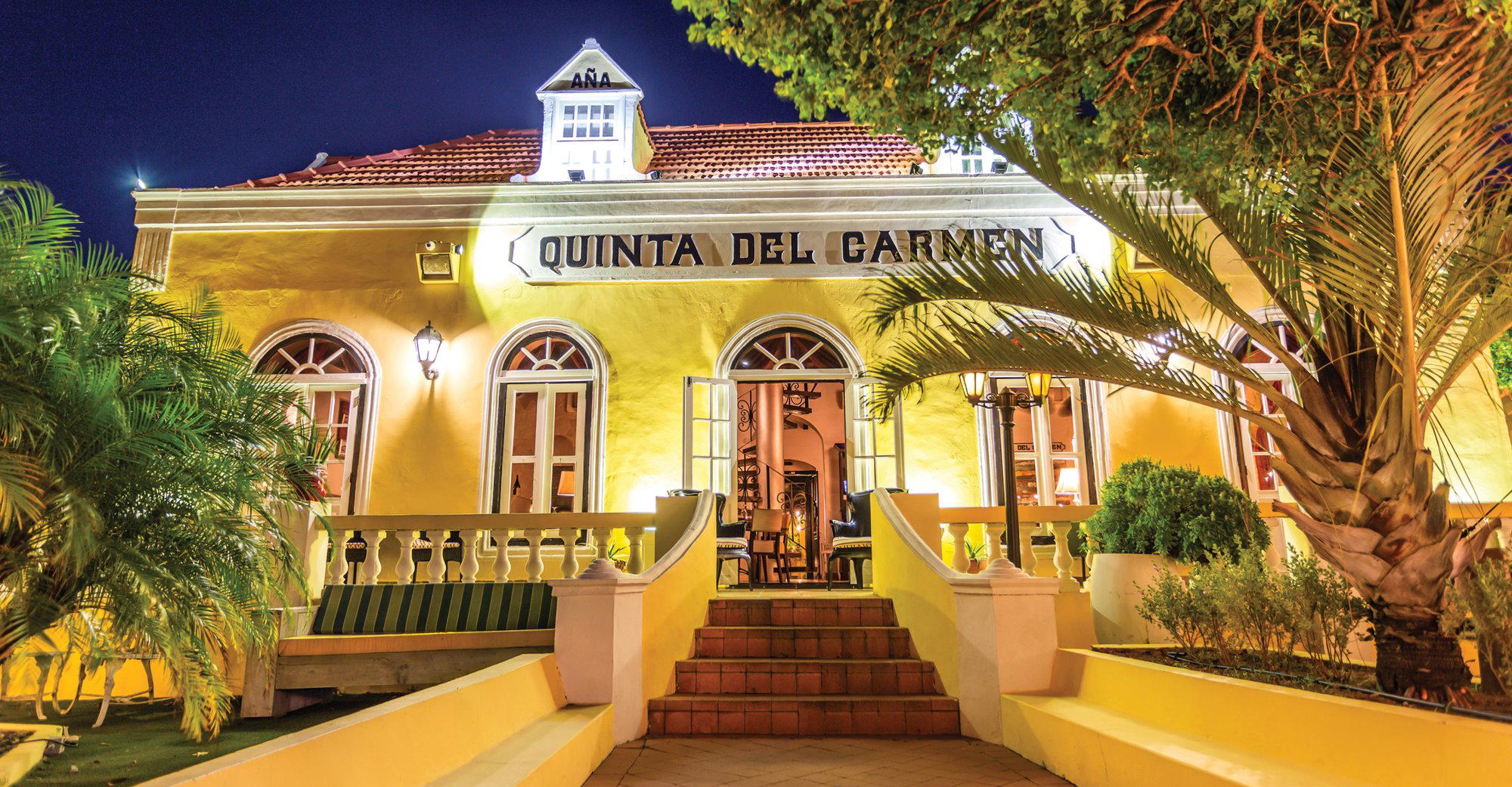
Where Oranjestad Eats Away From the Coast
Aruba's dining identity has long been pulled in two directions: the resort-facing kitchens along Palm Beach and Eagle Beach, engineered for volume and tourist familiarity, and a quieter tier of locally embedded restaurants that serve the island's own residents alongside visitors who have done their research. Quinta del Carmen, at Bubali 119 in Oranjestad, belongs to the second category. The Bubali address places it away from the waterfront corridor, in a part of the city where restaurants tend to earn their following through repeat local custom rather than foot traffic from hotel lobbies. Quinta del Carmen is a restaurant in Oranjestad, Aruba, with.
That geographic positioning matters. In a small island economy, the restaurants that survive in residential zones do so because the food justifies the deliberate trip. The clientele tends to be more mixed, the pace less pressured, and the kitchen less constrained by the lowest-common-denominator expectations that can weigh on resort dining. Across the Caribbean, this pattern holds from Curaçao's inland patio restaurants to the non-beach dining rooms of Barbados's St. James parish, and Oranjestad is no exception. For context on the full range of dining options across the city, the full Oranjestad restaurants guide maps the scene across neighborhoods and price points.
Reading the Menu as a Document
Quinta del Carmen's position in the Aruba dining market suggests a kitchen shaped by its Oranjestad setting and its Dutch Caribbean Seafood profile. Restaurants operating in the Bubali zone of Oranjestad, away from the high-volume resort strip, generally build menus around a narrower, more considered selection rather than the sprawling multi-page formats common at all-inclusive adjacent dining rooms. The logic is economic as much as culinary: a smaller menu reduces waste, allows for fresher sourcing, and signals to a knowledgeable local clientele that the kitchen is working within its means rather than papering over gaps with quantity.
Caribbean restaurants at this tier frequently organize their offer around a tension between local seafood and imported protein, which reflects both supply chain reality and diner expectation. Aruba's own waters yield catch that appears on menus across the island, while the demand for beef, lamb, and continental preparations requires sourcing from further afield. The restaurants that handle this tension most competently, rather than pretending it doesn't exist, tend to be the ones that build lasting reputations. For a sense of how other Oranjestad kitchens resolve the same tension, Driftwood Restaurant Aruba leans heavily local on the seafood side, while El Gaucho occupies the imported beef end of the spectrum.
The name the restaurant carries a Spanish colonial register, a reference point shared with much of Aruba's architectural and culinary heritage given the island's historical ties to the South American mainland and the Dutch Antillean tradition. What the name signals is a different set of cultural references, one rooted closer to the island's own demographic and historical identity.
The Oranjestad Dining Tier This Represents
Oranjestad's non-resort dining scene has matured in the past decade. The city now holds a range of formats: neighborhood bistros, Asian-influenced kitchens, and restaurants explicitly targeting a local professional clientele. Bentang Bali Restaurant and City Garden Bistro de Suikertuin represent the breadth of that range, from Indonesian heritage cooking to open-air bistro formats.
The restaurant's Bubali address puts it in a peer conversation with restaurants that prioritize the local dining experience over the visitor economy. That is not a secondary status. In the Caribbean context, the restaurants that develop a genuine local following tend to be more consistent through the shoulder season months, when resort-adjacent venues see significant drops in trade. The island's restaurant year runs relatively long given Aruba's position outside the hurricane belt, which keeps visitors arriving through periods that would shut down dining rooms elsewhere in the region. Aruban restaurants in the residential tier benefit from that stability more evenly than their Palm Beach counterparts.
For comparison points beyond the island, the dynamic between resort-dependent and locally embedded dining mirrors patterns visible in markets like the Algarve, Bali, and Cancún, where particularly enduring kitchens consistently operate at some remove from the tourist infrastructure. Internationally, the restaurants at Quattro Passi in Marina del Cantone and Dal Pescatore in Runate demonstrate how destination restaurants in secondary locations build reputations over decades through consistency rather than visibility. Closer to the EP Club's wider network, Le Bernardin in New York City and Atomix in New York City show what accumulated culinary credibility looks like at the summit of the market. The Aruba context is different in scale but the underlying logic, that a kitchen's reputation is built through the local dining community before it reaches the visitor, applies across geographies.
Beyond Oranjestad, the island's dining map extends to kitchens like Daily Fish in Noord and Kamini's Kitchen in San Nicolas, both of which reflect how Aruba's restaurant culture distributes across its different communities rather than concentrating exclusively in the capital. Aquarius in Oranjestad West represents another node of the city's dining geography, in a part of the capital with its own distinct character.
Planning a Visit
The restaurant's Bubali address is accessible by car from most parts of Oranjestad and from the resort corridor, which sits a short drive north. Reservations are recommended, and the restaurant opens daily from 5 to 10 PM. The Bubali area is a functioning residential and commercial zone rather than a tourist district, so arriving with some awareness of that context, rather than expecting resort-facing service conventions, sets the right expectation. The dress code is smart casual.
Recognition, Side-by-Side
Comparable venues nearby, for context on price, style, and recognition.
| Venue | Cuisine | Price | Notes |
|---|---|---|---|
| Quinta del CarmenThis venue — the venue you are viewing | Dutch Caribbean Seafood | $$$ | Not listed |
| Yemanja Woodfired Grill | Caribbean-Inspired Woodfired Grill | $$$ | Downtown Oranjestad |
| The Kitchen Table | Aruban-Caribbean-Peruvian Fusion Chef's Table | $$$$ | Palm - Eagle Beach |
| Flor de Oriente | Dutch-Caribbean Brasserie | $$ | Rancho |
| Italy in the World | Traditional Italian Ristorante | $$$ | Downtown Oranjestad |
| Picanha Churrascaria By Chalo | Brazilian Rodizio Steakhouse | $$$ | Oranjestad |
Continue exploring
More in Oranjestad
Restaurants in Oranjestad
Browse all →
Bars in Oranjestad
Browse all →
At a Glance
- Romantic
- Elegant
- Cozy
- Scenic
- Intimate
- Sophisticated
- Date Night
- Special Occasion
- Celebration
- Garden
- Historic Building
- Terrace
- Courtyard
- Craft Cocktails
- Extensive Wine List
- Garden
Current opening hours
- Monday
- 5–10 PM
- Tuesday
- 5–10 PM
- Wednesday
- 5–10 PM
- Thursday
- 5–10 PM
- Friday
- 5–10 PM
- Saturday
- 5–10 PM
- Sunday
- 5–10 PM
Hours can change for holidays and private events. Last verified .
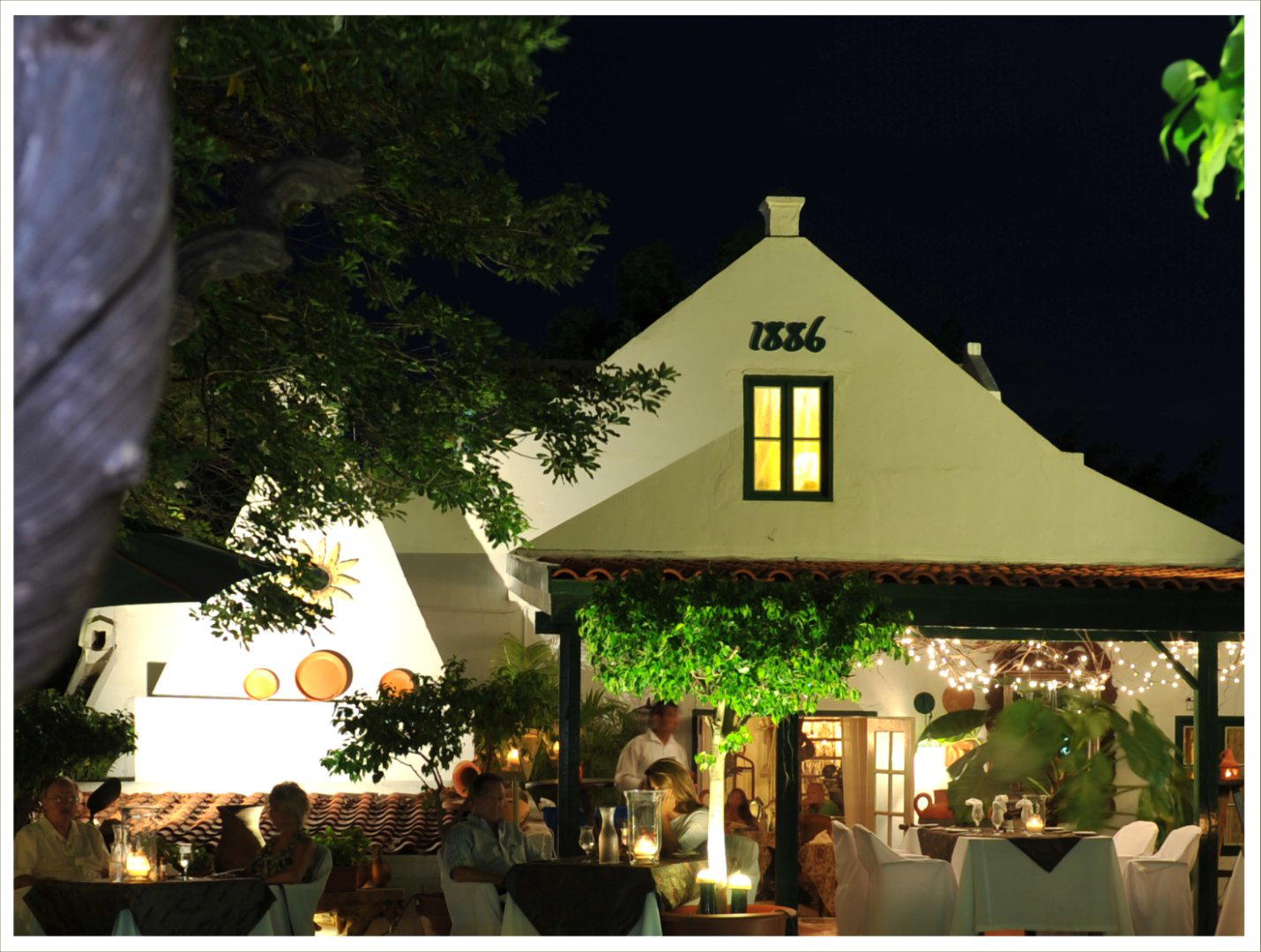
Garden-like atmosphere with twinkling lights, lush foliage, relaxing decor, and serene outdoor seating in a historic stucco Spanish-style structure.