Qué Leche


Michelin Plate · Guía Repsol 1 Sol
Our verdict
Holding a Michelin Plate for two consecutive years (2024 and 2025), Qué Leche operates at the mid-range price tier on Calle Torres in Las Palmas de Gran Canaria. Chef Jennise Ferrari draws on Venezuelan roots and local Canarian produce to build a fusion menu that spans Latin American and Asian reference points, with several dishes designed for sharing.

Pearl is the En Primeur Club membership app, where members save venues, book tables and use the concierge.
The menu
What to order
- Huevos rotos con camarones y mayonesa de trufa
- Cochinillo
- Tarta de queso Qué Leche
- Nigiri de arroz a la cubana
- Magret de pato
- Espuma de maracuyá
Where Las Palmas Fusion Finds Its Footing
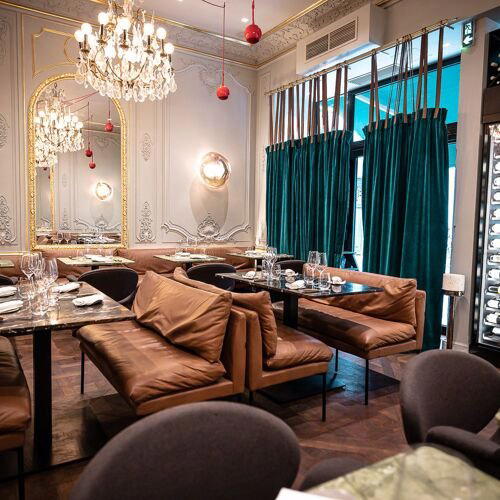
Calle Torres sits in the older residential fabric of Las Palmas de Gran Canaria, away from the tourist-facing promenades and closer to the neighbourhoods where locals actually eat. The street is narrow enough that the restaurant's modest frontage reads as understatement rather than neglect, a deliberate register that the dining room inside confirms. The space is informal and compact, the kind of room where table proximity creates ambient noise rather than crowd energy, and where the food has to carry the evening rather than the setting.
That calculus is worth noting because fusion at this price tier (€€) can easily drift into incoherence, ambitious references without the technique to connect them. What distinguishes the stronger practitioners in this category, and what Michelin's Plate recognition signals, is the ability to hold a clear through-line even when the reference map spans multiple continents. Qué Leche has held that recognition in both 2024 and 2025, which places it in consistent company with Las Palmas restaurants operating at a level above the neighbourhood average without competing on the luxury-format terms of the city's higher-tier tables.
The Awards Context and What It Actually Means
The Michelin Plate is the guide's threshold marker: the food is good enough to warrant a specific visit, even if the full star criteria, consistency, technique, creativity at that level, haven't aligned into a starred entry. In a city where the creative-cuisine tier is anchored by destinations like Muxgo and Poemas by Hermanos Padrón at higher price points, the Plate at €€ represents something different: accessible-format cooking that earns critical attention on merit rather than ceremony.
Two consecutive Plates is also a signal worth reading separately from a single-year mention. It indicates that whatever the kitchen produced to earn first recognition, the team reproduced it. In a small, enthusiastically run restaurant, that kind of consistency is harder to sustain than it looks. Across Spain's broader dining scene, Michelin Plate restaurants at the mid-range tier form a distinct competitive set, places like the neighbourhood-level entrants that sit below starred tables such as Arzak in San Sebastián, El Celler de Can Roca in Girona, or Aponiente in El Puerto de Santa María, yet are pulling away from the generic mid-market in culinary ambition. Qué Leche occupies that position in Las Palmas.
Volume at that score in a city with active dining culture is harder to sustain than a smaller sample; it suggests that the consistency is legible to a broad audience, not just to critics working from a single evening's snapshot.
The Cooking: Fusion With a Declared Geography
The menu at Qué Leche operates from a specific geographic logic: local Canarian ingredients as the base, with structural and flavour references drawn from Venezuela, Mexico, Asia, and Japan. That combination is not arbitrary. The kitchen's Venezuelan influence reflects the chef's own formation, Jennise Ferrari settled in Las Palmas in 2013 after building her culinary background in South America, and it connects Latin American technique to an island ingredient set that already has historical trade links across the Atlantic.
What results is a sharing-oriented menu where individual dishes carry identifiable regional signatures rather than blending into a homogenised pan-global register. The duck magret arrives with enough structural integrity to hold against the richer preparation it sits within. The Cuban-style rice nigiri works as a cross-format hybrid, Japanese presentation logic applied to a different grain tradition, rather than as a novelty item. The Venezuelan pabellón criollo, made here with Wagyu beef, is the dish that most directly places the kitchen's South American fluency on the table. The rabbit EscaViche and sea bass aguachile pull from different ends of the citrus-acid tradition that connects Spanish, Peruvian, and Japanese approaches to raw or lightly cured protein.
Within Las Palmas, this places Qué Leche in a different conversation from the more strictly rooted Canarian creative cooking at places like Tabaiba or Deliciosamarta. The peer comparison within the city's €€ modern cuisine tier is probably closer to El Santo, though the specific fusion references diverge. Internationally, the approach, Latin American foundations meeting Japanese technique at an accessible price point, has parallels in cities with significant South American diaspora cooking communities, from Barcelona to Miami, though in the Canarian context it reads as something more specific to this island's own demographic and agricultural history.
Planning Your Visit
Qué Leche sits at the €€ price tier, which in the Las Palmas context positions it as an accessible mid-range choice rather than a commitment-level spend. The format is informal and the room is compact, which in practical terms means booking ahead is advisable, particularly for dinner on weekends.
The sharing-plate structure of the menu makes it better suited to groups of two to four, where ordering range across three or four dishes allows the geographic breadth of the kitchen's references to become apparent in a single sitting. Coming with just one or two dishes ordered per person would narrow the picture considerably. The Calle Torres address places the restaurant in the city centre, accessible from most accommodation zones in Las Palmas without significant travel time.
For a full picture of where Qué Leche sits within the city's wider offer, see our full Las Palmas de Gran Canaria restaurants guide. If you are planning a longer stay, our Las Palmas de Gran Canaria hotels guide, bars guide, wineries guide, and experiences guide cover the broader scene. For context on where Spanish modern cuisine operates at its most ambitious tier, the reference points include DiverXO in Madrid, Quique Dacosta in Dénia, and Azurmendi in Larrabetzu. For modern cuisine operating at comparable ambition internationally, Frantzén in Stockholm and FZN by Björn Frantzén in Dubai represent the upper end of that conversation.
Frequently asked questions
What awards or recognition does Qué Leche have?
Qué Leche has received recognition including: If, as well as enjoying a meal, you are keen to be part of a gastronomic experience, this restaurant is well worth a visit! Although not overly spacious, this pleasant and informal restaurant is enthusiastically run by Jennise Ferrari, a Ve….
Where do I go for Qué Leche?
Qué Leche is located at C. Torres, 22, 35002 Las Palmas de Gran Canaria, Las Palmas, Spain, Las Palmas de Gran Canaria.
What's the best thing to order at Qué Leche?
The menu is built around sharing, so ordering across several dishes yields the most from the kitchen's range. The Michelin inspectors specifically called out the duck magret, Cuban-style rice nigiri, Venezuelan pabellón criollo with Wagyu beef, the rabbit EscaViche, and sea bass aguachile as standout plates. Working across two or three of those covers the kitchen's geographic reference points, Canarian, Latin American, and Asian, rather than staying in one lane.
What's the price range at Qué Leche?
Pricing at Qué Leche is listed as €€.
What's the best way to book Qué Leche?
Qué Leche is a compact, informal restaurant at the €€ price tier on Calle Torres in central Las Palmas de Gran Canaria. Two consecutive Michelin Plate recognitions (2024 and 2025) have raised its profile above the neighbourhood average, so booking ahead is advisable rather than walking in.
What's Qué Leche best at?
The kitchen's clearest strength is maintaining a coherent identity while pulling from a wide geographic reference range: Canarian produce as the foundation, with Venezuelan, Mexican, Japanese, and broader Asian influences applied with enough discipline that the menu reads as a specific point of view rather than a loose catalogue. At the €€ tier, that level of structural focus is less common, which is the ground the Michelin Plate citation effectively validates.
Price and Recognition
| Venue | Cuisine | Price | Awards | Notes |
|---|---|---|---|---|
| Qué LecheThis venue (the venue you are viewing) | Modern Fusion with Canarian & Venezuelan Influences | $30–50 | Michelin Plate · Guía Repsol 1 Sol | Not listed |
| Muxgo | Contemporary Canarian Haute Cuisine | $150–200 | 1 Michelin Star · Guía Repsol 1 Sol | Creative |
| Poemas by Hermanos Padrón | Modern Mediterranean Fine Dining | $100–150 | 1 Michelin Star · Guía Repsol 2 Soles | Creative |
| El Equilibrista 33 | Modern Canarian | $30–50 | Michelin Bib Gourmand · Guía Repsol 1 Sol | Creative |
| El Santo | Modern Canarian-Mexican Fusion | $50–100 | Michelin Plate | Modern Cuisine |
| Hikari Japanese Roots | Modern Japanese Omakase | Not listed | Michelin Plate | Japanese |
Recognition history
Dated appearances from independent guides and award organizations, with the underlying list record or original source where available.
Michelin Plate
Michelin
Guía Repsol 1 Sol
Guía Repsol
Full recognition history (4 entries)
Michelin Plate
Michelin
Michelin Plate
Michelin
Continue exploring
More in Las Palmas de Gran Canaria
Restaurants in Las Palmas de Gran Canaria
All restaurants in Las Palmas de Gran Canaria →
Bars in Las Palmas de Gran Canaria
All bars in Las Palmas de Gran Canaria →
Details
- Intimate
- Cozy
- Elegant
- Sophisticated
- Date Night
- Special Occasion
- Celebration
- Open Kitchen
- Terrace
- Sommelier Led
- Local Sourcing
- Farm To Table
- A La Carte
- Small Plates
- Wine
- Vegetarian Friendly
- Vegan Options
- Gluten Free Options
- Allergy Accommodating
Current opening hours
- Monday
- Closed
- Tuesday
- 1–4 PM, 8:30–11 PM
- Wednesday
- 1–4 PM, 8:30–11 PM
- Thursday
- 1–4 PM, 8:30–11 PM
- Friday
- 1–4 PM, 8:30–11 PM
- Saturday
- 1–4 PM, 8:30–11 PM
- Sunday
- Closed
Hours can change for holidays and private events. Hours as of .
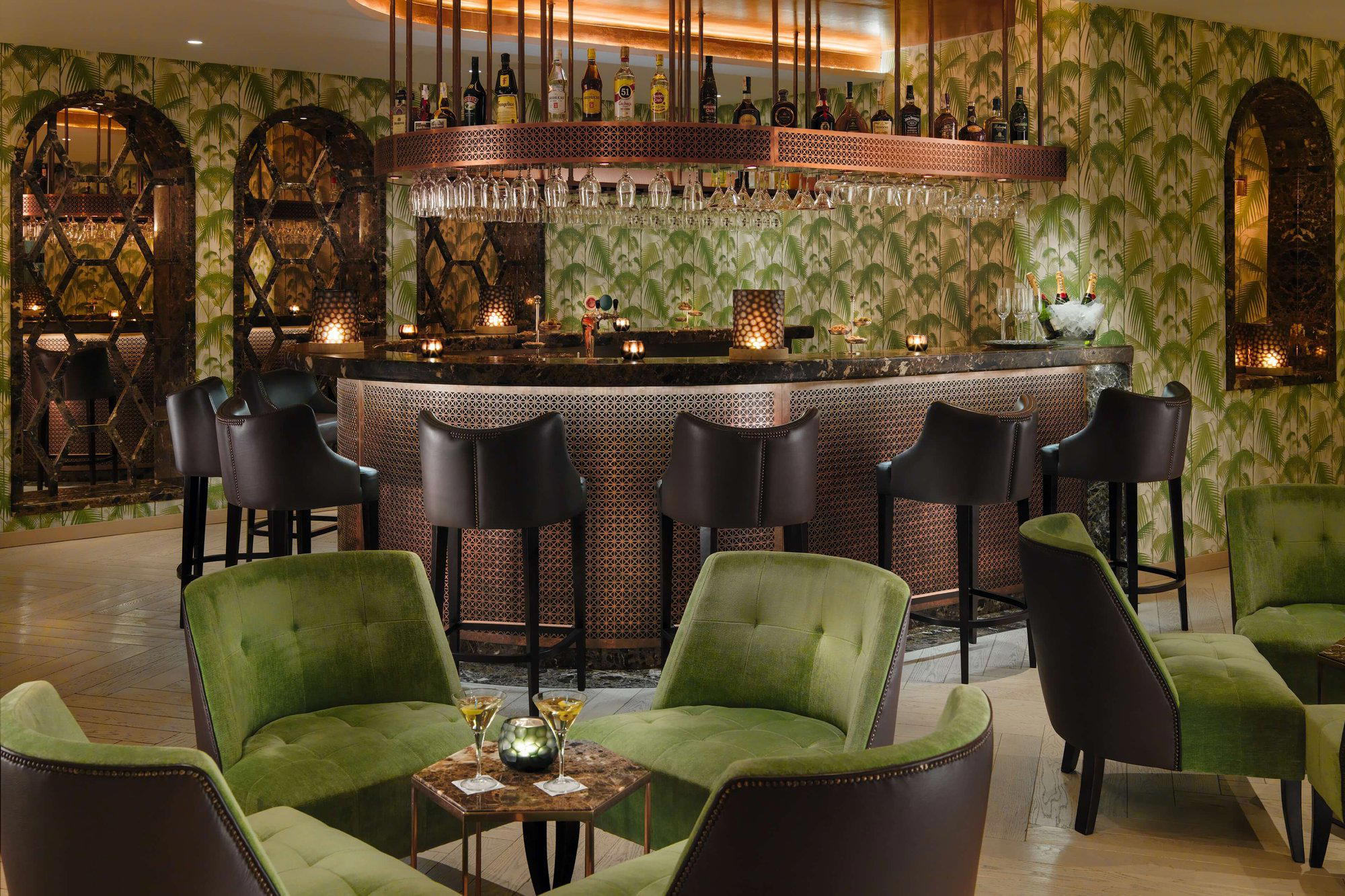
Warm, inviting, and intimate atmosphere with coqueta informal décor, well-dressed tables, and careful presentation; small space creates cozy feel without cramped sensation.