

1 Michelin Star · Guía Repsol 1 Sol
Our verdict
Inside Las Palmas de Gran Canaria's Santa Catalina Royal Hideaway hotel, Muxgo holds a Michelin star for creative cooking grounded in the Canary Islands' own land. Chef Borja Marrero sources directly from his farm in Tejeda, pulling ingredients like pine bark, millet, and prickly pear into three structured tasting menus. It is one of the clearest arguments in the city for what island-sourced fine dining can look like at its most considered.

Pearl is the En Primeur Club membership app — saves, bookings, and concierge access live there. Same editors, same standards.
- Address
- Santa Catalina, a Royal Hideaway Hotel, C. León y Castillo, 227, 35005 Las Palmas de Gran Canaria, Las Palmas, Spain
- Phone
- +34 828 15 00 28
- Hours
- Mon–Tue ClosedWed–Sat 1:30–3:30 PM, 8–11:30 PMSun 1:30–3:30 PM
- Website
- barcelo.com
- Directions
- Get directions
- Booking
- Book on the venue's website
The menu
What to order
- Camarón soldado de Mogán macerado en aceite de pipa de almendro quemada
- Cheese soup
- Prickly pear dishes
A Dining Room Built Around a Single Island
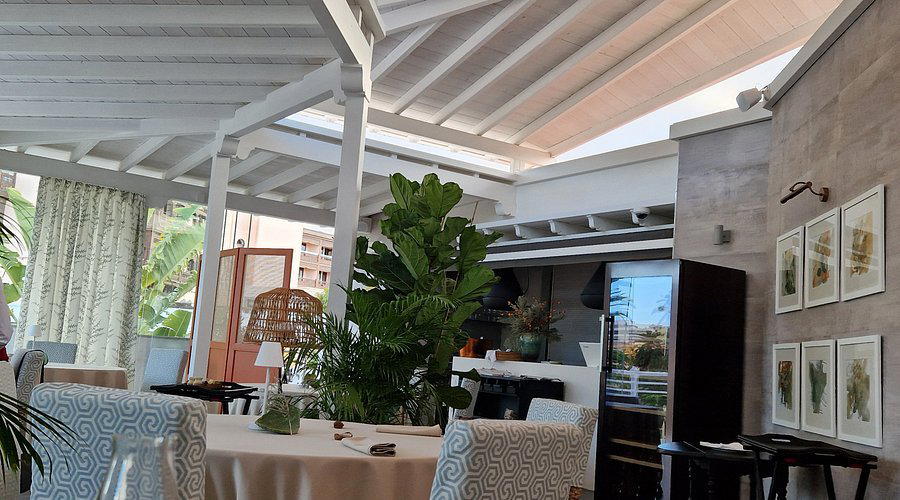
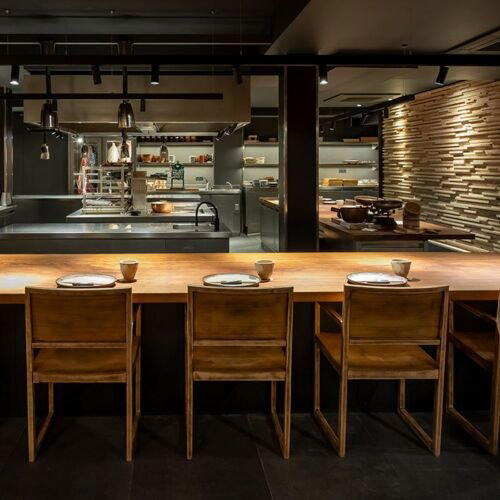
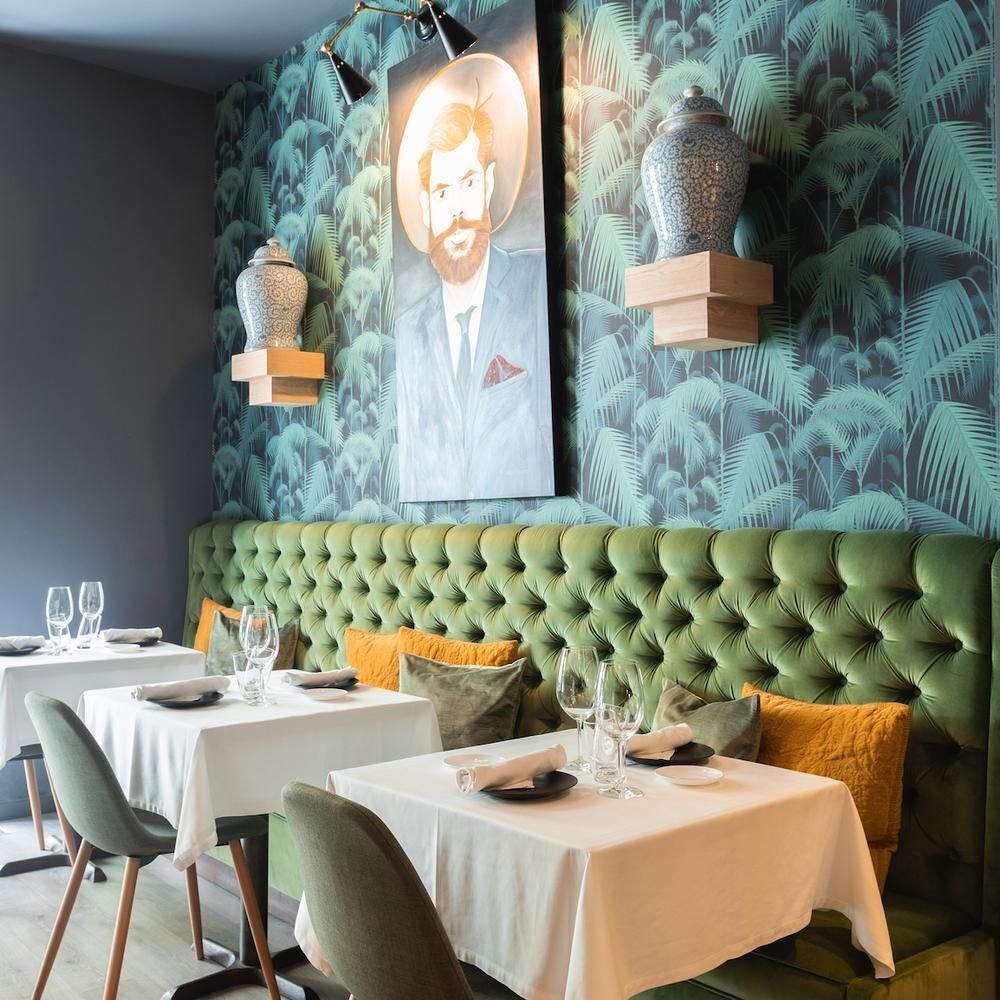
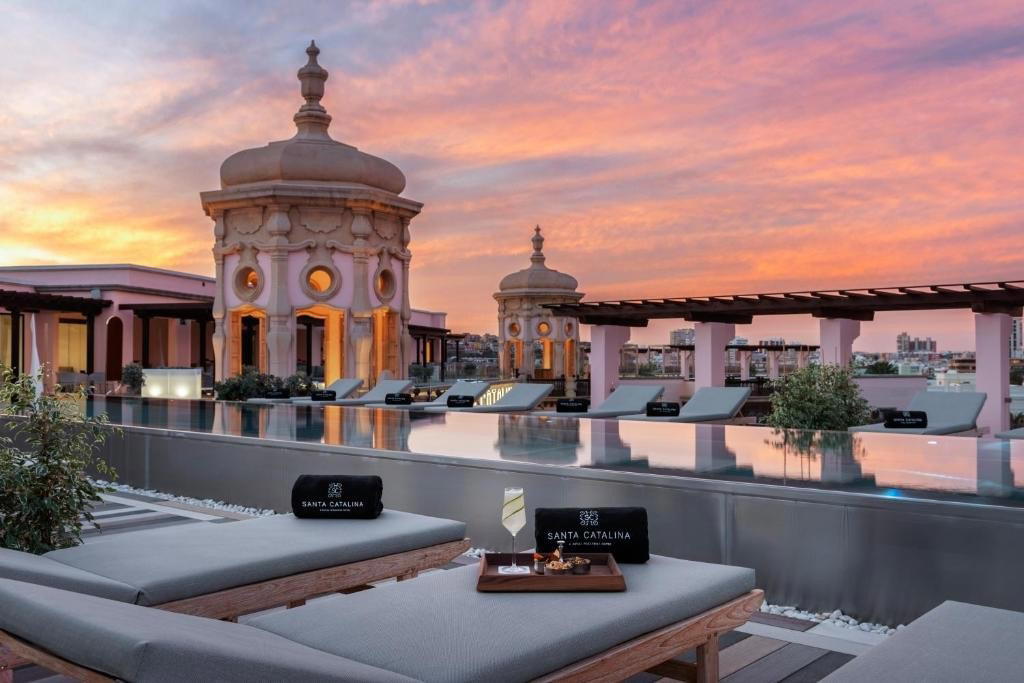
The Santa Catalina Royal Hideaway is one of Las Palmas de Gran Canaria's landmark historic hotels, and Muxgo occupies its fine dining position with a dining room that earns attention on its own terms. Watercolours by artist Ana Beltrán line the walls alongside a mural depicting some of the ingredients that drive the kitchen: pine bark, millet, prickly pear, cattle-derived meal. The effect is more greenhouse inventory than decorative gesture, which is precisely the point. Before a single dish arrives, the room communicates what kind of cooking this is going to be.
That physical clarity matters in the context of Las Palmas's creative dining scene, which has broadened considerably in recent years. Poemas by Hermanos Padrón operates at €€€ and Tabaiba sits at the same €€€€ tier as Muxgo, while El Equilibrista 33 and El Santo serve creative and modern cooking at more accessible price points. Within that range, Muxgo positions itself at the top tier with a specific argument: that the Canary Islands have a culinary identity worth expressing at Michelin-star level, and that identity runs through the soil of a working farm rather than through imported luxury ingredients.
What Three Tasting Menus Actually Deliver
At the €€€€ price point, the question any serious diner should ask is what the spend actually produces. Muxgo answers with three structured tasting menus, each with a distinct editorial logic. Los Orígenes positions itself as an entry into the kitchen's foundational thinking, drawing on ingredients rooted in the Canary Islands' agricultural and culinary DNA. Lo más profundo de Tejeda goes further into the volcanic interior, with Tejeda being the mountain village where chef Borja Marrero operates the farm that supplies the restaurant. The third option, Sin olvidar el territorio, is an executive format served only at midweek lunchtimes, a shorter path through the same ingredient philosophy at a format suited to those who want a structured meal without a full evening commitment.
The Mogán shrimp macerated in toasted almond oil appears in the available record as a reference dish, and it illustrates the kitchen's approach cleanly: a local crustacean, treated with a technique that amplifies rather than obscures its origin, paired with an ingredient (almond) that has deep roots in Canarian agriculture. This is not the kind of creative cooking that imports prestige ingredients and adds a local garnish. The localism here is structural, running through the sourcing logic of every component rather than appearing as a decorative Canarian note on an otherwise continental menu.
Spain's Michelin-starred creative cooking scene sets a demanding benchmark. Houses like Aponiente in El Puerto de Santa María, Arzak in San Sebastián, DiverXO in Madrid, El Celler de Can Roca in Girona, Quique Dacosta in Dénia, and Azurmendi in Larrabetzu have each built internationally recognised programs on the strength of place-specific thinking. Muxgo enters that broader conversation as the Canary Islands' contribution to a tradition where the most compelling argument a kitchen can make is one that could not have been made anywhere else. A Michelin star awarded in 2024 signals that the argument is being heard.
The Farm at Tejeda: Extending the Experience
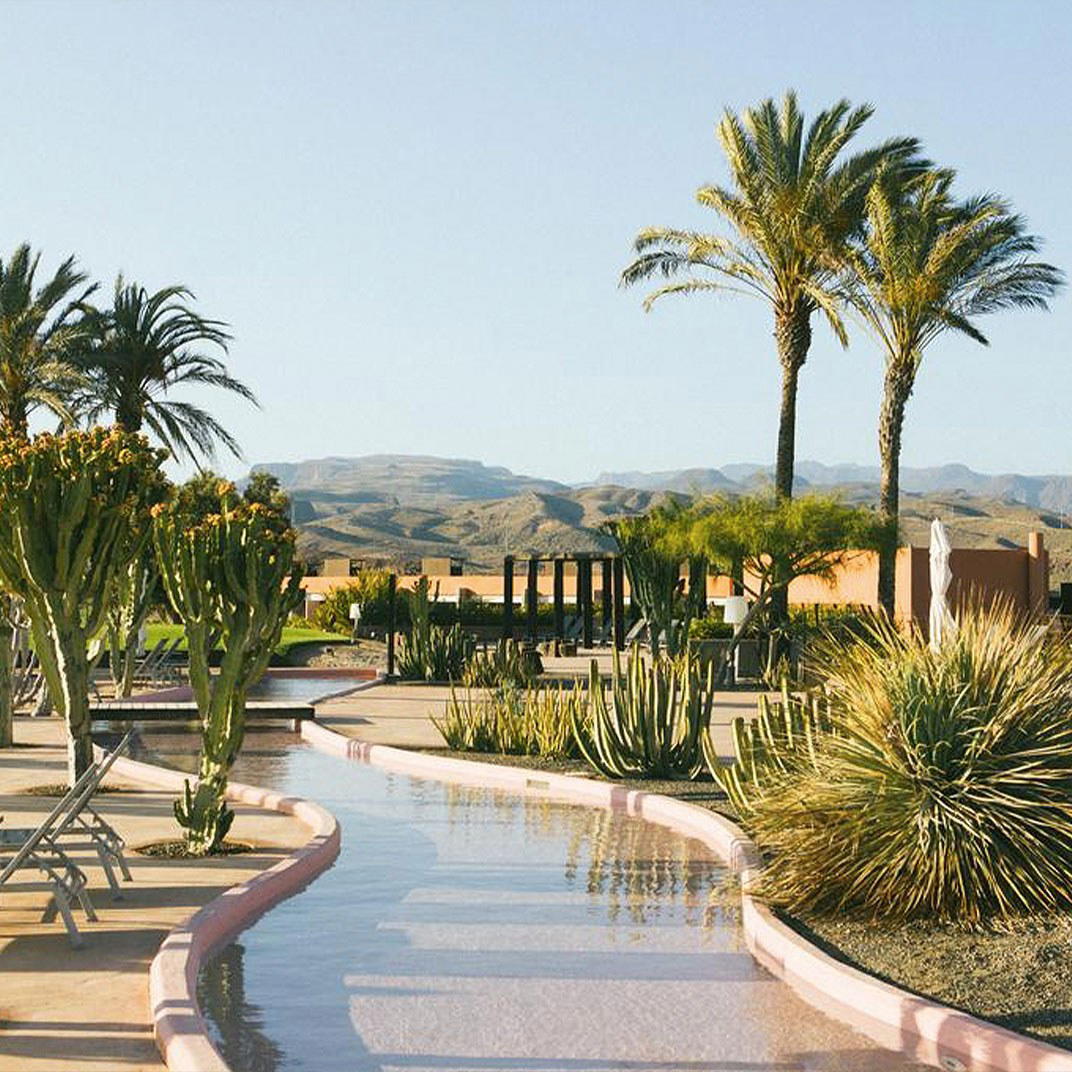
Few Michelin-starred restaurants in Spain offer a direct extension into the agricultural source of their menus, which makes the farm visit option at Tejeda a meaningful differentiator at this price tier. Tejeda sits in the island's mountainous interior, a different ecological register entirely from the coastal capital. The farm produces the pine bark, millet, prickly pear, and cattle-derived ingredients that appear throughout the menus. Visiting it converts the tasting menu from an abstract exercise in localism into something verifiable and physical.
This kind of farm-to-table transparency has become a marker of serious intent in European fine dining over the past decade, and venues like Alléno Paris au Pavillon Ledoyen and Enrico Bartolini in Milan each operate within broader ecosystems that connect kitchen to source. At Muxgo, the farm is not a talking point in the press release sense but a physical place you can book. Advance planning is necessary, however. The restaurant is explicit that farm visits require booking well ahead, and this is not a spontaneous add-on to a meal.
How Muxgo Sits Within Las Palmas's Dining Character
Las Palmas de Gran Canaria is a city where the dining conversation has historically been dominated by seafood and traditional Canarian cooking, with creative fine dining occupying a smaller, higher-stakes tier. The city's geographic position, mid-Atlantic rather than Mediterranean, gives its ingredient pool a different character from mainland Spain: fish from cooler Atlantic currents, volcanic-soil produce with mineral intensity, and a culinary tradition that absorbed influences from Africa, Latin America, and the Iberian Peninsula without fully resolving into any of them.
Muxgo's decision to anchor its menus in that hybrid agricultural identity rather than reaching for continental prestige ingredients is a coherent response to where the city sits. Restaurants at this price level in other European cities often default to sourcing protocols that could operate anywhere (Japanese A5 wagyu, Périgord truffle, Brittany lobster). The Canary Islands do not produce those ingredients, which forces a kitchen serious about localism to work with what volcanic soil and Atlantic waters actually yield. The resulting menu is more specific, and specificity at this price point is what justifies the spend.
For those building a broader picture of the city's dining options, our full Las Palmas de Gran Canaria restaurants guide covers the range from accessible creative cooking to the leading Michelin tier. The bars guide, hotels guide, wineries guide, and experiences guide provide the surrounding context for a longer stay. Deliciosamarta is also worth noting in the city's creative dining conversation for those exploring the full range.
Planning a Visit
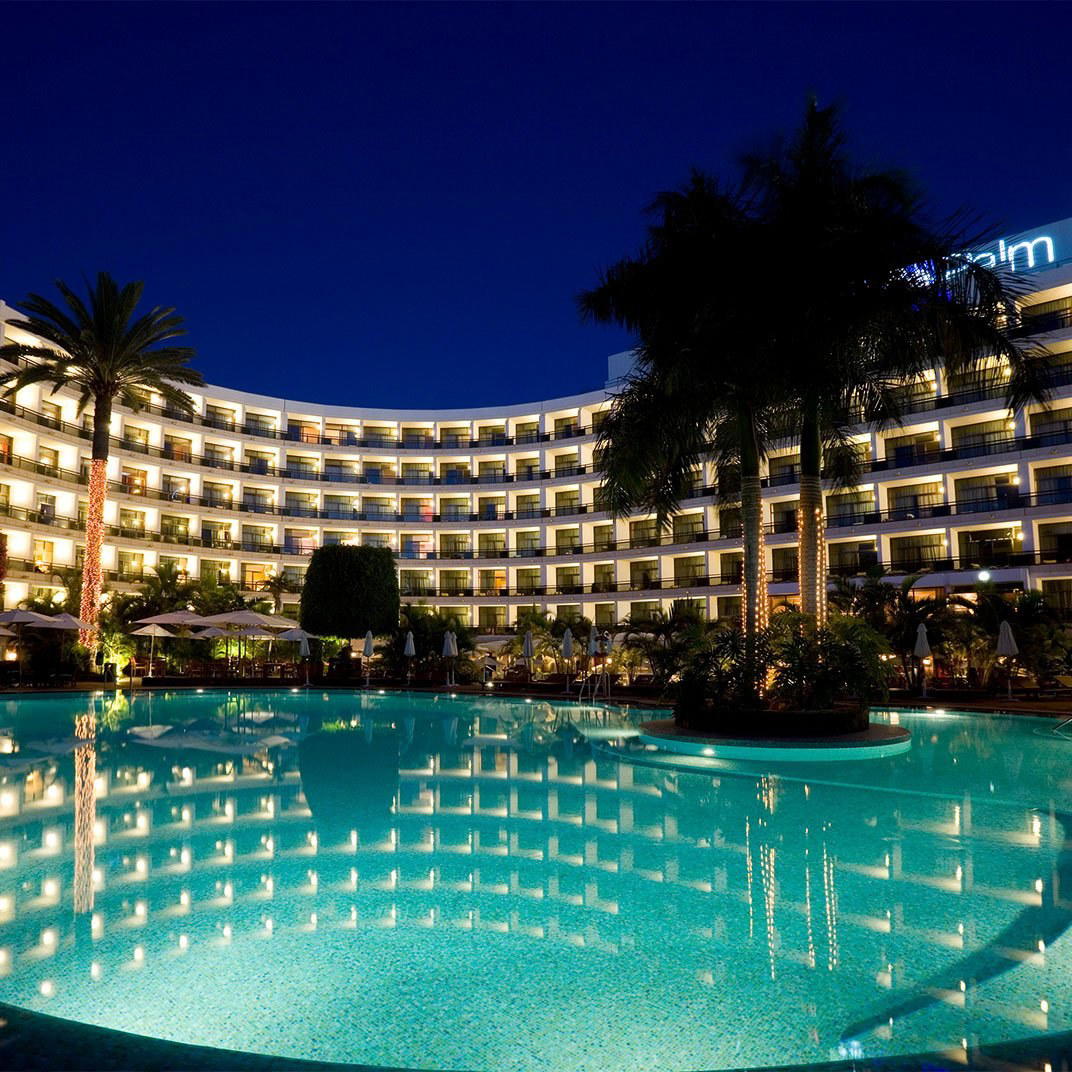
Muxgo operates within the Santa Catalina Royal Hideaway hotel at C. León y Castillo, 227, in Las Palmas de Gran Canaria. The hotel's location in the city places it in proximity to the Parque Doramas area, one of Las Palmas's more established residential and hospitality districts. Hotel guests have the option of combining a tasting menu with a stay, which removes any logistical friction for those arriving from outside the island. The midweek lunchtime format of Sin olvidar el territorio is the most accessible entry point in terms of time commitment, though it is only available Tuesday through Friday. The fuller evening menus, Los Orígenes and Lo más profundo de Tejeda, give the kitchen more room to develop its sourcing argument across a longer sequence of courses.
The Michelin star, awarded in 2024, confirms the kitchen's standing within Spain's critical framework. At €€€€, this is not the most accessible meal in Las Palmas, but the combination of Michelin recognition, farm-sourced ingredients with genuine geographic specificity, and the option to extend the experience to Tejeda produces a value proposition that is harder to find at lower price points in the city.
What Do Regulars Order at Muxgo?
Regulars with knowledge of the kitchen's sourcing philosophy tend to treat the Mogán shrimp macerated in toasted almond oil as a reference point, a dish that condenses the restaurant's approach into a single course: Atlantic seafood, Canarian agricultural ingredients, precise technique. The broader advice from those who know the menus is to commit to Lo más profundo de Tejeda if the goal is the fullest expression of what the kitchen can do, given that it draws most directly on the farm in Tejeda and requires the most preparation from the kitchen. The farm visit itself, available as a separate booking, is consistently cited as the experience that makes the tasting menu retrospectively more legible, though it requires planning well in advance of the restaurant visit. Chef Borja Marrero's 2024 Michelin star and the depth of the sourcing program from his own farm anchor this restaurant's reputation across both the creative and fine dining tiers of Las Palmas.
Recognition, Side-by-Side
| Venue | Cuisine | Price | Awards | Notes |
|---|---|---|---|---|
| MuxgoThis venue — the venue you are viewing | Contemporary Canarian Haute Cuisine | $150–200 | 1 Michelin Star · Guía Repsol 1 Sol | Not listed |
| Poemas by Hermanos Padrón | Modern Mediterranean Fine Dining | $100–150 | 1 Michelin Star · Guía Repsol 2 Soles | Creative |
| Tabaiba | Evolutionary Canarian Cuisine | $150–200 | 1 Michelin Star | Creative |
| El Equilibrista 33 | Modern Canarian | $30–50 | Michelin Bib Gourmand · Guía Repsol 1 Sol | Creative |
| El Santo | Modern Canarian-Mexican Fusion | $50–100 | Michelin Plate | Modern Cuisine |
| Hikari Japanese Roots | Modern Japanese Omakase | Not listed | Michelin Plate | Japanese |
Recognition history
Dated appearances from independent guides and award organizations, with the underlying list record or original source where available.
Michelin 1 Star
Michelin
Guía Repsol 1 Sol
Guía Repsol
Full recognition history (4 entries)
Michelin 1 Star
Michelin
Michelin 1 Star
Michelin
Continue exploring
More in Las Palmas de Gran Canaria
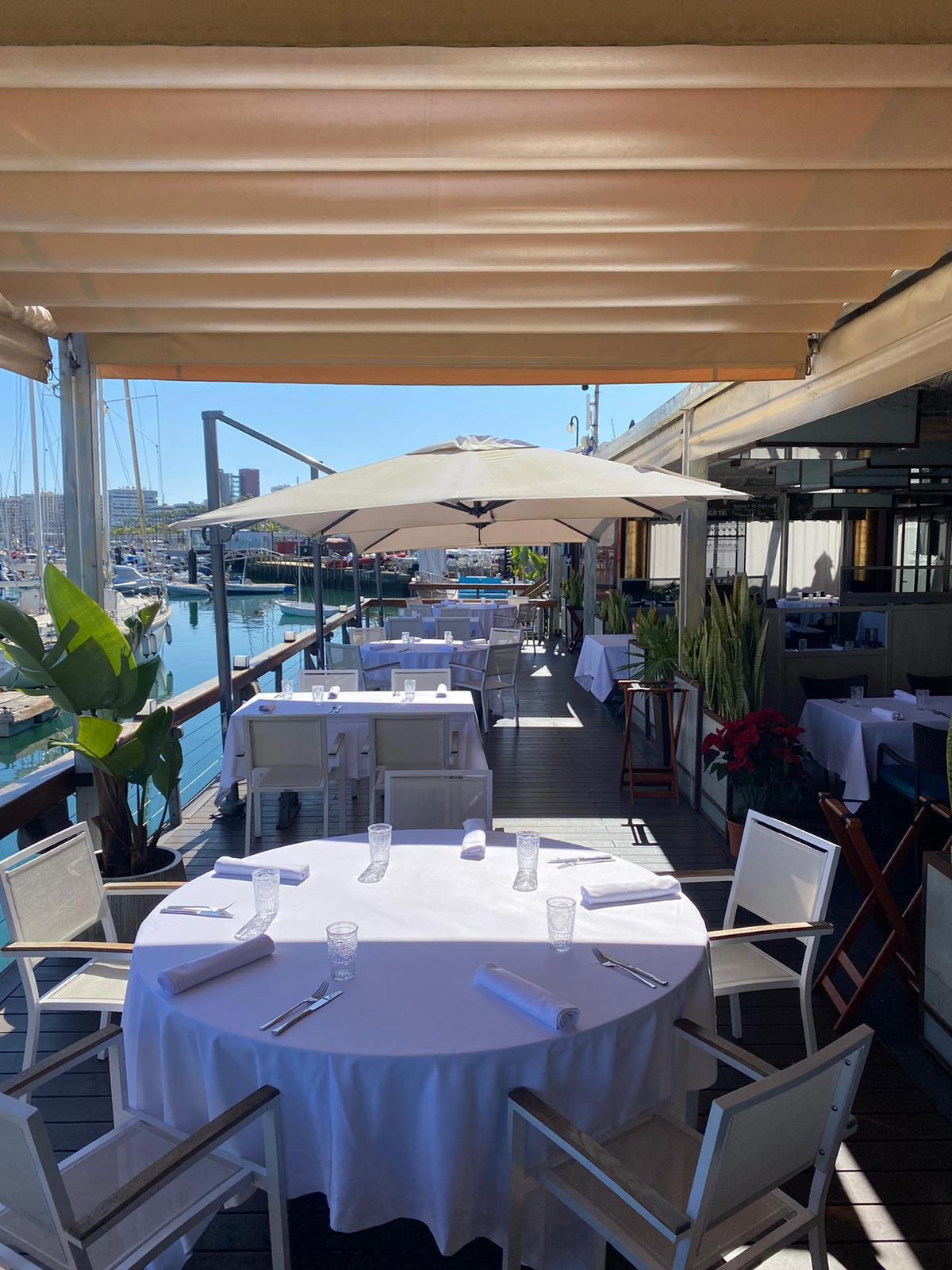
Restaurants in Las Palmas de Gran Canaria
Browse all →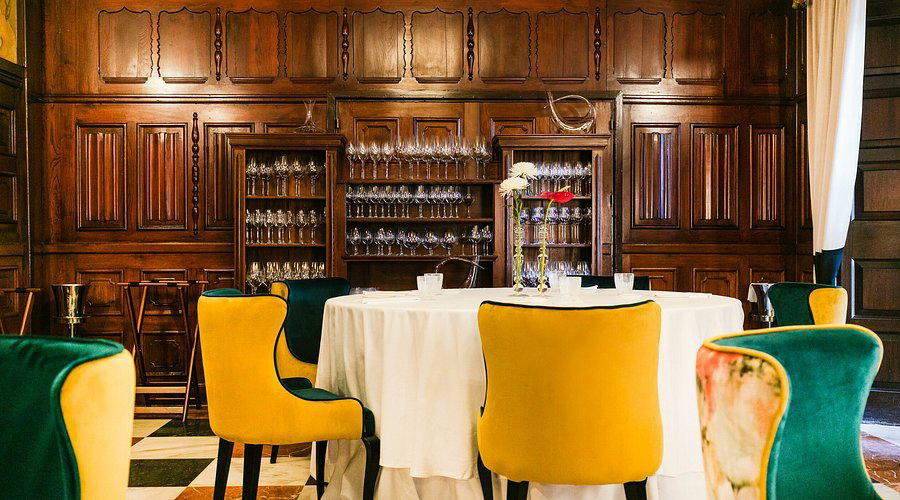
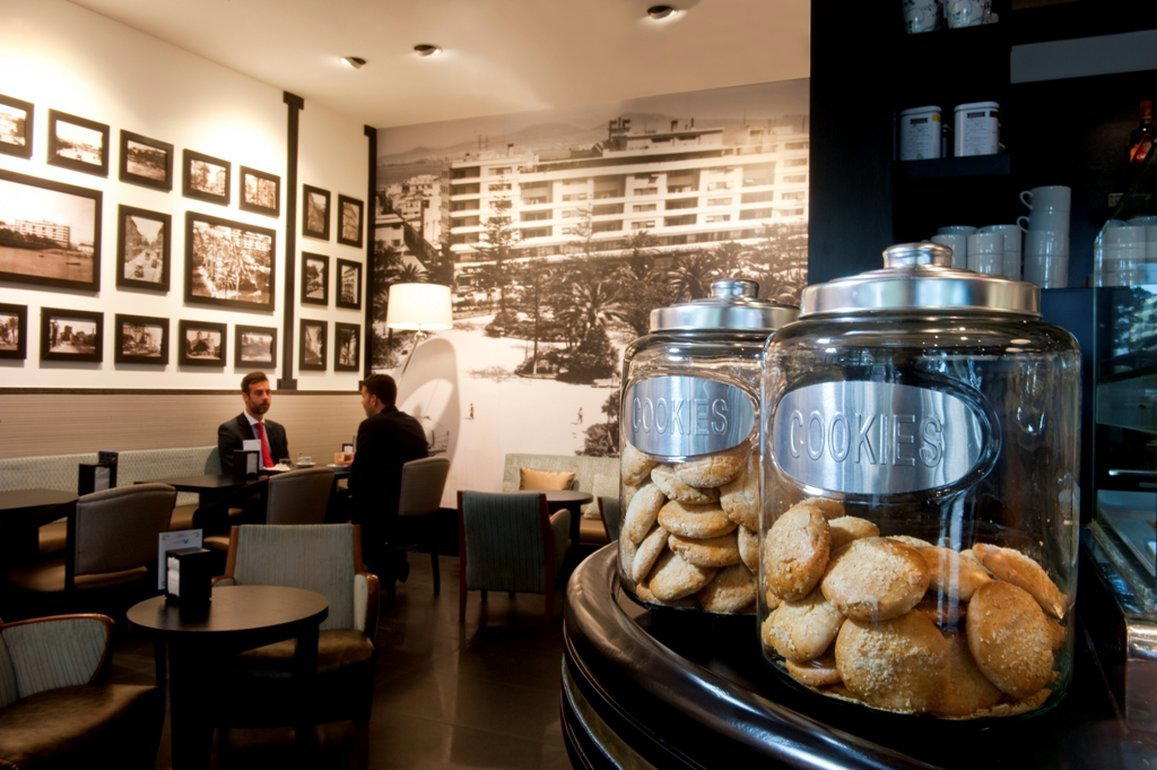
Bars in Las Palmas de Gran Canaria
Browse all →
Details
- Elegant
- Sophisticated
- Scenic
- Modern
- Special Occasion
- Date Night
- Celebration
- Rooftop
- Terrace
- Garden
- Hotel Restaurant
- Open Kitchen
- Sommelier Led
- Farm To Table
- Organic
- Local Sourcing
- Sustainable Seafood
- Zero Waste
- Garden
- Tasting Menu
- Set Menu
- Local Wines
- Wine Pairings
- Vegetarian Friendly
- Organic Focus
- Allergy Accommodating
Current opening hours
- Monday
- Closed
- Tuesday
- Closed
- Wednesday
- 1:30–3:30 PM, 8–11:30 PM
- Thursday
- 1:30–3:30 PM, 8–11:30 PM
- Friday
- 1:30–3:30 PM, 8–11:30 PM
- Saturday
- 1:30–3:30 PM, 8–11:30 PM
- Sunday
- 1:30–3:30 PM
Hours can change for holidays and private events. Last verified .
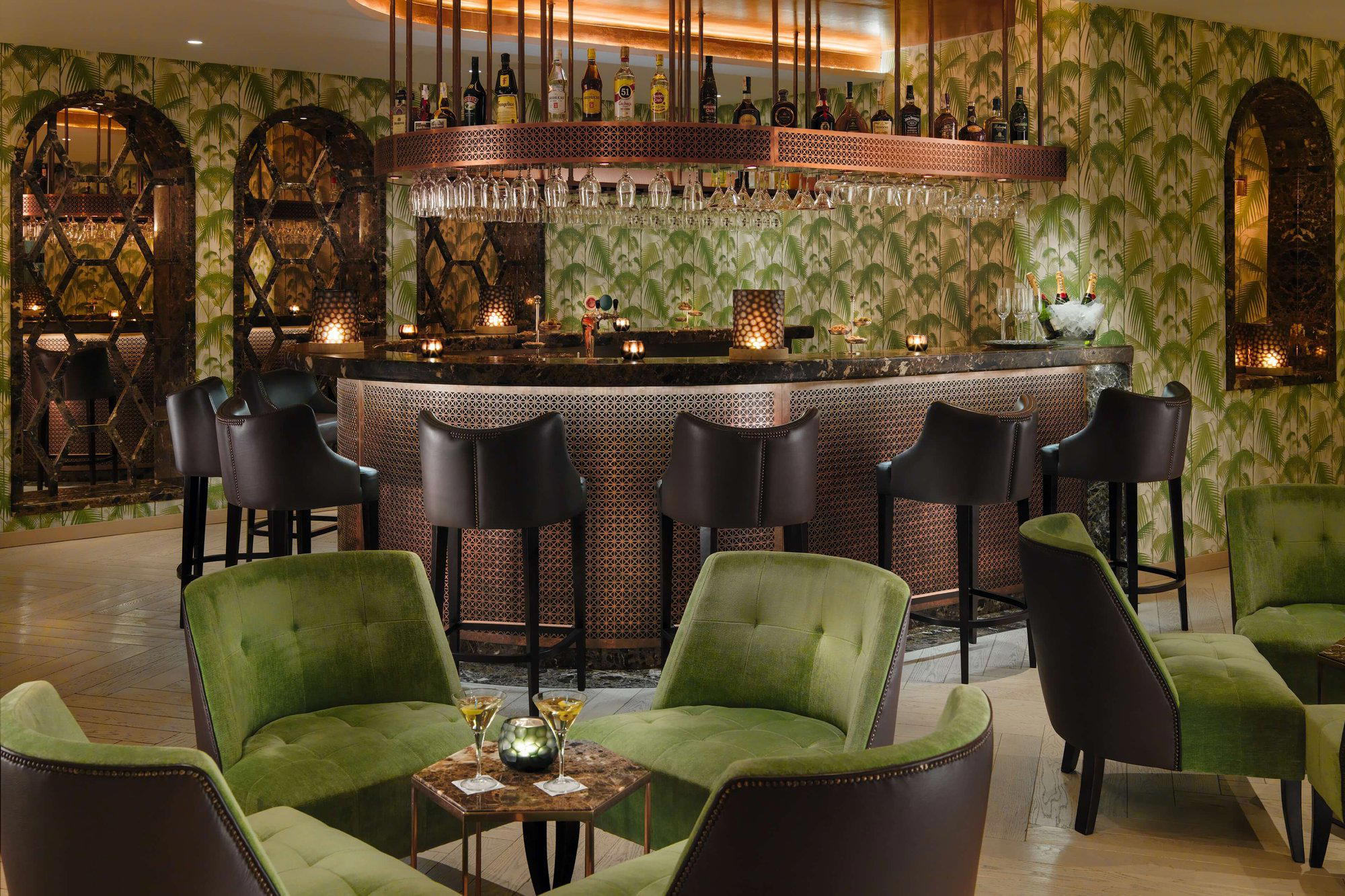
Bright, open dining room with natural light overlooking Santa Catalina Park, decorated with watercolor artworks and murals reflecting the chef's signature ingredients; located on the hotel terrace with a vertical garden visible from the dining space.