
Michelin Plate
Our verdict
A Michelin Plate-recognised spot on Avenida la Habana, qapaq brings Peruvian cooking to Arona's southern Tenerife coastline with a Mediterranean sensibility rooted in local market produce. The menu spans wok-chifa preparations, grilled dishes, and two tasting menus, with tiraditos and Arequipa-style shrimp chupe among the standout plates.

Pearl is the En Primeur Club membership app, where members save venues, book tables and use the concierge.
The menu
What to order
- Ceviche
- Lomo saltado
- Tiradito
- Ceviche cartillero
- Crispy sea bass
Arona sits at the southern tip of Tenerife, where the Atlantic light is flat and bright and the shoreline neighbourhoods run together in a strip of low-rise restaurants, beach bars, and holiday apartments. It is not a city that telegraphs culinary ambition, which makes the concentration of serious cooking along Avenida la Habana and its surrounding streets a recurring surprise for visitors who assume the area caters only to resort appetites. A short walk from the beach, qapaq occupies that gap between casual coastal dining and something with considerably more structural thought behind it. The Michelin Plate recognition it has held across both 2024 and 2025 confirms that the inspectors agree.
Peruvian Cooking in a Mediterranean Frame
The editorial angle worth noting here is not that qapaq serves Peruvian food in Spain, but what that combination actually means in practice. Peruvian cuisine already contains one of the world's most developed traditions of cross-cultural absorption: the Japanese-inflected nikkei school, the chifa tradition brought by Chinese immigrants, and the ceviche and tiradito canon that draws on coastal geography and acid-cure technique. When that tradition meets a Mediterranean supply chain, and specifically the market produce of the Canary Islands, the result is not fusion in the watered-down sense. It is an extension of a logic that Peruvian cooking has always applied, which is that the leading local ingredient takes precedence.
That logic is relevant when you consider where qapaq sits in the broader Spanish dining context. At the far end of the price and ambition scale, restaurants like Disfrutar in Barcelona, DiverXO in Madrid, and El Celler de Can Roca in Girona operate at the €€€€ tier with global reputations and multi-month booking windows. Closer to qapaq's register, the question is different: can a mid-price restaurant in a resort town hold Michelin recognition two years running while staying genuinely rooted in a specific culinary tradition? The answer here is yes, and the mechanism is the sourcing discipline. Market produce from the local Canarian supply grounds the menu in place even as the technique and flavour logic remain firmly Peruvian.
The Menu: Structure and What to Order
The format gives diners a choice between ordering à la carte or committing to one of two tasting menus. The 'Al Toque' and 'Karu Kay' menus offer different depths of engagement with the kitchen's range, and the wok-chifa section of the à la carte signals the chifa strand of Peruvian cooking that rarely appears with any seriousness outside Lima's dedicated Chinese-Peruvian houses. Grilled preparations sit alongside the wok dishes, giving the menu a structural range that covers both the fire-and-smoke end of Peruvian technique and the raw and cured tradition.
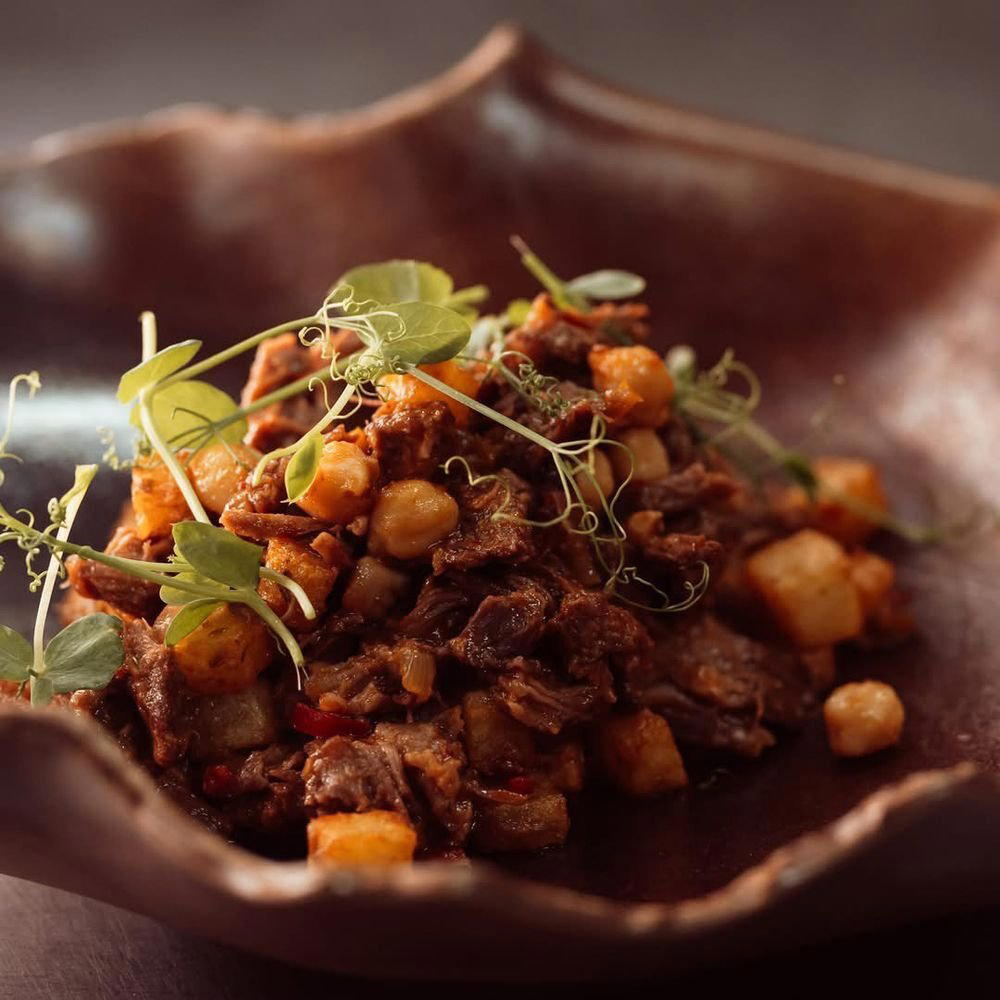
The tiraditos are the most direct expression of the kitchen's command of acid-cure work. Where ceviche uses citrus cure as a marinade, tiradito applies it more lightly, closer to Japanese tataki in its restraint, and the quality of the raw ingredient shows immediately. The Arequipa-style shrimp chupe arrives as a thick, spiced chowder rooted in the southern Peruvian highlands, where chupe is a category of hearty soup rather than a single recipe. The Arequipa version traditionally involves dried shrimp, aji panca, and dairy, and the interplay of heat and richness makes it one of the more texturally complex dishes in the Peruvian repertoire. For dessert, the lucuma soup draws on one of Peru's most distinctive indigenous fruits, whose caramel-sweet, starchy character sits somewhere between sweet potato and maple, and which is almost impossible to source fresh outside South America. Its presence on the menu is an indicator of the kitchen's sourcing reach.
Price range sits at the €€ tier, which in a Canary Islands context places it in the mid-range bracket, accessible without the planning overhead that the €€€€ rooms at Arzak in San Sebastián, Azurmendi in Larrabetzu, or Martin Berasategui in Lasarte-Oria require. For Peruvian cooking at a comparable level of seriousness in North America, Causa in Washington, D.C. and ITAMAE in Miami represent the benchmark tier. Qapaq sits in a different market entirely, but the Michelin recognition places it in a peer conversation that runs beyond its immediate neighbourhood.
Arona's Dining Context
Within Arona itself, qapaq occupies a distinct position among restaurants that take their sourcing and technique seriously. Blu and Condividere represent different points on the local spectrum, and the area supports a wider range of eating and drinking than its resort reputation suggests. For visitors mapping their time across the island, the full picture of options is laid out in our full Arona restaurants guide. Those extending into other categories will find context in our full Arona hotels guide, our full Arona bars guide, our full Arona wineries guide, and our full Arona experiences guide.
It is also worth placing qapaq in the wider geography of ambitious Spanish dining. The Canary Islands have historically sat outside the peninsula's fine-dining conversation, which has been dominated by the Basque Country and Catalonia. Restaurants like Quique Dacosta in Dénia, Aponiente in El Puerto de Santa María, and Mugaritz in Errenteria anchor that conversation. Qapaq makes no claim to that register, nor does it need to. Its argument is a different one: that a precise, market-sourced Peruvian kitchen, maintained to Michelin Plate standard across consecutive years, can operate at a price point and in a location that puts it within reach of a much wider audience than the fine-dining tier.
Planning Your Visit
Qapaq is located at Avenida la Habana, 14, in the 38650 postal district of Arona, Santa Cruz de Tenerife. The address places it close to the southern beach strip, walkable for guests staying in the immediate coastal area. Neither hours nor booking method are published in the venue data, so confirming current service times and availability directly before visiting is the practical step.
Frequently asked questions
What price level is qapaq?
Pricing at qapaq is listed as €€.
Do I need a reservation for qapaq?
Qapaq holds a Michelin Plate for 2024 and 2025, which puts it among the more sought-after tables in Arona. Booking ahead is advisable, particularly if you want to secure a spot on one of the two tasting menus, 'Al Toque' or 'Karu Kay'.
What is qapaq known for?
Qapaq is a Michelin Plate-recognised restaurant on Avenida la Habana in Arona that serves Peruvian cooking anchored to local Canarian market produce. The menu spans wok-chifa preparations and grilled dishes à la carte, plus two tasting menus that incorporate Mediterranean ingredients into a Peruvian framework. The price range sits at the €€ level, making it accessible relative to its recognition.
Cuisine-First Comparison
| Venue | Cuisine | Price | Awards | Notes |
|---|---|---|---|---|
| qapaqThis venue (the venue you are viewing) | Peruvian with Mediterranean Touch | $50–100 | Michelin Plate | Not listed |
| Aponiente | Avant-Garde Marine Seafood | $200–300 | 3 Michelin Stars · World's 50 Best #84 | Progressive - Seafood, Creative |
| Arzak | Contemporary Basque Fine Dining | $300–500 | 3 Michelin Stars · World's 50 Best #31 | Modern Basque, Creative |
| DiverXO | Avant-Garde Spanish Tasting Menu | $300–500 | 3 Michelin Stars · World's 50 Best #4 | Progressive - Asian, Creative |
| El Celler de Can Roca | Creative Catalan Fine Dining | $300–500 | 3 Michelin Stars · World's 50 Best #2 | Progressive Spanish, Creative |
| Quique Dacosta | Avant-Garde Spanish Fine Dining | $300–500 | 3 Michelin Stars · World's 50 Best #65 | Creative |
Recognition history
Dated appearances from independent guides and award organizations, with the underlying list record or original source where available.
Michelin Plate
Michelin
Full recognition history (3 entries)
Michelin Plate
Michelin
Michelin Plate
Michelin
Continue exploring
More in Arona
Restaurants in Arona
All restaurants in Arona →
Bars in Arona
Browse all →
Details
- Elegant
- Intimate
- Sophisticated
- Cozy
- Date Night
- Special Occasion
- Celebration
- Group Dining
- Standalone
- Terrace
- Extensive Wine List
- Craft Cocktails
- Local Sourcing
- Farm To Table
- Tasting Menu
- A La Carte
- Pisco Sour
- Wine
- Pescatarian Friendly
- Vegetarian Friendly
Current opening hours
- Monday
- Closed
- Tuesday
- Closed
- Wednesday
- 1:30–3:30 PM, 6:30–10 PM
- Thursday
- 1:30–3:30 PM, 6:30–10 PM
- Friday
- 1:30–3:30 PM, 6:30–10 PM
- Saturday
- 1:30–3:30 PM, 6:30–10 PM
- Sunday
- 1:30–3:30 PM, 6:30–10 PM
Hours can change for holidays and private events. Hours as of .
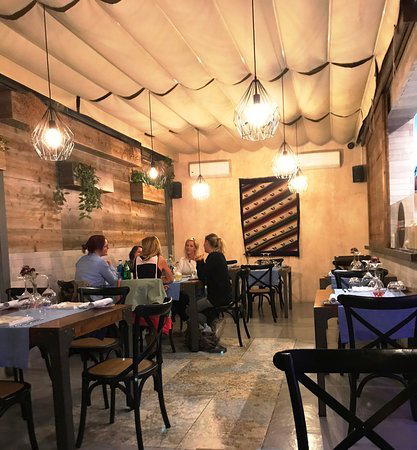
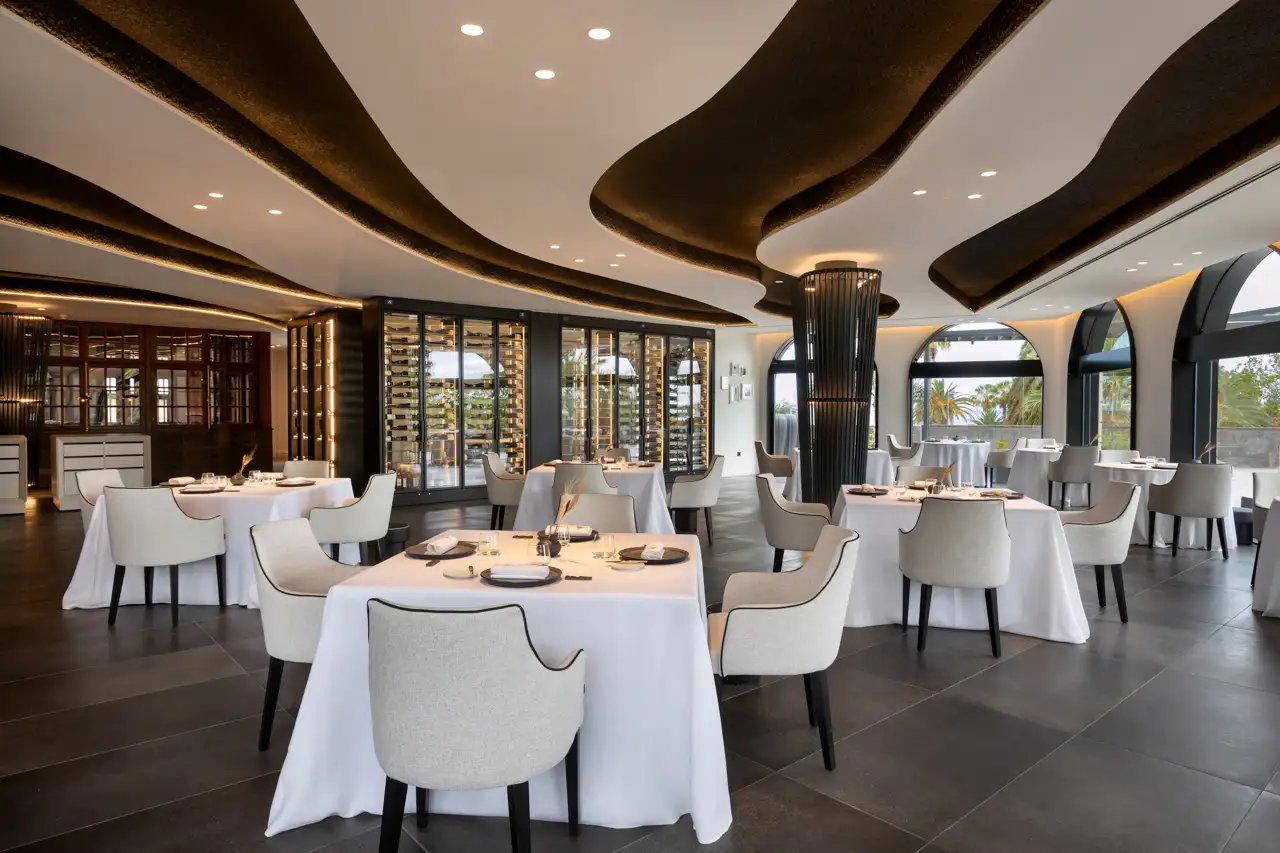
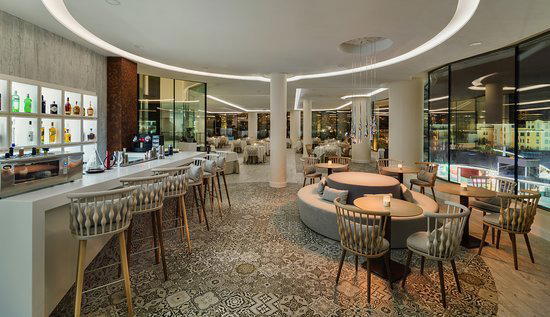
Warmly decorated interior with a cozy, inviting atmosphere; tables are closely spaced; some guests note the music selection could be more refined for the upscale dining experience.