Pyeong Chang Tofu House
On Telegraph Avenue in Oakland's Temescal corridor, Pyeong Chang Tofu House is one of the Bay Area's long-standing Korean tofu specialists, serving soondubu jjigae and banchan in a format rooted in the communal, broth-centered traditions of Korean home cooking. The address at 4701 Telegraph Ave places it within reach of Oakland's most concentrated stretch of independent dining, where the kitchen's focus on silken tofu stew distinguishes it from the broader Korean-American dining scene.
Pearl is the En Primeur Club membership app — saves, bookings, and concierge access live there. Same editors, same standards.
- Address
- 4701 Telegraph Ave, Oakland, CA 94609
- Phone
- +15106589040
- Website
- pctofu.com
- Directions
- Get directions
 Saves & bookings on Pearl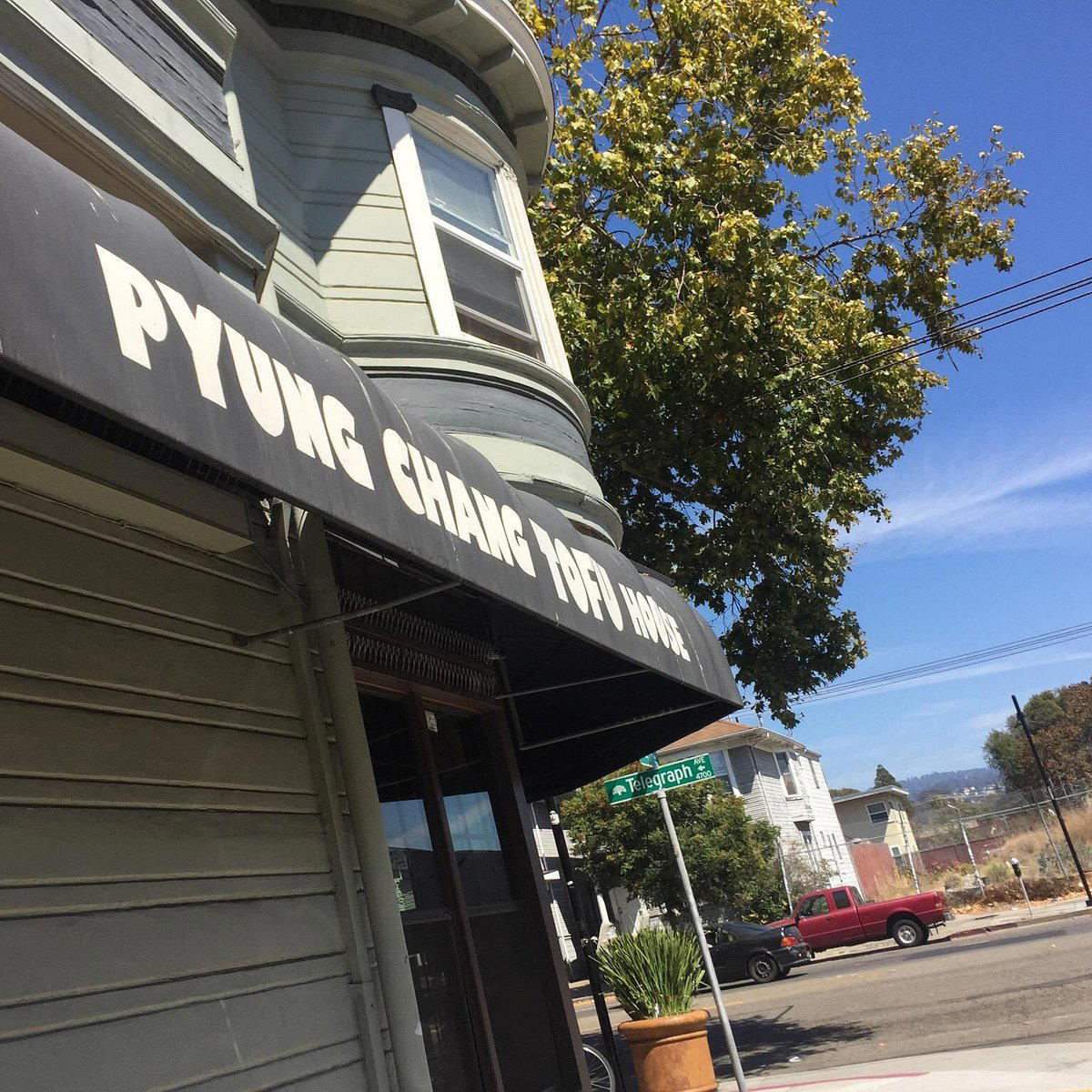
Broth, Tofu, and the Korean Table
Telegraph Avenue between 40th and 51st streets has become one of Oakland's most reliable corridors for independent, cuisine-specific dining. Korean restaurants occupy a particular niche in this stretch, distinct from the larger Koreatown clusters of Los Angeles and less concentrated than the Seoul-inflected blocks of San Jose's Saigon Business District, yet consistent enough to support specialists rather than generalists. It belongs to this specialist tradition: a kitchen organized around soondubu jjigae, the silken tofu stew that functions in Korean culinary culture less as a single dish and more as a category of daily sustenance.
Soondubu jjigae is not a restaurant invention. It derives from Korean home cooking, where soft, freshly made tofu is simmered in a gochugaru-seasoned broth with varying proteins and finished at the table in a stone pot that arrives still boiling. The dish's presence on restaurant menus in the United States reflects a broader pattern in Korean diaspora food culture: domestic staples that crossed the Pacific largely intact, adjusted less for local palates than for the logistics of a restaurant kitchen. What distinguishes a serious soondubu house from a generalist Korean menu is the depth of the broth, the texture of the tofu, and the quality and variety of the banchan, the small side dishes that arrive before the stew and set the register for the meal. For those curious how Korean cuisine compares at its most technically ambitious end, Atomix in New York City represents the tasting-menu expression of Korean fine dining, a useful point of contrast for understanding how broadly the cuisine's formal range now extends.
Temescal and Oakland's Independent Dining Fabric
Oakland's dining identity has been shaped, particularly since the mid-2000s, by the relative affordability of its commercial spaces compared to San Francisco, which allowed highly specific, cuisine-focused operations to open and persist without the pressure to broaden their menus for mass appeal. This is the condition that allows a tofu house to remain a tofu house rather than becoming a generalized Korean grill. The Temescal neighborhood specifically, where Pyeong Chang Tofu House sits, has attracted a range of independent operators across multiple cuisines. 3 Bottled Fish and Alem's Coffee reflect the neighborhood's range, while Agave Uptown and alaMar Dominican Kitchen point to the breadth of the city's independent scene beyond any single cultural anchor.
Korean food in this context is not an outlier but one thread in a dense weave of diaspora cooking that characterizes Oakland's restaurants more than any single dominant tradition. The city's Korean operations tend to be smaller and more community-oriented than their Los Angeles counterparts, calibrated to neighborhood regulars rather than destination diners. Places like 8th St Cafe illustrate how other Asian-American traditions have found durable footholds in Oakland on similar terms, through consistent execution and loyal repeat business rather than critical positioning. Joodooboo, Oakland's tofu-making operation, underscores the point that the Bay Area Korean food ecosystem extends beyond individual restaurants to ingredient producers, which in turn supports the kind of kitchen specificity that a soondubu house depends on.
What the Korean Tofu Tradition Brings to the Table
The cultural logic of soondubu jjigae is worth understanding before you sit down. Unlike the Korean barbecue format, where the dining experience is interactive and social in a visually dramatic way, the tofu stew meal is quieter and more internally focused. The stone pot (dolsot) retains heat long after the kitchen sends it out, which means the meal continues to cook as you eat. The banchan that precede it are not appetizers in the Western sense but accompaniments, kimchi, seasoned vegetables, dried fish, pickled sides, that you return to throughout the meal and that vary by kitchen. A restaurant's banchan selection is often the clearest signal of how seriously the kitchen approaches the full format.
Protein variations within soondubu typically include seafood, pork, beef, mushroom, and combinations thereof, with spice level adjusted from mild to hot. An egg is often cracked into the still-boiling stew at tableside, cooking in the residual heat. This is not a dish that benefits from being rushed or eaten cold. For readers whose Korean dining reference points sit at the fine-dining end, the format contrast with Atomix's precision multi-course structure illustrates how wide a spectrum a single cuisine can hold. For broader reference on what cuisine-specific depth looks like across the American dining scene, Lazy Bear in San Francisco and Single Thread Farm in Healdsburg offer points of comparison from adjacent Northern California traditions, while The French Laundry in Napa and Providence in Los Angeles anchor the high end of the California dining conversation in other directions entirely.
Placing Pyeong Chang in the Oakland Korean Scene
Korean dining in the East Bay has a longer history than its current profile might suggest. Korean immigration to the Bay Area accelerated through the 1980s and 1990s, and neighborhood-focused Korean restaurants predate the current wave of critical interest in Korean cuisine. Pyeong Chang Tofu House occupies a position in this older layer of the city's Korean food culture, a specialist operation serving a format that has remained largely unchanged in its essentials while the wider dining conversation has shifted considerably around it. That durability is not incidental. Soondubu jjigae does not require reinvention to be worth seeking out, it requires consistent execution of a set of variables that are easy to get wrong: broth depth, tofu texture, banchan freshness, and the temperature management of the stone pot service.
For visitors using Oakland as a base for broader Bay Area exploration, the city's independent dining scene rewards exactly this kind of cuisine-specific searching. The Telegraph Avenue corridor between Temescal and Rockridge concentrates enough serious operators across enough traditions that a meal plan organized by cuisine type rather than neighborhood becomes practical. 8th St Cafe and Agave Uptown illustrate the range available within a short distance. Regionally, the conversation about Korean food has risen significantly in critical standing, with Atomix in New York regularly cited alongside fine-dining peers from other traditions, including Le Bernardin in New York City, Alinea in Chicago, and Blue Hill at Stone Barns in Tarrytown.
Know Before You Go
- Address: 4701 Telegraph Ave, Oakland, CA 94609
- Neighborhood: Temescal, Oakland
- Format: Korean tofu house; soondubu jjigae specialist
- Nearby: 3 Bottled Fish, Alem's Coffee, alaMar Dominican Kitchen
Reputation Context
Comparable venues nearby, for context on price, style, and recognition.
| Venue | Cuisine | Price | Notes |
|---|---|---|---|
| Pyeong Chang Tofu HouseThis venue — the venue you are viewing | Traditional Korean Tofu Soup | $$ | Not listed |
| Hancook | Korean Shabu Shabu and BBQ | $$ | Temescal |
| Koryo Ja Jang | Korean-Chinese Noodles | $$ | Temescal |
| Kang Tong Degi | Korean BBQ Pork Belly | $$ | Temescal |
| Oriental B.B.Q. Chicken Town | Korean Fried Chicken & BBQ | $$ | Bushrod Park |
| Gogi Time | Korean BBQ & Hotpot | $ | Northgate |
Continue exploring
More in Oakland
Restaurants in Oakland
Browse all →
Bars in Oakland
Browse all →
Hotels in Oakland
Browse all →

At a Glance
- Rustic
- Casual
- Lively
- Casual Hangout
- Group Dining
- Family
- Standalone
Current opening hours
- Monday
- 11:30 AM–2:30 PM, 5–9:30 PM
- Tuesday
- 11:30 AM–2:30 PM, 5–9:30 PM
- Wednesday
- 11:30 AM–2:30 PM, 5–9:30 PM
- Thursday
- 11:30 AM–2:30 PM, 5–9:30 PM
- Friday
- 11:30 AM–2:30 PM, 5–10 PM
- Saturday
- 11:30 AM–2:30 PM, 5–10 PM
- Sunday
- 11:30 AM–2:30 PM, 5–9:30 PM
Hours can change for holidays and private events. Last verified .