Skip to Main Content
Korean Chinese Noodles
← Collection
Oakland, United States

Koryo Ja Jang

Price≈$15
Dress CodeCasual
ServiceCasual
NoiseConversational
CapacitySmall

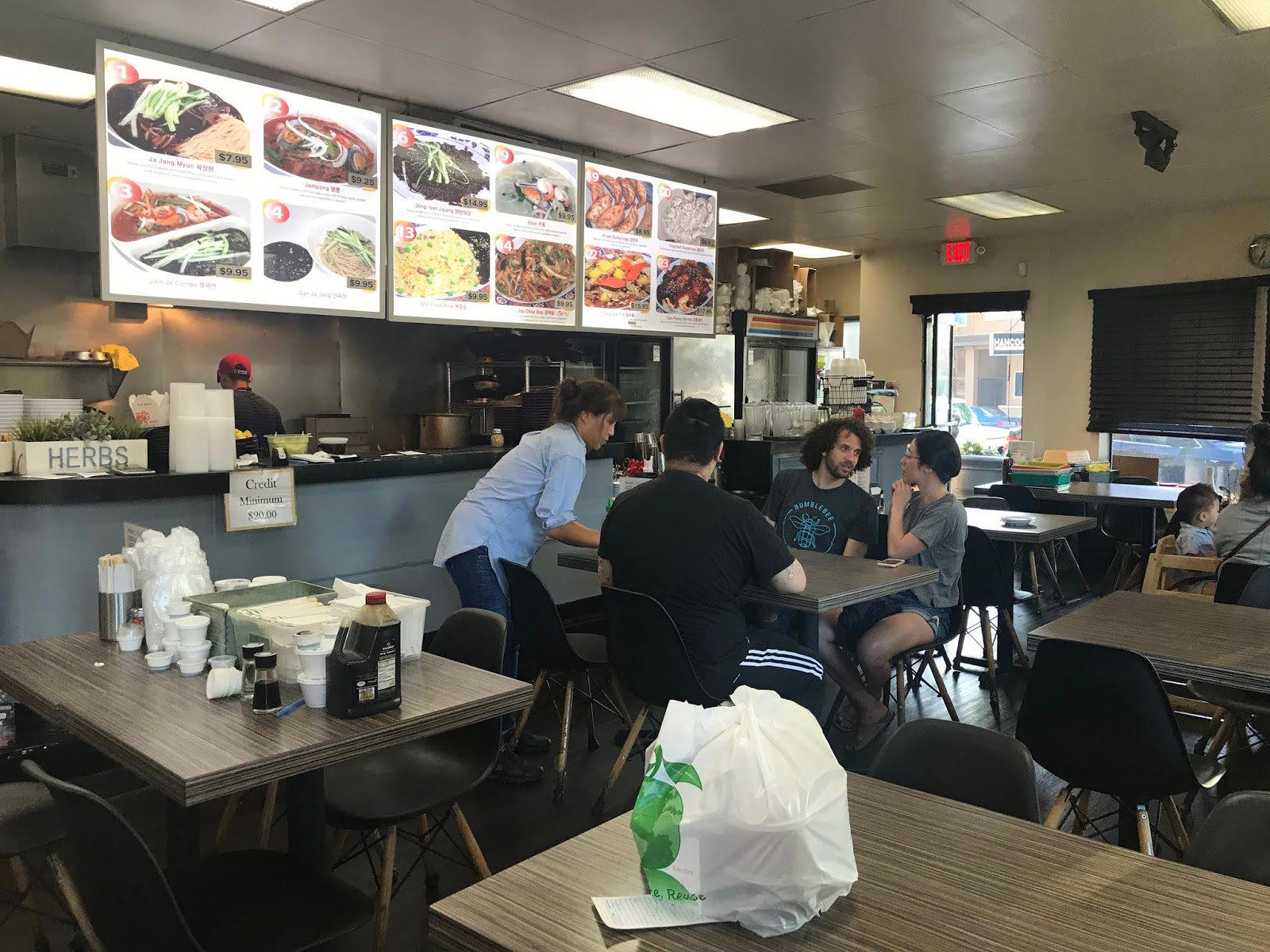
On Telegraph Avenue in the Temescal stretch of Oakland, Koryo Ja Jang represents the kind of Korean-Chinese cooking that rarely travels far from the communities that grew up eating it. Jajangmyeon, jjamppong, and tangsuyuk anchor a menu rooted in the zhajiangmian tradition that crossed into Korea generations ago and evolved into its own distinct culinary register.

Pearl is the En Primeur Club membership app — saves, bookings, and concierge access live there. Same editors, same standards.

Plan your visit on PearlPlan Your Visit
Address
4390 Telegraph Ave (btw 43rd & 44th), Oakland, CA 94609
Koryo Ja Jang restaurant in Oakland, United States
About

Telegraph Avenue and the Korean-Chinese Table

Telegraph Avenue between 43rd and 44th in Oakland's Temescal district is the kind of block that rewards familiarity. The stretch runs through one of the East Bay's more layered commercial corridors, where Korean grocers, Ethiopian coffee shops, and decades-old noodle houses share sidewalk space with newer arrivals. Koryo Ja Jang sits within this pattern, occupying a position that makes sense only once you understand what it is serving: Korean-Chinese cuisine, a genre so specific to the Korean peninsula's immigrant history that most diners outside Korean communities have never encountered it in this form.

Korean-Chinese cooking, known in Korea as junghwa yori, arrived via Chinese immigrants who settled in Incheon in the late nineteenth century and developed a hybrid cuisine shaped by local Korean tastes. The defining dish, jajangmyeon, thick wheat noodles pulled through a fermented black bean paste sauce with pork and vegetables, became so embedded in Korean food culture that it is now considered comfort food rather than foreign cuisine. In the United States, restaurants serving this tradition are sparse outside cities with large Korean populations, which makes the presence of Koryo Ja Jang on a North Oakland block something worth noting for anyone tracking how immigrant food traditions migrate and concentrate in specific urban pockets. For comparison, the Korean dining scene in the broader Bay Area skews heavily toward Korean barbecue and standard rice-and-banchan formats; Korean-Chinese specialists occupy a much smaller slice of the market.

What the Menu Represents

The core of Korean-Chinese cooking at a restaurant like Koryo Ja Jang revolves around a handful of dishes that have their own internal hierarchy. Jajangmyeon is the entry point, the dish Koreans associate with childhood, moving day, and late-night hunger. Alongside it, jjamppong, a spicy seafood noodle soup with a crimson broth built from gochugaru, shellfish, and pork, represents the genre's bolder register. Tangsuyuk, a sweet and sour fried pork or beef dish, functions as the shared plate that anchors group meals in the same way that General Tso's chicken does in a very different tradition.

These dishes are not interchangeable with their Chinese-American or mainland Chinese counterparts. Jajangmyeon's black bean sauce is distinctly sweeter and less salty than Chinese zhajiangmian; the noodles themselves are thicker and chewier. Jjamppong has little in common with Chinese seafood soups beyond the shared protein category. This is a cuisine that forked from its origins more than a century ago and developed on its own terms, which is part of what makes a dedicated Korean-Chinese restaurant a different proposition from a generalist Korean menu with a few Chinese-influenced additions.

Across the United States, the restaurants that do this well tend to cluster near Korean supermarkets and sit in neighborhoods with established Korean-American populations. The East Bay has long maintained enough of a Korean community to support specialist operators, and Temescal's food corridor has historically absorbed this kind of focused, community-anchored dining. Venues like 3 Bottled Fish, 8th St Cafe 文記茶餐廳, and alaMar Dominican Kitchen reflect Oakland's broader pattern of cuisine-specific restaurants serving specific communities while remaining open to the curious general diner.

Temescal as Context

The neighborhood context matters more than it might for a destination restaurant operating independently of its surroundings. Temescal is not Koreatown; it does not have the density of Korean signage and commerce that you find along Telegraph in the mid-Wilshire district of Los Angeles or in Flushing, Queens. What it has instead is a layered immigrant food presence that includes Ethiopian spots like Alem's Coffee, Mexican operations including the home-style cooking at Cenaduria Elvira nearby, and a range of Asian-focused kitchens operating at different price points.

Within that context, Koryo Ja Jang occupies a specific niche: a restaurant oriented toward the Korean-American diner who grew up eating this food and toward the Oakland resident curious about a cuisine tradition they may not have encountered elsewhere in the East Bay. That dual audience is typical of the most interesting restaurants in this part of Oakland, places that are not performing ethnicity for an outside gaze but are simply cooking what their core customers want, while remaining accessible to anyone who walks in knowing what to order.

Oakland's dining scene more broadly has built its reputation on this kind of specificity. The city's food identity is not anchored by the tasting-menu format you find at places like Lazy Bear in San Francisco or Alinea in Chicago, nor by the fine-dining register of Le Bernardin in New York City or The French Laundry in Napa. Oakland's stronger suit has always been the focused, community-rooted restaurant: the specialist who does one tradition with depth rather than the generalist who covers the table. Agave Uptown and JUNE'S PIZZA operate in a similar register of focused specificity, each grounded in a particular culinary tradition rather than a broad demographic appeal.

For readers interested in how Korean cuisine occupies fine-dining space in the United States, Atomix in New York City represents the formal upper end of that conversation, operating in an entirely different price and format category. Koryo Ja Jang sits at the opposite end of the spectrum, where the measure of quality is fidelity to the tradition rather than transformation of it. Both positions are legitimate; they are simply answering different questions about what Korean cooking can do in an American context.

Planning Your Visit

Koryo Ja Jang is located at 4390 Telegraph Avenue, between 43rd and 44th Streets, in Oakland's Temescal neighborhood. The area is accessible by AC Transit along the Telegraph corridor, and street parking is available on the surrounding blocks, though it can tighten during peak dinner hours. The restaurant draws from a local, regular clientele, which means walk-ins during off-peak lunch hours are generally more direct than evening visits. The restaurant is walk-in friendly, and pricing is around $15 per person.

Signature Dishes
jajangmyeonjampongfried dumplings
Frequently asked questions

What It’s Closest To

Comparable venues nearby, for context on price, style, and recognition.

At a Glance
Vibe
  • Hidden Gem
Best For
  • Casual Hangout
Dress CodeCasual
Noise LevelConversational
CapacitySmall
Service StyleCasual
Meal PacingStandard
Signature Dishes
jajangmyeonjampongfried dumplings