Punjab
Punjab on Neal Street is one of London's oldest North Indian restaurants, operating from Covent Garden since 1946. The menu centres on the strong, slow-cooked dishes of the Punjab region, from tandoor-fired breads to rich meat curries built on generations of technique. It occupies a different tier from London's Michelin-circuit Indian dining, trading on continuity and a specific regional focus rather than modernist reinvention.
Pearl is the En Primeur Club membership app — saves, bookings, and concierge access live there. Same editors, same standards.
- Address
- 80 Neal St, London WC2H 9PA, United Kingdom
- Phone
- +442078369787
- Website
- punjab.co.uk
- Directions
- Get directions
 Saves & bookings on Pearl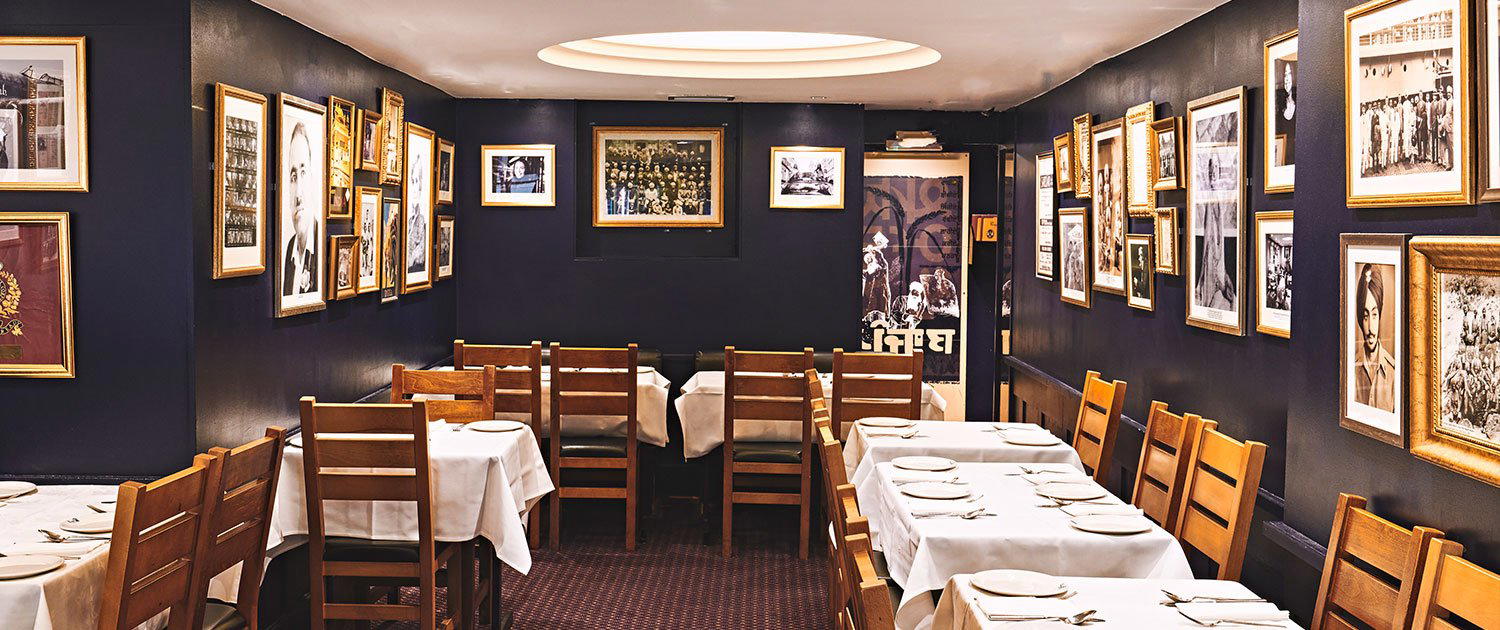
Covent Garden's Longest-Running North Indian Table
Neal Street in Covent Garden has changed almost beyond recognition since the mid-twentieth century. The theatres filled and emptied, the market moved, the neighbourhood cycled through fashion, then tourism, then a more settled commercial identity. Punjab at number 80 absorbed all of it. It has served North Indian cooking in Covent Garden for decades, at 80 Neal Street in one of the city's most visited dining corridors. That longevity is itself a form of credential, distinct from the awards and press cycles that define the contemporary restaurant conversation.
The Dining Ritual: How a Meal Here Unfolds
North Indian restaurant dining in Britain developed its own pacing and customs over the post-war decades, and Punjab sits squarely inside that tradition rather than outside it. The meal tends to begin with bread, a diagnostic choice that signals how much of the table's attention will go to technique rather than theatre. At restaurants operating in this regional mode, the tandoor is central: naan and roti arrive hot and slightly blistered, meant to be torn and used with the rest of the meal.
The order in which dishes land matters in this format. Dals and slow-cooked meat preparations are not designed to arrive in sequence like a European tasting menu; they come together, creating a shared, communal spread where each component interacts with the others. The bread pulls through the sauce. The raita moderates the heat. Pickles and chutneys punctuate. This is a meal architecture that rewards a table willing to order broadly rather than playing it safe with individual plates.
Punjab's position in that tradition is one of continuity. The restaurant has not repositioned itself toward the kind of regional specificity that drives London's newer wave of South Asian dining. Instead it occupies the category it helped establish: a full-service North Indian room where the cooking is measured against decades of its own prior form rather than against external trends.
Regional Identity in a City of Contrasts
London's Indian restaurant scene has stratified considerably. At one end, places like Opheem in Birmingham, awarded Michelin recognition for its contemporary Indian cooking, represent the critical-award tier that has emerged across British cities. London's own fine-dining Indian circuit has grown similarly, with tasting-menu formats, wine pairings, and modernist plating now commonplace at the upper end. Punjab operates below and apart from that circuit, in a register that predates it and has never sought to compete with it directly.
That separation is not a failing. The Punjabi cooking tradition that Punjab takes its name from is among the more substantial regional cuisines on the subcontinent: slow braises, tandoor technique, dairy-rich sauces, and a preference for depth over delicacy. These are not dishes that benefit from architectural plating or small-portion refinement. They require volume, time, and repetition, the kind of institutional knowledge that accumulates over decades in a single kitchen rather than through rotation and reinvention.
For context, London's contemporary fine-dining circuit includes rooms like CORE by Clare Smyth, Restaurant Gordon Ramsay, Sketch, The Lecture Room and Library, The Ledbury, and Dinner by Heston Blumenthal, all operating at the ££££ tier with formal service structures and extended tasting formats. Punjab sits in an entirely different bracket, both in price and in intention, where the meal is built around comfort and familiarity rather than surprise. That difference is exactly the point.
Elsewhere in Britain, restaurants such as Waterside Inn in Bray, Le Manoir aux Quat'Saisons in Oxford, L'Enclume in Cartmel, and Midsummer House in Cambridge operate in the European fine-dining idiom. Punjab's longevity in London makes a different kind of argument: that a specific regional tradition, maintained without deviation, can anchor a restaurant across generations of diners and neighbourhoods in flux.
Internationally, the contrast is equally instructive. Punjab's format, by contrast, is one of abundance and simultaneity, a different discipline, not an absence of one.
What to Know Before You Go
Punjab is located at 80 Neal Street, London WC2H 9PA, in the heart of Covent Garden and within easy reach of Covent Garden Underground station. The neighbourhood is dense with foot traffic, particularly on evenings and weekends, and the restaurant has operated in this context long enough to have developed its own rhythm around it.
Reservations are recommended. Dress is smart casual. Expect a mid-range spend of about $25 per person.
A Credentials Check
Comparable venues nearby, for context on price, style, and recognition.
| Venue | Cuisine | Price | Notes |
|---|---|---|---|
| PunjabThis venue — the venue you are viewing | Traditional North Indian Punjabi | $$ | Not listed |
| Postbox | Modern Indian with Goan influences | $$ | Castelnau |
| Chatora | Modern Indian | $$ | Richmond |
| Patri Northfields | Indian Railway Street Food | $$ | West Ealing |
| Social Dhaba | Modern Indian (North Indian & Punjabi) | $$ | Hatch End |
| Taste of Lahore Queensway | Pakistani & North Indian Curry House | $$ | Queensway |
Continue exploring
More in London
Restaurants in London
Browse all →
Bars in London
Browse all →
Hotels in London
Browse all →


At a Glance
- Classic
- Well Known
- Casual Hangout
- Late Night
- Historic Building
Current opening hours
- Monday
- 12–10 PM
- Tuesday
- 12–10 PM
- Wednesday
- 12–10 PM
- Thursday
- 12–10 PM
- Friday
- 12–10 PM
- Saturday
- 12–10 PM
- Sunday
- 12–10 PM
Hours can change for holidays and private events. Last verified .
Comfortable classic curry house atmosphere with energetic noise levels, featuring dated decor but warm and inviting service.