Profumi di Cous Cous

Michelin Plate
Our verdict
At Profumi di Cous Cous, couscous anchors a menu that reads as a direct expression of San Vito lo Capo's North African culinary inheritance. Michelin Plate recognition in both 2024 and 2025 confirms its standing among the town's most consistent tables, while the internal courtyard, shaded by citrus trees, makes summer evenings here distinctly worthwhile. A mid-range address with clear culinary purpose in Sicily's northwestern corner.

Pearl is the En Primeur Club membership app — saves, bookings, and concierge access live there. Same editors, same standards.
- Address
- Profumi di Cous Cous, Via Regina Margherita, 91030 San Vito Lo Capo TP, Italy
- Phone
- +39 0923 974155
- Website
- ghiblihotel.it
- Directions
- Get directions
The menu
What to order
- Cous Cous Duo
- Busiate alla Norma
- Sarde a beccafico
Where the Maghreb Meets the Sicilian Coast
San Vito lo Capo sits at the far northwestern tip of Sicily, where the coastline curves toward Tunisia and the food has always followed the geography. Couscous arrived on this stretch of the Sicilian coast through centuries of North African trade and settlement, and today it is as embedded in the local diet as pasta is in the rest of the island. The annual Cous Cous Fest, which draws international competitors to the town each September, is evidence of how seriously San Vito lo Capo treats this particular grain. Profumi di Cous Cous positions itself squarely within that tradition, with a menu organized around the dish rather than treating it as a novelty or a side note.
That commitment to a single ingredient as the structural core of a restaurant's identity is less common than it sounds. Across Sicily, even in the northwest, many restaurants hedge by centering seafood broadly and offering couscous as one option among many. The framing here is different: couscous is the organizing principle, with other Sicilian specialities appearing as supporting dishes rather than alternatives to it. For anyone who has eaten their way through the town's restaurant strip, that specificity registers immediately.
The Courtyard in Summer
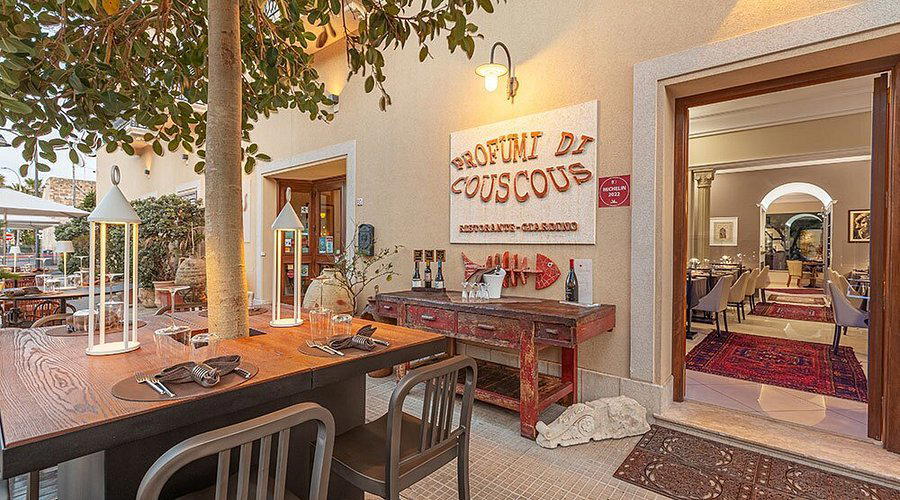
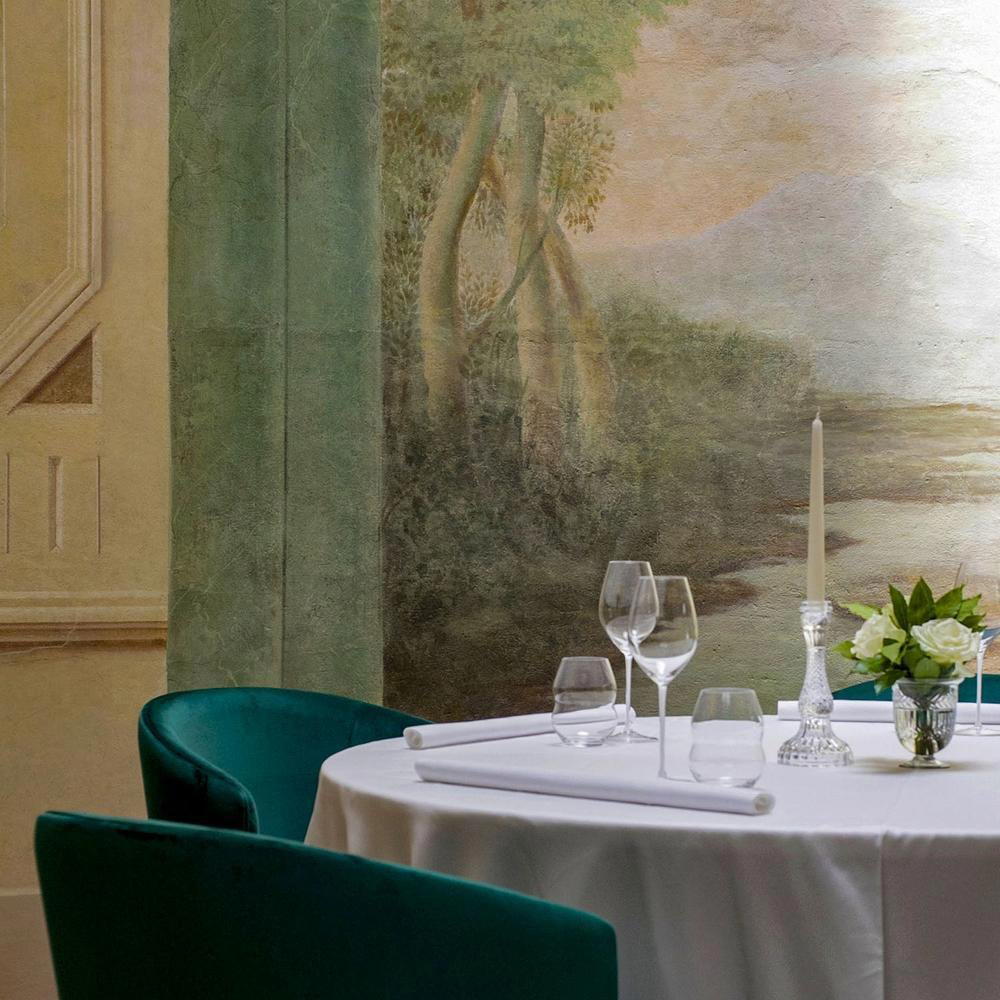
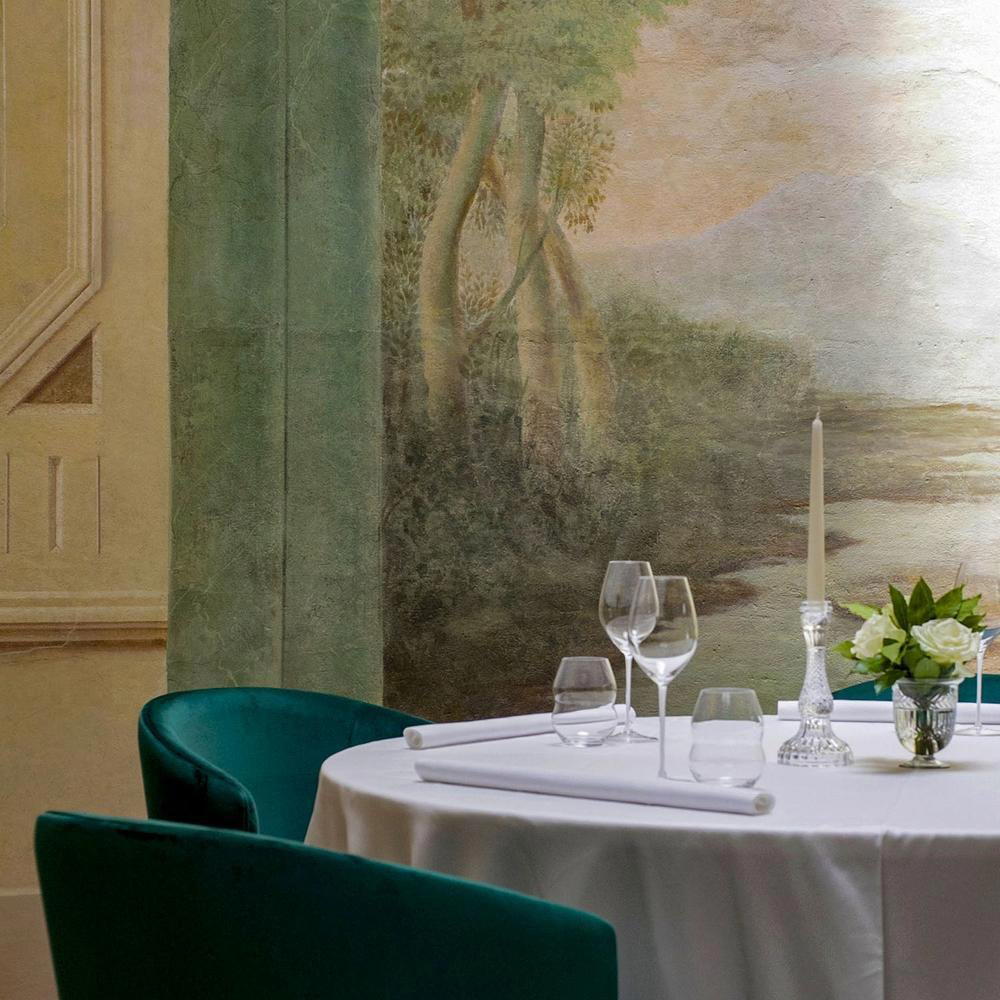
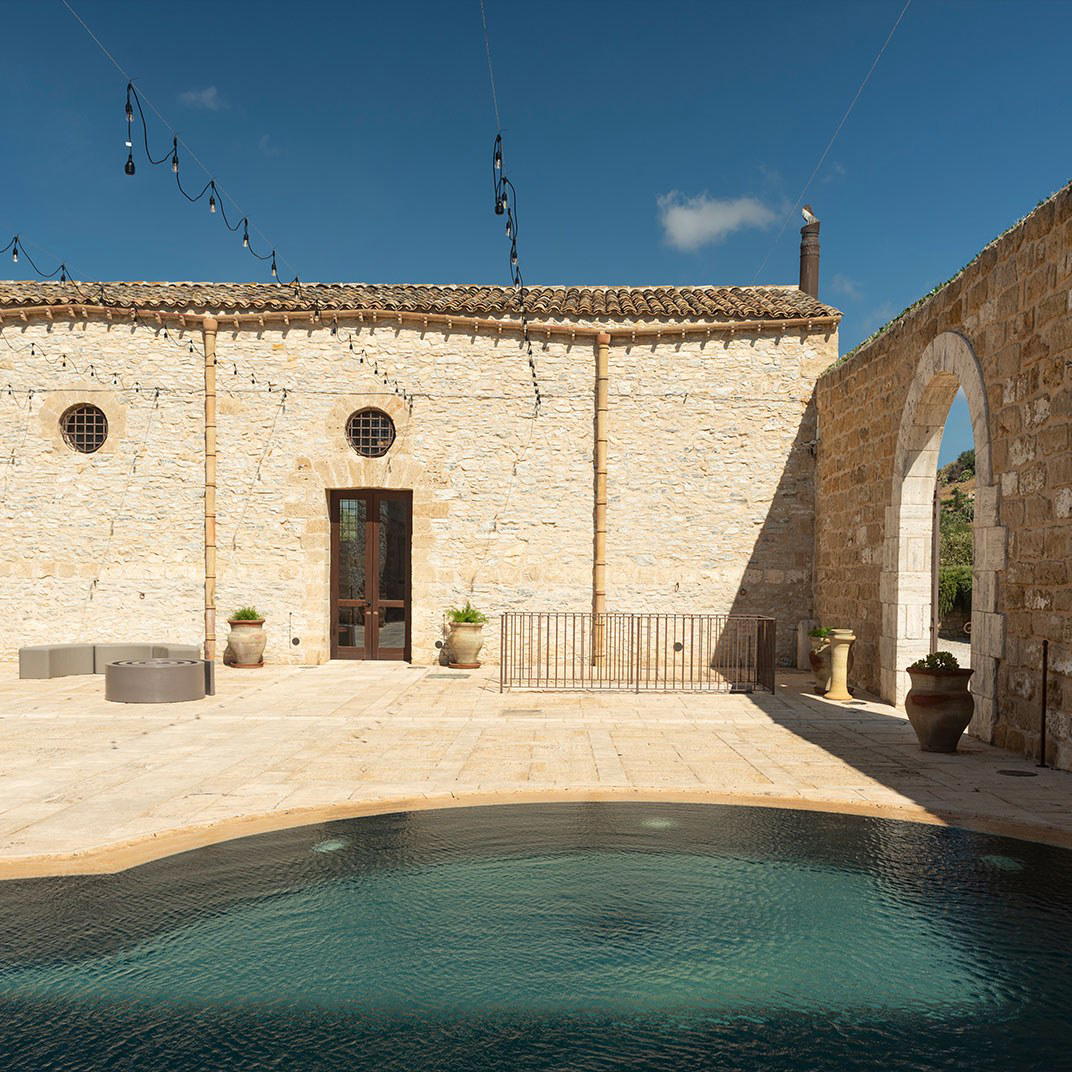
The physical setting at Profumi di Cous Cous carries weight in any honest account of the place. The internal courtyard, shaded by citrus trees, becomes the dominant dining environment during summer months, when evenings in San Vito lo Capo are warm enough to eat outdoors from late spring through October. Dining surrounded by lemon and orange trees in a Sicilian courtyard is not a stage-set effect here; it reflects the same Mediterranean agricultural logic that puts citrus peel into the cooking. The atmosphere that results, particularly on a July or August evening when the heat has dropped and the light goes slowly, is the kind of thing that pulls people back to a table after the meal has ended.
San Vito lo Capo is a seasonal town, and most of its serious restaurant activity compresses into the summer window. Visitors planning around the Cous Cous Fest in September should note that the town fills quickly during festival week, and tables at the most consistently recognized addresses book ahead. Profumi di Cous Cous sits on Via Regina Margherita, the main pedestrian artery that runs toward the beach, which means it is easy to find on foot from most central accommodation. For a broader look at where to stay while you are here, see our full San Vito lo Capo hotels guide, and for the wider dining picture across the town, our full San Vito lo Capo restaurants guide maps the full range.
Couscous as a Local Ingredient Story
The sourcing logic behind Sicilian couscous cooking is worth understanding before you sit down. In San Vito lo Capo, the traditional preparation uses semolina worked by hand and steamed in a terracotta pot called a cuscussiera, then combined with fish broth built from the day's catch. The fish component is not incidental: the broth's quality depends entirely on what came off the boats that morning, which means the dish is more tightly connected to local fishing conditions than many restaurant dishes that nominally claim a seasonal or local identity. When the fishing is good and the broth is built from a mix of local rockfish, the result is a more complex and aromatic base than anything achievable with farmed or transported fish.
This is the ingredient story that gives Sicilian couscous its regional distinctiveness and separates it from North African versions, where meat-based broths and different spice balances produce a different flavour register. The Trapani province, of which San Vito lo Capo is part, uses less spice and more fish, and the result reads as a specifically Sicilian synthesis of a dish that arrived from across the water. Profumi di Cous Cous works within this tradition rather than departing from it, which is precisely what the Michelin Plate recognition in 2024 and 2025 acknowledges: consistent, honest execution of a regional dish done at a reliable standard.
Where It Sits in the Sicilian Restaurant Picture
At a €€ price point, Profumi di Cous Cous occupies the accessible mid-range tier that accounts for most of the serious day-to-day eating in Sicilian coastal towns. This is not the tier of Sicily's multi-starred destination restaurants, several of which are mapped in our broader Italian coverage: I Pupi in Bagheria and La Capinera in Taormina represent the island's more formally ambitious end, while addresses like Osteria Francescana in Modena, Dal Pescatore in Runate, or Enoteca Pinchiorri in Florence sit in Italy's highest-investment bracket. Profumi di Cous Cous is not competing in those registers, and that is exactly the point: it is a specialized, neighbourhood-scale address that has earned Michelin recognition for doing one thing at a consistent level in a town where that one thing happens to matter enormously.
Other Italian restaurants earning sustained recognition at comparable price tiers, such as Quattro Passi in Marina del Cantone and Uliassi in Senigallia, demonstrate how coastal Italian cooking at this level tends to earn its standing through ingredient fidelity rather than formal technique or tasting-menu architecture. For further reference across Italy's recognized restaurant scene, Piazza Duomo in Alba, Le Calandre in Rubano, Reale in Castel di Sangro, Enrico Bartolini in Milan, Atelier Moessmer Norbert Niederkofler in Brunico, and Casa Perbellini 12 Apostoli in Verona provide a useful spread of the country's recognized tables.
Planning Your Visit
The restaurant is on Via Regina Margherita in the centre of San Vito lo Capo, walkable from the beach and from the town's main accommodation cluster. Summer is the obvious window, both for the courtyard experience and because the town's fishing activity is at its most active, which matters for the quality of the fish broth at the core of the signature preparation. For a broader picture of what to do beyond the table, our full San Vito lo Capo experiences guide covers the area, and if you want to extend your time in the northwestern tip of the island with a drink after dinner, our full San Vito lo Capo bars guide and our full San Vito lo Capo wineries guide map the options.
Frequently asked questions
Is Profumi di Cous Cous suitable for children?
The format works well for families. The central dish is couscous, a crowd-friendly staple, and the internal courtyard setting is relaxed rather than formal. The €€ price point puts it firmly in the accessible mid-range, so a family meal here is manageable without a special-occasion budget.
What is the atmosphere like at Profumi di Cous Cous?
In summer, the restaurant serves meals in an internal courtyard shaded by citrus trees, which shifts the tone from a standard dining room to something closer to an outdoor terrace. The setting is unhurried and informal, consistent with how San Vito lo Capo eats during the warmer months. The Michelin Plate recognition in both 2024 and 2025 confirms the kitchen takes the food seriously within that relaxed frame.
What's Profumi di Cous Cous known for in terms of accolades?
Profumi di Cous Cous has received recognition including: As the name of this restaurant suggests, couscous takes pride of place on the menu, although other Sicilian specialities can also be sampled here. Delightful atmosphere, especially in summer when meals are served in the internal courtyard a….
What's the must-try dish at Profumi di Cous Cous?
Couscous is the centrepiece of the menu and the reason the restaurant earned its name. San Vito lo Capo has a documented tradition of couscous preparation rooted in the town's proximity to North Africa, and this restaurant puts that tradition at the front of what it does. Other Sicilian specialities appear alongside it, but couscous is the dish that defines the kitchen's identity here.
Fast Comparison
| Venue | Cuisine | Price | Awards | Notes |
|---|---|---|---|---|
| Profumi di Cous CousThis venue — the venue you are viewing | Sicilian Couscous with Mediterranean & Arab Influences | $50–100 | Michelin Plate | Not listed |
| Atelier Moessmer Norbert Niederkofler | Italian, Creative | Not listed | Michelin 3 Star | Not listed |
| Dal Pescatore | Italian, Italian Contemporary | Not listed | Michelin 3 Star | Not listed |
| Enoteca Pinchiorri | Contemporary Italian Fine Dining | $200–300 | 3 Michelin Stars · World's 50 Best #32 | Italian - French, Italian Contemporary |
| Enrico Bartolini | Creative | Not listed | Michelin 3 Star | Not listed |
| Osteria Francescana | Avant-Garde Italian Contemporary | $300–500 | 3 Michelin Stars · World's 50 Best #1 | Progressive Italian, Creative |
Recognition history
Dated appearances from independent guides and award organizations, with the underlying list record or original source where available.
Michelin Plate
Michelin
Full recognition history (3 entries)
Michelin Plate
Michelin
Michelin Plate
Michelin
Continue exploring
More in San Vito lo Capo
Restaurants in San Vito lo Capo
Browse all →
Bars in San Vito lo Capo
Browse all →

Hotels in San Vito lo Capo
Browse all →




Details
- Rustic
- Cozy
- Elegant
- Scenic
- Date Night
- Special Occasion
- Group Dining
- Courtyard
- Open Kitchen
- Extensive Wine List
- Local Sourcing
- Garden
- A La Carte
- Wine
- Vegetarian Friendly
Intimate and magical garden courtyard scented with citrus trees, orange, lemon, jasmine, and olive trees, creating a refined, welcoming Mediterranean atmosphere.