
Our verdict
Pomle Nakke sits in Horbelev on the southern tip of Falster, a corner of Denmark where the distance from Copenhagen's restaurant circuit is itself part of the proposition. The address alone signals a particular kind of intention: this is not a venue that trades on urban proximity, but on what the surrounding land and water can deliver to the table. For those willing to make the drive south from the capital, the question is what that isolation actually produces.

Pearl is the En Primeur Club membership app, where members save venues, book tables and use the concierge.
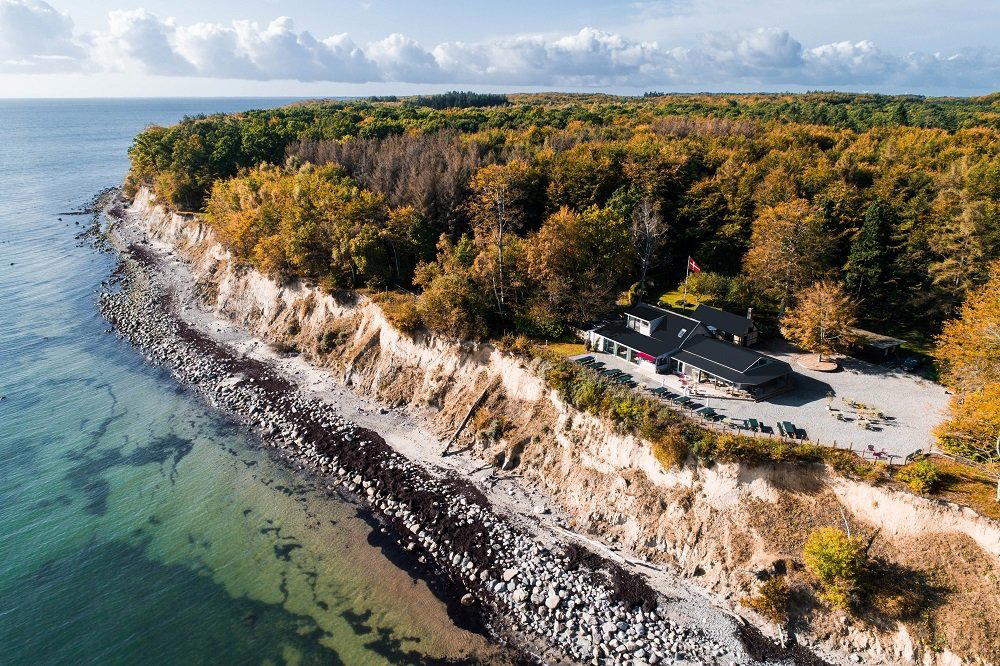
At the Edge of Falster: What Remote Dining Looks Like in Denmark
Southern Falster is not where most visitors to Denmark end up. The island sits below Zealand, connected by bridge and accessible by car from Copenhagen in roughly two hours, but it operates in a different register from the capital's dense restaurant scene. The landscape here is flat, agricultural, and coastal in the way that the Baltic edge of Denmark tends to be: fishing communities, beech forest, and farmland running to the water. Horbelev, specifically, is a small settlement near Gedser, the southernmost point of the country. When a restaurant chooses this as its address, that choice is a statement about sourcing before anything else is said about the food.
Pomle Nakke sits at Midtskovvejen 1, and the address already tells you something: a road name that translates roughly to "the middle forest road" places it in the green interior of this corner of Falster rather than on the coast itself. The physical approach, through low-lying farmland and sheltered treeline, positions the venue in a tradition of rural Danish dining that has been gaining serious critical attention over the past decade, as kitchens further from Copenhagen have used their geographical remove to build direct relationships with producers that urban restaurants simply cannot replicate at scale.
The Sourcing Logic of Rural Zealand and Falster
Denmark's broader shift toward ingredient-driven, region-specific cooking did not begin and end in Copenhagen. The kitchens that have drawn the most sustained attention outside the capital Henne Kirkeby Kro in Henne, Dragsholm Slot Gourmet in Hørve, and Frederiksminde in Præstø, share a structural logic: their distance from supply chains forces them into the kind of direct producer relationships that become, in themselves, a culinary identity. Falster sits in this same geographic and conceptual space. The island produces grain, vegetables, and fruit, and the surrounding Baltic waters supply fish and shellfish that reach tables within hours rather than days.
This matters because the argument for making a journey to a place like Horbelev rests almost entirely on whether the cooking reflects what can only be found here. In the upper tier of Danish destination dining, that question is the primary one. Geranium in Copenhagen and Jordnær in Gentofte operate at the formal end of that spectrum, with sourcing networks that are meticulous but necessarily broad. Rural venues like those on Falster can, in principle, operate from a tighter geographic radius, which changes both the menu's character and its seasonality in ways that are harder to engineer from a city kitchen.
Rural Denmark's Dining Scene Beyond the Capital
The spread of serious cooking across Danish geography over the past fifteen years reflects something more than the export of Copenhagen's ideas to the provinces. Venues like Frederikshøj in Aarhus, Alimentum in Aalborg, ARO in Odense, and LYST in Vejle have built regional reputations that draw visitors from outside their immediate areas. On the islands east and southeast of Copenhagen, a parallel development is visible: MOTA in Nykøbing Sjælland and venues on Falster itself represent the proposition that the most interesting ingredient stories in Denmark are often told furthest from the city centre.
This is not a romantic notion about rurality for its own sake. The practical argument is about supply chain compression. A kitchen that can source mushrooms, game, coastal herbs, and Baltic fish from producers within a short distance operates differently from one that consolidates deliveries from across Scandinavia. The menu changes faster, responds to what is actually available on a given week, and produces a kind of specificity that is difficult to fake. For the venues around Falster and southern Zealand, proximity to the water also means access to species and seasonal windows that do not appear reliably in urban supply networks.
Denmark's broader restaurant geography now includes serious destinations from Lønstrup in the north, where Villa Vest occupies the far coastal end of Jutland, to Sønderborg in the south at Syttende, Kruså at Pearl by Paul Proffitt, and Hellerup at Parsley Salon. The distribution of ambition across the country is now wide enough that no single region holds a monopoly on serious cooking. Horbelev's position at Denmark's southern edge fits into this pattern of dispersal. See our full Horbelev restaurants guide for further context on what the area offers.
The International Frame
The conversation about ingredient sourcing and rural destination dining is not specific to Denmark. At the far end of the sourcing-commitment spectrum internationally, kitchens like Le Bernardin in New York City have built reputations on the discipline of their supply relationships, while more conceptually driven venues like Atomix in New York City foreground provenance as a narrative layer in the dining experience itself. The Danish model differs in that geographic isolation is often the mechanism rather than a curatorial choice: you source locally because that is what arrives, and the menu follows from that constraint. It is a fundamentally different posture from the urban kitchen that selects premium producers from a wide network, and it produces a different kind of cooking. Whether Pomle Nakke fully inhabits that posture, the address and setting make the case structurally.
Planning Your Visit
Horbelev sits approximately two hours by car from Copenhagen, with the route crossing the Farø bridges onto Falster and continuing south toward Gedser. Public transport to this corner of the island is limited, making a car the practical choice for most visitors. Given the venue's rural location and the limited accommodation options in Horbelev itself, pairing a visit with a stay somewhere on Falster or in the southern Zealand area is worth considering if you are travelling from further afield.
Frequently asked questions
Is Pomle Nakke good for families?
Horbelev is a small, quiet settlement on southern Falster, the kind of location that tends to suit deliberate visits rather than spontaneous family outings with young children. That said, the rural setting and surrounding landscape make it a reasonable choice for families travelling the island by car. Confirm specific arrangements directly with the venue before visiting with children.
Is Pomle Nakke formal or casual?
Pomle Nakke sits in Horbelev, a remote corner of Falster two hours south of Copenhagen, a location that signals destination intent rather than drop-in dining. Rural destination restaurants of this type in Denmark typically lean toward relaxed but considered settings, where the cooking carries the weight rather than dress codes. Confirm the current format directly with the venue.
How far is Pomle Nakke from Copenhagen, and is it worth the drive?
Pomle Nakke is located at Midtskovvejen 1 in Horbelev, approximately two hours by car from Copenhagen via the Farø bridges onto Falster. That travel time places it firmly in destination-dining territory, the kind of commitment that filters out casual visitors and draws guests who have sought the place out specifically. For travellers already exploring Falster or the southern Danish islands, it sits at the logical end of that route toward Gedser.
What do regulars order at Pomle Nakke?
Given its position in southern Falster, where Danish kitchens at this distance from Copenhagen tend to build menus around hyper-local and seasonal sourcing, the menu likely reflects what's available close to Midtskovvejen 1 rather than a fixed, printed card. check the venue's official channels for current offerings.
Where do I go for Pomle Nakke?
Pomle Nakke is located at Midtskovvejen 1, 4871 Horbelev, Denmark, Horbelev.
At-a-Glance Comparison
Comparable venues nearby, for context on price, style, and recognition.
| Venue | Cuisine | Price | Notes |
|---|---|---|---|
| Pomle NakkeThis venue (the venue you are viewing) | Danish Coastal Nordic | Not listed | Not listed |
| Nyhavns Færgekro | Traditional Danish Smørrebrød & Herring Specialties | $30–50 | Indre By |
| Under Uret | Traditional Danish Smørrebrød | $20–30 | Indre By |
| Pipers Hus | Traditional Danish Scandinavian | $20–30 | Byparken |
| Kanal-Caféen | Traditional Danish Smørrebrød | $20–30 | Indre By |
| Ravelinen | Traditional Danish | $50–100 | Indre By |
Recognition history
Dated appearances from independent guides and award organizations, with the underlying list record or original source where available.
White Guide Denmark Restaurants - Very Fine Level
White Guide
Continue exploring
More in Horbelev
Restaurants in Horbelev
All restaurants in Horbelev →
Wineries in Horbelev
Browse all →
Details
- Cozy
- Scenic
- Rustic
- Special Occasion
- Family
- Waterfront
- Terrace
- Local Sourcing
- Waterfront
- A La Carte
- Small Plates
- Vegan Options
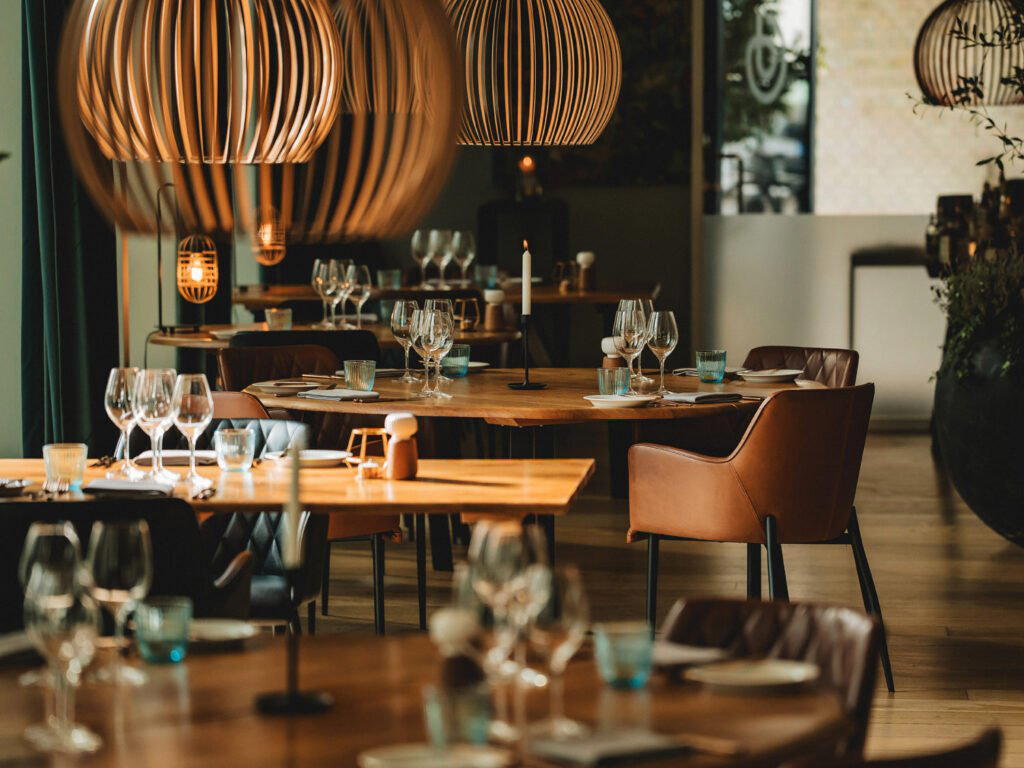
Wood and candlelight create a cosy coastal atmosphere inside, with terrace seating overlooking the sea and treetops.