Tabelog 100 #25
Our verdict
POIRE Tezukayama honten places Osaka’s western-style sweets culture in a residential Abeno setting rather than a department-store basement. Selected for Tabelog 100 Sweets WEST 2023, it works across cake, bread, and cafe formats, with take-out and a small seated cafe shaping the visit.

Pearl is the En Primeur Club membership app — saves, bookings, and concierge access live there. Same editors, same standards.
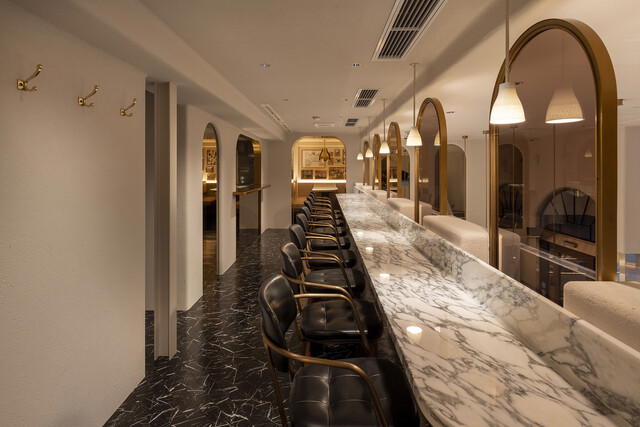
Approaching POIRE Tezukayama honten, Osaka shifts register. The city’s louder food rituals, grill smoke, station counters, late-night neon, can give way to a quieter rhythm. In that context, a cake shop and cafe reads differently: less as a tourist stop, more as part of the city’s daily grammar of gifts, afternoon tea, and carefully packaged sweets carried home.
Osaka is often reduced to heat, batter, sauce, and speed, but its sweets culture has another tempo. Western-style patisserie in Japan has long been filtered through local customs of seasonality, presentation, and omiyage, the social practice of bringing edible gifts. POIRE Tezukayama honten belongs to that lineage. Its categories are cake, bread, and cafe, and that combination matters: it places the shop between daily bakery, celebratory dessert counter, and sit-down cafe rather than inside a single-purpose pastry boutique.
Osaka's patisserie culture runs quieter than the city's louder food image
Osaka is not only its busiest dining districts, and that difference is the point. Central Osaka often rewards compression: eat quickly, move on, compare queues. A sweets address gives the city a more domestic role. The purchase may be for a family table, a visit to a friend, or a pause over tea rather than a hit-and-run snack. That changes the expectations. Packaging, range, and consistency carry as much weight as theatrical plating.
The Tabelog 100 Sweets WEST 2023 selection gives the address a measurable place within western Japan’s dessert field. Tabelog’s sweets lists tend to capture shops that locals return to as much as destinations that travellers chase, and this is useful context for Osaka. The city’s better-known food identity is savoury and populist, yet its dessert scene draws from French patisserie, Japanese gift culture, department-store standards, and neighbourhood cafe life. A shop selected in that sweets category is being judged inside a specific regional conversation, not against kaiseki, sushi, or ramen.
Price also sets the tone. The listed average range sits at JPY 1,000 to JPY 1,999 for both lunch and dinner, which keeps the experience in the realm of repeatable pleasure rather than rare-event dining. That puts it closer to Osaka’s serious casual food circuit than to formal dessert tasting menus. In the same broad budget band, comparison venues such as Organic Pan Kobo Soreiyu, M Kasse, and Kamaage Udon Raku show how Osaka’s lower-priced specialist addresses can command loyalty without the ceremony of luxury dining. Kashiya, as another Osaka comparison point, points to the same broader habit: focused food stops need not be expensive to be culturally significant.
Cake, bread, cafe: the hybrid format is the signal
The format does much of the editorial work here. A cafe attached to a shop changes how sweets function. Take-out can serve the omiyage and home-dessert crowd; the cafe format gives space for a slower read of the counter. This dual mode is common in Japanese patisserie culture, where the same address may operate as a retail showcase, a tea stop, and a reliable source for family occasions.
That breadth also prevents the experience from becoming too precious. Cake shops that move into luxury language can lose contact with daily life. Here, the appeal is less about a single named pastry than about the social range: bread for routine use, cakes for occasion, cafe time for conversation. It is a polished sweets address, but not simply a sealed temple of dessert.
Osaka travellers often build itineraries around contrast, and this is where the shop earns its place. Pairing a POIRE Tezukayama honten stop with other Osaka dining gives a more accurate view of the city than another round of sauce-heavy shorthand. For a broader counterpoint, Matsuzushi can sit alongside other unnamed Osaka dining rooms to show how varied the city’s food habits can be. Sweets complete that map rather than decorate it.
The cafe association adds another cultural layer. Japanese cake culture has never been only about sugar; it is also about the beverage pairing, the pause, and the social permission to sit in daylight. That matters in a city famous for eating on the move. A sweets cafe in Osaka offers a different kind of Osaka literacy: slower, more relaxed, and built around repeat customers as much as visitors crossing town.
How to place it in an Osaka itinerary
This is not the address to use as a substitute for Osaka’s heavier meals. It works better as a hinge in the day: after a morning elsewhere in Osaka, before an evening meal, or as a calmer detour when the city’s station complexes start to feel interchangeable. The cake, bread, and cafe categories broaden its usefulness for travellers who want something lighter than a full restaurant booking.
The stronger planning point is format discipline. With a shop, take-out possibilities, and a cafe identity, the experience can flex according to time and appetite. It can be a quick purchase, a pause over something sweet, or a practical gift stop. The Tabelog score of 3.65 and the Tabelog 100 Sweets WEST 2023 recognition make it easy to understand why it belongs on a sweets-focused Osaka route.
For broader planning, place this stop inside a wider Osaka food day rather than treating it as a standalone pilgrimage. EP Club’s city coverage can help shape that sequence: see Our full Osaka restaurants guide, Our full Osaka hotels guide, Our full Osaka bars guide, Our full Osaka wineries guide, and Our full Osaka experiences guide. Nearby and category-adjacent reading can stay within Osaka’s unnamed bakery, cafe, and sweets scene; for a wider Japan food map, compare the way specialist formats, casual budgets, and local repeat use shape dining across other cities.
Frequently asked questions
Is POIRE Tezukayama honten open every day?
Is POIRE Tezukayama honten more mid-range or high-end?
Pricing at POIRE Tezukayama honten is listed as JPY 1,000 - JPY 1,999 for both lunch and dinner.
Where do I go for POIRE Tezukayama honten?
POIRE Tezukayama honten is located in Osaka.
What's the standout thing about POIRE Tezukayama honten?
Its clearest credential is selection for Tabelog Sweets WEST "Tabelog 100" 2023. The cake, bread, and cafe format makes it useful for both take-out and a short cafe stop in Osaka.
Cuisine and Credentials
Comparable venues to place this listing in its category.
| Venue | Cuisine | Price | Awards | Notes |
|---|---|---|---|---|
| POIRE Tezukayama hontenThis venue (the venue you are viewing) | Classic Osaka patisserie & café | $10–20 | Tabelog 100 #25 | Not listed |
| Le Premier Cafe Shinsaibashi honten | Specialty coffee & cafe | $10–20 | Tabelog 100 | Chūō |
| TIKAL by Cacao en Masse | Artisanal Chocolate & Shortbread Boutique | $10–20 | Tabelog 100 #4 | Chūō |
| ARABIYA | Traditional Japanese kissaten & coffee shop | $10–20 | Tabelog 100 | Chūō |
| ELMERS GREEN CAFE | Coffee Shop & Bakery Café | $10–20 | Tabelog 100 #83 | Chūō |
| Bird COFFEE | Specialty coffee & doughnut café | $10–20 | Tabelog 100 #66 | Tsurumi |
Recognition history
Dated appearances from independent guides and award organizations, with the underlying list record or original source where available.
Tabelog 100 #25 · No. 25
Tabelog · Tabelog 100 - Sweets - WEST - 2023