Point Seven


An upscale seafood restaurant inside the historic MetLife Building at 200 Park Avenue, Point Seven draws a crowd beyond its commuter-adjacent address. The wine program, overseen by Wine Director Luke B., is the editorial anchor here, placing it in conversation with Midtown's more celebrated dining rooms. The room rewards those willing to look past the Grand Central foot traffic.
Pearl is the En Primeur Club membership app — saves, bookings, and concierge access live there. Same editors, same standards.
- Address
- 200 Park Ave, New York, NY 10166
- Phone
- (929) 877-1718
- Website
- pointsevennyc.com
- Directions
- Get directions
 Saves & bookings on Pearl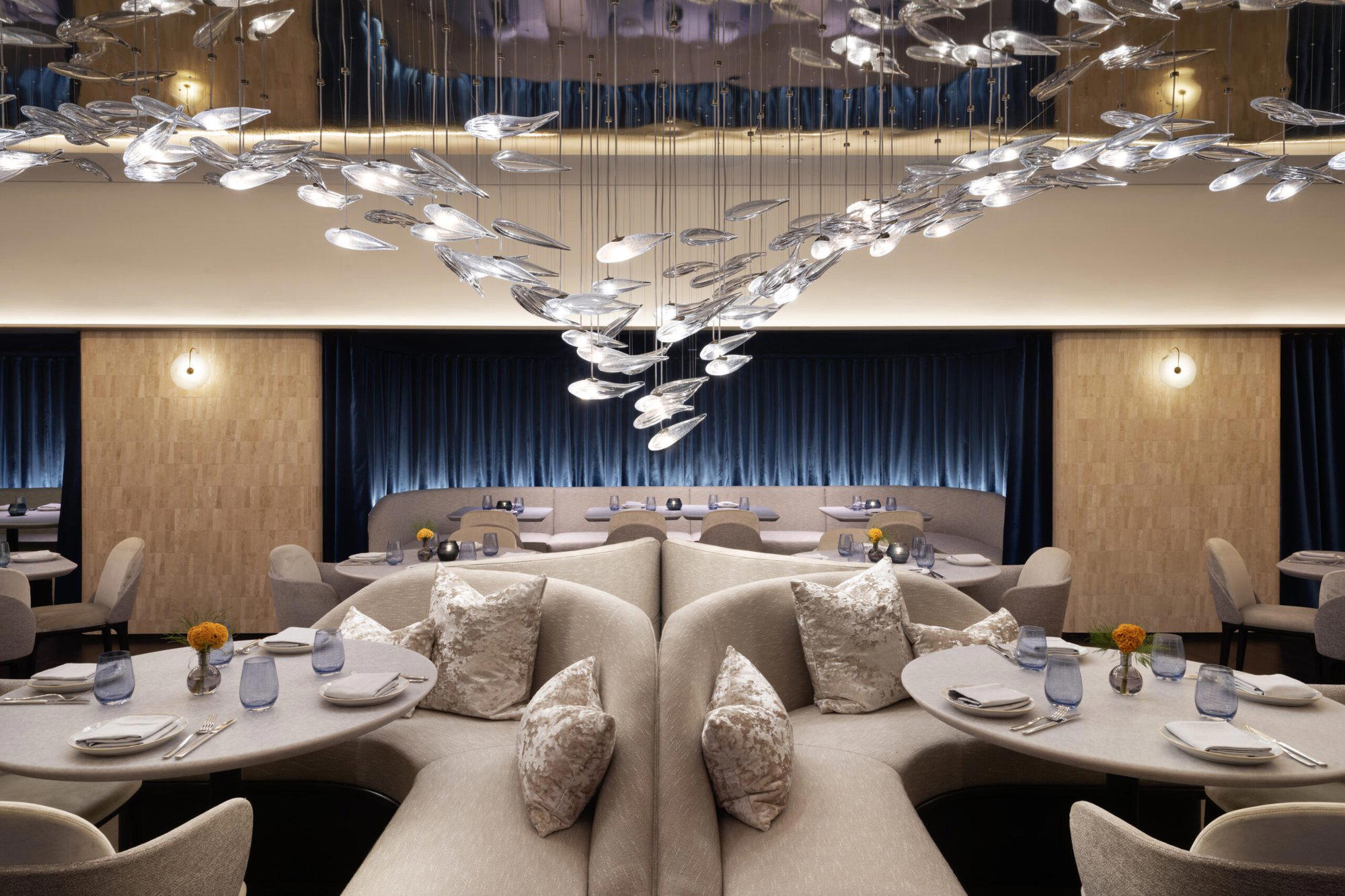
Inside the MetLife Building, a Seafood Room That Earns a Second Look
Midtown Manhattan's dining identity is shaped as much by its office towers as by its kitchens. The corridors that feed into Grand Central Terminal and the surrounding blocks sustain a tier of restaurants that serve lunch crowds, pre-theatre diners, and expense-account tables — and within that tier, most venues trade on convenience rather than conviction. Point Seven, positioned inside the MetLife Building at 200 Park Avenue, occupies a more specific position: an upscale seafood room with a wine program serious enough to justify the visit on its own terms.
The address carries architectural weight. The MetLife Building — the slab tower that interrupts Park Avenue's northward sightline above Grand Central, has housed offices, commuter corridors, and, over the decades, various restaurants that have cycled through the building's considerable foot traffic. Point Seven is not a corridor restaurant. The room is designed for the kind of dinner where the wine list arrives before you've finished reading the menu, and where the seafood framework provides a clear structural logic to what's on the plate.
How the Menu Is Framed, and What That Frame Reveals
Seafood-led menus at the upper tier of New York dining operate within a compressed but well-defined competitive set. Le Bernardin defines the category's ceiling, running a format built on classical French technique applied to fish, with a tasting menu and à la carte structure that has set the standard for decades. Point Seven operates in the same broad category but reads differently: it is a restaurant where the wine program functions as an equal structural element alongside the kitchen, rather than a supporting act.
That distinction matters in menu architecture terms. When a wine director holds real curatorial weight, the menu tends to be written with pairing in mind at the structural level, not as an afterthought. Dishes are built around the logic of what opens up in a glass alongside them, acidity, salinity, weight. A seafood framework is particularly suited to this approach: the range from raw preparations through to richer cooked fish and shellfish creates natural anchoring points for a list that can move from mineral-driven whites through to more textured, aged options.
Wine Director Luke B. is identified in EP Club's editorial recognition as the primary draw for visitors approaching from the Grand Central commuter stream. That framing is telling. A wine director mentioned in the same breath as the restaurant's location in awards-adjacent editorial copy is a director whose program has crossed from supporting role to defining feature. Among Midtown seafood restaurants, that combination, credible kitchen, wine-first identity, is less common than the address density might suggest.
Placing Point Seven in Midtown's Competitive Set
New York's upper-tier seafood and contemporary American restaurants cluster in a way that makes positioning legible. Masa and Per Se at the Time Warner Center represent the tasting-menu, multi-hour commitment end of the spectrum. Saga, the contemporary American room in the financial district, and César sit further downtown with their own distinct formats. Point Seven's Midtown address places it in a different competitive conversation, one that includes power-lunch rooms and hotel dining rooms rather than destination-only tasting menus.
What separates Point Seven from the volume-driven Midtown tier is the deliberateness of the wine program. In the same way that Lazy Bear in San Francisco or Alinea in Chicago use beverage programs as structural signals of their ambition, Point Seven uses its wine list to establish that it is operating at a different register than the building's address might first imply. The comparison is not one of format, those are tasting-menu operations, but of the principle that a serious beverage program is an editorial statement about the type of restaurant you're in.
Internationally, the pattern holds across the restaurants EP Club tracks. Alain Ducasse's Louis XV in Monte Carlo and 8½ Otto e Mezzo Bombana in Hong Kong both maintain wine programs that function as primary identity signals for their respective rooms. The approach is consistent: at the upper tiers, the list is part of the argument a restaurant makes about itself.
The Grand Central Detour Logic
EP Club's editorial note on Point Seven is specific: commuters at Grand Central would be well-advised to detour and linger over the wine list. That framing is worth unpacking. It isn't describing a quick glass before a train. It's describing a deliberate shift in pace, the kind of evening where the commute becomes secondary and the room becomes the destination.
The MetLife Building's position directly above Grand Central's Vanderbilt Avenue entrance makes Point Seven more physically accessible from the terminal than most Midtown dining rooms. The proximity is an operational fact, but the editorial recommendation treats it as an invitation to reconsider the building's restaurant tier entirely. Among the seafood-focused rooms reachable within a five-minute walk of Grand Central, few carry a wine program built to reward sustained attention.
For visitors approaching New York's dining scene from elsewhere, Point Seven fits into a broader East Coast pattern of upscale seafood rooms that anchor themselves in office-adjacent architecture while maintaining kitchen and cellar programs that reach beyond their footfall demographics. Providence in Los Angeles and The French Laundry in Napa operate in entirely different physical contexts, but the principle of a room that exceeds its surroundings is one that applies across the category.
What the Wine Program Signals About the Room
In practical terms, a wine director whose program receives editorial recognition in a seafood restaurant is shaping the experience at every table, not just for wine-first guests. The list's structure informs how the kitchen writes its menu, how servers are trained, and how the room positions its price-to-ambition ratio. At Point Seven, the wine program is the trust signal, the evidence that the restaurant takes the full experience seriously rather than treating the cellar as a revenue line.
New York produces enough credentialed seafood rooms, from Le Bernardin's classical summit down through the midmarket tier, that any room positioning itself at the upper end needs a differentiated argument.
For a broader view of where Point Seven sits in the city's full dining picture, see our full New York City restaurants guide. For planning the rest of a Midtown visit, our New York City hotels guide, bars guide, wineries guide, and experiences guide cover the adjacent options.
Know Before You Go
- Address: 200 Park Ave, New York, NY 10166 (MetLife Building)
- Location context: Directly above Grand Central Terminal, accessible via the Vanderbilt Avenue entrance
- Category: Upscale seafood restaurant with a wine-director-led program
- Editorial note: EP Club recommends prioritising time at the wine list, the program is the primary draw
- Nearby comparison: Saga and César sit in a comparable upscale contemporary tier downtown; Le Bernardin defines the seafood category's upper ceiling in Midtown
How Point Seven New York City compares with similar nearby venues.
| Venue | Cuisine |
|---|---|
| Palladino's Steak & Seafood | Steakhouse/Seafood |
| The Kati Roll Company | Indian Rolls |
Recognition history
Dated appearances from independent guides and award organizations, with the underlying list record or original source where available.
Star Wine List
Star Wine List
Wine Spectator Best of Award of Excellence
Wine Spectator
Continue exploring
More in New York City
Restaurants in New York City
Browse all →
Bars in New York City
Browse all →
Hotels in New York City
Browse all →




At a Glance
- Modern
- Elegant
- Sophisticated
- Trendy
- Business Dinner
- Date Night
- Group Dining
- Open Kitchen
- Chefs Counter
- Extensive Wine List
- Craft Cocktails
- Sustainable Seafood
- Local Sourcing
Current opening hours
- Monday
- 7:30 AM–10:30 PM
- Tuesday
- 7:30 AM–10:30 PM
- Wednesday
- 7:30 AM–10:30 PM
- Thursday
- 7:30 AM–10:30 PM
- Friday
- 7:30 AM–10:30 PM
- Saturday
- 4–10:30 PM
- Sunday
- Closed
Hours can change for holidays and private events. Last verified .
Sleek, contemporary atmosphere with futuristic and zen decor, deep blue curtains, sandy white couches, and glass school of fish overhead, evoking the ocean.
Know Before You Go
- Getting there
- 200 Park Ave, New York, NY 10166