Pinar
Positioned on Herbergsgasse in Basel's medieval core, Pinar occupies a city where French-rooted fine dining and contemporary European kitchens compete for serious attention. Against that backdrop, Pinar represents a distinct entry point into the Basel dining conversation, drawing guests into a setting where the old-city address frames the meal before the first course arrives.
Pearl is the En Primeur Club membership app — saves, bookings, and concierge access live there. Same editors, same standards.
- Address
- Herbergsgasse 1, 4051 Basel, Switzerland
- Phone
- +41612610239
- Website
- restaurant-pinar.ch
- Directions
- Get directions
 Saves & bookings on Pearl
Basel's Old Town and the Logic of Where a Restaurant Sits
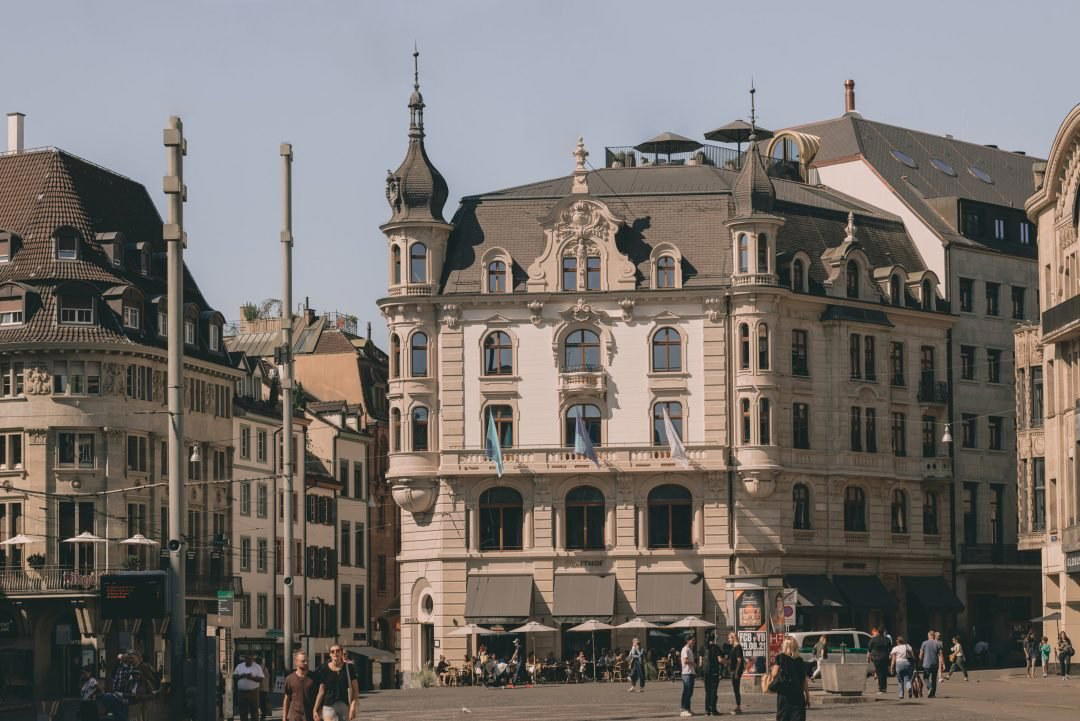
Herbergsgasse 1 is not an address that announces itself on a map without effort. It sits inside Basel's Altstadt, the medieval quarter where narrow lanes connect the cathedral square to the Rhine embankment, and where a building's stone facade rarely telegraphs what is happening inside. In a city that has spent decades building a reputation for serious fine dining alongside its identity as Switzerland's art capital, the physical context of a restaurant matters. An old-town address in Basel carries layered expectation: the buildings are old, the guest base tends to be international and financially comfortable, and the competition from rooms like Cheval Blanc by Peter Knogl and Stucki - Tanja Grandits means that a kitchen cannot survive on location alone.
Pinar, at that address, enters a dining scene that has become notably stratified over the past decade. Basel's top tier is anchored by Michelin-starred French and contemporary European kitchens. Below that, a mid-range layer of brasseries and neighbourhood rooms absorbs the overflow. Any restaurant settling into the old-city corridor has to decide, implicitly, which tier it is speaking to and what it is offering that the established names are not.
The Shape of a Meal Here
When venue-specific details on format and menu are limited, the more instructive question is what kind of meal the setting typically produces in this part of Basel. Old-town restaurants in this price corridor tend toward either the classic brasserie register, where French technique meets Swiss-market produce in a relaxed multi-course format, or a more focused contemporary approach where sourcing specificity and seasonal progression define the evening. The contrast matters because both formats exist within a few hundred metres of Herbergsgasse, and the choice a kitchen makes about sequencing, pacing, and restraint determines which guest it is really competing for.
A meal structured around progression, rather than individual showpiece dishes, works differently in a room of this kind. The opening courses set register and temperature, the middle courses do the argumentative work, and the close either confirms or questions what came before. Basel guests who move between rooms like roots, with its vegetable-led precision, and the classical French weight of Cheval Blanc, bring that comparative range to the table. They notice pacing. They notice when a kitchen commits to a position and when it hedges.
Basel Fine Dining: A Market That Rewards Specificity
Switzerland's restaurant market is particular in ways that matter for understanding any Basel entry. The country supports a higher density of Michelin stars per capita than almost anywhere in Europe, and Swiss diners have been eating at a serious level long enough to have formed strong preferences about value, format, and craft. In cities like Zurich and Geneva, the market for ambitious cooking splits between French-influenced grand rooms and a newer generation of chef-driven, produce-focused formats. Basel tracks similarly but with a smaller market and a guest base that includes a substantial proportion of international visitors tied to the city's art and pharmaceutical industries.
That internationalism shapes what restaurants here need to do. A room at Herbergsgasse has to speak to a Basel local who may have eaten at Hotel de Ville Crissier in Crissier and is measuring quality against a national benchmark. It also has to make sense to a visitor from New York or London who might reference a room like Le Bernardin or Atomix as their frame for what a serious evening looks like. Serving both audiences without diluting either is the structural challenge for any ambitious kitchen in this city.
Switzerland's broader scene includes reference points at considerable distance from Basel: Schloss Schauenstein in Fürstenau, Memories in Bad Ragaz, and 7132 Silver in Vals each represent a different argument about what Swiss fine dining can be. Closer to Basel's scale, rooms like IGNIV Zürich by Andreas Caminada and Einstein Gourmet in Sankt Gallen show how a Swiss city restaurant can establish a clear identity. focus ATELIER in Vitznau, Colonnade in Lucerne, and Da Vittorio in St. Moritz extend the comparison further. What connects these rooms is a shared expectation of intentionality: every element of the experience, from the opening course to the close, should register as a decision, not a default.
The Old City as Context, Not Decoration
What an old-town Basel address does, practically, is compress the competitive radius. Within the Altstadt, guests are choosing between a small number of rooms on foot, often before or after an evening at one of the city's galleries or institutions. The Art Basel week in June concentrates international spending dramatically, but the year-round gallery circuit and the calendar of art fairs mean that Basel's restaurant season runs longer and more evenly than in comparable Swiss cities. A restaurant at Herbergsgasse 1 benefits from that calendar. The question is whether it uses it.
Rooms like 1777 and Ackermannshof illustrate different responses to the same neighbourhood opportunity: a tightly formatted, destination-minded experience versus a more accessible Mediterranean proposition. Pinar occupies this same field and the choice of register it makes will determine which of these it is genuinely competing with and which it is simply adjacent to.
Planning a Visit
Pinar is at Herbergsgasse 1, 4051 Basel, in the Altstadt on the south bank of the Rhine. The address is walkable from Basel's main railway station in under fifteen minutes, and the neighbourhood is dense enough with other cultural institutions that it supports an evening built around multiple stops. For full context on where Pinar sits within the city's dining offer, the EP Club Basel restaurants guide maps the market in detail, including the Michelin-starred rooms and the alternatives at different price points. As with many old-town Basel restaurants, demand during Art Basel week in June and during the holiday season makes forward planning advisable; specific booking details should be confirmed directly with the venue.
How Pinar Basel compares with similar nearby venues.
| Venue | Cuisine | Price |
|---|---|---|
| Cheval Blanc by Peter Knogl | Classic French | €€€€ |
| Brasserie Les Trois Rois | French, Classic French | €€€ |
Continue exploring
More in Basel
Restaurants in Basel
Browse all →
Bars in Basel
Browse all →
Hotels in Basel
Browse all →

At a Glance
- Cozy
- Casual Hangout
- Group Dining
- Standalone
- Local Sourcing
- Organic
Current opening hours
- Monday
- 9 AM–2:30 PM, 5–11 PM
- Tuesday
- 9 AM–2:30 PM, 5–11 PM
- Wednesday
- 9 AM–2:30 PM, 5–11 PM
- Thursday
- 9 AM–2:30 PM, 5–11 PM
- Friday
- 9 AM–2:30 PM, 5–11 PM
- Saturday
- 9 AM–2:30 PM, 5–11 PM
- Sunday
- Closed
Hours can change for holidays and private events. Last verified .
Warmly welcoming with friendly service, though not particularly cozy.
Know Before You Go
- Getting there
- Herbergsgasse 1, 4051 Basel, Switzerland