Picoso Taqueria
Our verdict
Picoso Taqueria occupies a corner of Shattuck Avenue where Berkeley's taqueria tradition runs up against the neighborhood's appetite for quality ingredients and casual formats. The address puts it squarely in the North Shattuck corridor, a stretch that rewards walk-in exploration over advance planning. For context on the broader Berkeley dining scene, the EP Club full Berkeley restaurants guide maps the full range.
- Address
- 1511 Shattuck Ave (Cedar), Berkeley, CA 94709
- Directions
- Get directions
The menu
What to order
- Shrimp burrito
The Shattuck Corridor and the Taqueria Format
North Shattuck Avenue in Berkeley occupies an interesting middle position in the city's dining geography. It is close enough to the Gourmet Ghetto to carry some of that neighborhood's expectation for sourcing and craft, yet casual enough in its day-to-day rhythm that counter-service taquerias fit the streetscape without apology. Picoso Taqueria, at the corner of Shattuck and Cedar, sits inside that tension. The address is 1511 Shattuck Ave, placing it on a block that draws a steady mix of university-adjacent foot traffic and North Berkeley residents who treat the corridor as a functional eating street rather than a destination dining circuit.
The taqueria format itself carries a particular set of sensory expectations that are worth naming before arriving. In California, the form has split across at least two distinct tiers: fast-casual operations running steam-table proteins under fluorescent light, and a smaller cohort of places where masa preparation, protein sourcing, and sauce construction receive the kind of attention more commonly associated with sit-down kitchens. Berkeley has examples of both. Cafe Bolita, operating nearby with a nixtamalization-focused approach to masa, tetelas, tamales, and quesadillas, represents the latter tier clearly. Picoso occupies a different position on that spectrum, with a name that signals heat and directness rather than technique-forward positioning.
Atmosphere and Physical Setting
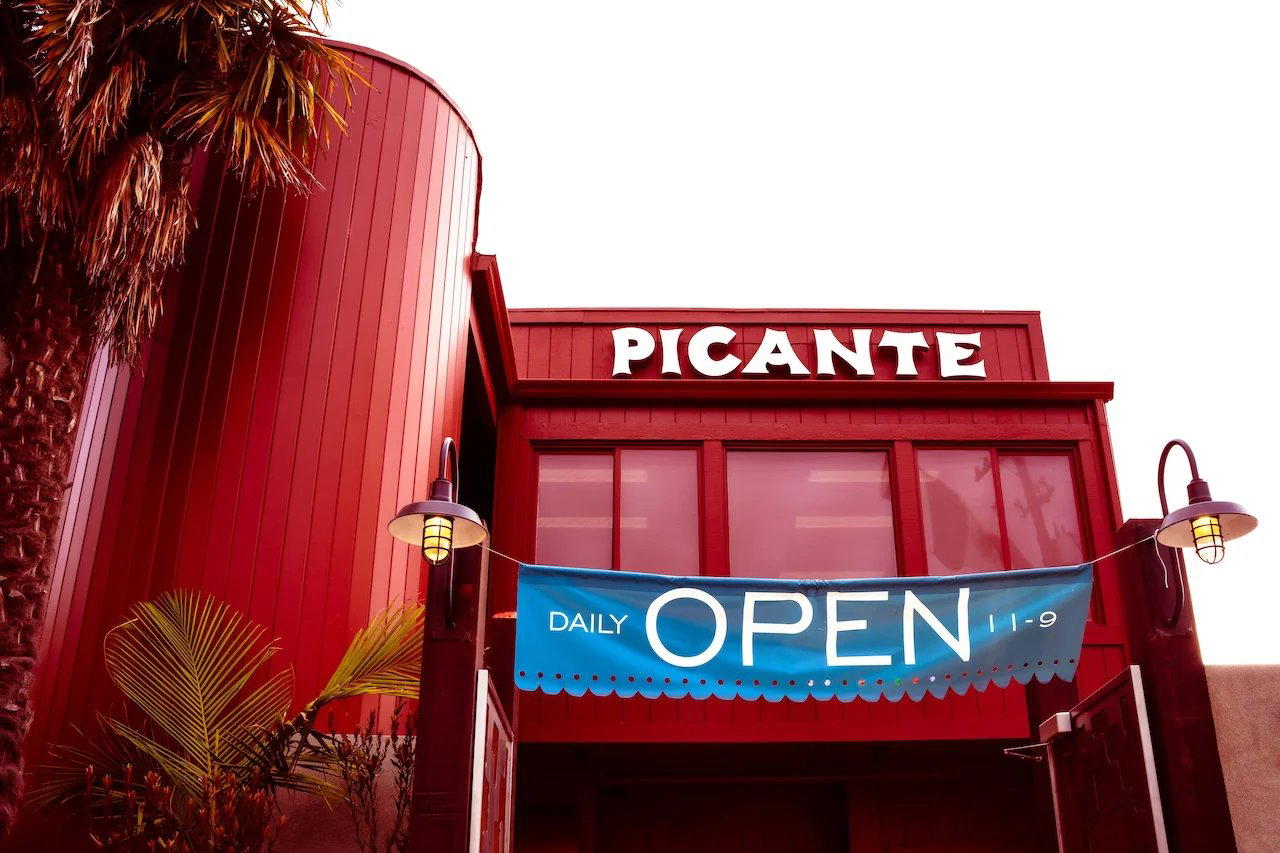
Approaching the corner of Shattuck and Cedar, the building reads as a neighborhood anchor rather than a polished concept. Taquerias at this price tier in Berkeley tend to prioritize throughput over atmosphere, which means the visual and sensory experience is organized around the counter, the board, and the smell of cooking rather than designed sightlines or curated materials. That is not a criticism. In the taqueria format, the absence of ambient decoration often signals that resources are being spent elsewhere, and the smell of sizzling protein and warm tortillas at the door does more editorial work than any interior design choice could.
The Cedar Street corner location gives Picoso a dual-frontage quality that is common to Berkeley neighborhood buildings of its era, allowing foot traffic from two directions and making the space feel more embedded in the block than a mid-street storefront would. The physical environment at this type of operation is defined more by pace and sound than by visual staging: the rhythm of orders called, the press of a tortilla, the thud of a cleaver on a board. These are the cues that signal authenticity in the format, and they carry more weight than lighting design.
Where Picoso Sits in Berkeley's Casual Dining Range
Berkeley's casual dining range is broader than its fine-dining reputation suggests. The city that anchors the conversation around 900 Grayson and its brunch following, or around the Italian seasonal approach at Agrodolce, also sustains a dense layer of counter-service and fast-casual operations where the editorial question is not tasting menu depth but value, consistency, and sensory directness. Picoso belongs to that layer. Its comparison set is not the regional ambition of Ajanta's Indian kitchen or the Japanese precision at AKEMI; it is the neighborhood taqueria that a Berkeley resident trusts for a Tuesday dinner without deliberation.
For readers accustomed to tracking the fine-dining tier nationally, the calibration point is useful. Operations like Lazy Bear in San Francisco, Alinea in Chicago, or The French Laundry in Napa occupy an entirely different register of planning, price, and sensory construction. So do Le Bernardin in New York City, Providence in Los Angeles, Single Thread Farm in Healdsburg, Blue Hill at Stone Barns in Tarrytown, Addison in San Diego, Atomix in New York City, The Inn at Little Washington, 8 1/2 Otto e Mezzo Bombana in Hong Kong, and Emeril's in New Orleans. The taqueria format sits at the opposite end of that planning arc, and that is precisely the point: the sensory payoff is immediate, the commitment is minimal, and the format rewards appetite over occasion.
The Sensory Case for the Taqueria Format
There is an argument, made with some consistency by food critics who cover casual cooking seriously, that the taqueria format delivers a higher sensory-to-effort ratio than almost any other restaurant category. The smell of charred chili, the resistance and yield of a properly hydrated corn tortilla, the contrast between cold crema and hot protein, and the sharp cut of raw onion and cilantro together create a sensory profile that is immediate in a way that constructed tasting menus are not. The format does not build toward a climax; it lands directly.
California's taqueria culture draws from a deep tradition of Mexican regional cooking adapted through decades of cross-border movement, agricultural labor, and urban neighborhood formation. The name Picoso, referring to heat and spice, situates the kitchen within a flavor tradition that prioritizes the chile as a primary organizing ingredient rather than a condiment. That is a meaningful distinction in a market where many casual Mexican operations soften their heat profiles to broaden accessibility. A name that leans into spice is a signal, even if the specific execution requires a visit to confirm.
Berkeley's version of this tradition benefits from the city's unusual density of food-aware consumers. A neighborhood that supports the sourcing commitments visible at Angeline's Louisiana Kitchen and the craft orientation visible across the North Shattuck corridor tends to set a baseline expectation even for casual operations. Whether a taqueria in this environment chooses to meet that expectation through ingredient sourcing, masa technique, or sauce complexity varies by operator, but the surrounding culture creates pressure in that direction.
Planning a Visit
The Shattuck and Cedar corner is accessible by the AC Transit lines running along Shattuck Avenue, and the North Berkeley BART station is within walking distance for visitors approaching from the East Bay rail network. Street parking along Cedar and the surrounding blocks follows Berkeley's residential permit structure, which means meter time is the more reliable option for visitors arriving by car. As with most taquerias operating in this format, walk-in access is the standard approach; no booking infrastructure is typical for counter-service operations at this tier. Visiting during off-peak lunch or early dinner hours reduces wait time and tends to produce the freshest rotation of proteins. The full Berkeley restaurants guide provides broader context for building an itinerary around the North Shattuck area and the city's other dining corridors.
Frequently asked questions
Where exactly is Picoso Taqueria?
Picoso Taqueria is located at 1511 Shattuck Ave (Cedar), Berkeley, CA 94709, Berkeley.
How does Picoso Taqueria fit into Berkeley's broader casual dining scene?
Berkeley's casual dining range extends well beyond its fine-dining reputation, and the taqueria format at Picoso's tier on North Shattuck fills a gap between the city's celebrated destination restaurants and its fast-food options. The 1511 Shattuck Ave address puts it at the edge of a corridor that includes some of Berkeley's most discussed casual spots, giving it a neighborhood-anchor role that purely concept-driven openings rarely achieve. For a city that takes its food culture seriously at every price point, a taqueria in this position is evaluated on execution and consistency rather than on novelty.
What do regulars order at Picoso Taqueria?
Picoso Taqueria operates within the classic taqueria format on Shattuck Avenue at Cedar in Berkeley, where the menu centers on tacos and related preparations built for repeat visits. Regulars at counters like this typically anchor their order around the core taco selection, working through proteins across visits rather than ordering broadly in one sitting. The corner location near the Gourmet Ghetto draws a neighborhood crowd that treats the format as a reliable weekday staple rather than an occasion meal.
Do they take walk-ins at Picoso Taqueria?
Taquerias at Picoso's position on the Shattuck and Cedar corner operate on a walk-in basis by format convention — reservation systems are not standard practice at this tier of Berkeley casual dining. The AC Transit lines along Shattuck Avenue and the proximity to North Berkeley BART make the location straightforward to reach without a car. Arriving during off-peak hours is the practical way to avoid a wait at the counter.
What do critics highlight about Picoso Taqueria?
Food critics who cover casual cooking in Berkeley have noted that the taqueria format delivers a focused, high-repetition menu that rewards the kitchen's consistency rather than ambition. Picoso's address at 1511 Shattuck Ave places it on the North Shattuck corridor, close enough to the Gourmet Ghetto to draw comparison but operating in a distinct price register. The format itself — counter service, a tight menu, a neighborhood anchor role — is what analysts of Berkeley's casual dining range tend to evaluate on its own terms.
Accolades, Compared
| Venue | Cuisine | Price | Awards | Notes |
|---|---|---|---|---|
| Picoso TaqueriaThis venue — the venue you are viewing | Mexican Taqueria | Not listed | Not listed | Not listed |
| Cafe Bolita | Heirloom Nixtamalized Corn Masa | $10–20 | Not listed | Nixtamalization/masa-focused (tetelas, tamales, quesadillas) |
| Cultured Pickle Shop | Fermented Vegetarian Rice Bowls | $30–50 | Not listed | Not listed |
| Rose Pizzeria | Thin-Crust California Pizza | $20–30 | 50 Top Pizza USA #50 | Not listed |
| Tanzie's Cafe | Northern Thai Brunch | $20–30 | Not listed | Not listed |
| 900 Grayson | American Comfort Cafe | $20–30 | Diners, Drive-Ins and Dives Featured Restaurant | Not listed |