





2 Michelin Stars · La Liste Top Restaurants · Guía Repsol 2 Soles
Our verdict
A two-Michelin-star address in rural Galicia, Pepe Vieira sits in a woodland setting above the Rías Baixas coastline and serves three distinct tasting menus anchored in the region's seafood and agricultural traditions. Chef Xosé Torres Cannas frames Galician cooking as 'la última cociña do mundo' — the last cuisine of the world — combining local coastal produce with techniques drawn from further afield. La Liste ranks the kitchen at 82 points for 2026, placing it firmly among Spain's serious creative houses.

Pearl is the En Primeur Club membership app — saves, bookings, and concierge access live there. Same editors, same standards.
- Address
- Camiño Serpe, s/n, 36992 Raxó, Pontevedra, Spain
- Phone
- +34 986 74 13 78
- Hours
- Mon–Tue ClosedWed 1–2:30 PM, 8:30 PM–12 AMThu 12 AM–9:30 PMFri–Sat 1–3 PM, 8:30–9:30 PMSun 1–2:30 PM
- Website
- pepevieira.com
- Directions
- Get directions
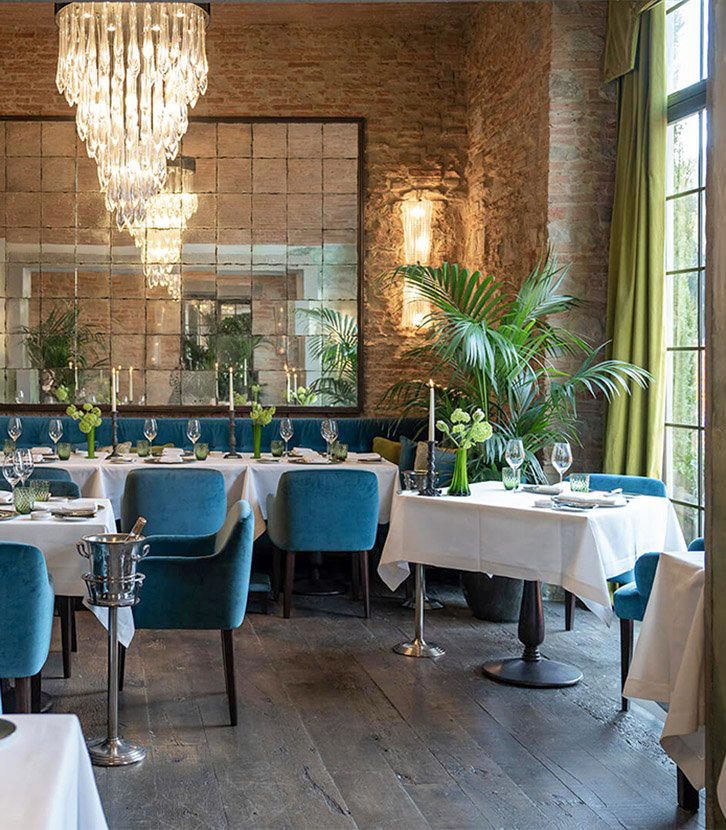
Where the Galician coast meets the treeline
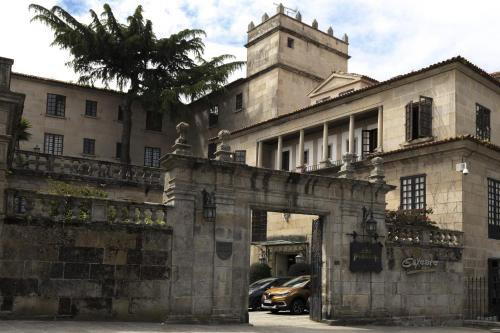
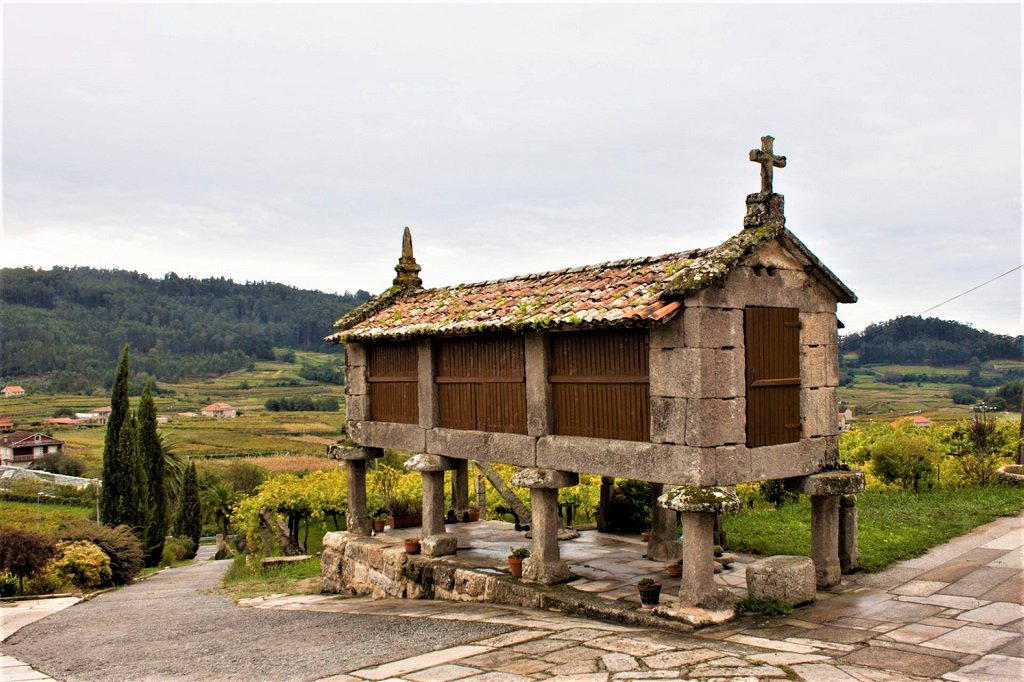
The approach to Pepe Vieira sets the terms before you reach the door. A wooded track off the Rías Baixas coastline near the small village of Raxó gives way to a low-slung building flanked by gardens and stone terraces, with the Atlantic air carrying the faint brine of an estuary somewhere below. This is not the urban fine-dining model — no valet queue, no chandelier lobby — and the physical setting is not incidental. It is the argument the kitchen intends to make at every course. If you are coming from Vigo, the drive takes roughly thirty minutes along the coast road; from Santiago de Compostela, allow around an hour. The address places Pepe Vieira at considerable remove from Spain's main fine-dining corridors, which makes the consistency of its recognition more telling.
What Galician creative cooking looks like at this level
Spain's two-star creative tier has settled into a recognisable set of references and pressures. Houses such as Arzak in San Sebastián, El Celler de Can Roca in Girona, and Disfrutar in Barcelona have each built their identities around a defined regional or conceptual premise, then pushed against it. Galicia's version of that premise is unusually specific: an Atlantic-facing region where the seafood is arguably Spain's finest, the wine culture is anchored in Albariño, and the cuisine has remained relatively opaque to international scrutiny compared with the Basque Country or Catalonia. Pepe Vieira works within that context, treating Galician cooking not as nostalgic raw material to be deconstructed but as an active creative reference, the kitchen's own phrase, 'la última cociña do mundo', frames Galicia as a culinary endpoint rather than a starting point, a region whose traditions arrived late to fine-dining attention and can therefore be addressed without the accumulated weight of prior reinterpretation.
The comparison with Aponiente in El Puerto de Santa María is instructive. Both houses build around coastal produce; both have earned sustained Michelin recognition. Where Aponiente's program centres on the lesser-used biology of the sea, Pepe Vieira's approach is broader in its sourcing geography, combining the local Atlantic catch with ingredients drawn from further afield when the kitchen's creative logic requires it. Chef Xosé Torres Cannas brings external technique and reference to bear on Galician foundations rather than restricting the kitchen to a purely regional ingredient list.
Three menus, one argument
The kitchen runs three tasting menus: Romasanta, O Señor de Andrade, and A Santa Elección. The names are drawn from Galician cultural reference, Romasanta from the region's folk mythology, Andrade from its medieval history, which is not mere decoration. Each menu operates as a distinct proposition in terms of length and depth, allowing guests to choose the level of engagement. The three-menu format at Pepe Vieira gives the kitchen flexibility while giving guests a degree of agency that the fixed-format model does not allow. At the €€€€ price tier, this is not an inexpensive proposition, and the multi-menu architecture reflects an awareness that guests may be spending a night in one of the property's 14 cube-style rooms rather than driving back down the coast road the same evening.
Wine list is organised around the Camino de Santiago, the pilgrimage route that crosses Galicia and terminates in Santiago de Compostela, which is a formally coherent organising principle rather than a gimmick. The Camino passes through multiple Spanish wine regions before entering Galicia, which gives the wine program legitimate geographic breadth while keeping Galicia's own appellations, including Rías Baixas and Ribeira Sacra, as the anchor. For broader reference on Spain's creative fine-dining wine programs, the approach here sits between the deep regional cellar model employed at Atrio in Cáceres and the more internationally oriented lists common at Madrid addresses like DiverXO.
The experience as a sequence of spaces
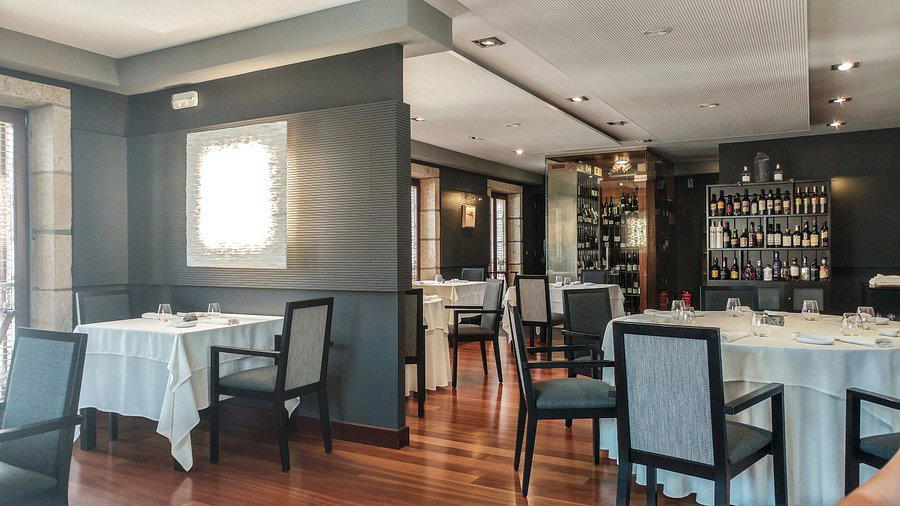
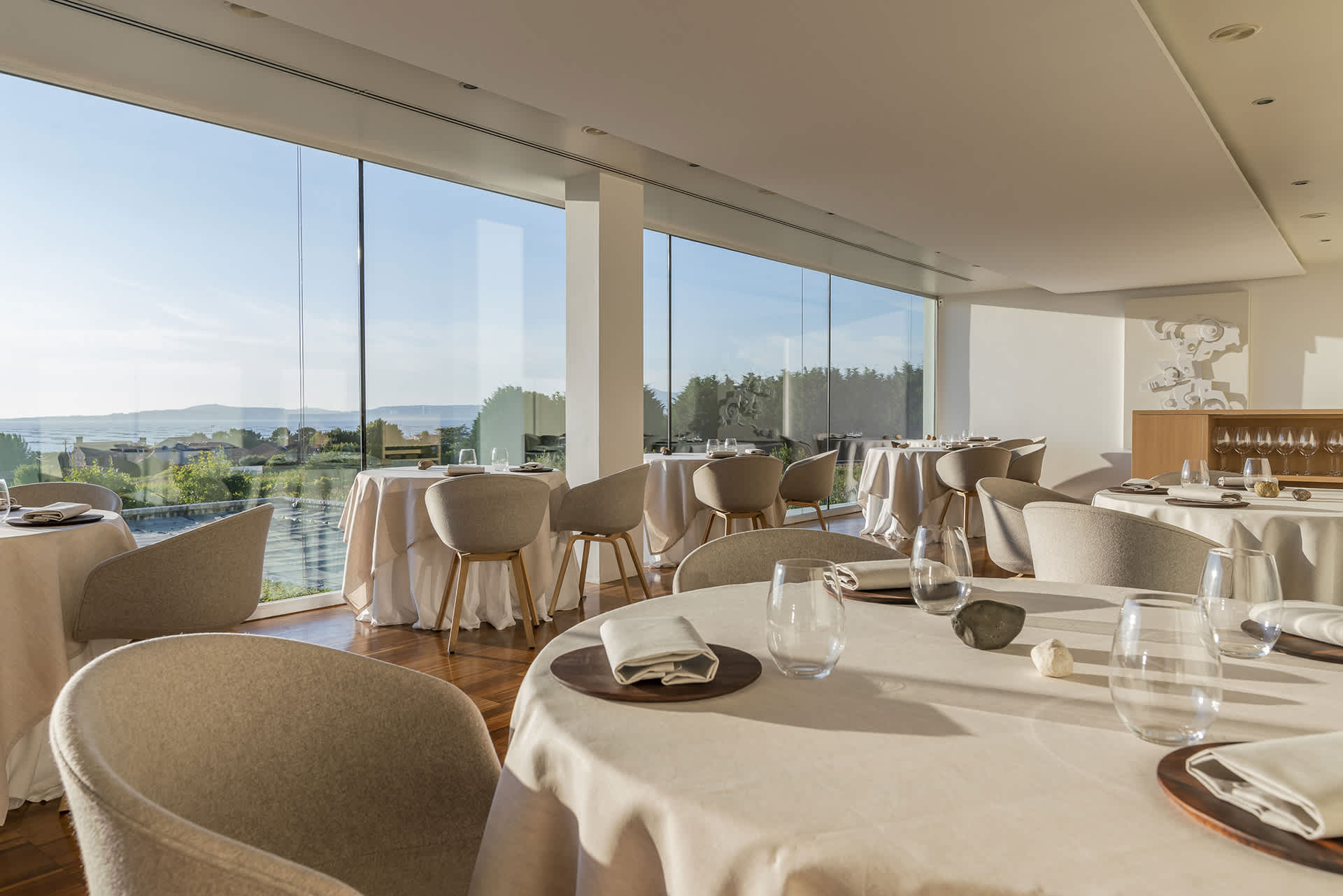
Format at Pepe Vieira does not begin at the dining table. Aperitifs are served in the garden, and the meal progresses through different areas of the building before reaching the main dining room, which faces the surrounding woodland through full-height picture windows. This is a deliberate structural choice that mirrors the tasting menu's own internal logic: the outside-to-inside movement mirrors the kitchen's movement from elemental Galician reference points toward more technically complex courses. Sustainability functions as an operational principle throughout, shaping sourcing decisions and the kitchen's relationship with the surrounding land. The overall sequence takes several hours, which aligns with the norms of the Spanish multi-course format, Martin Berasategui in Lasarte-Oria and Azurmendi in Larrabetzu operate similarly extended meal rhythms, but the spatial progression at Pepe Vieira makes the length feel less static than a single-room format allows.
Where Pepe Vieira sits in the recognition tier
Kitchen holds two Michelin stars as of 2024 and carries a La Liste score of 82 points for 2026 (83.5 in 2025). The awards profile places Pepe Vieira in a clear peer group: two-star creative houses operating outside Spain's major urban centres, where transport costs and advance planning are factored into the decision. Within that group, which includes Ricard Camarena in València at the regional-creative tier, the recognition Pepe Vieira has sustained across multiple editions of La Liste and Michelin suggests a kitchen with a stable and legible identity rather than a single-season story. For comparison, creative kitchens at a similar recognition level in other European markets include Alléno Paris au Pavillon Ledoyen and Enrico Bartolini in Milan, both of which operate in dense urban contexts; the rural Galician setting makes Pepe Vieira's equivalent recognition a more operationally demanding achievement.
Staying on site and planning the visit
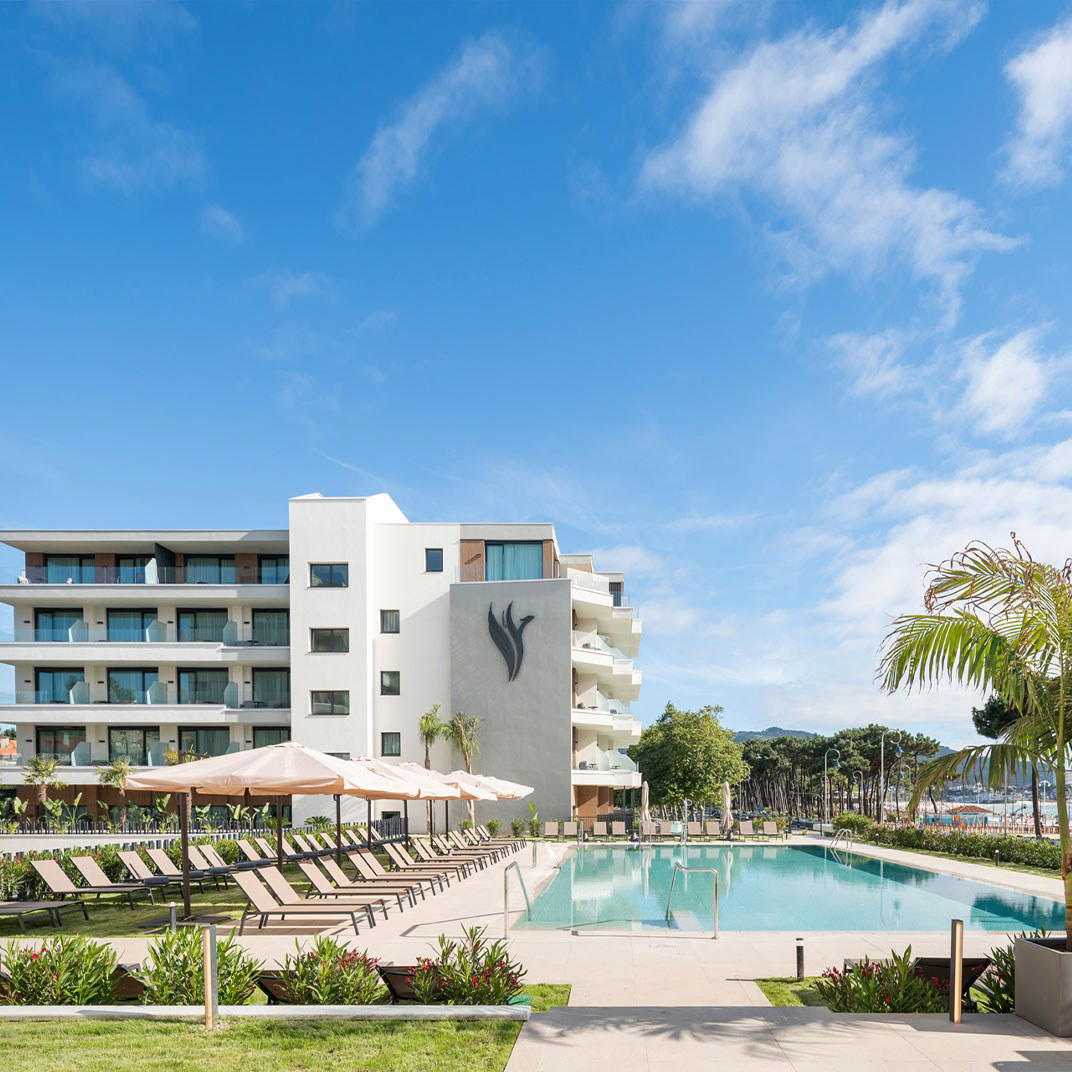
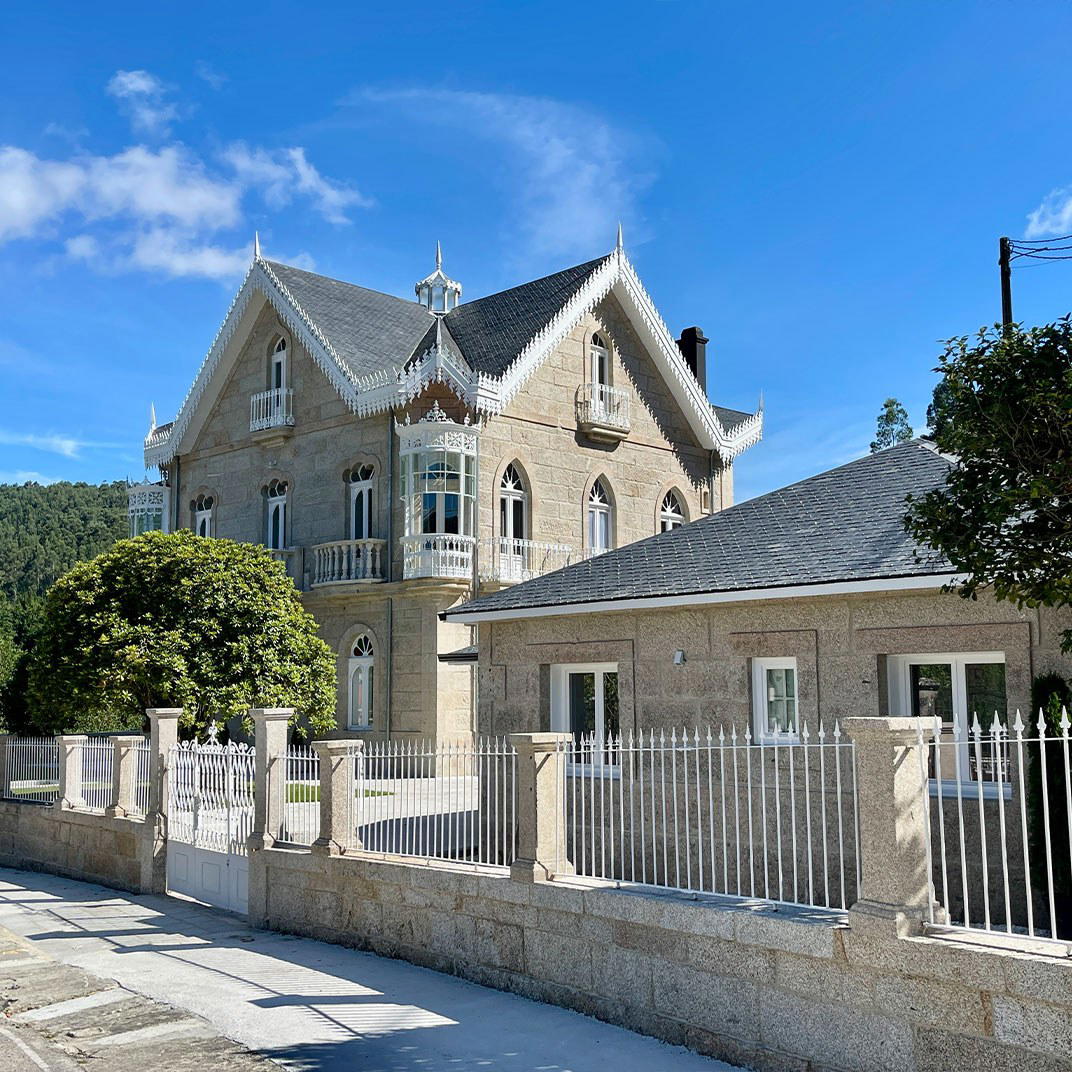
14 on-site rooms are described as cube-style structures with a contemporary design that orients guests toward the natural surroundings rather than insulating them from the setting. This is relevant practical information: a meal at this level runs long, the property is not in a village with taxi infrastructure, and the combination of a full tasting menu and a Camino-themed wine program is not designed for a quick turnaround. Booking the accommodation alongside the dinner is the logical approach, and it places Pepe Vieira in a category of destination restaurant that requires overnight planning rather than an evening reservation. For broader context on what else the area offers, see our full Raxó restaurants guide, our full Raxó hotels guide, our full Raxó bars guide, our full Raxó wineries guide, and our full Raxó experiences guide.
Frequently asked questions
Does Pepe Vieira work for a family meal?
Pepe Vieira runs structured tasting menus — Romasanta, O Señor de Andrade, and A Santa Elección — at a €€€€ price point, which places it firmly in destination-dining territory rather than casual family eating. The garden aperitif sequence and multi-space format require time and engagement. Families with children who are comfortable at long, formal tasting-menu dinners will find the wooded rural setting in Raxó a natural fit; those looking for flexibility or à la carte ordering will not.
What's the overall feel of Pepe Vieira?
The experience is deliberately unhurried and spatial: it begins with aperitifs in the garden, moves through different areas of the building, and ends in a dining room whose floor-to-ceiling windows open directly onto the surrounding woodland. La Liste describes the setting as a restaurant surrounded by woods, gardens, and terraces, and gives it 82 points for 2026. The 14 on-site cube rooms extend that relationship with the natural surroundings beyond the meal itself.
Is Pepe Vieira award-winning?
Pepe Vieira has received recognition including: La Liste Top Restaurants (2026): 82pts; It is a miracle to find a restaurant of this standard in the middle of the countryside, but Pepe Vieira bucks this trend! In this spectacular restaurant surrounded by woods, gardens and pleasant terra….
What's the signature dish at Pepe Vieira?
Specific dish descriptions are not published in available documentation, but the kitchen's direction is clear: chef Xosé Torres Cannas foregrounds Galician coastal produce, particularly seafood, combined with ingredients and techniques drawn from elsewhere. La Liste frames this as a cooking philosophy the restaurant calls 'la última cociña do mundo' — the last cuisine in the world — which positions the tasting menus as an argument for Galician culinary identity rather than a showcase for any single plate.
What's the pricing like at Pepe Vieira?
Pricing at Pepe Vieira is listed as €€€€.
What's the address for Pepe Vieira?
Pepe Vieira is located at Camiño Serpe, s/n, 36992 Raxó, Pontevedra, Spain, Raxó.
In Context: Similar Options
| Venue | Cuisine | Price | Awards |
|---|---|---|---|
| Pepe VieiraThis venue — the venue you are viewing | Modern Galician Seafood | $300–500 | 2 Michelin Stars · La Liste Top Restaurants |
| Aponiente | Progressive - Seafood, Creative | Not listed | Michelin 3 Star |
| Arzak | Modern Basque, Creative | Not listed | Michelin 3 Star |
| DiverXO | Progressive - Asian, Creative | Not listed | Michelin 3 Star |
| El Celler de Can Roca | Progressive Spanish, Creative | Not listed | Michelin 3 Star |
| Quique Dacosta | Creative | Not listed | Michelin 3 Star |
Recognition history
Dated appearances from independent guides and award organizations, with the underlying list record or original source where available.
Michelin 2 Stars
Michelin
La Liste Top Restaurants
La Liste
Guía Repsol 2 Soles
Guía Repsol
Macarfi 9.1 Food Rating
Macarfi
Opinionated About Dining Top Restaurants in Europe Ranked #293
Opinionated About Dining
Full recognition history (9 entries)
La Liste Top Restaurants
La Liste
Michelin 2 Stars
Michelin
The Best Chef One Knife
The Best Chef
Michelin 2 Stars
Michelin
Continue exploring
More in Raxó
Restaurants in Raxó
Browse all →
Bars in Raxó
Browse all →
Hotels in Raxó
Browse all →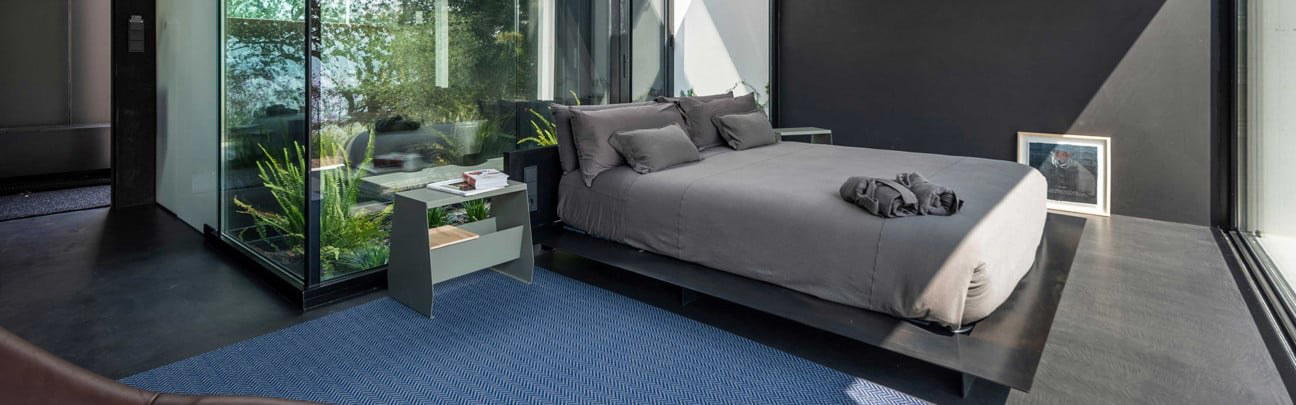

Details
- Elegant
- Scenic
- Sophisticated
- Intimate
- Special Occasion
- Date Night
- Celebration
- Open Kitchen
- Garden
- Panoramic View
- Terrace
- Hotel Restaurant
- Standalone
- Sommelier Led
- Farm To Table
- Local Sourcing
- Sustainable Seafood
- Garden
- Waterfront
- Tasting Menu
- Set Menu
- Wine Pairing
- Regional Wines
- Pescatarian Friendly
- Allergy Accommodating
Current opening hours
- Monday
- Closed
- Tuesday
- Closed
- Wednesday
- 1–2:30 PM, 8:30 PM–12 AM
- Thursday
- 12 AM–9:30 PM
- Friday
- 1–3 PM, 8:30–9:30 PM
- Saturday
- 1–3 PM, 8:30–9:30 PM
- Sunday
- 1–2:30 PM
Hours can change for holidays and private events. Last verified .
Sophisticated and serene with dark, tasteful furnishings that draw focus to the food and spectacular estuary views; the dining experience unfolds across multiple spaces including the kitchen, bar, and dining room with fireplace.