Park's Kitchen Hammersmith
Park's Kitchen on King Street sits in the middle of Hammersmith's quieter residential dining scene, away from the central London ££££ tier dominated by places like The Ledbury and CORE by Clare Smyth. Where those rooms trade in tasting-menu ceremony, Park's Kitchen occupies a more accessible neighbourhood register, the kind of spot that rewards regulars as much as first-time visitors making the westward trip along the District line.
Pearl is the En Primeur Club membership app — saves, bookings, and concierge access live there. Same editors, same standards.
- Address
- 210 King St, London W6 0RA, United Kingdom
- Phone
- +442035657418
- Website
- parks-kitchen.com
- Directions
- Get directions
 Saves & bookings on Pearl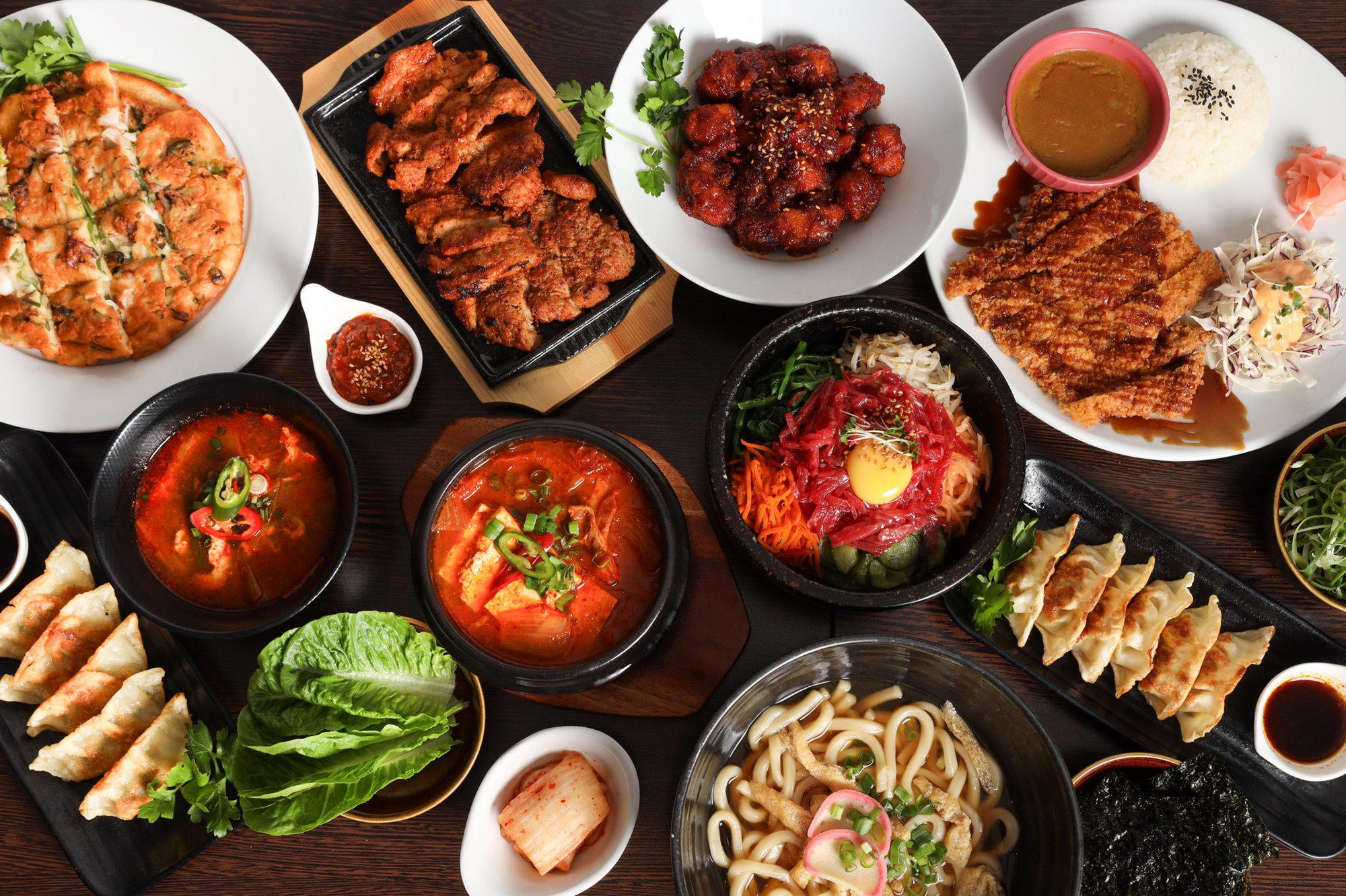
King Street and the West London Neighbourhood Dining Pattern
Hammersmith occupies an odd position in London's dining geography. It sits far enough west to feel removed from the Mayfair-to-Notting Hill corridor where most of the city's Michelin-tier spending concentrates, yet it carries a resident population dense enough to sustain serious cooking. King Street in particular functions as a high street that has occasionally surprised: not a destination in the way that Shepherd's Bush Market or the Heddon Street cluster attract food tourists, but a working street where a restaurant earns its place by feeding the same postcode repeatedly. Park's Kitchen, at number 210, sits inside that pattern.
You see this at the ambitious end in places like CORE by Clare Smyth, where Modern British form structures the menu, and at The Ledbury, where European fine-dining vocabulary meets specifically sourced UK ingredients. The interesting question for a neighbourhood room is how far down that axis the approach can travel without losing coherence, or accessibility.
The Local-Ingredients, Global-Technique Frame
The editorial angle worth applying to Park's Kitchen is one that has become increasingly common across London's mid-tier: the use of imported culinary methods applied to whatever is available and honest in the British larder. Raymond Blanc built an entire reputation on it at Le Manoir aux Quat'Saisons in Oxford, insisting on kitchen garden produce to feed menus rooted in French classical training. Simon Rogan took the same logic further north at L'Enclume in Cartmel, where hyper-local foraging and farming effectively became the menu's identity rather than just its supply chain.
At the neighbourhood level, the execution tends to be less programmatic and more pragmatic: what technique can be brought to bear on what is actually available at reasonable cost, and can it be delivered consistently to a room that expects value as much as refinement? This is a harder problem than it looks. Restaurants like Moor Hall in Aughton and Midsummer House in Cambridge solve it with dedicated sourcing programs and tasting-menu formats that build the cost of premium ingredients into a single per-head price. A King Street restaurant cannot assume the same guest profile or the same willingness to commit to that structure.
The name itself, Park's Kitchen, signals a personal rather than a conceptual brand. That positioning places it alongside a cluster of London neighbourhood rooms where the proprietor's identity anchors the offer rather than a culinary thesis. It is a different register from the thematic restaurants that have proliferated in central London, including the theatrical formats at Sketch, The Lecture Room and Library or the historically anchored menu at Dinner by Heston Blumenthal. In a neighbourhood context, that restraint is usually appropriate.
Hammersmith Against Its comparable set
Positioning Park's Kitchen against central London's ££££ tier, Restaurant Gordon Ramsay, CORE, The Ledbury, tells you less than positioning it against what a west London resident actually considers when choosing where to eat mid-week. The relevant comparison set is not the tasting-menu circuit but the collection of neighbourhood rooms from Chiswick through Fulham that have developed reliable local followings without chasing awards recognition.
Outside London, the same tension between local anchoring and wider culinary ambition plays out at places like Gidleigh Park in Chagford, hide and fox in Saltwood, and Hand and Flowers in Marlow, the last of which made its name by delivering serious cooking in a pub format, which is the English analogue of what a good neighbourhood restaurant attempts. The lesson from Hand and Flowers is that format and price accessibility do not preclude technical seriousness; they simply require that the kitchen makes different decisions about where to concentrate its effort.
Internationally, kitchens that have most convincingly merged imported technique with local produce tend to operate in cities where the produce itself carries prestige: Le Bernardin in New York City built its case on French classical seafood technique applied to American Atlantic catch, while Atomix in New York City applies Korean fine-dining logic to ingredients that shift between Korean imports and local sourcing depending on season. The throughline is that the technique provides structure while the ingredient sourcing provides specificity and locality. A restaurant that gets that balance right earns loyalty that transcends any single dish.
In Scotland, Restaurant Andrew Fairlie in Auchterarder has made a sustained case for French-trained precision applied to Scottish produce. The model is transferable: what changes is the postcode and the price point at which the guest expects to encounter it. And in Birmingham, Opheem has built a Michelin-starred case for Indian culinary technique applied to British seasonal ingredients, a more dramatic cultural translation that has nonetheless found a coherent audience.
The Waterside Inn in Bray remains the clearest example of a French-trained kitchen that embedded itself so completely in a specific English setting that the two are now inseparable, a long-game version of exactly what neighbourhood restaurants attempt on a smaller scale.
Planning Your Visit
| Venue | Area | Price Tier | Format | Awards |
|---|---|---|---|---|
| Park's Kitchen Hammersmith | Hammersmith, W6 | Not confirmed | Neighbourhood restaurant | Not confirmed |
| CORE by Clare Smyth | Notting Hill, W11 | ££££ | Tasting menu | Michelin-starred |
| The Ledbury | Notting Hill, W11 | ££££ | Tasting menu | Michelin-starred |
| Dinner by Heston Blumenthal | Knightsbridge, SW1X | ££££ | À la carte / set menu | Michelin-starred |
The Minimal Set
Comparable venues nearby, for context on price, style, and recognition.
| Venue | Cuisine | Price |
|---|---|---|
| Park's Kitchen HammersmithThis venue — the venue you are viewing | Ravenscourt Park, Traditional Korean | $$ |
| KOREAN BBQ HOUSE | St Luke's, Halal Korean BBQ | $$ |
| Myung Ga Korean Restaurant | Soho, Authentic Korean BBQ | $$ |
| Seoul K-food | Woolwich, Authentic Korean Comfort Food | $$ |
| Jang Restaurant | Cheapside, Korean-Japanese Fusion | $$$ |
| Butchers Hook | Hammersmith Broadway, British Gastropub | $$ |
Continue exploring
More in London
Restaurants in London
Browse all →
Bars in London
Browse all →
Hotels in London
Browse all →
Wineries in London
Browse all →
At a Glance
- Modern
- Lively
- Energetic
- Casual Hangout
- Group Dining
- Family
- Standalone
- Local Sourcing
Current opening hours
- Monday
- 12–3 PM, 5:30–9:30 PM
- Tuesday
- 12–3 PM, 5:30–9:30 PM
- Wednesday
- 12–3 PM, 5:30–9:30 PM
- Thursday
- 12–3 PM, 5:30–9:30 PM
- Friday
- 12–3 PM, 5:30–10 PM
- Saturday
- 12–3:30 PM, 5–10 PM
- Sunday
- Closed
Hours can change for holidays and private events. Last verified .