Paradise Cove
Our verdict
Paradise Cove sits on Oahu's leeward coast at 92-1089 Aliinui Drive in Kapolei, anchoring one of Hawaii's most-attended luau formats against a backdrop of open ocean and torch-lit shoreline. The experience draws on the ali'i (chiefly) tradition of Hawaiian feasting, positioning it squarely within the ceremonial end of the island's cultural dining spectrum, distinct from the resort-buffet model that dominates Waikiki.
The menu
What to order
- Kalua Pork
- Lomi Lomi Salmon
- Island Fish with Macadamia Nut Creme Sauce
Leeward Coast Setting and the Logic of the Luau Format
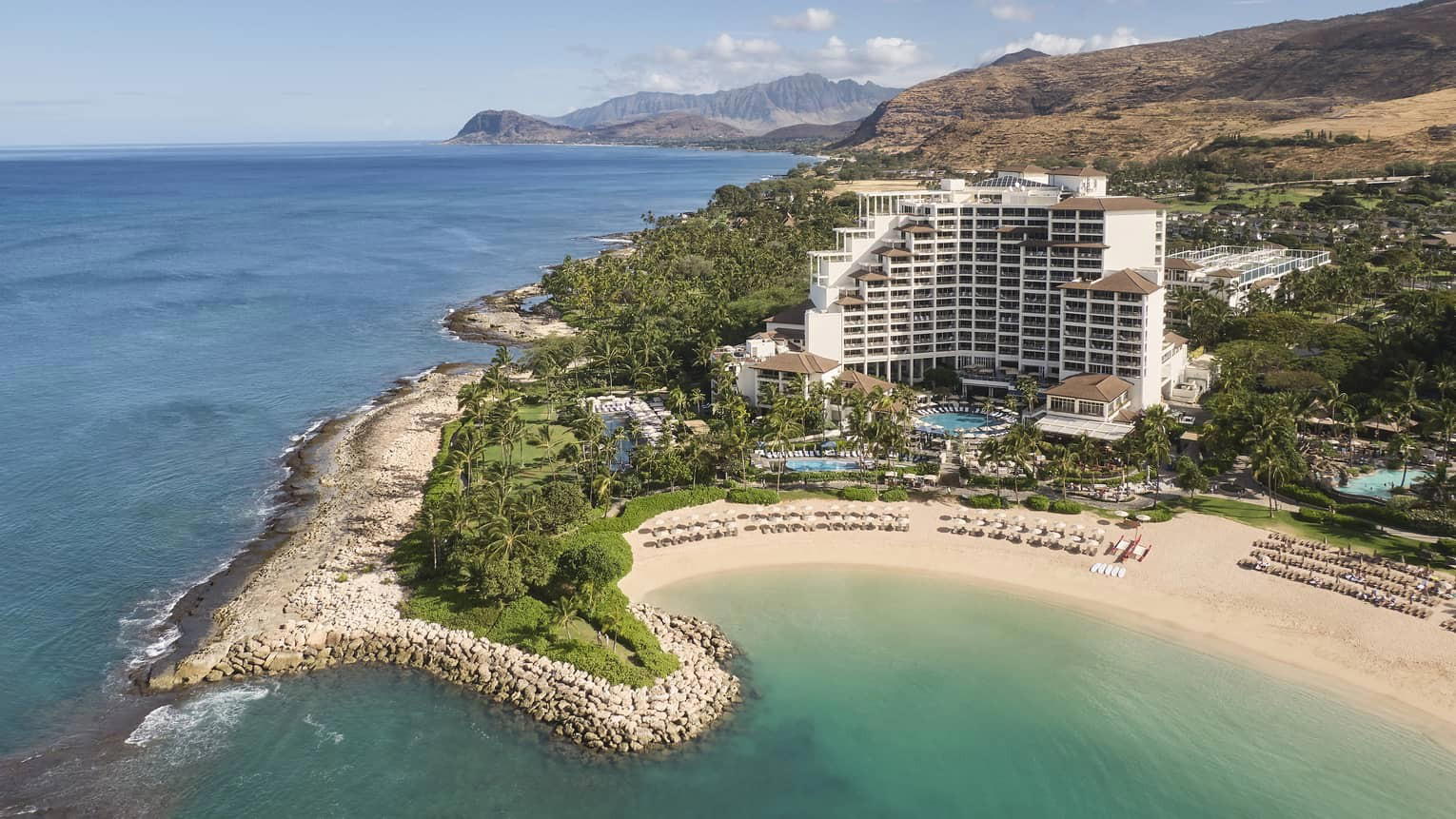
Oahu's west shore does something the hotel strip in Waikiki cannot replicate: it puts the ocean behind the event rather than beside a highway. At Paradise Cove on Aliinui Drive in Kapolei, arriving guests follow a coastal access road that opens, almost abruptly, onto a private cove facing the Pacific. The sky typically clears on the leeward side by late afternoon, a meteorological quirk of the Ko Olina and Kapolei corridor that makes the west coast the preferred site for sunset-timed events. The setting is not incidental to the program; it is the program's structural foundation.
That geography explains why the luau format, as practiced here and at comparable leeward venues, operates on a different register than the dinner-theater model found closer to Honolulu. Sunset over the water functions as a built-in dramatic arc. The meal, the ceremony, and the entertainment are timed against it, giving the evening a pacing discipline that indoor venues have to manufacture artificially.
Menu Architecture and the Ali'i Tradition
Hawaiian luau menus exist on a spectrum that runs from resort-buffet convenience (kalua pork, macaroni salad, one poi station) to more considered programs that attempt to reconstruct the ali'i-era feast with a fuller range of native and introduced ingredients. Paradise Cove positions itself at the ceremonial end of that range, which is the more demanding place to operate, it requires committing to traditional preparation methods, particularly the imu (underground oven), where kalua pig is the centerpiece of a slow, labor-intensive process that begins well before guests arrive.
The imu ceremony itself functions as an editorial statement about the menu's priorities. When the pig is uncovered from the earth oven in front of guests, the kitchen is making visible a production process that most food services conceal. It places preparation, specifically, the patience required by traditional Hawaiian cooking, at the center of the meal rather than at its margins. That structural choice separates ceremonial luau formats from hotel buffet operations that source kalua pork from commissary suppliers.
Alongside the imu centerpiece, the broader table typically follows a pattern common to formal Hawaiian feasting: poi from taro, lomi lomi salmon (a post-contact addition that became canonical), haupia (coconut pudding), and a range of side preparations that reflect the layering of Polynesian, Asian, and American influences that define contemporary Hawaiian food culture. The menu reads as a document of Oahu's food history, not just a list of dishes.
Kapolei's Position in Oahu's Dining Geography
Kapolei has developed a distinct dining character that sits apart from both the tourist concentration of Waikiki and the neighborhood-restaurant density of Honolulu's urban core. The area around Ko Olina and the leeward corridor hosts a mix of resort-anchored dining, Ama 'Ama and La Hiki being the most formally structured, alongside more casual local options like Kalapawai Cafe & Deli and DB Grill. Within that mix, Paradise Cove and Germaine's Luau occupy the experiential category, events rather than restaurants, with cultural programming as the primary product.
That distinction matters for how readers should calibrate expectations. Luau venues are not competing with fine-dining programs on the island. They are competing with each other on depth of cultural content, production quality, and site. For visitors choosing between leeward luau options, the differentiators are the setting's proximity to the water, the scope of the pre-show activities, and whether the imu ceremony is treated as spectacle or as genuine process. See our full Kapolei restaurants guide for how Paradise Cove fits against the wider field.
For reference, the scale of production at a major luau venue is closer to event hospitality than to restaurant service. The comparison set is not Le Bernardin in New York City or The French Laundry in Napa, and it is not trying to be. The relevant benchmark is whether the cultural content is substantive and the food preparation is honest. Both Lazy Bear in San Francisco and Blue Hill at Stone Barns in Tarrytown demonstrate how American dining experiences can place production process front and center; the luau format has been doing the same thing, in its own terms, for considerably longer.
Entertainment as Menu Extension
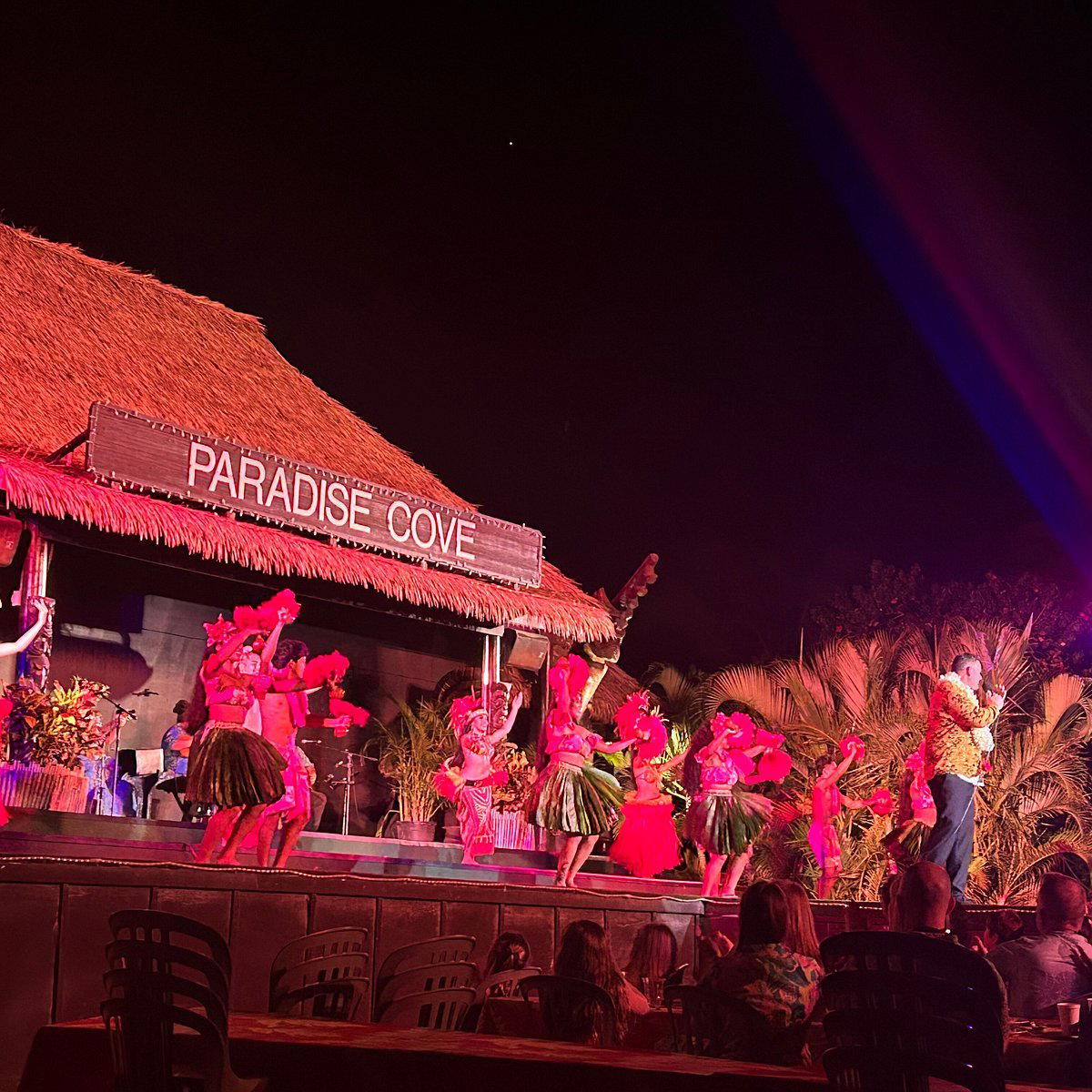
At ceremonially structured luau venues, the Polynesian performance program is not supplementary to the meal, it is part of the menu's architecture. Traditional hula, Tahitian ori, Samoan fire knife dancing, and Hawaiian chant serve as courses in a different register, delivering cultural content that the food alone cannot carry. The sequencing of performance acts against the meal service functions like a tasting menu's pacing: each element changes the texture of the evening before the next arrives.
This is worth stating plainly for visitors accustomed to Western dining categories, where entertainment and food service occupy separate mental compartments. At Paradise Cove, the fire knife dancer appearing as the sky goes fully dark is not an interruption of dinner, it is dinner's climax, timed to the moment when the imu-roasted pork has been consumed and the haupia has arrived. The event's producers understand this structural logic even when it is not articulated explicitly.
Planning a Visit
Paradise Cove is located at 92-1089 Aliinui Drive in Kapolei, on Oahu's leeward coast. The venue is approximately 27 miles from Waikiki via the H-1 freeway, making it a roughly 40-to-60-minute drive depending on traffic, Oahu's westbound H-1 corridor can be congested during late-afternoon commute hours, which overlaps with the typical departure window for luau guests. Visitors driving from the Honolulu side should account for that variable. Shuttle services from Waikiki hotels are available through most concierge desks and third-party booking platforms, which removes the driving concern entirely.
Luau events of this scale typically operate on a fixed-time model, doors open at a set hour, the imu ceremony follows shortly after, and the evening concludes after the performance program. There is no walk-in service; advance booking is standard practice for all structured luau events, and weekend dates during peak travel periods (June through August, and December through January) fill well ahead. Booking a minimum of two to three weeks out is advisable for those traveling during high season. Packages at venues like this typically tier by seating position and inclusions, with premium tiers offering closer proximity to the performance stage and additional beverage access.
For visitors building a multi-day Oahu itinerary that balances cultural dining with more conventional restaurant experiences, the west coast's concentrated resort dining, including options at Ko Olina such as Ama 'Ama, makes it possible to combine a luau evening with a separate fine-dining meal without returning to Honolulu. Nationally, the immersive-experience dining format has drawn comparison to venues like Alinea in Chicago, Atomix in New York City, Providence in Los Angeles, Addison in San Diego, The Inn at Little Washington, Single Thread Farm in Healdsburg, Emeril's in New Orleans, and 8 1/2 Otto e Mezzo Bombana in Hong Kong, all of which treat the evening as a structured arc rather than a simple meal. The luau tradition predates all of them.
Frequently asked questions
Where is Paradise Cove in Kapolei?
Paradise Cove is located at 92-1089 Aliinui Dr, Kapolei, HI 96707, Kapolei.
Is Paradise Cove suitable for first-time visitors to Hawaii who are unfamiliar with Hawaiian culture?
The event is specifically structured for that audience. The ali'i (chiefly) welcome ceremony, the imu explanation, and the performance narration are designed to give cultural context without prior knowledge. Located in Kapolei on Oahu's leeward coast, Paradise Cove draws a mix of first-time visitors and returning guests precisely because the program sequence doubles as cultural orientation.
What dish is Paradise Cove famous for?
The kalua pig from the imu, a traditional underground earth oven, is the ceremonial centerpiece of the meal. The imu preparation involves slow-cooking the whole pig with heated volcanic rocks, a method that defines luau cooking across the Hawaiian islands. At Paradise Cove in Kapolei, the imu unveiling is a scheduled part of the event rather than a back-of-house production detail.
Do I need a reservation for Paradise Cove?
Yes. Structured luau events operate on fixed capacity determined by the physical site, so walk-ins are not possible. Visitors traveling to Oahu during summer months or around major holidays should book well in advance, as leeward coast venues with ocean-facing settings fill quickly. Paradise Cove is located at 92-1089 Aliinui Drive in Kapolei, roughly 27 miles from Waikiki.
What has Paradise Cove built its reputation on?
The venue's standing comes from three converging elements: its leeward coastal setting, which places the ocean directly behind the event space rather than alongside a hotel corridor; the ceremonial imu presentation; and a Polynesian performance program that runs as an integrated part of the evening rather than a separate show. That combination, on Oahu's west shore in Kapolei, separates it from resort-strip luau formats closer to Waikiki.
Where the Accolades Land
| Venue | Cuisine | Price |
|---|---|---|
| Paradise CoveThis venue (the venue you are viewing) | Traditional Hawaiian Luau | Not listed |
| 'Ama 'Ama | Contemporary Hawaiian | $100–150 |
| Kalapawai Cafe & Deli | American Deli & Cafe | $20–30 |
| Mahi 'ai Table | Local Hawaiian Farm-to-Table | $30–50 |
| La Hiki | Continental American with Hawaiian Influences | $50–100 |
| DB Grill | Modern Asian Bistro | $20–30 |
Continue exploring
More in Kapolei
Restaurants in Kapolei
All restaurants in Kapolei →
Bars in Kapolei
Browse all →
Details
- Lively
- Scenic
- Whimsical
- Group Dining
- Family
- Celebration
- Special Occasion
- Live Music
- Waterfront
- Terrace
- Beer Program
- Local Sourcing
- Waterfront
- Buffet
- Family Style
- Beer
- Tropical Drinks
- Gluten Free Options
- Vegetarian Friendly
Festive and casual outdoor evening atmosphere with cultural entertainment, buffet-style dining, and waterfront views creating an immersive Hawaiian experience.