Papillon sits on the second floor of the Hyatt Place on Jl. Jend. Sudirman, positioning it within Makassar's emerging mid-to-upper dining corridor. The venue operates against a city backdrop where Bugis and Makassarese food traditions set a high bar for bold, seafood-forward cooking.
Pearl is the En Primeur Club membership app — saves, bookings, and concierge access live there. Same editors, same standards.
- Address
- of Hyatt Place, Jl. Jend. Sudirman No. Kav 31 2nd Floor, Sawerigading, Kec. Makassar, Kota Makassar, Sulawesi Selatan 90113, Indonesia
- Phone
- +62 411 3607888
- Website
- hyatt.com
- Directions
- Get directions
 Saves & bookings on Pearl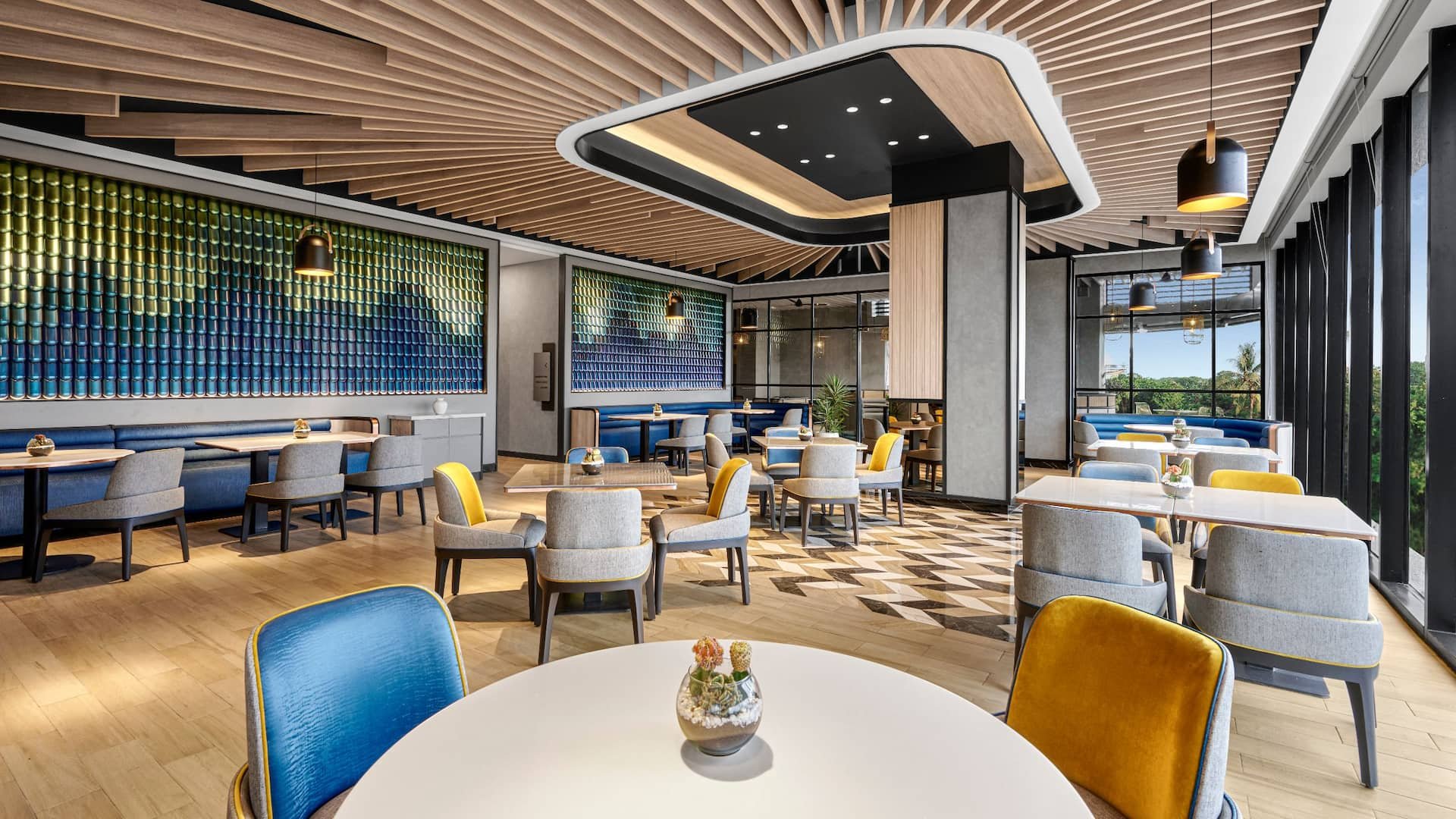
Dining in Makassar: Where Bugis Food Culture Sets the Terms
Makassar occupies a specific place in Indonesia's culinary geography. The city is the gateway to eastern Indonesia and the historic heart of Bugis and Makassarese maritime culture, two traditions that produced some of the country's most assertive cooking: coto Makassar (a dense offal-and-spice broth), konro (slow-cooked beef ribs in dark, clove-scented gravy), and pallubasa, a cousin of coto that leans harder on coconut milk and toasted coconut. This is not a food culture built on subtlety. It is built on depth, on the accumulation of spice and time, and on the logic of feeding people who spent weeks at sea. Any restaurant operating in this city is, whether consciously or not, in conversation with that tradition.
The city's formal dining sector has grown alongside its commercial infrastructure, particularly along the Jl. Jend. Sudirman corridor, which concentrates business hotels, corporate offices, and the restaurants that serve both. It is a different register from the street-level warung culture that still defines much of Makassar's day-to-day eating, but the two registers are not as separate as they might appear. The local palate remains anchored in bold flavour, and restaurants that ignore this tend to read as foreign rather than ambitious.
Papillon at Hyatt Place: Position and Context
Papillon occupies the second floor of the Hyatt Place on Jl. Jend. Sudirman, in the Sawerigading district. Hotel-attached restaurants in Indonesian provincial cities have historically operated in a narrow band: serviceable international menus aimed at business travellers, calibrated for familiarity rather than local engagement. That model has been under pressure across the country as independent dining has grown more sophisticated and travellers have become more willing to leave the hotel lobby for a meal.
Papillon serves Western and Indonesian dishes at an accessible price point. What the address establishes clearly is its commercial positioning: Jl. Jend. Sudirman is Makassar's primary business spine, and a second-floor room at a Hyatt Place targets a specific kind of guest, one who values consistency and accessibility, and who may be eating on a corporate account. That is a legitimate market, and the better hotel-attached restaurants in Indonesian cities have learned to serve it without sacrificing culinary ambition. The comparison that matters here is less with Makassar's street-food institutions and more with the handful of mid-to-upper restaurant formats that have emerged in the city's newer commercial districts.
For context on what that tier can achieve elsewhere in Indonesia, the trajectory is instructive. In Bali, properties like Locavore NXT in Ubud have demonstrated that Indonesian ingredients and culinary logic can anchor a serious fine-dining proposition. In Jakarta, restaurants such as August and Kita in Kecamatan Menteng have built reputations on technically driven menus that take local produce seriously. Makassar's dining scene is at an earlier stage of that evolution, which means the city's better hotel-attached and independent venues are still defining what the upper tier looks like locally.
The Culinary Tradition Behind the Location
To understand what a restaurant in this city is working with, or against, it helps to map the raw material. South Sulawesi's coastline produces seafood of genuine range: crab, shrimp, sea bass, and the small reef fish that appear in everything from clear soups to thick, tamarind-soured broths. The interior contributes beef and buffalo, which underpin konro and the various broth-based dishes that Makassar has exported across the archipelago. Makassarese cooking also has a pronounced sweet register, evident in the use of palm sugar in savoury dishes and in the dessert tradition of pisang epe, grilled banana pressed flat and served with brown sugar syrup.
Across the city, seafood-forward restaurants like Ratu Gurih Seafood represent the more accessible end of this tradition, where the focus is on fresh catch cooked to local preference, grilled, fried, or sauced with chilli and aromatics. That format has a loyal local following and sets the baseline expectation for seafood quality in the city. Any venue operating above that price point has to justify the gap with either technical ambition or a dining format that adds value beyond the plate.
Elsewhere in the Indonesian archipelago, the conversation about how to cook with local ingredients at a higher level of formal ambition has been running for over a decade. Bikini Restaurant in Badung and Jungle Fish Bali in Gianyar represent different points on that spectrum in Bali. Kunyit Restaurant in Bandung and Gudeg Yu Djum in Yogyakarta show how Javanese culinary identity anchors different restaurant formats. In eastern Indonesia, the equivalent conversation is only beginning, and Makassar is its most commercially developed venue.
Visiting Papillon
Papillon serves Western and Indonesian dishes, is open daily from 6 AM to 11 PM, and reservations are recommended. The venue's address within the Hyatt Place is confirmed: Jl. Jend. Sudirman No. Kav 31, 2nd Floor, Sawerigading, Makassar, South Sulawesi. Reservations are recommended.
Kimukatsu at Manado Town Square offers a useful point of comparison for hotel-adjacent dining in another eastern Indonesian city, while Kynd Community in Bali illustrates how the island's dining scene has diversified well beyond its traditional formats.
That standard is rising, and Makassar is one of the cities where the next stage of that development is most likely to take shape.
Price Lens
Comparable venues nearby, for context on price, style, and recognition.
| Venue | Cuisine | Price | Notes |
|---|---|---|---|
| PapillonThis venue — the venue you are viewing | Ujung Pandang, Western and Indonesian | $$$ | Not listed |
| Ratu Gurih Seafood | Lamadukelleng, Makassar Seafood Grill | $$ | Not listed |
| Panorama Restaurant | Not listed | $$$ | Sangalangi, Modern Indonesian Fine Dining |
| Made's Warung | Denpasar, Traditional Indonesian Warung | $$ | Not listed |
| Super Grain | Menteng, Build-Your-Own Grain Bowls | $$ | Not listed |
| Locavore | Not listed | $$$$ | Lodtunduh, Ubud, Modern Indonesian Fusion |
At a Glance
- Lively
- Modern
- Family
- Group Dining
- Casual Hangout
- Open Kitchen
- Live Music
- Terrace
- Beer Program
- Street Scene
Current opening hours
- Monday
- 6 AM–11 PM
- Tuesday
- 6 AM–11 PM
- Wednesday
- 6 AM–11 PM
- Thursday
- 6 AM–11 PM
- Friday
- 6 AM–11 PM
- Saturday
- 6 AM–11 PM
- Sunday
- 6 AM–11 PM
Hours can change for holidays and private events. Last verified .
Convivial atmosphere enlivened by open kitchen activity, warm lighting, and city views in indoor and outdoor areas.