Our verdict
Pante Madrid occupies a Salamanca address on Calle de Villanueva, placing it inside one of Madrid's most competitive dining corridors. Where neighbouring rooms lean on creative tasting menus and Michelin credentials, Pante reads as a counterpoint: a space where the structure of the menu itself carries the editorial weight. A practical entry point into the Salamanca dining scene for those who want considered food without the formality of the capital's multi-star circuit.

The menu
What to order
- Cotoletta Pantesca
- Burrata u Culatello
- Garganelli con Porcini
Salamanca's Dining Register and Where Pante Sits
The Salamanca district has spent the last decade consolidating its position as Madrid's most reliable address for serious dining outside the headline creative circuit. Calle de Villanueva and its immediate surroundings hold a density of restaurants that price and position against a wealthy residential and professional clientele, and the room expectations here run high without necessarily demanding the theatrical formats that define venues like DiverXO or the architectural tasting structures of Coque. Pante Madrid, at number 21 on Calle de Villanueva, operates inside that register: a Salamanca address signals a particular kind of seriousness, one calibrated to the neighbourhood rather than to the international awards circuit.
Madrid's fine dining map has bifurcated sharply. On one side sit the multi-Michelin creative houses, where a meal at Deessa or DSTAgE comes with a defined format, a tasting menu price point, and a booking lead time measured in weeks. On the other side sits a quieter tier of Salamanca addresses that operate as serious neighbourhood restaurants with genuine ambition, where the menu architecture tends to be more negotiable and the service register less ceremonial. Pante belongs to this second cohort.
Reading the Menu as a Document
The editorial angle that most reveals a restaurant's actual priorities is not the press release or the chef biography but the structure of the menu itself. How a kitchen organises its offer, what it groups together, where it places its price anchors, and how it sequences a meal all function as a kind of culinary argument. In the Salamanca context, where competition is dense and the clientele arrives with calibrated expectations, menu architecture becomes a strategic statement.
Spanish restaurants in this tier have increasingly moved toward formats that allow diners to compose their own progression rather than surrendering to a fixed tasting sequence. This reflects a broader shift visible across the country's upper-middle dining tier, from Ricard Camarena in València to Cocina Hermanos Torres in Barcelona: the tasting menu format dominates at the very leading, but beneath that ceiling, the a la carte structure has recovered ground, particularly in city-centre addresses where lunch is a commercial reality and dinner covers need to turn. Pante's position on Calle de Villanueva places it squarely in that negotiation.
What a menu structured for a Salamanca clientele typically reveals is a preference for product clarity over conceptual density. The rooms in this neighbourhood that have sustained themselves over time tend not to lead with technique as spectacle. They lead with sourcing legibility: identifiable ingredients, preparation methods that don't require a glossary, and a price architecture that rewards ordering across multiple sections rather than committing to a fixed format. That discipline, where the menu is organised to facilitate generosity rather than restrict it, is the mark of a kitchen confident in its product rather than its concept.
Understanding what Pante is requires understanding what it is not. The creative intensity of Paco Roncero, with its technically elaborate sequences, belongs to a different competitive set entirely. The same applies to the internationally referenced formats: Mugaritz in Errenteria, El Celler de Can Roca in Girona, and Azurmendi in Larrabetzu operate at a scale of ambition and a level of prior commitment from the diner that positions them differently from a Salamanca address on a midweek evening.
Pante's peers are the restaurants that have built consistent clientele within the district: places where the wine list is taken seriously, the room is managed with professional restraint, and the cooking does not require apology or explanation. In that group, the comparison is less about awards and more about regularity of execution, the consistency that keeps a Salamanca professional returning for a Tuesday lunch rather than reserving for a special occasion.
Spain's broader dining geography provides useful calibration. The ambition visible at Aponiente in El Puerto de Santa María, Arzak in San Sebastián, Quique Dacosta in Dénia, or Martin Berasategui in Lasarte-Oria represents the upper ceiling of what Spanish cooking has argued for internationally. A Salamanca address like Pante sits two or three registers below that ceiling in terms of format and price commitment, but operates within a tradition that takes product and precision seriously. Atrio in Cáceres offers a useful contrast: a smaller city, a more self-contained environment, a different kind of ambition. Salamanca's density makes the competitive calculus sharper and the bar for consistency higher.
Planning a Visit
Calle de Villanueva 21 places Pante within walking distance of the Retiro park boundary and the commercial axis of Serrano, making it accessible from the centre of Salamanca on foot. The address is a practical Salamanca dinner rather than a destination requiring cross-city planning. For the Madrid first-timer calibrating between the full creative tasting experience and a serious neighbourhood meal, this part of Villanueva sits at a useful midpoint.
Quick Comparison: Salamanca and Madrid Creative Tier
| Venue | Format | Price Tier | Booking Lead |
|---|---|---|---|
| Pante Madrid | Salamanca neighbourhood | Mid-upper | Short to moderate |
| Deessa | Tasting menu | €€€€ | Weeks in advance |
| DiverXO | Progressive tasting | €€€€ | Months in advance |
| Coque | Creative tasting | €€€€ | Weeks in advance |
For a broader orientation across the Madrid dining scene, the EP Club Madrid restaurants guide maps the full range from creative tasting formats to neighbourhood addresses by district and price tier. International reference points for serious a la carte formats in major cities include Le Bernardin in New York City and the structured tasting approach of Atomix in New York City, both of which illustrate how menu architecture at the top of a city's dining register can carry critical weight independent of casual-format alternatives.
Frequently asked questions
What's Pante Madrid's location?
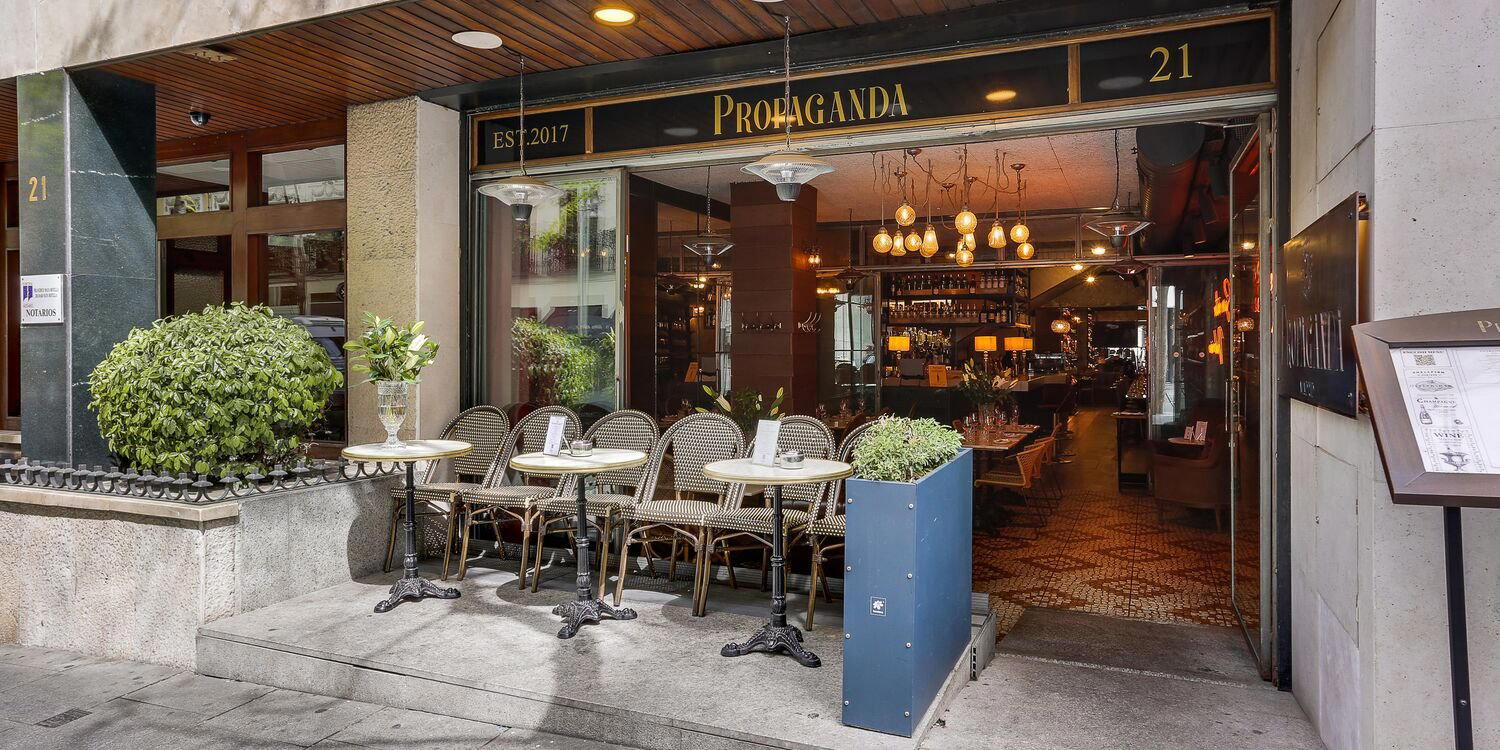
Pante Madrid is located at C. de Villanueva, 21, Salamanca, 28001 Madrid, Spain, Madrid.
How does Pante Madrid compare to other restaurants in the Salamanca district?
Pante sits on Calle de Villanueva 21 within one of Madrid's most densely populated corridors for serious dining, a district that has spent years building credibility outside the city's headline creative addresses. Where some Salamanca neighbours compete on technical ambition or wine programme depth, Pante's positioning is defined by its menu register rather than external awards or a named-chef profile. For visitors orienting themselves across the district, it reads as a considered neighbourhood choice rather than a destination-dining event.
What should I order at Pante Madrid?
The menu structure at Pante is the most direct guide to what the kitchen prioritises, read it as a document rather than a list. Without a set tasting menu imposed on every table, ordering à la carte lets the kitchen's actual strengths emerge course by course. Arrive knowing which sections draw the most depth, typically proteins or raw preparations in Salamanca-tier kitchens, and let the server orient you from there.
Do I need a reservation for Pante Madrid?
Given Pante's address in Salamanca, Madrid's most consistent district for serious dining outside the headline creative tier, walk-ins during peak evening service carry real risk. Booking ahead, particularly for Thursday through Saturday dinner, is the practical approach. Contact details are best confirmed directly through current listings, as phone and web information for the venue are not published here.
What's Pante Madrid best at?
Pante occupies a specific register in the Salamanca dining scene: grounded rather than technically theatrical, which differentiates it from the elaborate sequences associated with Madrid's creative-tier restaurants. That consistency of approach, rather than any single dish, is what defines the kitchen's reputation in the neighbourhood.
Is Pante Madrid allergy-friendly?
No allergy or dietary accommodation policy is documented in available venue data for Pante Madrid. The standard practice at Salamanca-district restaurants of this calibre is to raise specific requirements at the time of booking rather than at the table.
A Lean Comparison
| Venue | Cuisine | Price | Awards | Notes |
|---|---|---|---|---|
| Pante MadridThis venue (the venue you are viewing) | Contemporary Sicilian-Italian | $50–100 | Not listed | Not listed |
| DiverXO | Avant-Garde Spanish Tasting Menu | $300–500 | 3 Michelin Stars · World's 50 Best #9 | Progressive - Asian, Creative |
| Coque | Modern Spanish Fine Dining | $300–500 | 2 Michelin Stars · La Liste Top Restaurants | Spanish, Creative |
| Deessa | Modern Valencian Fine Dining | $150–200 | 2 Michelin Stars · La Liste Top Restaurants | Modern Spanish, Creative |
| Paco Roncero | Avant-Garde Spanish Fine Dining | $150–200 | 2 Michelin Stars · La Liste Top Restaurants | Creative |
| Smoked Room | Modern Japanese Fire Omakase | $200–300 | 2 Michelin Stars · La Liste Top Restaurants | Progressive Asador, Contemporary |