






1 Michelin Star · La Liste Top Restaurants · Black Pearl 1 Diamond
Our verdict
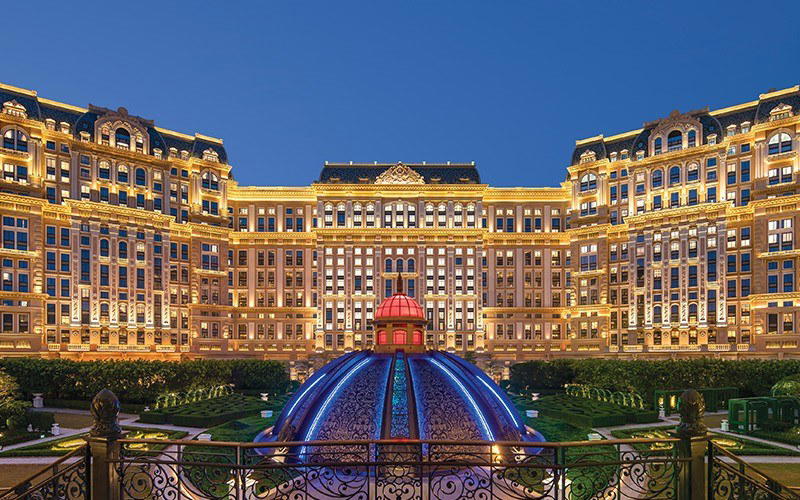
Palace Garden operates at the upper tier of Macau's fine-dining Cantonese scene, set within the Grand Lisboa Palace on Cotai and recognised by both Michelin (Plate, 2025) and La Liste (87 points, 2026). Chef Ken Chong's approach draws on classical imperial technique while integrating premium imported ingredients. A cellar of 35,000 bottles and five private dining rooms position it as one of the city's most formally appointed Chinese restaurants.

Pearl is the En Primeur Club membership app, where members save venues, book tables and use the concierge.
The menu
What to order
- Premium Partridge Bisque
- Crystal King Tiger Prawns
- Crispy Skin Squab
- Alaska King Crab
Where Maximalism Becomes the Argument
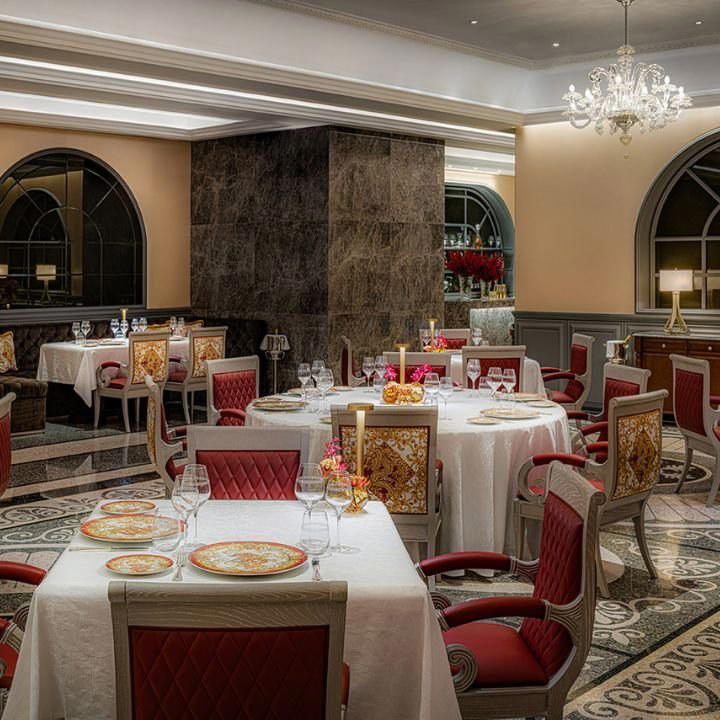
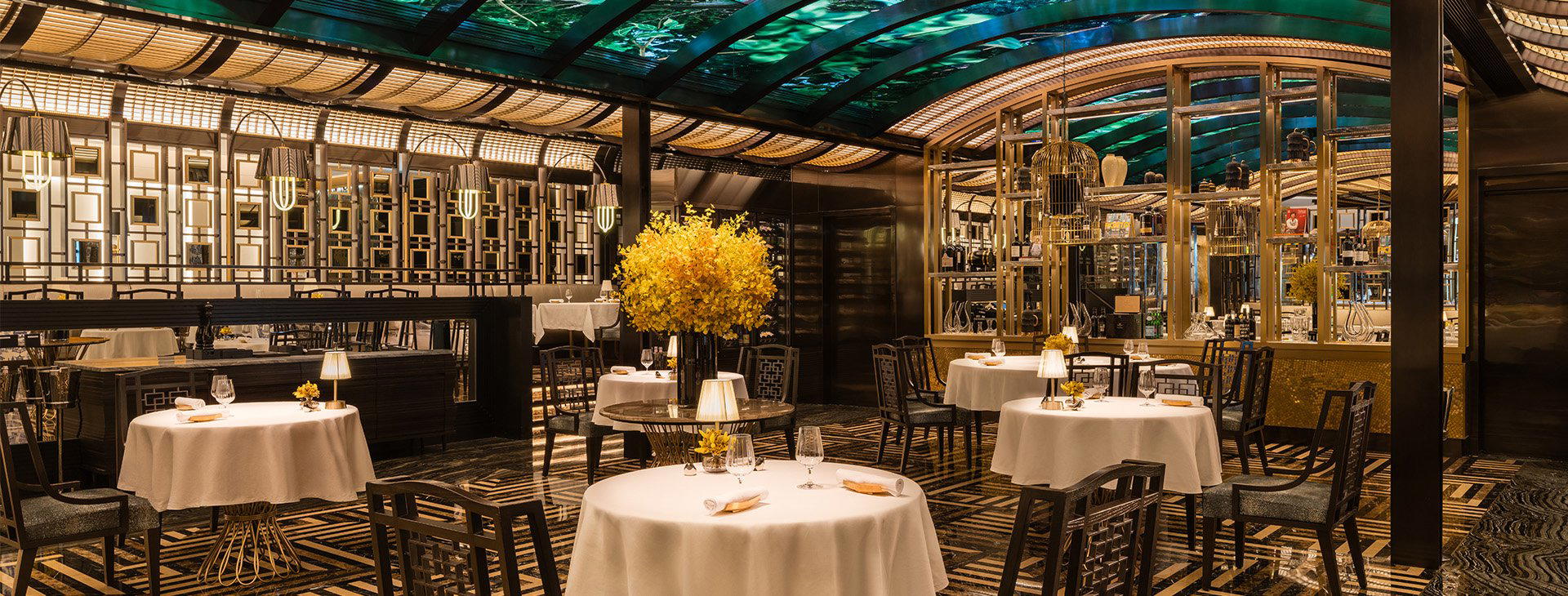
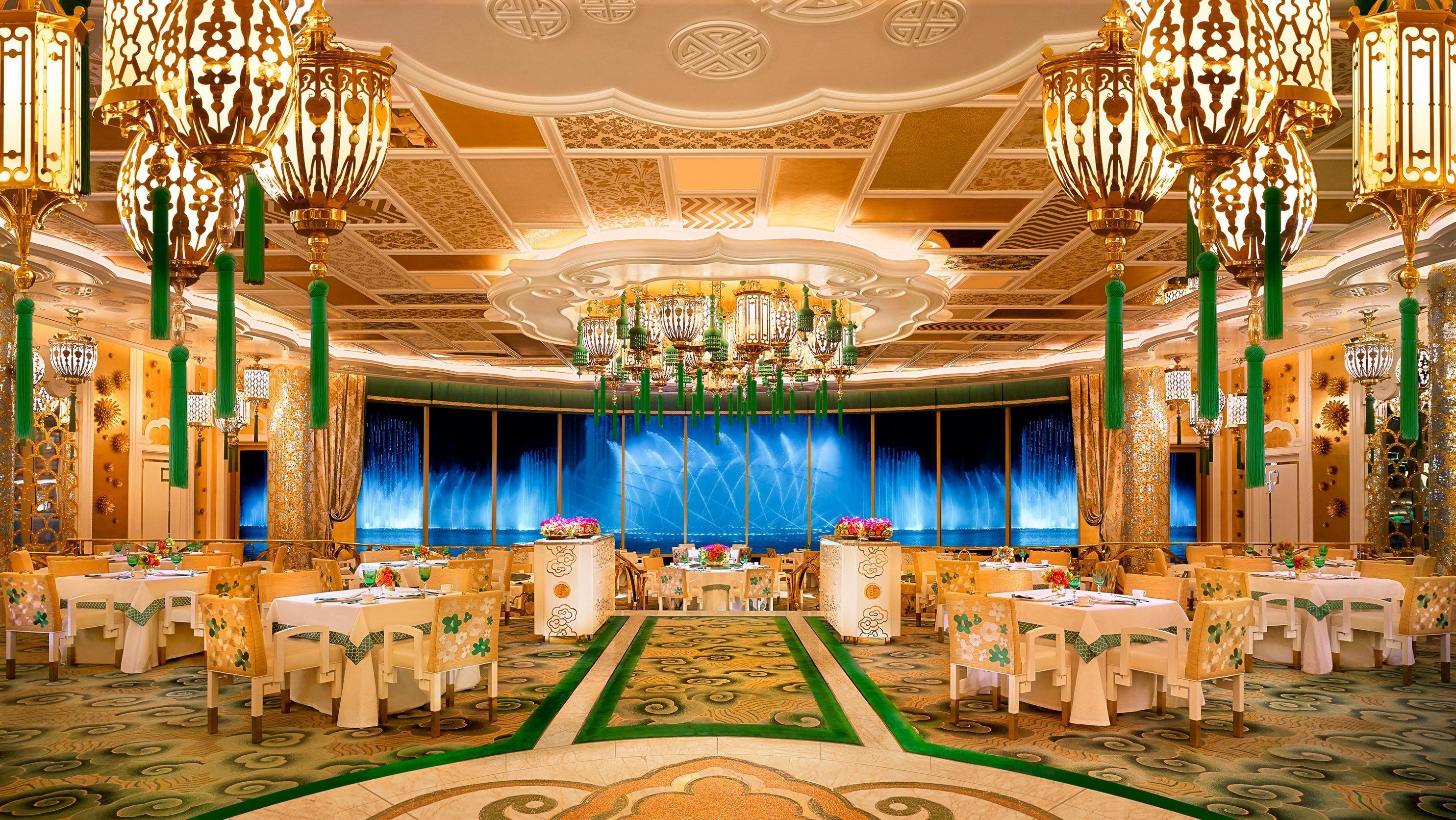
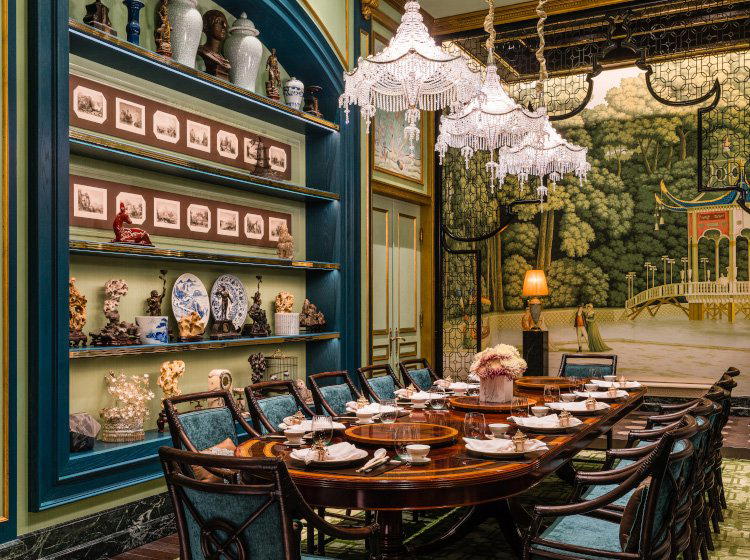
Before the food arrives, the room makes a case. The main dining hall at Palace Garden is anchored by a 115-foot-long, eight-foot-high silk mural produced using an ancient embroidery technique from Suzhou, the work of 60 embroidery masters and more than 100,000 hours of labour. Two crystal chandeliers hang above: one modelled on a flying dragon, the other on flowing water. Six free-standing circular fans, also embroidered in the Suzhou style, divide the dining floor into more intimate sections while depicting classical scenes of birds and botanicals. Scenes from Dream of the Red Chamber, one of China's Four Great Classical Novels, are etched into the gold-tinted glass wall that frames the room. The entry gate draws its proportions from Versailles. This is not ambient décor. The design carries the same weight as the cooking, and the cooking is genuinely serious.
Cotai's resort corridor has produced a concentrated tier of formal Cantonese dining that sits above most of what the territory offered a decade ago. Palace Garden occupies that upper stratum alongside peers such as Jade Dragon, Wing Lei, and Lai Heen. The shared characteristic of this group is the combination of classical Cantonese technique with the kind of procurement and cellar depth more typically associated with European fine dining. Palace Garden's La Liste score of 87 points (2026) and Michelin Plate recognition (2025), alongside a Black Pearl one-diamond rating (2025), confirm its position in that competitive set rather than in the broader mid-market.
The Kitchen's Approach to Freshness Theatre
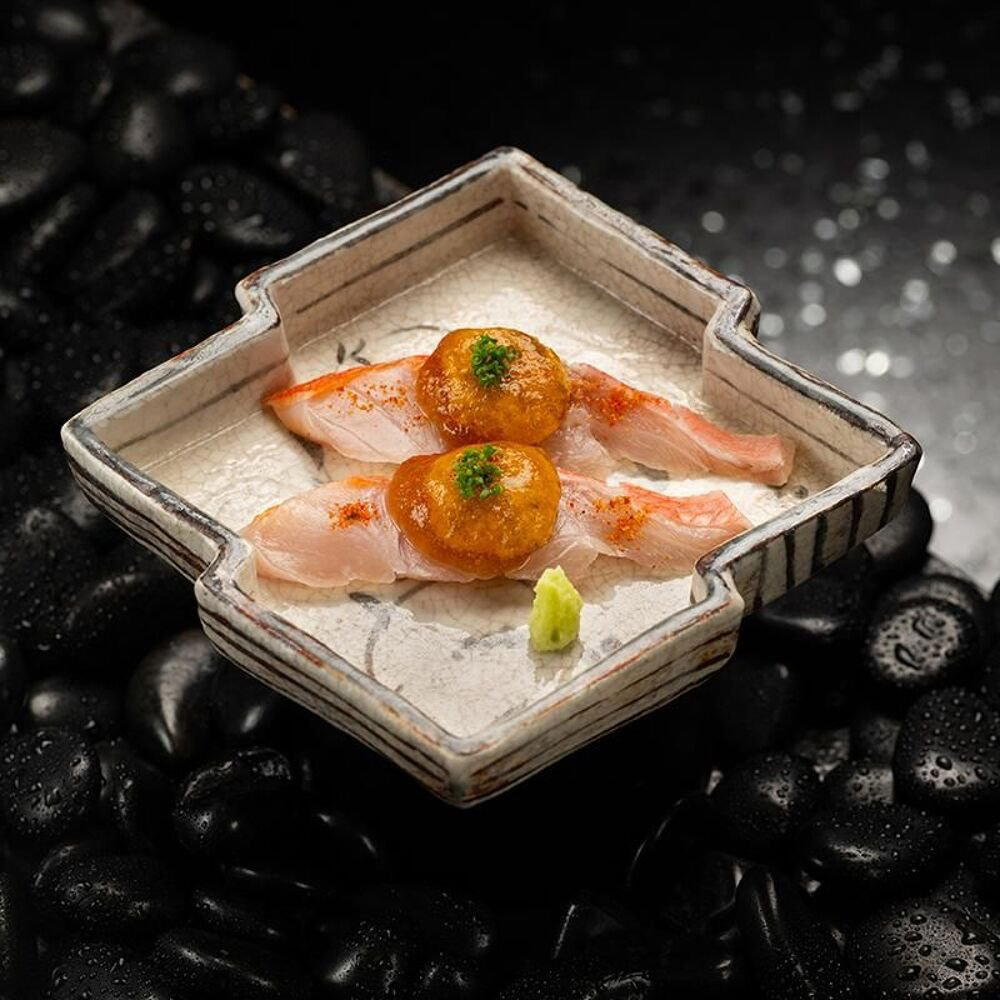
Cantonese cuisine has always placed premium value on ingredient freshness as a form of luxury signalling, the live tank, the market-weight crustacean, the seasonal bird handled with minimal intervention so the quality speaks directly. Palace Garden's menu follows this logic while extending it toward imported premium products. The kitchen's reported use of crystal tiger prawn served alongside 52-month-aged Iberico ham and a 25-year-aged balsamic vinaigrette positions freshness and provenance as a dialogue rather than a single note: the prawn's immediacy reads against the long-cured intensity of the ham. That kind of pairing reflects where serious Cantonese cooking in Macau has moved, not away from classical ideas of ingredient purity, but in conversation with global premium supply chains that bring comparable levels of sourcing rigour to the table.
The partridge bisque, listed among the kitchen's referenced signatures, belongs to a different register: slow-extracted, deeply reduced, the sort of preparation that requires both the right raw material and the patience to not rush extraction. Chef Ken Chong's training places him within a contemporary Cantonese lineage that treats technical precision as a form of respect for the ingredient rather than an imposition on it. The approach bears comparison to what kitchens like Forum in Hong Kong or Le Palais in Taipei have done with classical Cantonese frameworks: modernise the language, maintain the grammar.
Dim Sum as a Separate Case
Lunch service at this tier of Macau dining functions differently from dinner. The dim sum format at Palace Garden, with signatures including crystal blue prawn dumplings and pork dumplings made with aged mandarin peel, allows a lower-commitment entry into the kitchen's output. The pork dumpling detail is worth noting: aged mandarin peel is a specific ingredient with its own prestige logic in Cantonese cooking, used sparingly because its flavour is concentrated and its sourcing is deliberate. It is not a flourish. Its presence in a lunch dumpling is a signal about how the kitchen approaches the format. For visitors who want to assess the restaurant without committing to a full dinner, the lunch menu provides an honest read. For context on how Macau's Cantonese dining compares more broadly to the mainland, it is worth cross-referencing approaches at Xin Rong Ji in Beijing or Imperial Treasure in Guangzhou.
The Wine Program
A 35,000-bottle inventory across roughly 1,780 labels is a serious commitment for any restaurant, let alone one whose primary cuisine identity is Chinese. Wine Director Winnie Chen oversees a list weighted toward Champagne, Burgundy, Bordeaux, Portuguese, and Italian selections. Pricing sits at the $$$ tier, meaning the list carries a meaningful proportion of bottles above the $100 mark, though the range accommodates varied spend levels. Corkage is set at $50 for those arriving with their own bottles. The eight-course Prestige Set Menu with vintage wine pairing is the clearest expression of how the kitchen and the cellar are intended to work together. A premium Chinese tea pairing is also available, with sourced teas including Ming Qian Shi Feng Long Jing from the mountains outside Hangzhou and An Ji White Tea, options that hold the same hospitality weight as the wine program for guests who prefer that register. Other Macau restaurants operating at this level, such as Pearl Dragon and Chef Tam's Seasons, have similarly invested in wine lists that signal positioning to an international audience.
Private Dining and the Event Format
Five private rooms, each accommodating between six and twelve guests, give Palace Garden a corporate and special-occasion function that extends its commercial scope well beyond walk-in dining. The rooms carry distinct design motifs: the Fan Room references Eastern and Western fans used by royal courtesans; the Butterfly Room is built around a concentrated collection of butterfly artwork. The design language of each space follows the maximalist logic of the main dining room rather than dialling it down for boardroom neutrality. For groups needing a formal venue with strong aesthetic coherence, these rooms remove the need to weigh up the event circuit separately from the dining choice. For further reference on the broader Macau hospitality context, see our full Macau hotels guide.
Planning a Visit
Palace Garden is located on Level 3 of the Grand Lisboa Palace Resort on Cotai, with both self-parking and valet available at the hotel. Reservations are recommended for both lunch and dinner. The dress code is business casual. Lunch and dinner are both served. Private dining rooms require advance booking given limited capacity at each sitting. For the broader dining picture across the territory, our full Macau restaurants guide covers the competitive set in more depth. For Macau's bar and nightlife scene, see our full Macau bars guide, and for cultural programming, our full Macau experiences guide provides further context. Those extending into mainland China might also consider 102 House in Shanghai, Ru Yuan in Hangzhou, Xin Rong Ji in Chengdu, or Dai Yuet Heen in Nanjing for comparative reference points. Wine-focused travellers can review our full Macau wineries guide for additional context.
Frequently asked questions
Would Palace Garden be comfortable with kids?
Palace Garden is a formal fine-dining room at Grand Lisboa Palace operating at the $$$ price tier, with a dress code that leans business casual. The atmosphere, crystal chandeliers, silk murals, elaborate private rooms, is built around adult dining occasions. Families with older children attending a special event could find it workable, but the format and setting are not designed around younger guests.
How would you describe the vibe at Palace Garden?
Maximalist, deliberate, and theatrical without being loud. The main dining hall is anchored by a 115-foot Suzhou embroidery silk mural that took 60 artisans over 100,000 hours to complete, and the ceiling carries two crystal chandeliers shaped as a dragon and flowing water. Five private dining rooms each carry a distinct motif, from the Fan Room to the Butterfly Room, making the space feel more like a curated art environment than a conventional restaurant.
What's Palace Garden known for in terms of accolades?
Palace Garden has received recognition including: La Liste Top Restaurants (2026): 87pts; Michelin Plate (2025); Black Pearl 1 Diamond (2025); WINE: Wine Strengths: Champagne, Burgundy, Bordeaux, Portugal, Italy Pricing: $$$ i Wine pricing: Based on the list\'s general markup and high and ….
What should I order at Palace Garden?
The inspector-highlighted signatures include crystal blue prawn dumplings and pork dumplings with aged mandarin peel at lunch, and at dinner, the partridge bisque alongside crystal tiger prawn served with 52-month-aged Iberico ham and a 25-year-aged balsamic vinaigrette. The Prestige Set Menu, an eight-course format paired with vintage wines, is the structured route through Chef Ken Chong's modern interpretation of imperial Cantonese cooking. Premium Chinese tea pairings, including Ming Qian Shi Feng Long Jing from outside Hangzhou, are also worth requesting.
Cuisine and Recognition
| Venue | Cuisine | Price | Awards | Notes |
|---|---|---|---|---|
| Palace GardenThis venue (the venue you are viewing) | Modern Cantonese Fine Dining | $150–200 | 1 Michelin Star · La Liste Top Restaurants | Not listed |
| Aji | Asian Bistronomy (Nikkei Fusion) | $50–100 | 1 Michelin Star · Wine Spectator Best of Award of Excellence | Nikkei, Innovative |
| Ying | Modern Cantonese Fine Dining | Not listed | 1 Michelin Star · La Liste Top Restaurants | Cantonese |
| Five Foot Road | Modern Sichuan Fine Dining | Not listed | 1 Michelin Star · La Liste Top Restaurants | Sichuan |
| Robuchon au Dôme | Contemporary French Fine Dining | $150–200 | 3 Michelin Stars · La Liste Top Restaurants | French Contemporary |
| Feng Wei Ju | Refined Hunan & Sichuan Chinese | Not listed | 2 Michelin Stars · La Liste Top Restaurants | Hunan-Sichuan, Hunanese |
Recognition history
Dated appearances from independent guides and award organizations, with the underlying list record or original source where available.
Michelin 1 Star
Michelin
La Liste Top Restaurants
La Liste
Black Pearl 1 Diamond
Black Pearl
Opinionated About Dining Top Restaurants in Asia Recommended
Opinionated About Dining
SCMP 100 Top Tables Restaurants
SCMP 100 Top Tables
Full recognition history (18 entries)
Wine Spectator Best of Award of Excellence
Wine Spectator
Black Pearl 1 Diamond
Black Pearl
Forbes 5-Star
Forbes
La Liste Top Restaurants
La Liste
Michelin Plate
Michelin
Wine Spectator Best of Award of Excellence
Wine Spectator
World's Best Wine Lists Awards WBWL Category Winner
World's Best Wine Lists Awards
World's Best Wine Lists Awards WBWL 3-Star
World's Best Wine Lists Awards
Michelin Plate
Michelin
World's Best Wine Lists Awards WBWL 3-Star
World's Best Wine Lists Awards
World's Best Wine Lists Awards WBWL Category Winner
World's Best Wine Lists Awards
World's Best Wine Lists Awards WBWL 3-Star
World's Best Wine Lists Awards
World's Best Wine Lists Awards WBWL 3-Star
World's Best Wine Lists Awards