Pacific Dining Car
Pacific Dining Car has anchored the western edge of downtown Los Angeles since 1921, making it one of the oldest continuously operating steakhouses on the West Coast. The railway-car setting on West 6th Street signals a particular kind of institutional permanence that few American restaurants achieve. For visitors mapping Los Angeles dining against its more progressive contemporary scene, the Dining Car represents a different but equally deliberate tradition.
- Address
- 1310 W 6th St, Los Angeles, CA 90017
- Phone
- +12134836000
- Website
- pacificdiningcar.com
- Directions
- Get directions
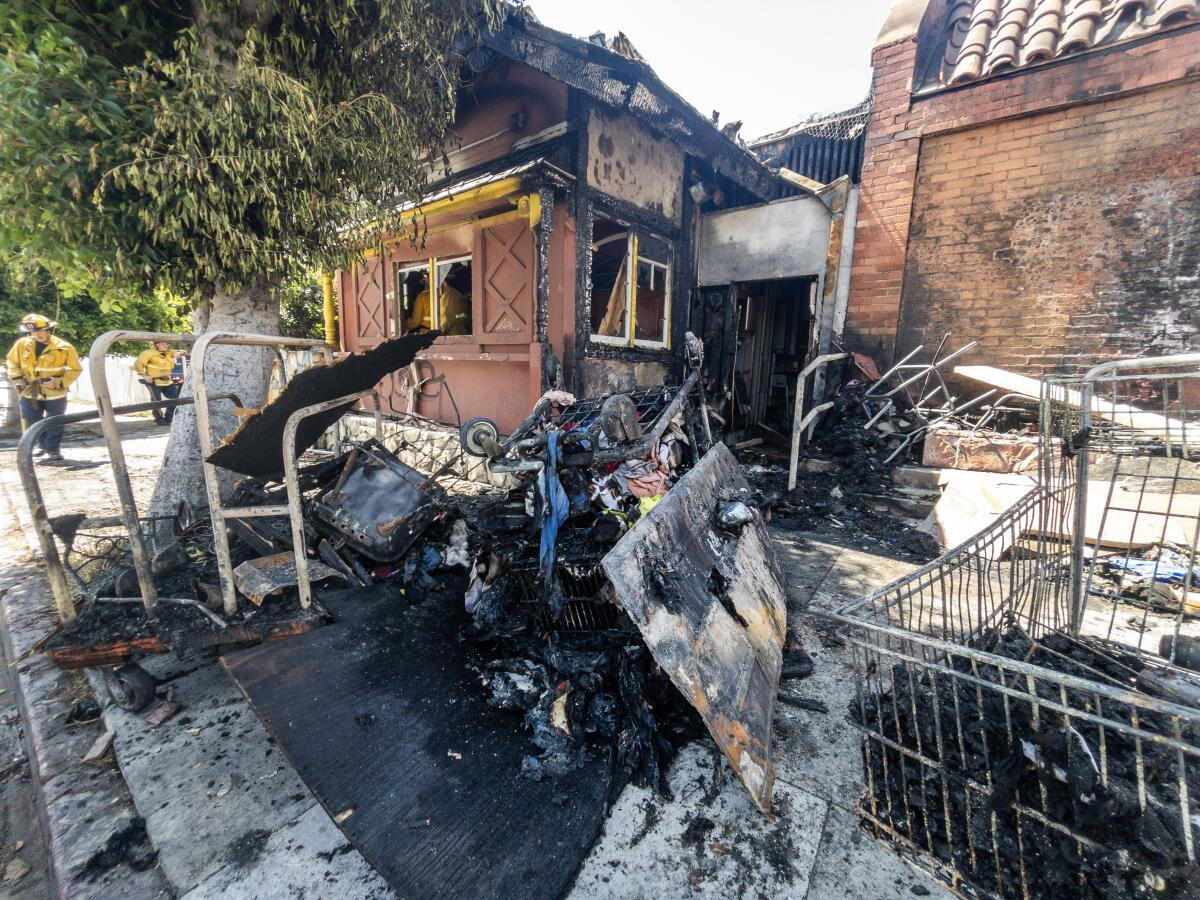
A Century of Red Meat in Downtown Los Angeles
Los Angeles has spent the last decade aggressively rewriting its fine-dining identity. Kato compressed New Taiwanese precision into a tasting format that earned national attention. Somni pushed molecular ambition into territory that few domestic kitchens attempt. Hayato brought kaiseki rigor that the city had never quite housed before. Against that momentum, the presence of a steakhouse operating from the same address since 1921 reads less like nostalgia and more like a counterargument, a position that the restaurant has held long enough to constitute its own kind of authority.
Pacific Dining Car sits at 1310 West 6th Street in what was once the westward fringe of downtown Los Angeles. The building is modeled on a Pullman dining car, a design choice that would have signaled modernity and aspiration in the early 20th century, when rail travel was still the primary infrastructure of American ambition. Today, that same form reads as a deliberate anachronism, which is precisely the point. Restaurants that survive a century in a city as prone to reinvention as Los Angeles do so not by accident but by occupying a niche that the market keeps generating demand for: the occasion meal with institutional weight behind it.
What the Wine List Says About a Room
In American steakhouse culture, the wine program is often an afterthought, a catalogue of California Cabernet and French Bordeaux assembled by price rather than curation. The better houses have always understood that a serious cellar is a form of positioning. It signals the kind of guest the restaurant is trying to hold across multiple visits and multiple decades. Steakhouses that have operated for generations tend to accumulate cellars rather than maintain them, and the depth of older vintages in those programs often tells you more about the establishment's continuity than any marketing language could.
Pacific Dining Car's longevity places it alongside a specific peer group of American restaurants where institutional age and cellar depth overlap. Le Bernardin in New York City represents the equivalent weight in the French seafood register. Emeril's in New Orleans carries a similar kind of city-defining permanence in its market. What distinguishes the long-running American dining room from its younger competitors is often not technical innovation but the accumulated trust of a wine program that has had time to age alongside its clientele.
For a restaurant of Pacific Dining Car's age and format, the wine list functions as an argument about what kind of experience the room is selling. A steakhouse operating since 1921 in Los Angeles has lived through the rise of the California wine industry in real time, from the post-Prohibition recovery through the Napa Valley premium tier that now benchmarks American fine wine internationally. That historical proximity to California's wine development gives establishments of this vintage a different relationship to domestic producers than newer restaurants can claim.
Where Pacific Dining Car Sits in the Los Angeles Restaurant Spectrum
Los Angeles restaurant culture has always been more stratified than its reputation for casual dining suggests. The city supports tasting-menu formats at the level of Providence, which has held two Michelin stars in the contemporary seafood register, and Osteria Mozza, which established a serious Italian standard on Melrose Avenue. It also supports the kind of room where a deal gets closed over a bone-in ribeye and a bottle that predates the guest's career. The restaurant occupies the latter category with more seniority than any comparable venue in the city.
That positioning places it in a national conversation alongside institutions like The French Laundry in Napa and Alinea in Chicago, not in terms of culinary format, but in terms of the gravitational pull that a long-established restaurant exerts on a city's dining identity. Blue Hill at Stone Barns in Tarrytown and Single Thread Farm in Healdsburg have built reputations on a different axis, farm-driven menus with a contemporary ethical framework, but they share with the restaurant the quality of restaurants that have developed a clear point of view and held it against market pressure.
Within Los Angeles specifically, the comparison set for a restaurant of this age and format is thin. The city has not historically preserved its dining institutions the way New York or New Orleans has. The survival of the restaurant through a century of seismic cultural and economic change in Los Angeles represents a data point that the city's restaurant ecology rarely produces.
The Steakhouse as a Format, and Why It Persists
The American steakhouse has proven more durable than almost any other fine-dining format. Addison in San Diego and The Inn at Little Washington represent the tasting-menu end of American fine dining, formats built around a single creative vision, inherently dependent on that vision's continued relevance. The steakhouse format makes no such bet. It sells a known quantity: aged beef, a deep cellar, a room designed for conversation rather than performance. The risk of obsolescence is lower precisely because the promise is narrower.
For comparison, Bacchanalia in Atlanta has anchored that city's fine-dining scene with a similar longevity-through-consistency argument. Atomix in New York City and 8½ Otto e Mezzo Bombana in Hong Kong represent the opposite approach, restaurants built on maximum technical ambition within a specific culinary tradition. Both models sustain themselves. The restaurant model does so by making age itself the credential, which is a more defensible position than most restaurants get to claim. Lazy Bear in San Francisco offers a useful counterpoint: a younger restaurant that has built institutional weight quickly through format discipline rather than historical continuity.
Planning Your Visit
The restaurant is located at 1310 West 6th Street in downtown Los Angeles, on the western edge of the Westlake district. Address: 1310 W 6th St, Los Angeles, CA 90017. The restaurant has operated at this address for over a century, which makes it among the more geographically stable dining destinations in the city. Reservations: Contact the restaurant directly; for a venue of this longevity and format, reservations are advisable particularly for weekend evenings and larger parties. Dress: The room's historical character and price positioning suggest business-casual at minimum; the institutional atmosphere rewards dressing for the occasion. Budget: At roughly $60 per person, it sits in a premium spend bracket consistent with downtown Los Angeles steakhouse dining. Verify current hours and booking availability directly with the venue before your visit.
Cuisine-First Comparison
Comparable venues nearby, for context on price, style, and recognition.
| Venue | Cuisine | Price | Notes |
|---|---|---|---|
| Pacific Dining CarThis venue — the venue you are viewing | Classic Steakhouse | $$$$ | Not listed |
| Matu Kai | Grass-Fed Wagyu Steakhouse | $$$$ | Brentwood |
| Dear John's | Classic Steakhouse | $$$$ | Clarkdale |
| American Beauty | Modern neighborhood steakhouse | $$$ | The Grove |
| Mastro's Ocean Club | Steakhouse & Seafood | $$$$ | Downtown |
| Lawry’s The Prime Rib | Classic Prime Rib Steakhouse | $$$$ | Beverly Hills |
Continue exploring
More in Los Angeles
Restaurants in Los Angeles
Browse all →
Bars in Los Angeles
Browse all →
Hotels in Los Angeles
Browse all →
Wineries in Los Angeles
Browse all →
At a Glance
- Classic
- Well Known
- Elegant
- Special Occasion
- Business Dinner
- Late Night
- Historic Building
- Standalone
- Extensive Wine List
Nostalgic dining car atmosphere with pleasant, old-school elegance and formal tuxedo-clad service.