P Thai’s Khao Man Gai & Noodles


James Beard Award Semi Finalist · New York Times America's Best Restaurants
Our verdict
Few dishes in the Thai-Chinese canon demand more technical discipline than khao man gai, and at P Thai's Khao Man Gai & Noodles on Airport Boulevard, chef Thai Changthong has spent more than a decade refining his version. Opened in April 2024, this Airport Boulevard counter delivers whole chickens poached in two-year-old broth, finished in an ice bath for taut skin, and served with seven house-made sauces that trace the cooking of Chinese immigrants who reshaped their food around Thai flavors.

Pearl is the En Primeur Club membership app, where members save venues, book tables and use the concierge.
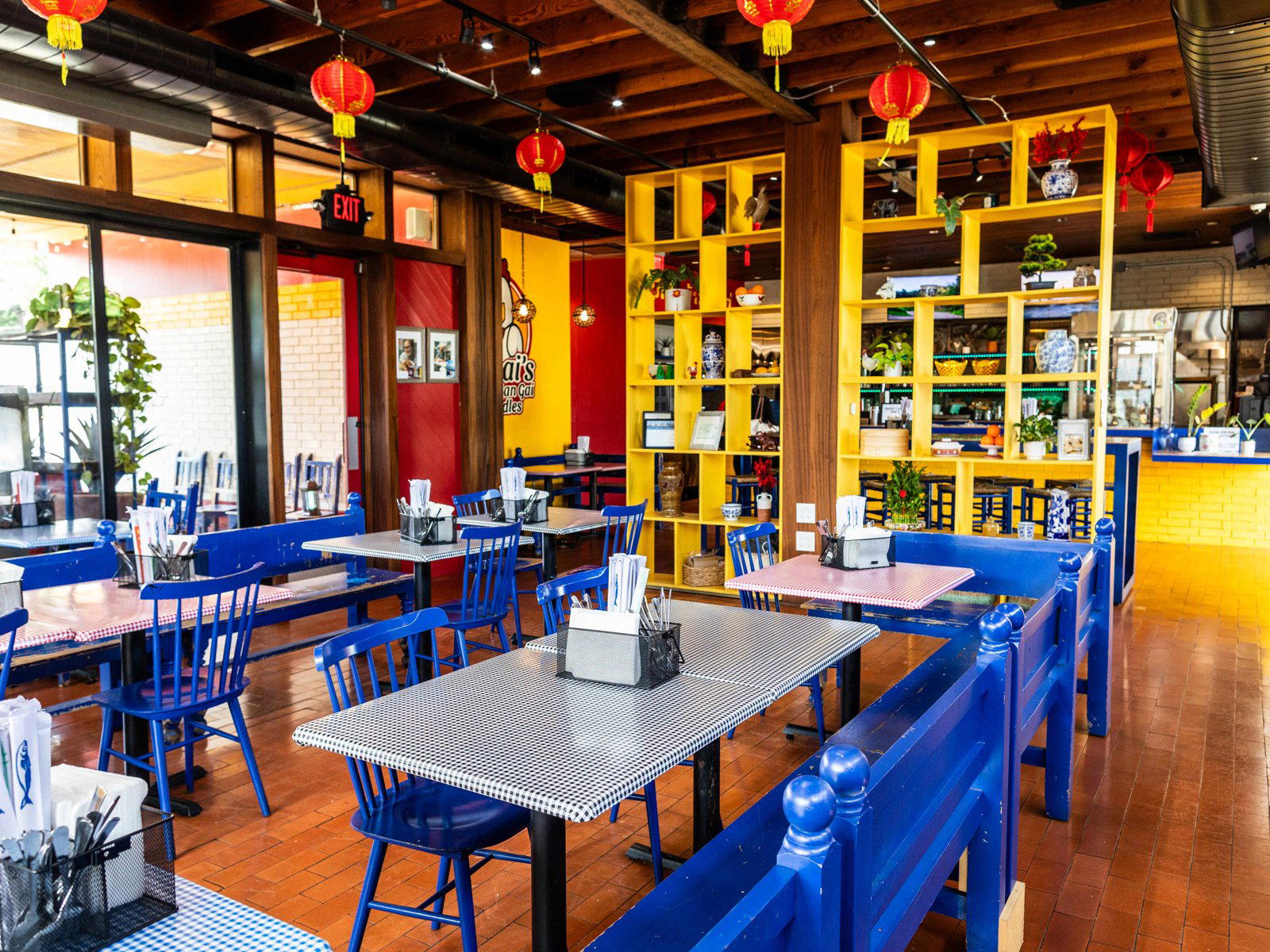
Where Chinese Roasting Tradition Meets Thai Heat on Airport Boulevard
The strip along Airport Boulevard has always been Austin's most utilitarian dining corridor: functional storefronts, parking lots designed for convenience over aesthetics, the kind of block where the food does the talking because nothing else will. That context matters when you walk into P Thai's Khao Man Gai & Noodles, which opened in April 2024 at 4807 Airport Boulevard. The room does not announce itself. What greets you instead is the smell: warm fat, ginger, the faint fermented edge of bean paste. It orients you before a single dish arrives.
The Cuisine: A Distinct Tradition, Not a Fusion Project
Khao man gai is often explained as Thailand's answer to Hainanese chicken rice, which is accurate but incomplete. The dish belongs to a broader tradition of Chinese immigrant cooking that took root in Thailand over generations, producing a cuisine with its own internal logic. Chinese roasting techniques, the discipline around broth management, skin preparation, and fat application that defines char siu, Peking duck, and poached whole-bird cookery, were adapted over time to accommodate the sharper, more acidic flavor registers of Thai cooking. The result is not a Thai dish with Chinese elements, or a Chinese dish cooked in Thailand. It is a third thing: a cuisine shaped by the specific negotiation between two culinary systems, played out across decades in kitchens across Bangkok, Chiang Mai, and now, increasingly, in diaspora cities like Austin.
That context is why the seven sauces at P Thai's matter as much as the chicken itself. In the same way that Peking duck service is structured around the condiment plate (hoisin, cucumber, spring onion, the crepe), khao man gai is built on the sauce as a counterweight to the restrained poached protein. The fermented bean base, the Thai chile heat, the ginger brightness: these are not accompaniments. They are the mechanism by which the dish's Chinese structural discipline gets converted into something distinctly Thai in character.
What the Kitchen Is Actually Doing
The technical process here is worth understanding, because it explains why khao man gai separates serious practitioners from casual ones. At P Thai's, whole chickens are poached in a broth that has been maintained for two years. That depth of stock is closer to the logic of a long-fermented mother sauce than a fresh-made cooking liquid: it accumulates complexity with each use, and the fat rendered into it over time carries flavors that a young broth cannot replicate. After poaching, the birds go into an ice bath, a step borrowed directly from the Chinese roasting tradition, where rapid chilling causes the skin to contract and tighten against the flesh. The result, when sliced, is a piece of chicken where the skin has a distinct textural presence rather than slipping off in a limp sheet. The fat rendered during poaching goes into the rice, where it does the same work that duck fat does in a confit potato: it coats each grain and provides a richness that water-cooked rice cannot approach.
Chef Thai Changthong has been working this dish for more than a decade, which places him in a peer group defined less by awards and more by accumulated repetition. The analogy in the Chinese roasting world would be the dedicated Cantonese roast-master who has been reading the color of his char siu for thirty years: the credential is in the consistency, not the credential itself. That kind of cooking does not photograph well or generate headline-friendly complexity. It just works, every time, at a level that casual versions do not reach.
Where P Thai's Sits in the Austin Picture
Austin's dining conversation in 2024 is heavily weighted toward live-fire American cooking and high-end tasting menus. Hestia defines the former tier; at the other end of the price spectrum, InterStellar BBQ and la Barbecue have made Austin's smoked-meat tradition one of the most discussed in the country. Barley Swine sits in the contemporary American tier that draws comparison to places like Lazy Bear in San Francisco or Alinea in Chicago. P Thai's operates in a different register entirely: it is a single-dish specialist with a narrow, focused menu, priced and positioned for frequency rather than occasion. In a city that defaults to barbecue when it wants something specific and skilled, P Thai's represents the case for a different kind of specificity: the specialist Thai-Chinese counter, where the depth is vertical rather than horizontal.
That specialist model has strong precedent outside Austin. In cities with denser Southeast Asian populations, dedicated khao man gai counters operate with the same focused discipline that ramen shops in Japan or noodle houses in Hong Kong apply to their single category. The Austin version of this format is still developing, which makes P Thai's significant not just as a restaurant but as a data point about where the city's dining range is expanding.
For visitors building a broader Austin itinerary, Craft Omakase covers the Japanese precision tier, while the city's bar and hotel scenes are covered in our full Austin bars guide and full Austin hotels guide. Dedicated diners researching the full range should start with our full Austin restaurants guide, which maps venues across price points and cuisines. The Austin experiences guide and wineries guide round out the picture for longer stays.
Planning Your Visit
P Thai's Khao Man Gai & Noodles is located at 4807 Airport Boulevard, Austin, TX 78751. Hours and booking information are not published through a central reservations system; given the counter-service format common to specialist khao man gai operations, walk-in is likely the standard approach, though verifying current hours directly before visiting is advisable. The restaurant opened in April 2024, making it a recent addition to Austin's dining map rather than an established institution. Airport Boulevard is accessible by car and has on-street and lot parking. The ordering strategy is clear: the khao man gai is the anchor, and the seven sauces are not optional extras but a structural part of the meal. Order all of them.
Frequently Asked Questions
- What should I eat at P Thai's Khao Man Gai & Noodles?
- The khao man gai is the reason to come. The dish is built on whole chickens poached in a two-year-old broth, finished with an ice bath for skin texture, and served with rice cooked in chicken fat alongside slinky slices of chicken skin. The kitchen prepares seven distinct sauces, including a fermented bean, Thai chile, and ginger combination that provides the dish's characteristic heat and acidity. Order all seven sauces: they are not garnishes but the mechanism by which the Thai-Chinese character of the cooking becomes fully legible. Chef Thai Changthong has been refining this specific preparation for more than a decade, which is the relevant credential here.
- What should I expect atmosphere-wise at P Thai's Khao Man Gai & Noodles?
- Airport Boulevard is a working commercial strip rather than a destination dining neighborhood, and P Thai's fits that context: the focus is on the food rather than on room design or service theater. Austin's mid-price dining scene includes places like la Barbecue that operate in a similar register, the environment is functional, the cooking is the draw. Expect a casual, counter-oriented format with the kind of informal atmosphere appropriate to a specialist single-dish operation. This is not the setting for a long occasion dinner; it is the setting for eating something prepared with serious technical care at a price point that makes repetition practical.
- Is P Thai's Khao Man Gai & Noodles suitable for children?
- The casual counter format and focused menu make P Thai's accessible for families. The khao man gai itself is mild in its base form, the heat is delivered through the sauces, which can be applied selectively. Austin's dining scene at this price tier is generally family-oriented and informal, and a specialist noodle and rice counter is a more natural fit for children than a tasting-menu format like Craft Omakase or the longer-format dining at Barley Swine. The seven-sauce format is also a practical way to introduce younger diners to the flavor logic of Thai-Chinese cooking at their own pace.
The Short List
A quick snapshot of similar venues for side-by-side context.
| Venue | Cuisine | Price | Awards | Notes |
|---|---|---|---|---|
| P Thai’s Khao Man Gai & NoodlesThis venue (the venue you are viewing) | Thai Khao Man Gai & Noodles | $10–20 | James Beard Award Semi Finalist · New York Times America's Best Restaurants | Not listed |
| Barley Swine | Modern American Fine Dining | $100–150 | 1 Michelin Star · James Beard Award Semi Finalist | New American, Contemporary |
| la Barbecue | Texas Barbecue | $50–100 | 1 Michelin Star · James Beard Award Semi Finalist | Barbecue |
| Olamaie | Modern Southern | $100–150 | 1 Michelin Star | Southern |
| Jeffrey's | Modern American Steakhouse | $150–200 | Michelin Plate · Wine Spectator Best of Award of Excellence | French - Steakhouuse, Contemporary |
| Kemuri Tatsu-ya | Japanese-Texas BBQ Izakaya | $50–100 | Michelin Bib Gourmand | Izakaya |
Recognition history
Dated appearances from independent guides and award organizations, with the underlying list record or original source where available.
James Beard Award Semi Finalist
James Beard Award
New York Times America's Best Restaurants
New York Times
Continue exploring
More in Austin
Restaurants in Austin
All restaurants in Austin →
Bars in Austin
All bars in Austin →



Details
- Casual
- Cozy
- Casual Hangout
- A La Carte
Current opening hours
- Monday
- Closed
- Tuesday
- 11 AM–2:30 PM, 5–9 PM
- Wednesday
- 11 AM–2:30 PM, 5–9 PM
- Thursday
- 11 AM–2:30 PM, 5–9 PM
- Friday
- 11 AM–2:30 PM, 5–10 PM
- Saturday
- 12–10 PM
- Sunday
- 12–9 PM
Hours can change for holidays and private events. Hours as of .
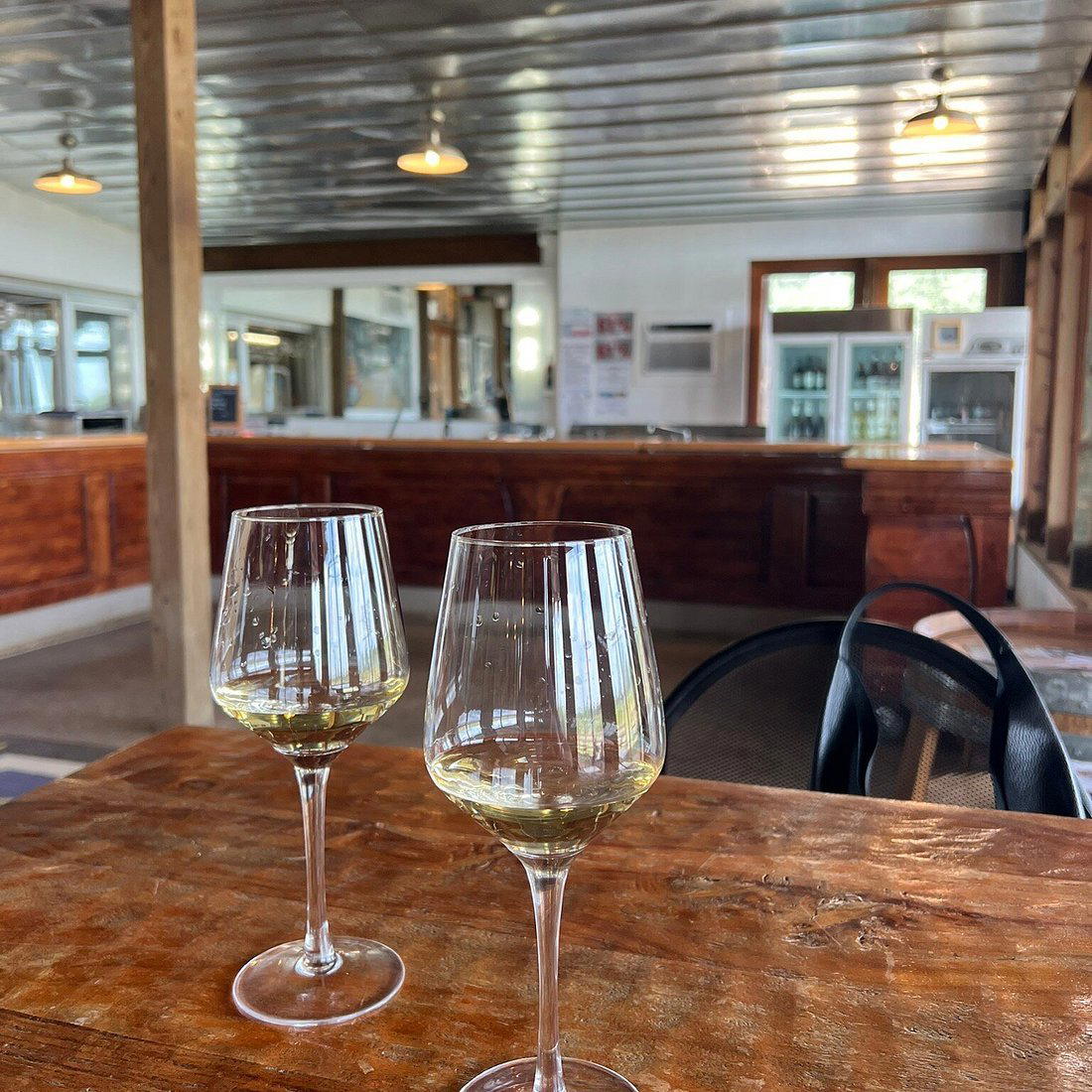
Casual counter-service spot with colorful chairs, picnic print tables, and royal blue wooden chairs in a simple brick-and-mortar dining room.