
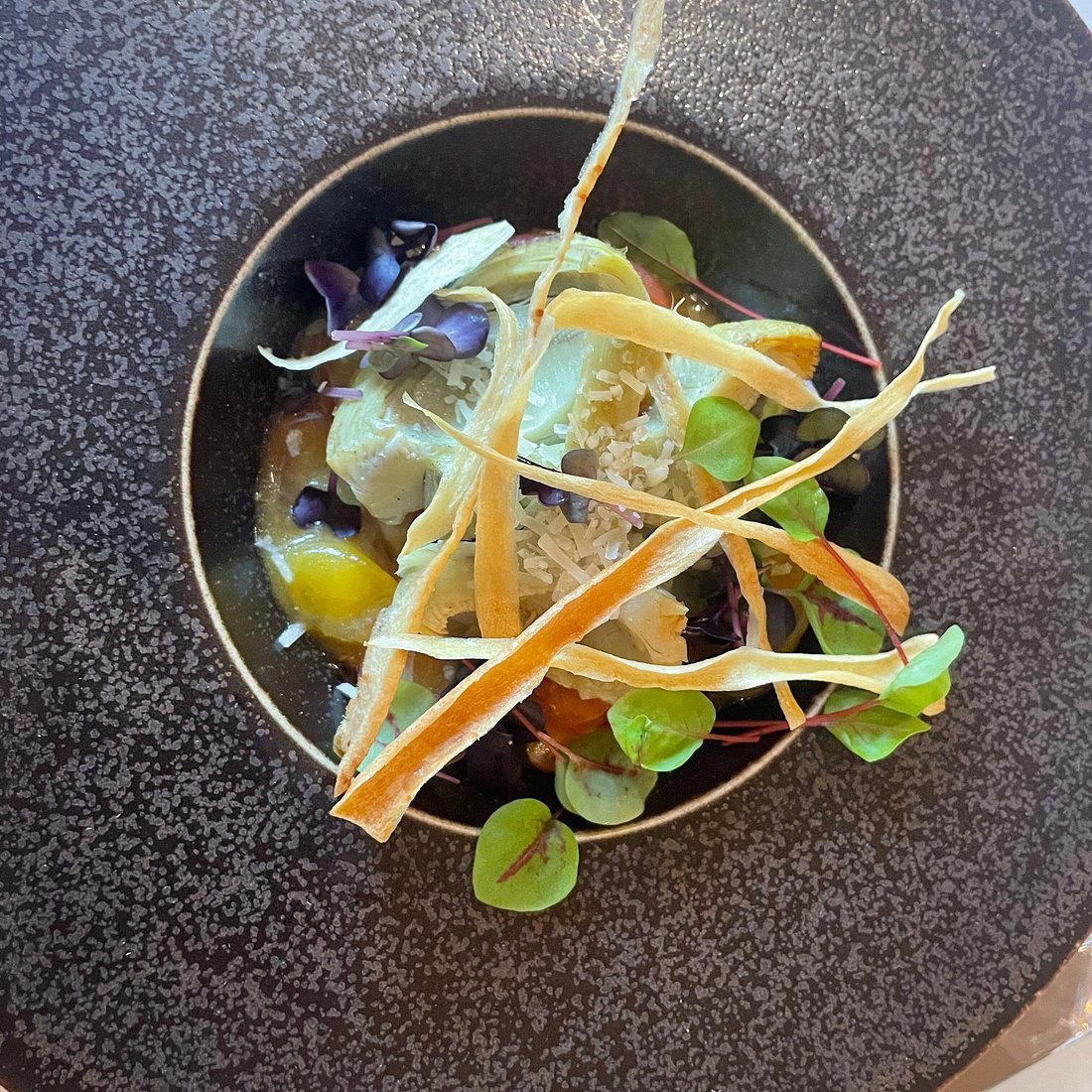
The €€€€ price point signals serious tasting-menu territory, where the surrounding coastline and its producers are the natural reference point for what arrives at the table.
Pearl is the En Primeur Club membership app — saves, bookings, and concierge access live there. Same editors, same standards.
- Address
- Birkenallee 20, 18347 Dierhagen, Germany
- Phone
- +49 38226 5010
- Website
- strandhotel-duenenmeer.de
- Directions
- Get directions
 Saves & bookings on Pearl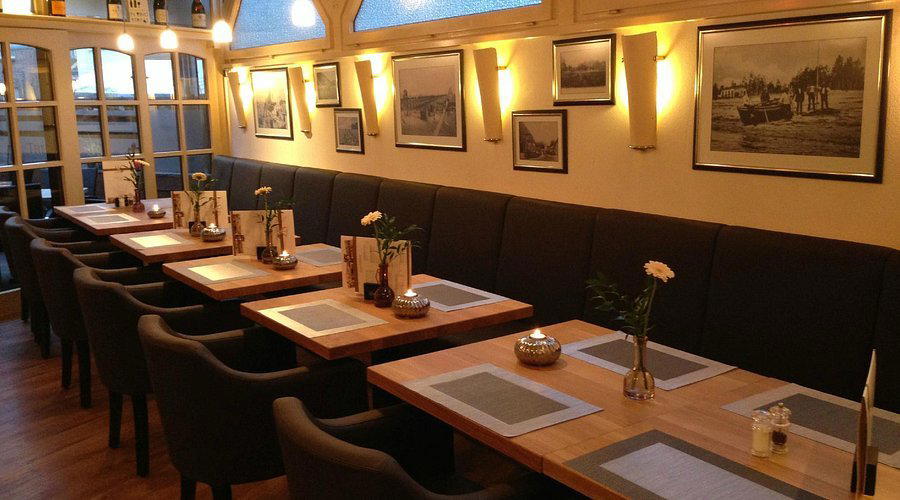
Where the Baltic Sets the Table
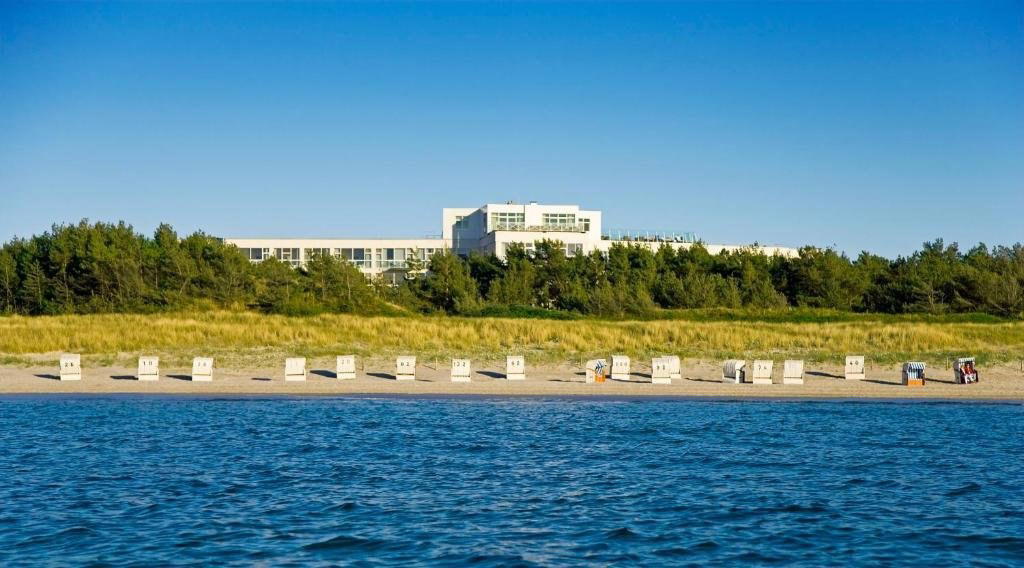
Dierhagen sits on the Fischland-Darß-Zingst peninsula, a narrow strip of land caught between the Baltic Sea and the Saaler Bodden lagoon. The area is not a restaurant destination in the way that Hamburg or Munich are, there are no dense clusters of Michelin-starred addresses, no neighborhood defined by competing omakase counters. What there is, in abundance, is coastline, fishing tradition, and a larder defined by the cold northern waters on one side and the sheltered brackish lagoon on the other. Ostseelounge occupies that context deliberately. The address on Birkenallee 20 places it within the resort zone of Dierhagen, where the approach through birch-lined paths and dune-adjacent terrain signals from the outset that geography is doing more work here than interior design alone.
A 2025 Michelin Plate in a Region That Earns One Rarely
Michelin's Plate designation, awarded in the 2025 guide, recognizes restaurants serving food prepared to a consistently high standard, distinct from starred venues but meaningful as a quality signal in regions where the guide's coverage is sparse. Mecklenburg-Vorpommern does not carry the density of recognized addresses that Baden-Württemberg or Bavaria do. To put that in perspective: Schwarzwaldstube in Baiersbronn operates in one of Germany's most concentrated fine-dining corridors, and Aqua in Wolfsburg draws on the weight of a major urban economy. Ostseelounge's Michelin Plate lands in a different context entirely, where the recognition carries more weight precisely because it is less common.
For a broader sweep of German fine dining at the €€€€ tier, the comparison set includes Vendôme in Bergisch Gladbach, ES:SENZ in Grassau, and Restaurant Haerlin in Hamburg, all operating at the same price tier but in different regional and culinary contexts.
The Sourcing Argument: Why Coastal Provenance Matters Here
Modern cuisine at the €€€€ level increasingly positions itself around sourcing specificity rather than technique alone. In coastal Germany, that specificity has a clear axis: fish and seafood from Baltic waters, where the relatively low salinity and cold temperatures produce herring, pike-perch, flounder, and Baltic cod with flavour profiles distinct from North Sea or Atlantic equivalents. The Bodden lagoon system adds another layer, eel, crab, and smaller freshwater species that are hyperlocal in the strictest geographic sense, unavailable anywhere else at the same origin point.
This is the sourcing logic that gives a restaurant like Ostseelounge its structural identity. Where a venue in an inland city must import coastal ingredients and absorb the compromise of transit, a kitchen on the Fischland-Darß-Zingst peninsula operates at the source. The argument is not sentimental, it is logistical. Morning catches from local fishing operations can reach the kitchen within hours. That is a consequence of geography. The same argument holds for the broader farm context of the region: Mecklenburg-Vorpommern's agricultural output, including dairy, game, and root vegetables, sits at the kitchen's immediate periphery.
This sourcing philosophy connects to a wider conversation in northern European fine dining. FZN by Björn Frantzén in Dubai demonstrates how coastal Nordic sourcing logic can be exported, though something is inevitably lost in that translation. At Ostseelounge, the Baltic is not a branding device, it is the actual supply chain.
The Price Point and What It Implies
At €€€€, Ostseelounge sits in Germany's highest restaurant price tier. That bracket, shared with addresses like JAN in Munich, Schanz in Piesport, Waldhotel Sonnora in Dreis, and Victor's Fine Dining by Christian Bau in Perl, implies multi-course tasting formats, wine pairing options, and a service structure built around a full evening rather than a single course. It also implies a room where the decision to eat there is planned rather than spontaneous, reservations will apply, and the meal represents a deliberate commitment of time and money.
In the context of Dierhagen specifically, that price tier takes on additional meaning. The town is a coastal resort rather than an urban dining capital, which means the visitor demographic skews toward weekenders and longer-stay guests from Hamburg, Berlin, and the broader northern German region. The restaurant operates within that resort economy, where guests staying in the area are making dinner reservations as part of a broader holiday logic rather than as standalone restaurant pilgrimages. That context shapes expectations on both sides of the table.
Planning Your Visit
Dierhagen is reached most directly by car from Rostock, approximately 35 kilometres to the south, or from Stralsund to the east. The peninsula has limited public transport options, making a vehicle the practical choice for most visitors. The address at Birkenallee 20 is within the main Dierhagen resort area. As with most venues at this price tier in Germany, advance reservations are strongly advisable, particularly during the summer Baltic season when the peninsula's visitor numbers peak. For a restaurant with its pricing and seasonal setting, advance reservations will be essential on peak weekends. The shoulder seasons, late spring and early autumn, offer a different experience of the coastal environment with reduced competition for tables.
For creative fine dining comparisons in Germany at a similar tier, CODA Dessert Dining in Berlin and Bagatelle in Trier represent the range of approaches the country's modern cuisine scene is producing.
Side-by-Side Snapshot
Comparable venues nearby, for context on price, style, and recognition.
| Venue | Cuisine | Price | Awards | Notes |
|---|---|---|---|---|
| OstseeloungeThis venue — the venue you are viewing | Modern Regional Seafood Fine Dining | $$$$ | Michelin Plate | Not listed |
| Bootshaus | Modern Mediterranean Seafood | $$$$ | Michelin Plate | Wangels |
| Rive Fish & Faible | Urban Seafood Bistro | $$$ | Michelin Plate | Altona-Altstadt |
| am kai | Modern Seafood with Mediterranean and Asian Influences | $$$ | Michelin Plate | Altona-Altstadt |
| StromGold Warnemünde | Baltic Seafood | $$ | Not listed | Warnemünde |
| Orania. Berlin | Modern Fusion with Peking Duck Focus | $$$$ | Michelin Plate | Kreuzberg |
Recognition history
Dated appearances from independent guides and award organizations, with the underlying list record or original source where available.
Michelin 1 Star
Michelin
Michelin Plate
Michelin
Continue exploring
More in Dierhagen
Restaurants in Dierhagen
Browse all →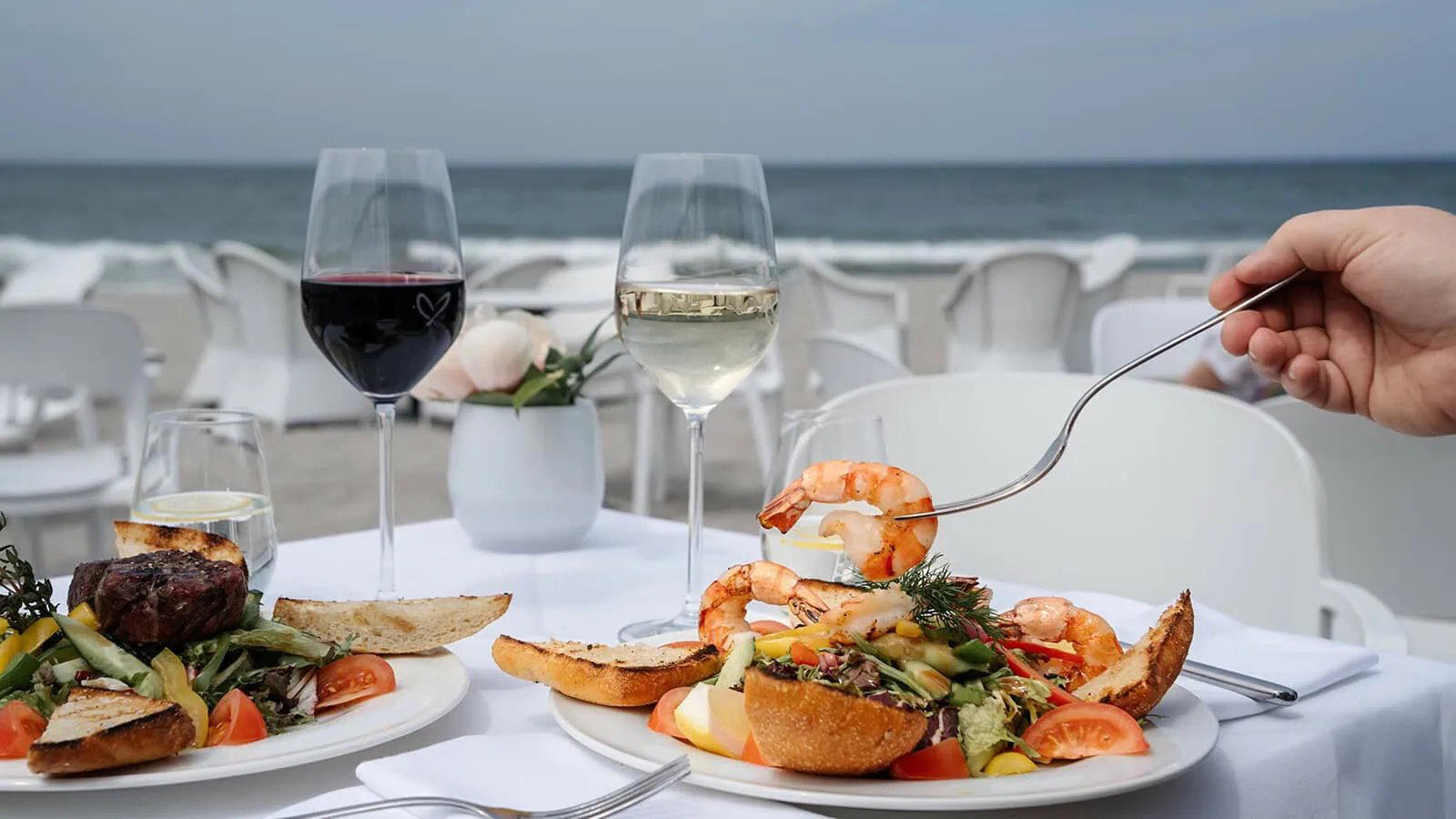
Bars in Dierhagen
Browse all →
At a Glance
- Elegant
- Sophisticated
- Scenic
- Date Night
- Special Occasion
- Waterfront
- Terrace
- Open Kitchen
- Extensive Wine List
- Sommelier Led
- Local Sourcing
- Waterfront
Current opening hours
- Monday
- Closed
- Tuesday
- Closed
- Wednesday
- 6–10 PM
- Thursday
- 6–10 PM
- Friday
- 6–10 PM
- Saturday
- 6–10 PM
- Sunday
- Closed
Hours can change for holidays and private events. Last verified .
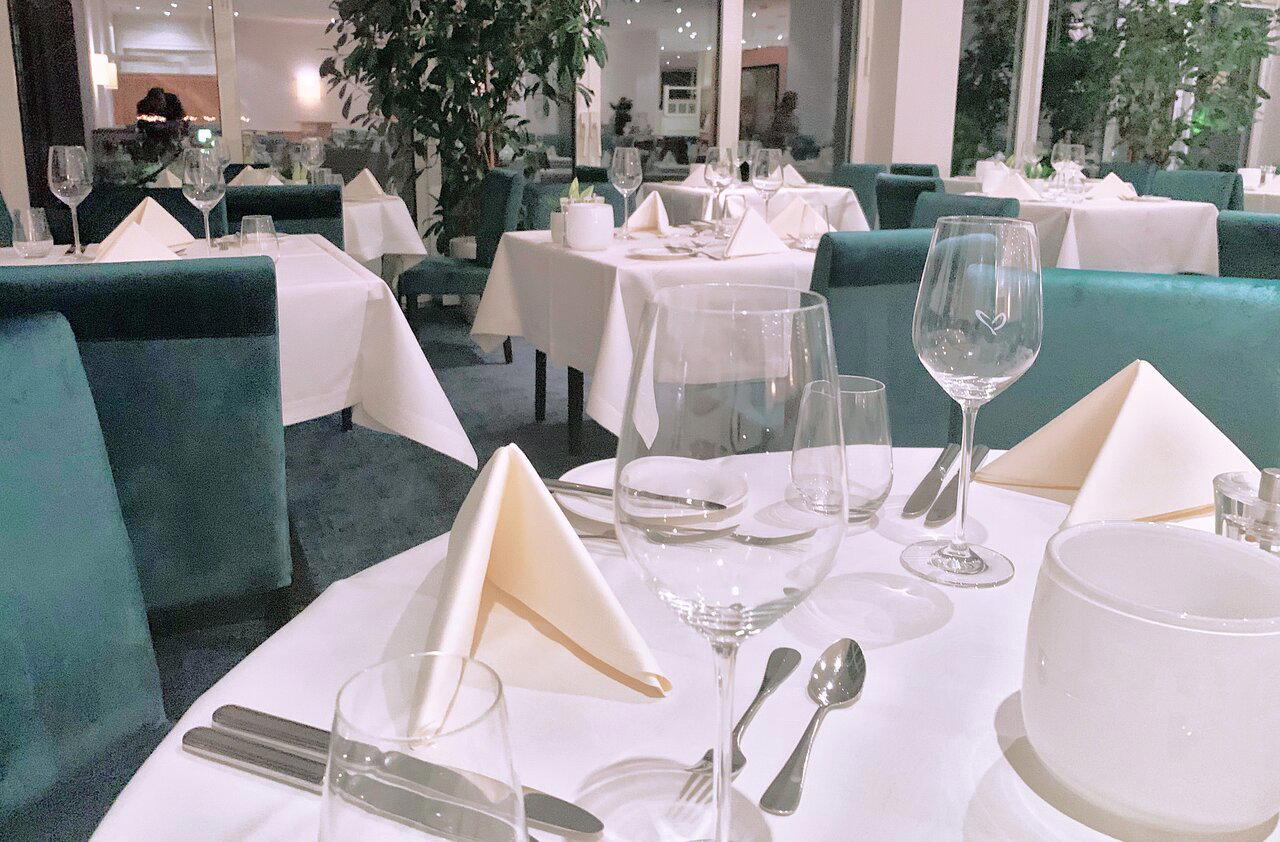
Chic, bright interior with stylish, comfortable seating, ample table spacing, and a lovely terrace for aperitifs.