
Michelin Bib Gourmand
Our verdict
Among Ostuni's Michelin-recognised tables, Osteria Piazzetta Cattedrale occupies a distinct position: Bib Gourmand-awarded for two consecutive years (2024 and 2025), it delivers considered Apulian cooking at a price point that undercuts most of its white-city peers. A husband-and-wife operation steps from the cathedral, it reads as the antithesis of the region's grand masseria format.

Pearl is the En Primeur Club membership app — saves, bookings, and concierge access live there. Same editors, same standards.
- Address
- Osteria Piazzetta Cattedrale, Via Cattedrale, 72017 Ostuni BR, Italy
- Phone
- +39 0831 335026
- Website
- piazzettacattedrale.it
- Directions
- Get directions
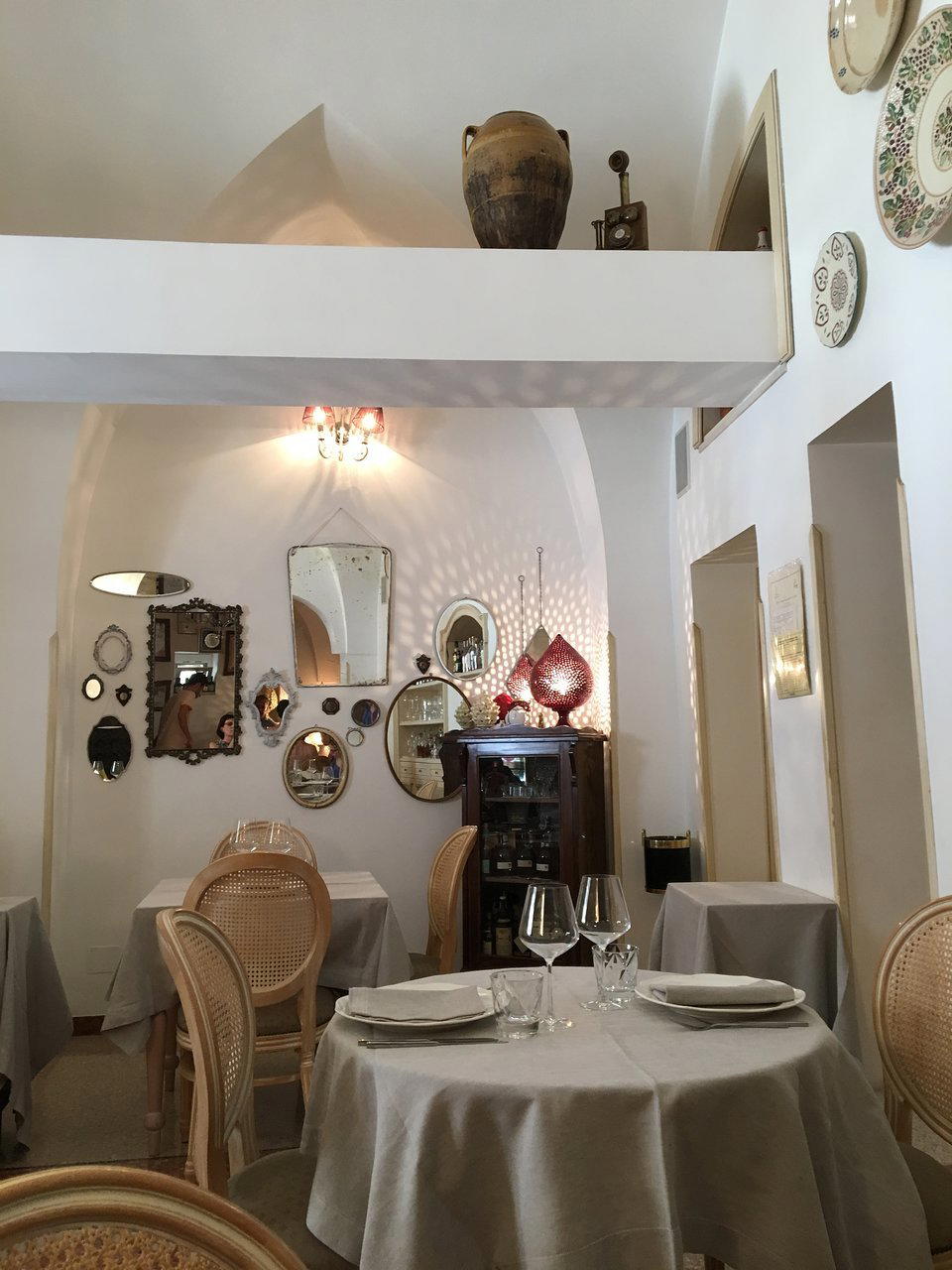
The menu
What to order
- Broad_bean_purée
- Sformatino_with_courgette_flowers
- Suckling_pig
- Tuna_tartare
- Risotto_with_mantis_shrimp
A Few Metres from the Cathedral, a Different Kind of Ostuni Meal
The white city's upper restaurant tier has, in recent years, tilted toward the masseria format: expansive rural estates, theatrical settings, price points that sit firmly at €€€€. Masseria Moroseta and Cielo both occupy that upper bracket, where the setting does as much work as the plate. Osteria Piazzetta Cattedrale operates on a different register entirely. Positioned steps from Ostuni's cathedral on Via Cattedrale, it sits in the historic centro storico rather than out on the Valle d'Itria plain, and its price range holds at €€, making it one of the few Michelin-recognised addresses in the area where the recognition and the spend don't move in lockstep.
The Michelin Guide has awarded it the Bib Gourmand in both 2024 and 2025, a designation that specifically tracks quality-to-value ratio rather than technical ambition or theatrical presentation. That distinction matters in the Ostuni context, where most of the serious cooking is attached to serious price tags. Among the Bib Gourmand's criteria, consistent sourcing and honest regional cooking weigh heavily, and those two qualities are what define the kitchen here.
The Rhythm of an Apulian Meal at This Level
Dining ritual at trattorias and osterias in Puglia has a tempo that differs from the northern Italian progression. Antipasti are not a formality; they are the argument the kitchen makes about the season and the land. At this level of Apulian cooking, the opening plate of broad bean purée with seasonal vegetables is a structural statement, not a warm-up act. The dish is rooted in Puglian cucina povera tradition: dried fave, slow-cooked to a dense, savoury paste, plated with whatever the season permits. It is the kind of dish that gets benchmarked across every osteria in the region, and kitchens that get it right earn a kind of shorthand credibility among locals that no award fully replicates.
From there, the meal builds through dishes that maintain the same logic. The sformatino with courgette flowers, spring onions and date purée holds a textural tension that more maximalist kitchens often abandon for visual impact. Suckling pig with baked potato and wild greens follows a preparation rooted in the rotisserie traditions of inland Puglia, where the pork and the foraging culture of the Murge plateau have long intersected. The warm sfogliatina pastry with vanilla cream closes the meal in the Pugliese pasticceria tradition rather than reaching for the sort of architectural dessert that signals fine-dining ambition. The sequencing, read as a whole, is deliberate: this is cooking that trusts its own tradition rather than stepping outside it to impress.
The produce underpinning all of it is primarily sourced from within Puglia, a region that generates some of Italy's most consequential agricultural output: olive oil from centuries-old trees, vegetables from the Salento plain, pork from inland farms. Kitchens working at the Bib Gourmand tier that commit to local sourcing at this level are making a commercial choice as much as a philosophical one; the discipline it requires shows in the consistency of the plate.
The Husband-and-Wife Format and What It Signals
Italian fine dining has a long tradition of family operations where the kitchen and the dining room divide along domestic lines, and that structure appears here with the wife leading the kitchen and the husband managing the front of house. This format recurs across some of Italy's most respected addresses: Dal Pescatore in Runate is the most cited national example, a multi-generational family enterprise that holds three Michelin stars. The dynamic isn't merely biographical; it produces a particular quality of hospitality in which the distance between the kitchen's intent and the table's experience is shorter than in brigade-heavy operations. The front-of-house partner often has a more granular knowledge of the night's cooking than a conventional maître d', and the kitchen has a direct read on how the room is responding.
At Osteria Piazzetta Cattedrale, Chef Gabriele Dal Moro works within this structure, with the kitchen output shaped by that close operational loop. The result is a dining room that reads as coherent rather than compartmentalised, the kind of consistency that explains why the Bib Gourmand has been awarded in successive years rather than arriving and then lapsing.
Where This Sits in Ostuni's Dining Picture
Ostuni's restaurant scene has broadened considerably as the town's profile among international visitors has risen, but the serious cooking options remain relatively concentrated. Osteria Ricanatti operates at the €€€ tier with a modern Apulian approach, while Berton al Vista and Pescheria Nautilas Ostuni each occupy distinct format niches. Osteria Piazzetta Cattedrale's position is specific: Michelin-flagged, traditionally framed, and priced below all of its recognised peers in town. For travellers calibrating a multi-meal stay in Ostuni, that combination makes it a different kind of decision from the masseria circuit.
Within Puglia's wider Apulian restaurant map, the comparison set extends further. Casa Sgarra in Trani and Pashà in Conversano both represent the region's more technically ambitious end, where Apulian ingredients are worked through a contemporary fine-dining framework. Osteria Piazzetta Cattedrale sits at the opposite end of that spectrum: the cooking is regional in a way that doesn't seek to reframe or deconstruct its references. That is a conscious position, not a limitation.
Italy's broader restaurant culture has spent the last decade negotiating between the international fine-dining template and the specificity of regional traditions. The Bib Gourmand tier, which includes addresses like Osteria Francescana in Modena at the starred extreme and dozens of smaller regional operations across the country, functions as the Michelin Guide's endorsement of that second path. Across Italy, from Enoteca Pinchiorri in Florence to Enrico Bartolini in Milan and Quattro Passi in Marina del Cantone, the starred and Bib Gourmand tiers serve different functions in the dining ecosystem, and the Bib designation here carries a specific credibility: it is not consolation recognition for a kitchen that didn't quite reach star level; it is confirmation that the kitchen is doing exactly what it set out to do.
For context on the wider Valle d'Itria food and drink picture, our full Ostuni restaurants guide maps the town's dining options across price tiers. The Ostuni hotels guide, bars guide, wineries guide, and experiences guide round out the planning picture for a stay in the area. Among the regional Apulian cooking addresses worth considering alongside a visit here, Atelier Moessmer Norbert Niederkofler in Brunico represents the northern Italian end of the hyper-regional ingredient philosophy, an instructive contrast to the Puglian south.
Planning a Visit
Via Cattedrale places the osteria within easy walking distance of Ostuni's main cathedral piazza, which means arriving on foot through the white-walled centro storico is the natural approach. The €€ price point suggests a two-course meal with wine will land meaningfully below what the town's higher-profile addresses charge, though precise current pricing should be confirmed directly with the venue. Given the small-format nature of family-run osterias in historic town centres, booking ahead is advisable, particularly in the summer months when Ostuni's visitor numbers peak between June and September. The Bib Gourmand recognition has increased the profile of the address, and tables at this tier of quality-to-value ratio tend to fill earlier in the week than the broader dining scene.
What Should I Eat at Osteria Piazzetta Cattedrale?
The broad bean purée with seasonal vegetables is the dish most firmly anchored in the Puglian cucina povera tradition and gives the clearest reading of the kitchen's sourcing and technique. The sformatino with courgette flowers, spring onions and date purée demonstrates the kitchen's range beyond the strictly rustic. Among the secondi, the suckling pig with baked potato and wild greens reflects the inland Puglia roasting tradition. The warm sfogliatina with vanilla cream is the closing act in the pastry register. Across all categories, the produce is primarily Puglian, and the dishes are framed to honour that provenance rather than complicate it. The two successive Michelin Bib Gourmand awards (2024 and 2025), grounded in the venue's sourcing and consistency, support treating the full menu progression as the intended format rather than ordering selectively.
Frequently asked questions
Is Osteria Piazzetta Cattedrale chef-led?
The chef associated with Osteria Piazzetta Cattedrale is Gabriele Dal Moro.
What does dinner at Osteria Piazzetta Cattedrale typically cost?
Pricing at Osteria Piazzetta Cattedrale is listed as €€.
What should I eat at Osteria Piazzetta Cattedrale?
The broad bean purée with seasonal vegetables is the dish most rooted in Puglian cucina povera and the clearest measure of the kitchen's restraint with regional produce. The sformatino with courgette flowers, spring onions and date purée shows a more composed register, while the suckling pig with baked potato and wild greens rounds out the savory progression. The warm sfogliatina pastry with vanilla cream is the dessert to finish on.
What's Osteria Piazzetta Cattedrale's location?
Osteria Piazzetta Cattedrale is located at Osteria Piazzetta Cattedrale, Via Cattedrale, 72017 Ostuni BR, Italy, Ostuni.
The Essentials
| Venue | Cuisine | Price | Awards | Notes |
|---|---|---|---|---|
| Osteria Piazzetta CattedraleThis venue — the venue you are viewing | Puglian Osteria | Not listed | Michelin Bib Gourmand | Not listed |
| Cielo | Modern Puglian Fine Dining | $100–150 | Michelin Plate · Relais Chateaux Award | Modern Cuisine |
| Masseria Moroseta | Mediterranean Farm-to-Table | $100–150 | Michelin Plate | Mediterranean Cuisine |
| Osteria Ricanatti | Modern Apulian Italian | $50–100 | Michelin Plate | Modern Cuisine |
| Pescheria Nautilas Ostuni | Fresh Seafood Pescheria Bistrot | $100–150 | Not listed | Italian Seafood |
| Restaurant 700 | Contemporary Puglian Fine Dining | $50–100 | Michelin Plate | Contemporary |
Recognition history
Dated appearances from independent guides and award organizations, with the underlying list record or original source where available.
Michelin Bib Gourmand
Michelin
Full recognition history (3 entries)
Michelin Bib Gourmand
Michelin
Michelin Bib Gourmand
Michelin
Continue exploring
More in Ostuni
Restaurants in Ostuni
Browse all →

Bars in Ostuni
Browse all →
Hotels in Ostuni
Browse all →



Details
- Cozy
- Elegant
- Rustic
- Intimate
- Romantic
- Date Night
- Special Occasion
- Celebration
- Historic Building
- Extensive Wine List
- Local Sourcing
- Street Scene
- A La Carte
- Tasting Menu
- Vegetarian Friendly
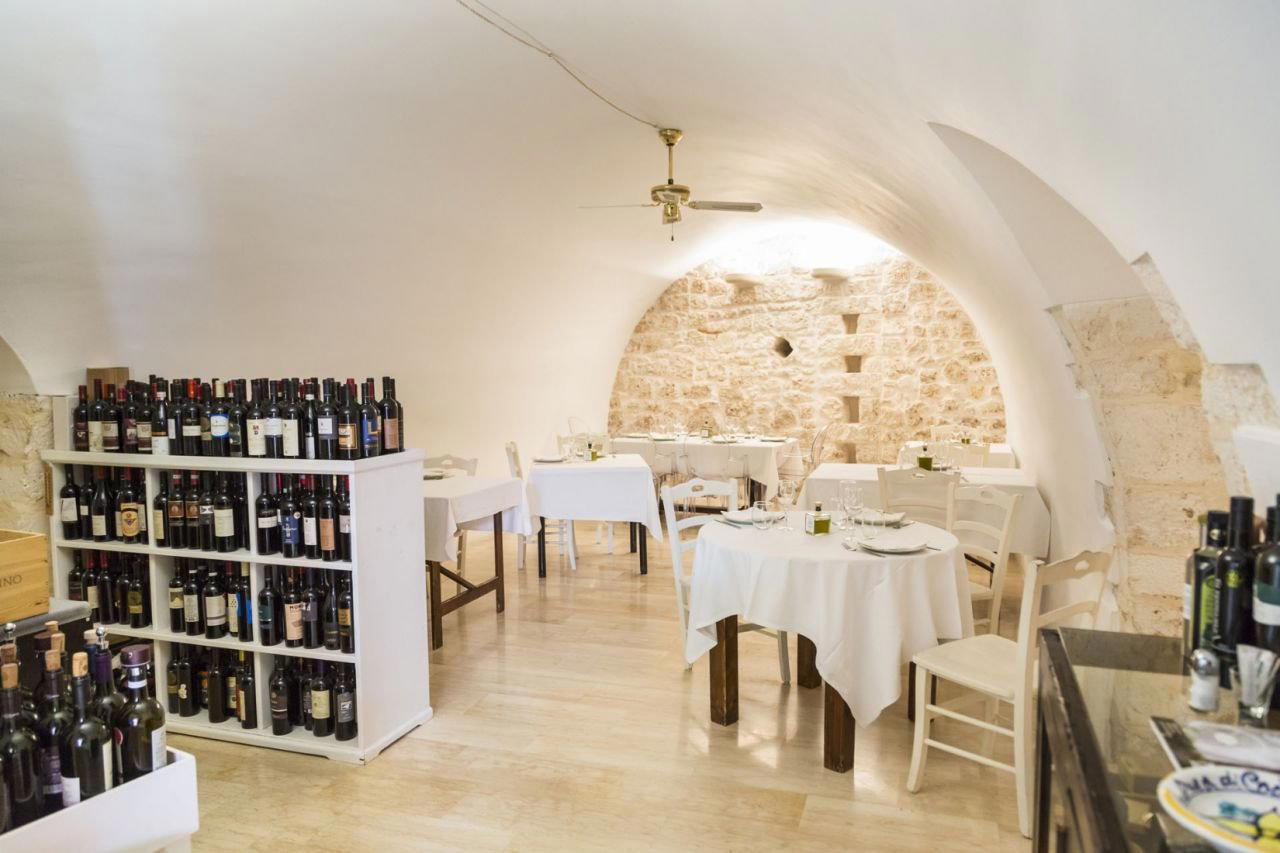
Sophisticated, warm, and cozy atmosphere in a small, elegant space with soft music and attentive service.