



Cielo occupies the rooftop of La Sommità hotel in Ostuni's whitewashed hilltop quarter, holding a Michelin Plate and consecutive Opinionated About Dining recognition across both its North and South American ranking lists. Chef Juan Manuel Barrientos Valencia works with Puglian ingredients reframed through a modern lens, with dining options spanning a terrace aperitif at dusk to a full tasting menu beneath vaulted ceilings. Price range sits at €€€€.
Pearl is the En Primeur Club membership app — saves, bookings, and concierge access live there. Same editors, same standards.
- Address
- Vico Pergola, 9, 72017 Ostuni BR, Italy
- Phone
- +39 0831 305925
- Website
- lasommita.it
- Directions
- Get directions
 Saves & bookings on Pearl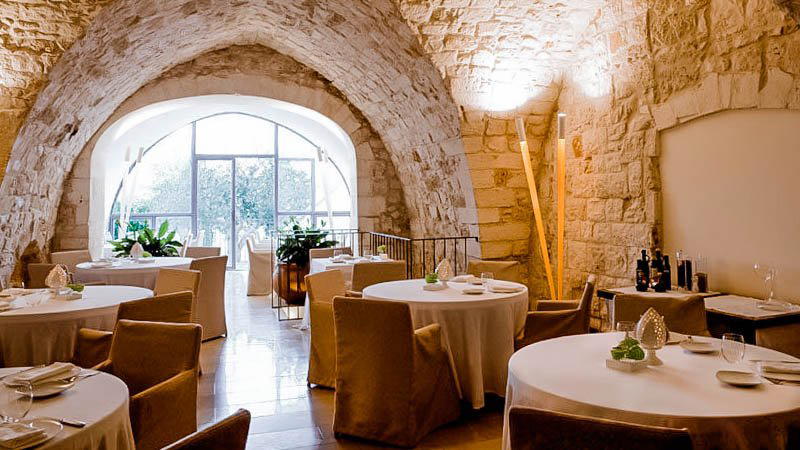
Where Puglia's Larder Meets the White City's Heights
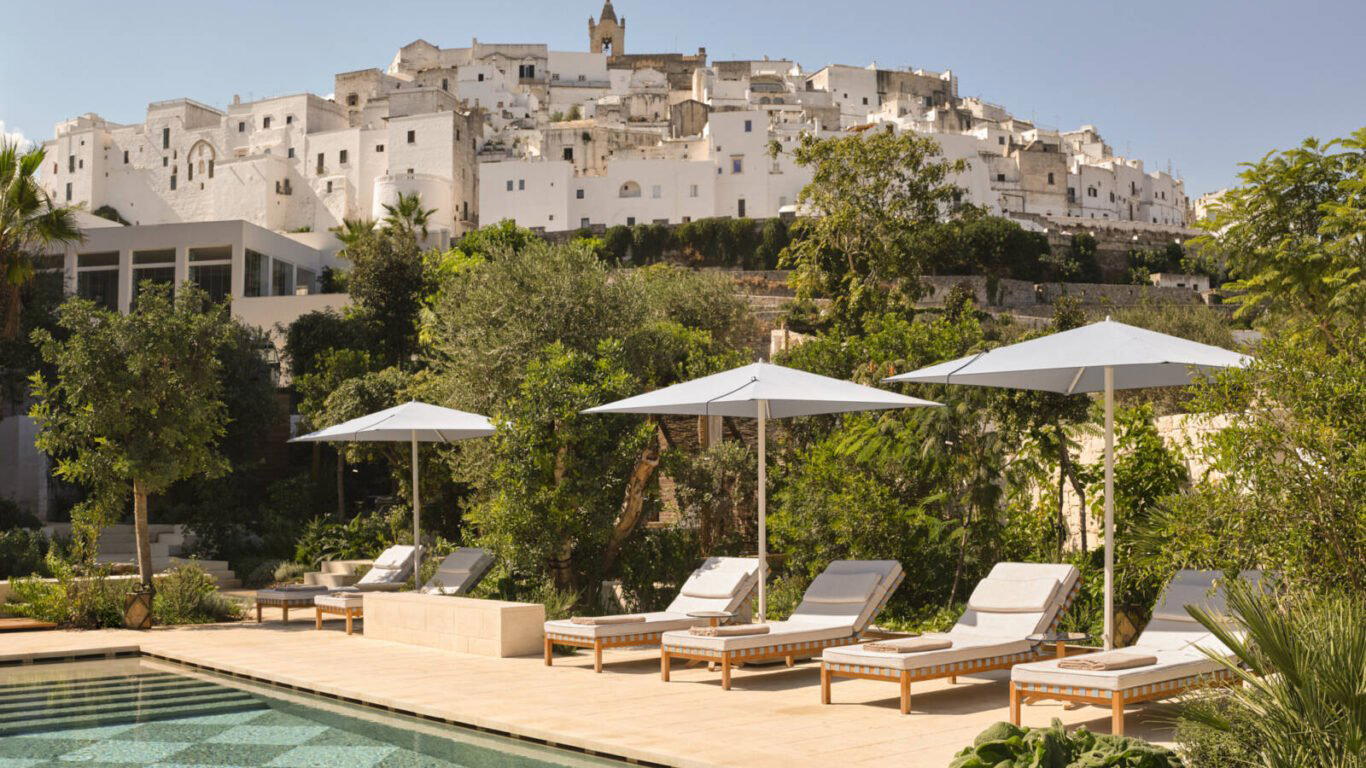
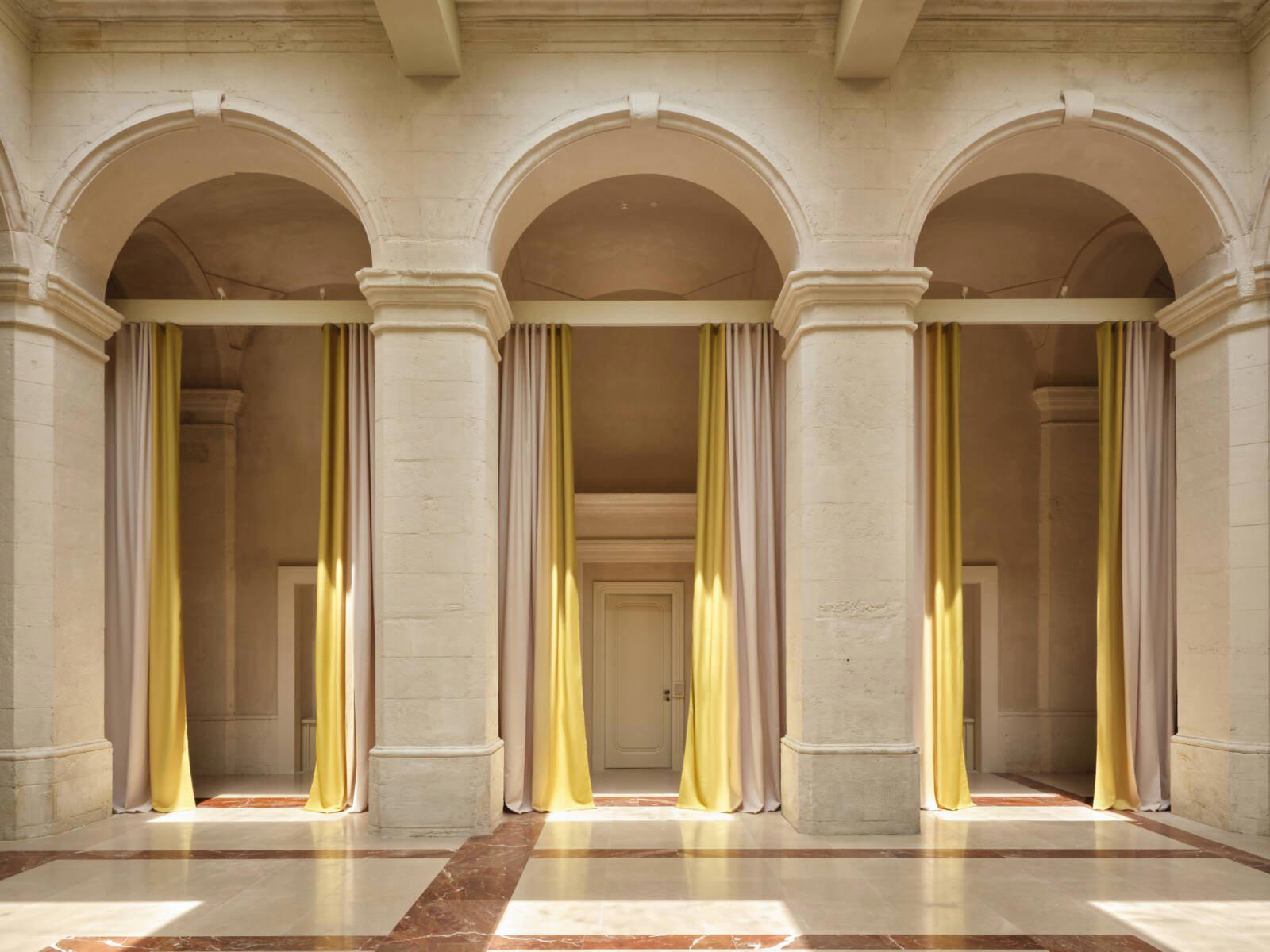
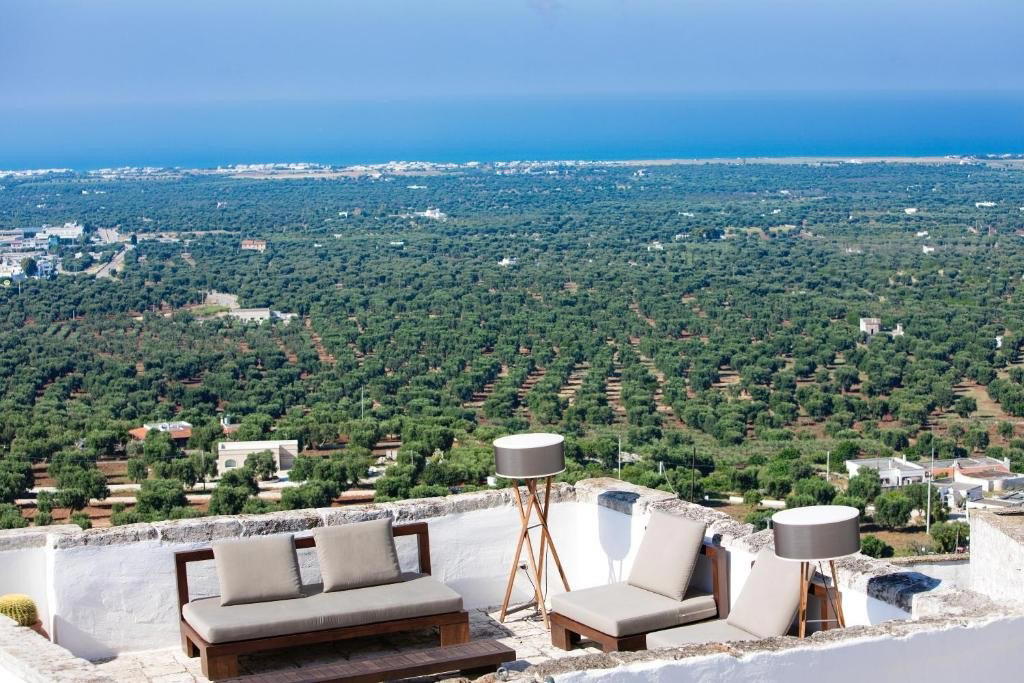
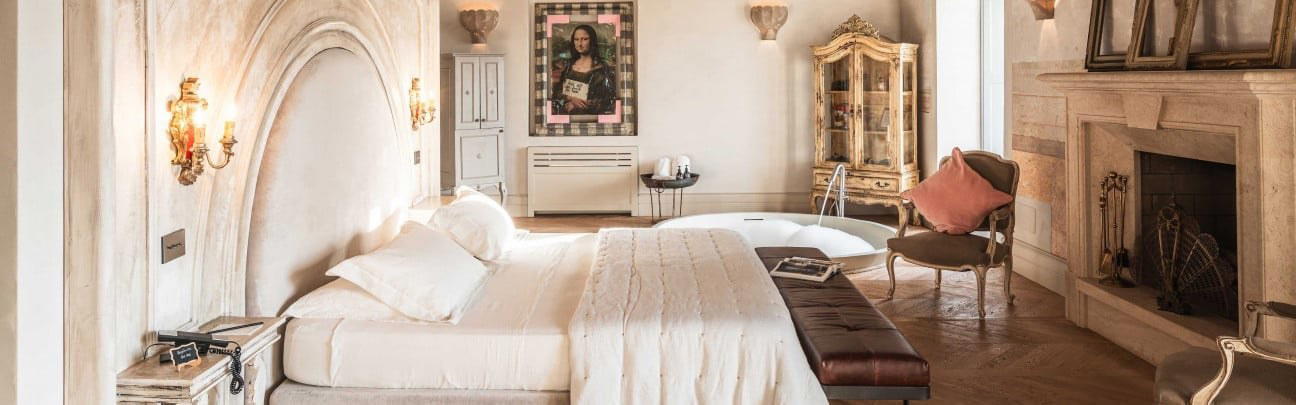
At the summit of Ostuni's limestone hill, where the lanes narrow to single-file and the whitewash is thick enough to feel structural, the terrace at Cielo catches the last of the evening light over the Valle d'Itria. The Adriatic sits somewhere in the far distance. Below, the town stacks downward in layers of pale stone. This is not a backdrop assembled for atmosphere; it is the physical logic of a town built to be seen from the sea, and Cielo sits at its apex inside the Relais & Châteaux property La Sommità, a converted mansion whose bones are firmly seventeenth-century.
The setting matters to understanding the food. Puglia is a region where ingredient sourcing is not a trend or a marketing posture; it is a consequence of geography. The heel of Italy is one of the country's most productive agricultural zones, generating wheat, olives, almonds, figs, and vegetables at a scale that makes local supply chains economically logical as well as philosophically sound. Restaurants operating at this price point in the region have an argument to make: that Puglian produce, treated with technical seriousness, requires no supplementation from elsewhere.
The Sourcing Logic Behind the Menu
Puglia's culinary tradition has long been shaped by what the land produced in surplus. Cicorie, chicory greens pulled from field margins, appear in peasant cooking alongside fava beans because both were abundant and required little intervention. Orecchiette with turnip tops, a dish so embedded in regional identity that it is made by hand on street corners in Bari's old quarter, is built entirely around a bitter brassica that once fed those who could not afford meat. The modern reinterpretation of this tradition, which Cielo pursues, involves applying contemporary technique to those same ingredients without severing their agricultural logic.
Chef Juan Manuel Barrientos Valencia, who trained in Martina Franca and carries a CV that the Michelin inspectors have described as highly respectable, works within that framework. The direction is modern Puglian: the ingredients are regional, the approach is not bound by historical recipe. This is a distinction that separates a restaurant like Cielo from the more strictly traditional Apulian format practiced at, for example, Osteria Piazzetta Cattedrale, where fidelity to classical preparation is the primary editorial statement. At Cielo, the source material is the same; the grammar is different.
The vegetable-led tasting menu has attracted particular attention, including recognition from a Relais & Châteaux reviewer who cited it specifically. In a region where the cucina povera tradition already placed vegetables at the centre of the table rather than at its margins, a serious vegetable menu is not a concession to dietary preference; it is a return to the cuisine's structural logic. Puglia grows some of the leading produce in Italy. A kitchen that treats that produce as the main event is working with the grain of its territory, not against it.
The Format: Terrace, Courtyard, Dining Room
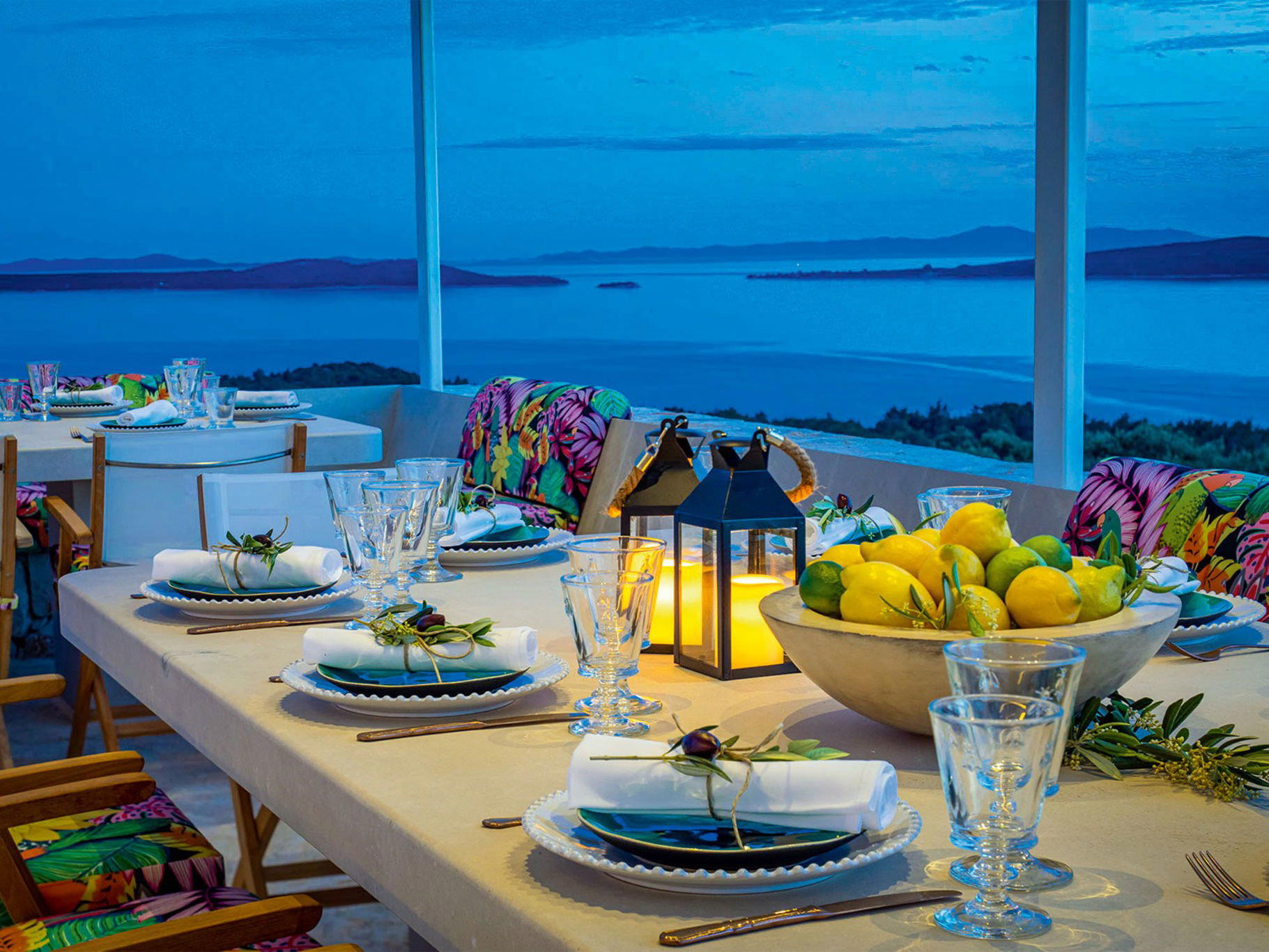
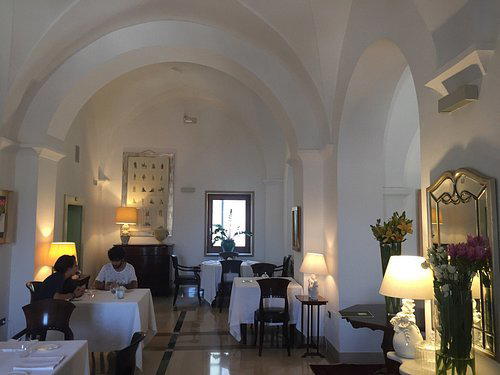
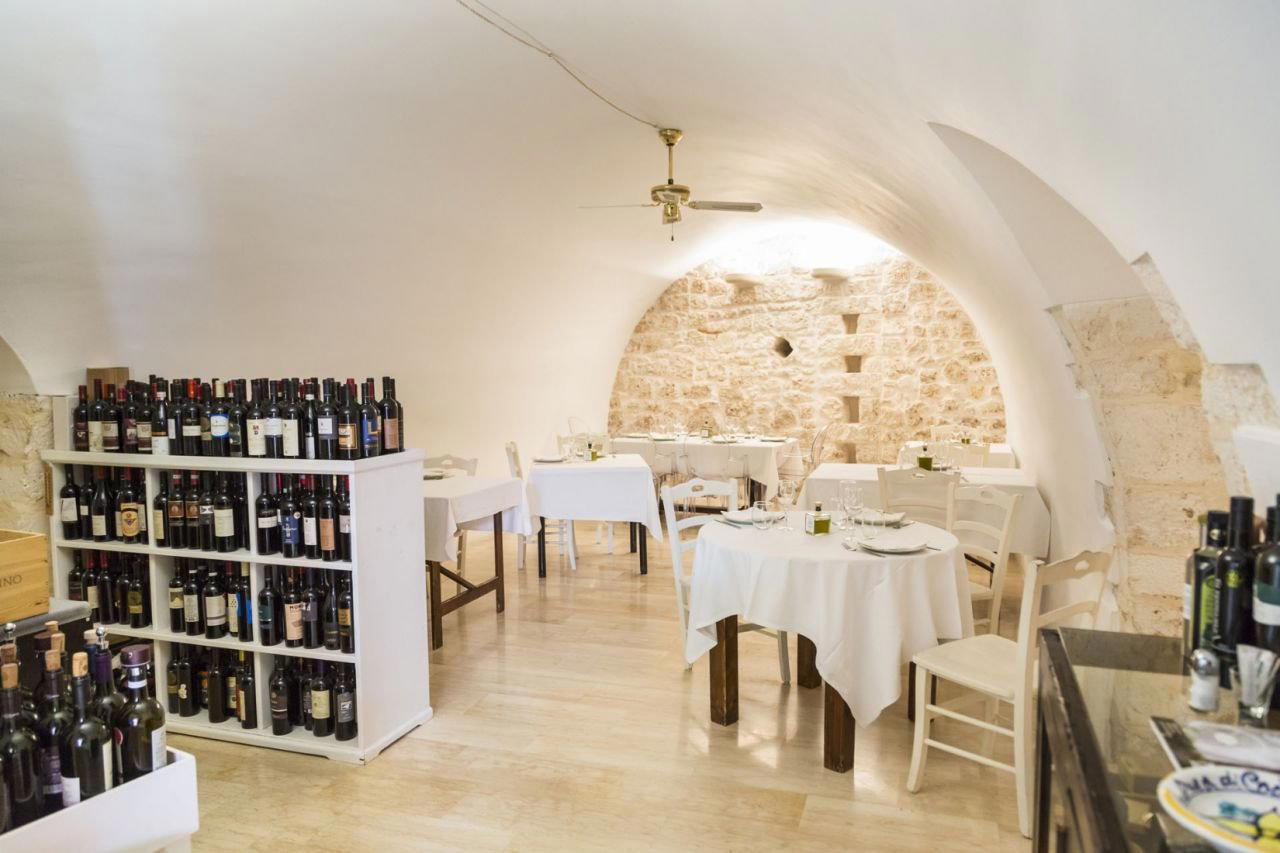
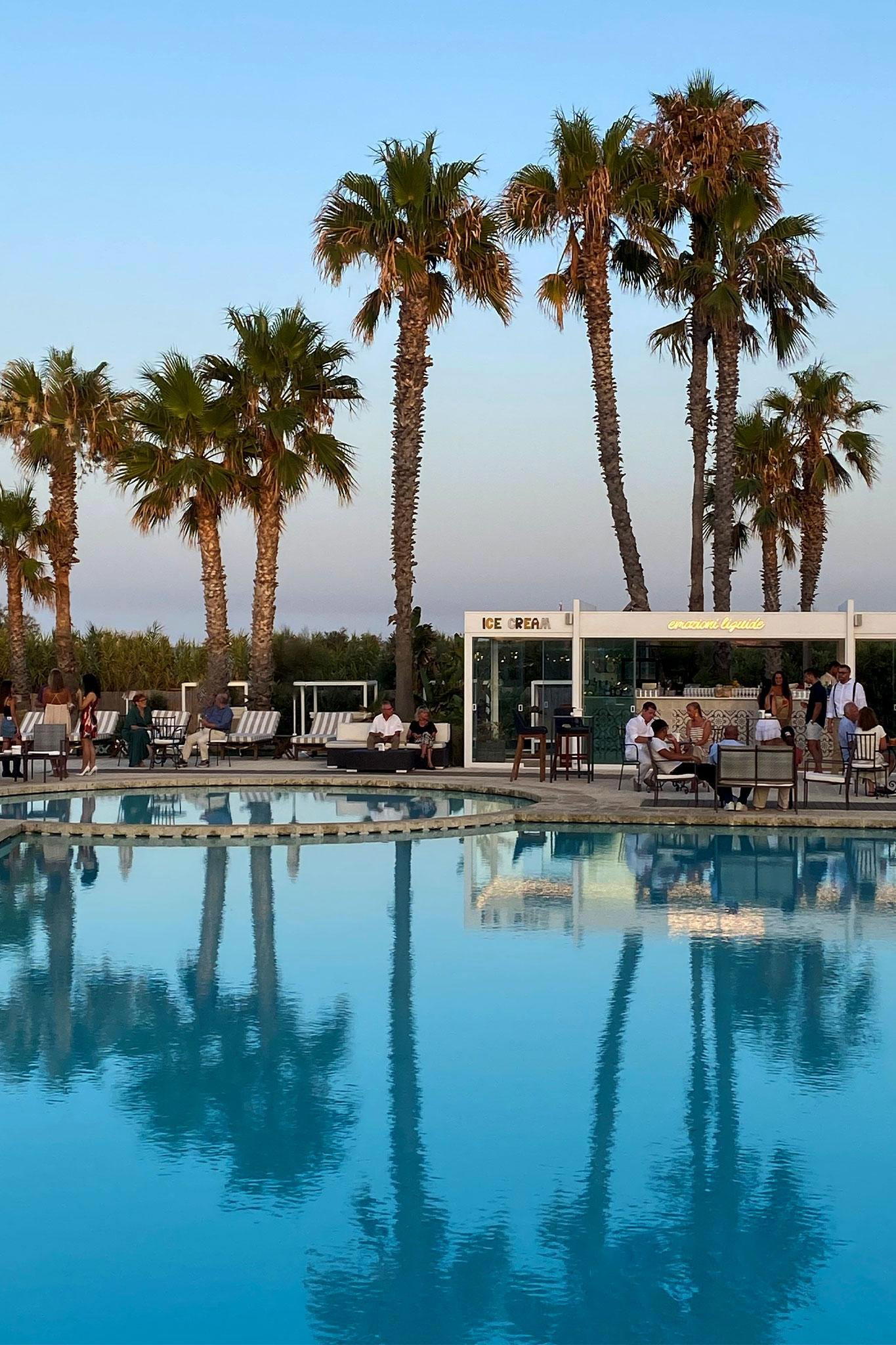
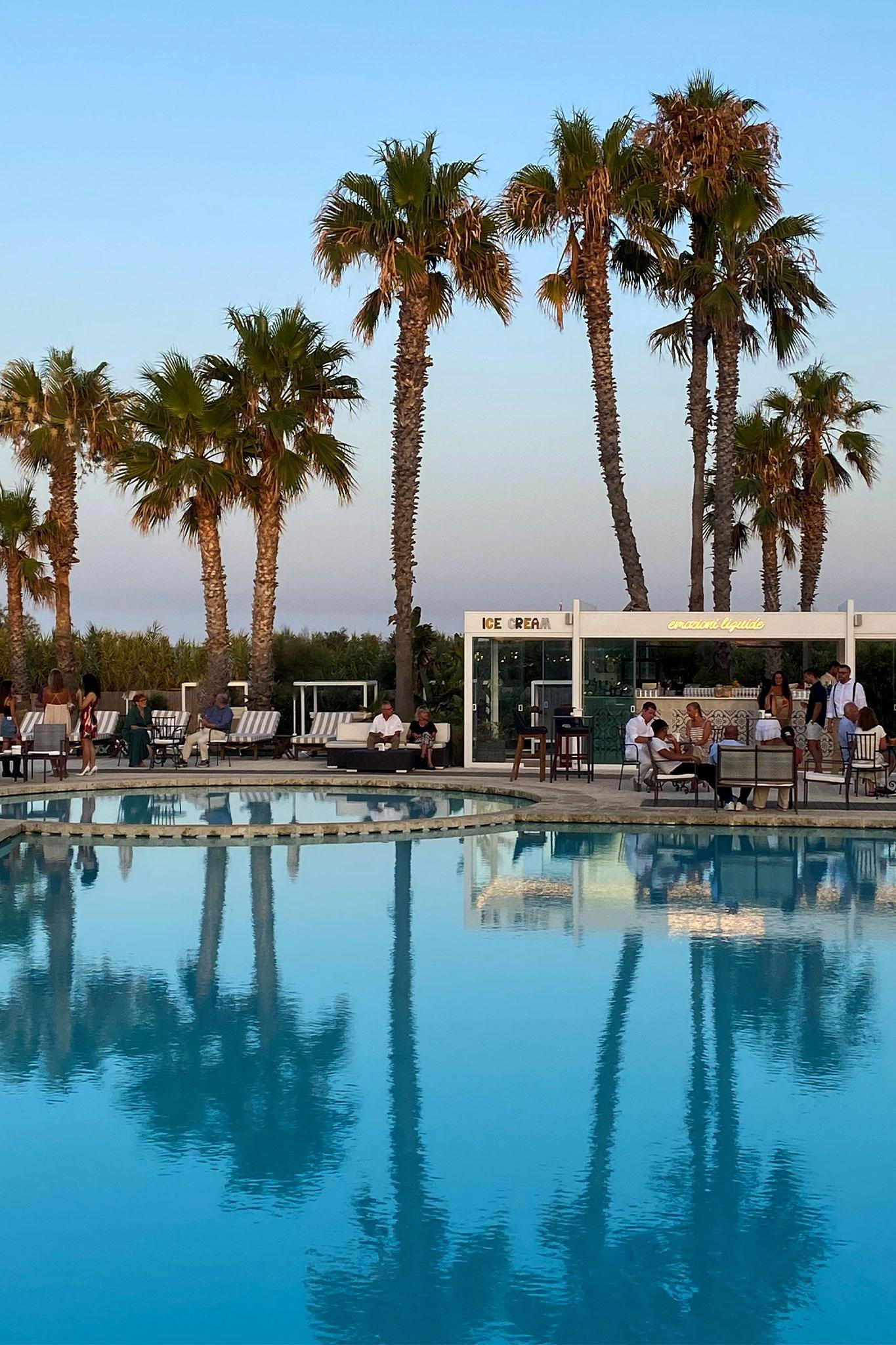
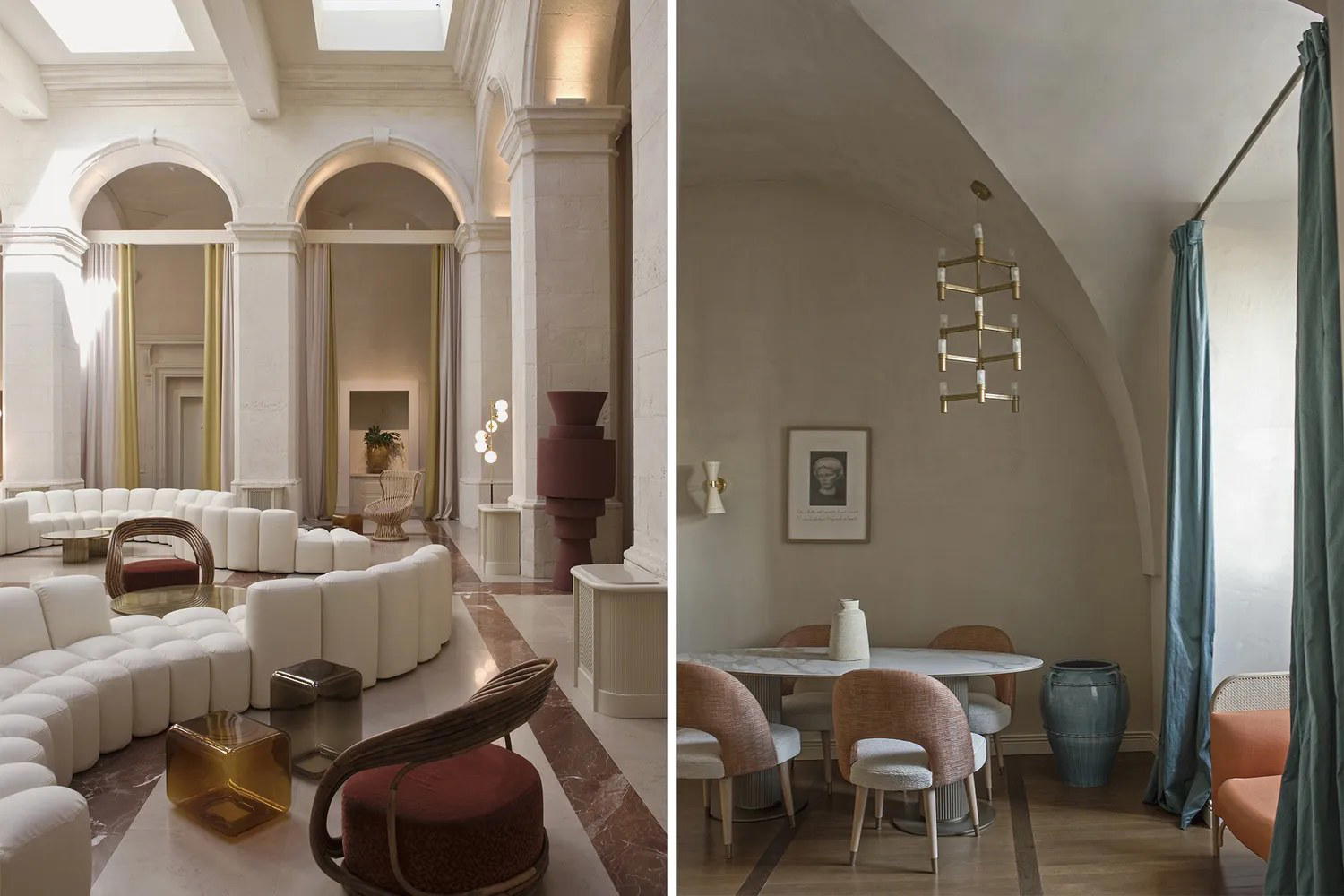
Cielo operates in two distinct registers depending on the hour. At lunch, a simpler menu runs in the dining room, which suits those moving through Ostuni on a tighter schedule or who prefer lighter midday eating. In the evening, the full expression of the kitchen is available, either in the vaulted interior room or outdoors in the small inner courtyard among citrus trees. The terrace, suited to aperitivo at dusk, functions as a transitional space between the town outside and the meal inside, and the light at that hour over the valley is the kind that makes timing your arrival carefully worth the effort.
This layered format, aperitif on the terrace, dinner in the courtyard or vaulted room, positions Cielo as an extended-evening proposition rather than a quick-service operation. At €€€€ pricing, the expectation from the guest is a full arc of hospitality, and the physical layout of La Sommità supports that. Among the restaurants in Ostuni operating at this tier, Masseria Moroseta shares the €€€€ bracket with a Mediterranean focus rooted in its agricultural estate, while Osteria Ricanatti and Berton al Vista operate one tier below at €€€ with modern cuisine formats of their own.
Recognition and Peer Context
Cielo holds a Michelin Plate, a designation that signals a kitchen producing food of quality without yet reaching star level, and has maintained consecutive recognition in the Opinionated About Dining lists across multiple years. In the 2025 OAD rankings, the restaurant appeared at number 75 in North America and number 22 in South America. In 2024 it ranked 94th and 27th on those same lists respectively, and in 2023 it was Highly Recommended in North America and ranked 46th in South America. Sustained ranking across multiple cycles implies a consistent operation rather than a single strong year.
For context on where Cielo sits within the broader Italian fine dining spectrum, the country's most discussed modern cuisine addresses include Osteria Francescana in Modena, Enoteca Pinchiorri in Florence, and Enrico Bartolini in Milan. In the south, Quattro Passi in Marina del Cantone and Dal Pescatore in Runate represent the longer-established fine dining tier. Cielo operates below those in recognition terms but above the majority of the regional scene, occupying a position that is more credentialed than most of Puglia's restaurant stock and more regionally embedded than the prestige addresses further north.
Internationally, modern cuisine restaurants in the Cielo peer bracket for technical ambition include Atelier Moessmer Norbert Niederkofler in Brunico, which shares a similar commitment to regional sourcing as the core editorial argument of the menu, and hotels-within-a-destination formats such as Frantzén in Stockholm and FZN by Björn Frantzén in Dubai, where the restaurant operates as the primary reason for the visit rather than an amenity alongside it.
Planning a Visit
Cielo sits inside La Sommità at Vico Pergola 9, at the summit of Ostuni's historic centre. The address is pedestrian territory; the old town is not navigable by car, so arriving by foot from the nearest parking areas below the walls is the standard approach. Ostuni itself is most accessible from Brindisi airport, roughly 35 kilometres to the south, with both rental cars and direct transfers available. The restaurant operates in a hotel context, which means the team handles booking through the property. The summer months represent the peak season for the terrace and courtyard formats; the vaulted dining room functions year-round. For seafood at a different price point in town, Pescheria Nautilas Ostuni covers the fish-focused end of the local market.
What to Eat at Cielo
The vegetable menu is the kitchen's most discussed format and the one that most directly connects to the region's agricultural logic. Puglian produce, specifically its greens, legumes, and fruit, is the sourcing foundation, reframed through modern technique rather than classical preparation. The Michelin Plate and OAD recognition (including a top-22 South America ranking in 2025) apply to the full operation, but reviewer commentary has specifically cited the vegetable menu as the element that sets Cielo apart from comparably priced addresses in the region. The simpler lunchtime menu is a lower-commitment entry point; the full evening format, terrace aperitif included, is where the kitchen makes its complete argument.
Cost Snapshot
Comparable venues nearby, for context on price, style, and recognition.
| Venue | Cuisine | Price | Awards | Notes |
|---|---|---|---|---|
| CieloThis venue — the venue you are viewing | Modern Cuisine | $$$$ | Michelin Plate | Not listed |
| Restaurant 700 | Not listed | $$$$ | Michelin Plate | historic centre, Contemporary Puglian Fine Dining |
| Berton al Vista | Not listed | $$$$ | Michelin Plate | at the foot of Ostuni, Modern Italian Fine Dining |
| Osteria Ricanatti | Italian | $$$ | Michelin Plate | Not listed |
| Osteria Piazzetta Cattedrale | Historic Center, Puglian Osteria | $$$ | Bib Gourmand | Not listed |
| Pescheria Nautilas Ostuni | Ostuni, Fresh Seafood Pescheria Bistrot | $$$ | Not listed | Not listed |
Recognition history
Dated appearances from independent guides and award organizations, with the underlying list record or original source where available.
Michelin Plate
Michelin
Relais Chateaux Award
Relais Chateaux
Michelin Plate
Michelin
Opinionated About Dining Top Restaurants in South America Ranked #22
Opinionated About Dining
Opinionated About Dining Top Restaurants in North America Ranked #75
Opinionated About Dining
Relais Chateaux Award
Relais Chateaux
We're Smart World 3 Radishes
We're Smart World
Michelin Plate
Michelin
Opinionated About Dining Top Restaurants in South America Ranked #27
Opinionated About Dining
Opinionated About Dining Top Restaurants in North America Ranked #94
Opinionated About Dining
Opinionated About Dining Top Restaurants in North America Highly Recommended
Opinionated About Dining
Opinionated About Dining Top Restaurants in South America Ranked #46
Opinionated About Dining

At a Glance
- Elegant
- Romantic
- Sophisticated
- Rustic
- Date Night
- Special Occasion
- Terrace
- Hotel Restaurant
- Historic Building
- Extensive Wine List
- Sommelier Led
- Local Sourcing
Current opening hours
- Monday
- 12:30–2:30 PM, 7:30–10:30 PM
- Tuesday
- 12:30–2:30 PM, 7:30–10:30 PM
- Wednesday
- 12:30–2:30 PM, 7:30–10:30 PM
- Thursday
- 12:30–2:30 PM, 7:30–10:30 PM
- Friday
- 12:30–2:30 PM, 7:30–10:30 PM
- Saturday
- 12:30–2:30 PM, 7:30–10:30 PM
- Sunday
- 12:30–2:30 PM, 7:30–10:30 PM
Hours can change for holidays and private events. Last verified .
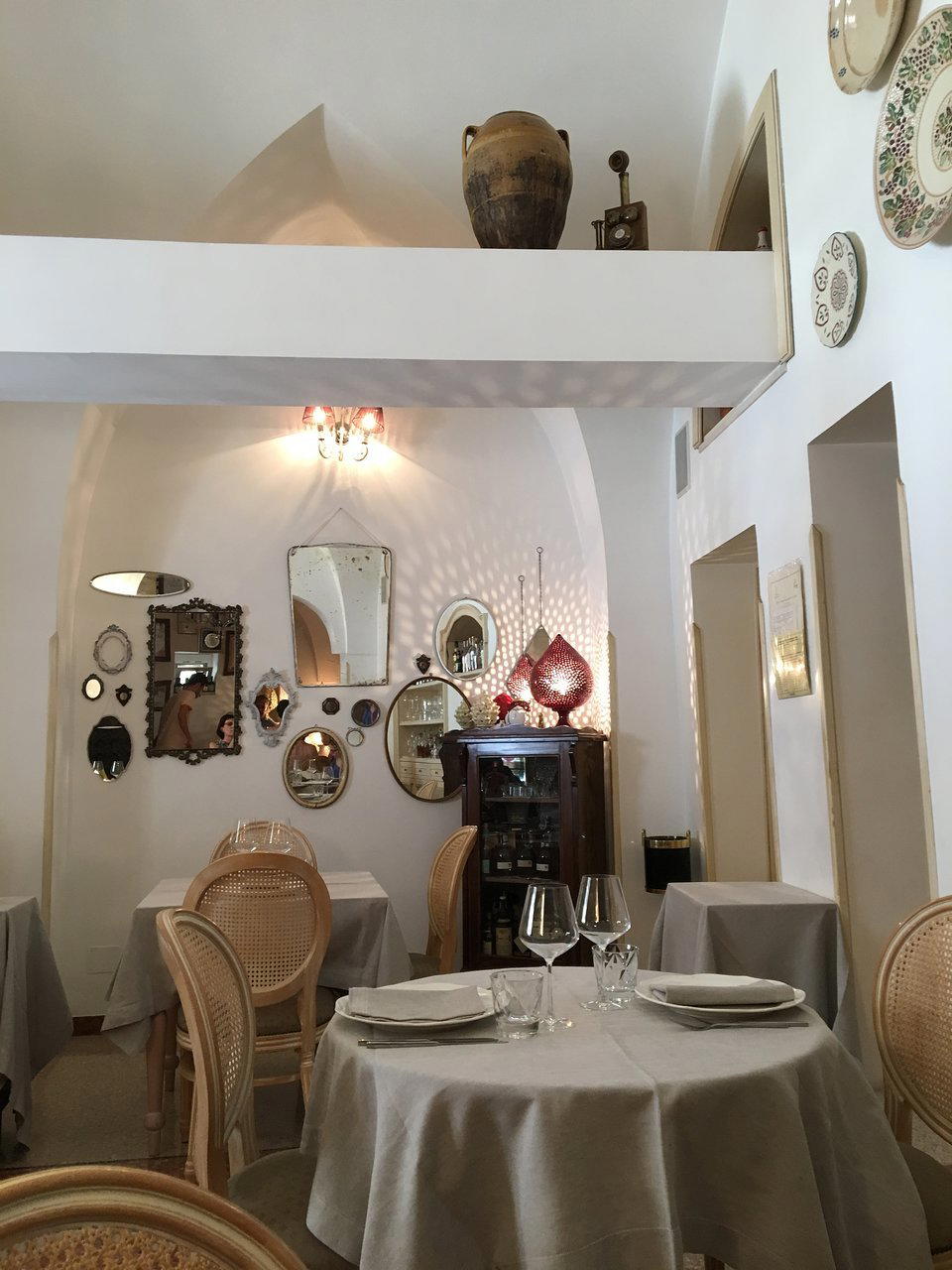
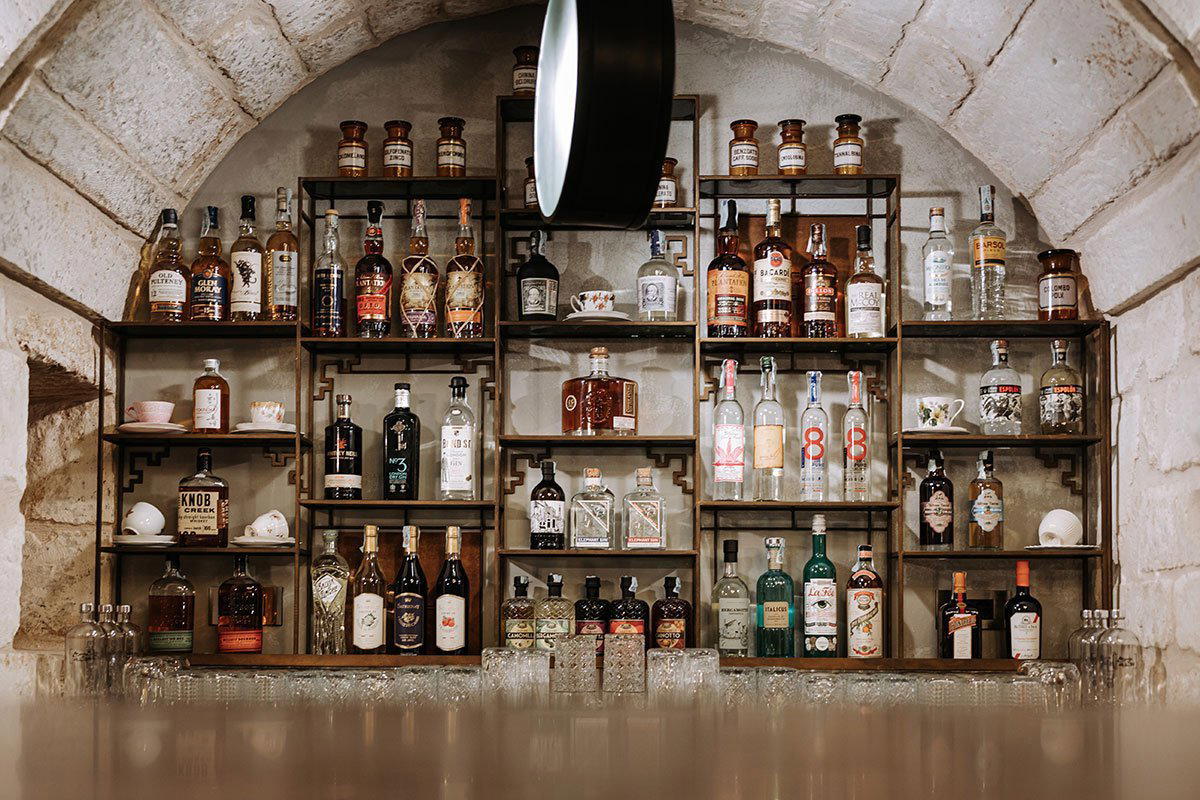
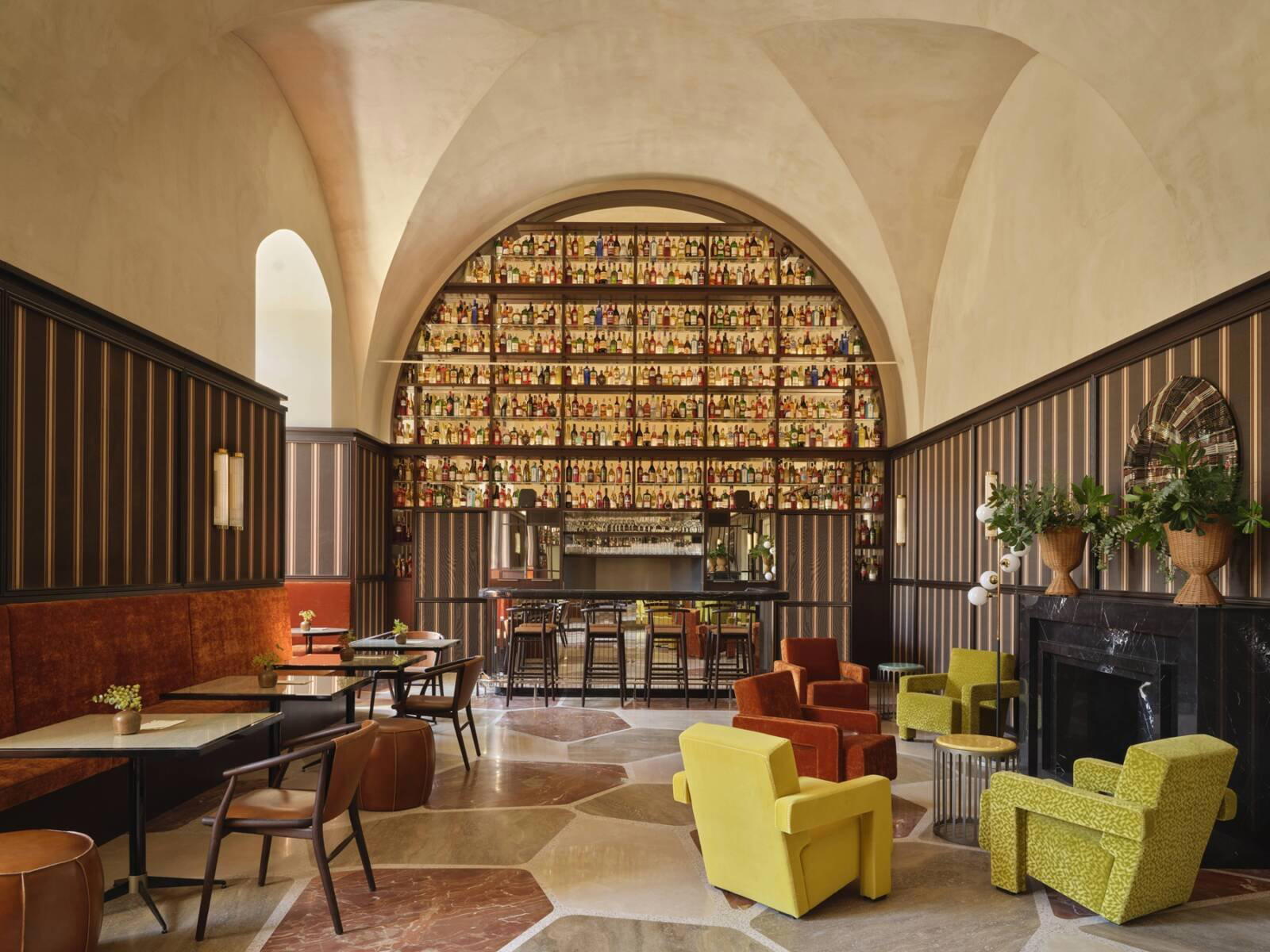
Warm atmosphere with rough stone walls, soft lighting, vaulted ceilings, and an elegant setting in an old mansion, well-suited for romantic dinners.