
Tabelog 100 #40
Our verdict
Okonomiyaki Tecchan Honten gives Mihara a serious Hiroshima-style okonomiyaki address rather than a casual station-area fallback. Its Tabelog Okonomiyaki 100 selection in 2025, 26-seat room, take-out service, and modest price band place it in the everyday-food category where craft, sourcing logic, and local repeat custom matter more than ceremony.

Pearl is the En Primeur Club membership app — saves, bookings, and concierge access live there. Same editors, same standards.
- Address
- 1 Chome-5-25 Shiromachi, Mihara, Hiroshima 723-0014, Japan
- Phone
- +81 848-63-9073
- Hours
- Mon–Wed 11 AM–7:30 PMThu ClosedFri–Sun 11 AM–7:30 PM
- Website
- www1.megaegg.ne.jp
- Directions
- Get directions
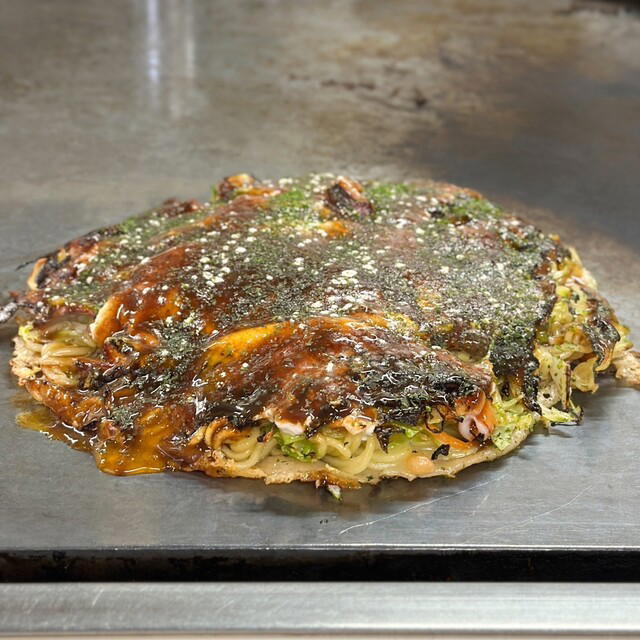
The menu
What to order
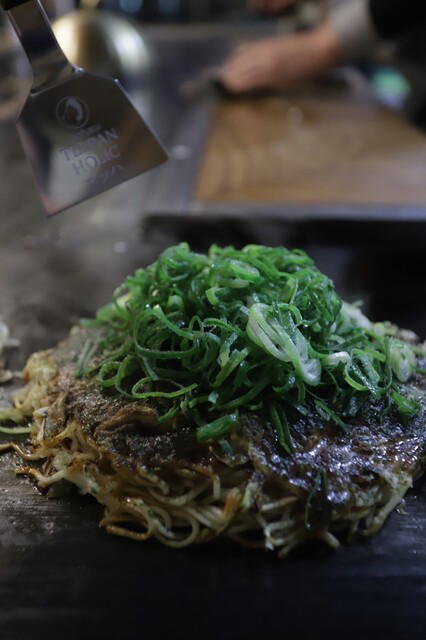
- Hiroshima-style okonomiyaki
- Stir-fried noodles (yakisoba)
The approach to Mihara is not destination-dining theatre; it is the practical rhythm of a city where lunch and early dinner often depend on speed, heat, and familiarity. Here, okonomiyaki is not novelty but everyday architecture on a hotplate: a savory pancake tradition shaped by noodles, sauce, and the emphasis a cook has learned to trust. Okonomiyaki Tecchan Honten belongs to that lineage, valuable for how precisely it fits the city rather than how loudly it announces itself.
Okonomiyaki rewards discipline because it is layered and managed on heat, not simply treated as a batter-heavy pancake. Cabbage volume, noodle handling, sauce balance, and teppan timing decide whether it eats as a coherent stack or a loose pile. In Mihara, the appeal is less luxury sourcing than dependable turnover, local portion logic, and a format that works for solo diners, friends, and take-out.
Okonomiyaki layering, judged by daily repetition
Across Japan, okonomiyaki changes by region and by shop. For travelers, that alters texture, pace, and craft. A focused okonomiyaki counter asks the cook to manage heat across several components, not simply brown one batter. When a small restaurant earns selection in an okonomiyaki-specific category list, the signal is consistency in a form locals read quickly, not luxury.
Okonomiyaki Tecchan Honten was selected for Tabelog Okonomiyaki 100 in 2025. That recognition separates the address from generic cheap-eats advice. The budget remains low by Japan dining standards, with dinner listed at JPY 1,000 - JPY 1,999 and lunch at up to JPY 999, but the award context places it among specialist okonomiyaki shops rather than general casual restaurants. For readers comparing Mihara with larger Japan itineraries, the point is regional literacy, not novelty detour.
The sourcing angle is practical, not theatrical. Okonomiyaki depends on staples that withstand volume cooking: cabbage with structure, noodles that hold under sauce and heat, eggs cooked to bind rather than decorate, and teppanyaki additions that make sense within the stack. No public-facing menu detail is needed to understand the standard. In this tradition, sourcing shows through repeatability. Better shops protect the dish from excess, because too much garnish or sweetness blunts the balance.
A compact room for teppan food, not a long-course performance
The room should be understood as a compact okonomiyaki specialist rather than a long-course restaurant. That tells travelers to expect close-range cooking, quick turnover, and a hotplate at the center of the social contract. The format suits solo dining, pairs, and small groups without becoming a banquet room. The experience stays aligned with everyday okonomiyaki rather than restaurant theatre.
Service expectations should follow that reading. This is the economics of a focused teppan shop, where preparation, space, and heat management are linked. Travelers expecting large-chain flexibility may misread the room; those who understand compact specialists will find the system logical. The listed categories are Okonomiyaki, stir-fried noodles, and teppanyaki, which keeps the editorial focus on hotplate cooking rather than broad casual dining.
Location also matters. The venue is in Mihara, and it is not a polished hotel-district dining room. It belongs to the regional Japanese category where strong meals often sit between errands, schedules, and local routine. For broader planning, Mihara places the meal within a tighter local itinerary.
Where it fits in a wider Japan eating itinerary
Japan’s casual dining hierarchy is easy to underestimate from abroad. A low price band does not mean low seriousness, especially in single-dish categories where repetition is the craft. Okonomiyaki sits with other familiar everyday foods in that national pattern: accessible food, high local scrutiny, and strong regional codes. The right comparison is not a tasting menu but focused counters and narrow-format specialists, where a traveler learns more from house rhythm than long explanation.
This Mihara address pairs well with other specific-format stops in the region rather than prestige dining alone. A traveler tracing everyday craft might compare the decision logic with other casual specialists: different cuisines, same question of whether a narrow format has enough conviction to justify a stop. Regional breadth also matters, but the useful comparison remains local and practical. In Mihara, diners can think about Okonomiyaki Tecchan Honten alongside other permitted local references such as Azumi Setoda, Dolce Honten, Karasawa, Okonomiyaki Murakami, and 割烹 東山, or simply compare it with other unnamed dining rooms in the city.
The editorial case for Okonomiyaki Tecchan Honten is narrow and strong: go for okonomiyaki in a Mihara context, expecting a compact specialist shop rather than a ceremonial destination restaurant. Tabelog Okonomiyaki 100 recognition in 2025 gives outside validation; the categories of okonomiyaki, stir-fried noodles, and teppanyaki explain the daily operation. For travelers passing through Mihara, that combination is more useful than a grand dining room: a clear regional meal at the scale locals use it.
Frequently asked questions
Can I bring kids to Okonomiyaki Tecchan Honten?
Yes, the casual okonomiyaki format in Mihara can be workable for children. Smaller parties tend to fit this kind of compact specialist more easily than large family groups.
What should I expect atmosphere-wise at Okonomiyaki Tecchan Honten?
Expect a casual teppan dining room focused on okonomiyaki, stir-fried noodles, and teppanyaki rather than a long, formal meal.
What does dinner at Okonomiyaki Tecchan Honten typically cost?
Dinner at Okonomiyaki Tecchan Honten is listed at JPY 1,000 - JPY 1,999; lunch is listed at up to JPY 999.
What is Okonomiyaki Tecchan Honten known for?
Okonomiyaki Tecchan Honten is known for okonomiyaki, stir-fried noodles, and teppanyaki in Mihara, with Tabelog Okonomiyaki 100 recognition in 2025.
Comparable Spots, Quickly
Comparable venues by cuisine and price in the same metro.
| Venue | Cuisine | Price | Awards | Notes |
|---|---|---|---|---|
| Okonomiyaki Tecchan HontenThis venue — the venue you are viewing | Hiroshima-style okonomiyaki & teppanyaki | $10–20 | Tabelog 100 #40 | Not listed |
| 香屋 | Hiroshima Okonomiyaki Izakaya | Not listed | Not listed | 城町 |
| 旭がのぼるまで | Miso Ramen | Not listed | Not listed | Susukino |
| つけめん 頑者 新横浜ラーメン博物館店 | Tsukemen (Dipping Ramen) | $1–10 | Not listed | Shin-Yokohama |
| ラーメン亭「十五夜」 | Japanese Ramen | Not listed | Not listed | Kushiro |
| Seiko Udoku | Soupless Tantanmen Ramen | $10–20 | Tabelog 100 #19 | Uji |
Recognition history
Dated appearances from independent guides and award organizations, with the underlying list record or original source where available.
Tabelog 100 #40 · No. 40
Tabelog · Tabelog 100 - Okonomiyaki - 2025
Details
- Lively
- Cozy
- Classic
- Casual Hangout
- Solo
- Family
- Group Dining
- Late Night
- Standalone
- Beer Program
- A La Carte
- Counter Dining
- Beer
- Soft Drinks
Current opening hours
- Monday
- 11 AM–7:30 PM
- Tuesday
- 11 AM–7:30 PM
- Wednesday
- 11 AM–7:30 PM
- Thursday
- Closed
- Friday
- 11 AM–7:30 PM
- Saturday
- 11 AM–7:30 PM
- Sunday
- 11 AM–7:30 PM
Hours can change for holidays and private events. Last verified .