
Abeno’s okonomiyaki culture is practical before it is performative: griddles, tight rooms, quick turnover, and prices that keep the meal in everyday Osaka territory. Okonomiyaki Hayashi belongs to that lane, with Tabelog 100 Okonomiyaki 2025 recognition, a compact 20-seat setup, and a menu frame that also covers yakisoba and omurice.
Pearl is the En Primeur Club membership app — saves, bookings, and concierge access live there. Same editors, same standards.
- Address
- 2 Chome-1-1-104 Asahimachi, Abeno Ward, Osaka, 545-0051, Japan
- Phone
- +81 6-6631-7237
- Website
- marche.pupu.jp
 Saves & bookings on Pearl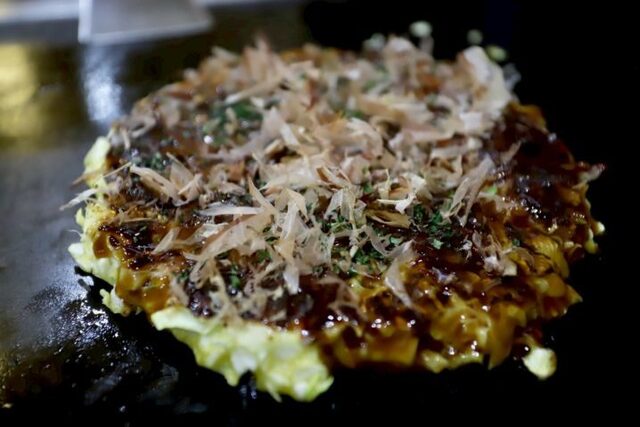
Approaching an Osaka okonomiyaki room in Abeno is not about ceremony. The cues are compact and urban: a ground-floor address, a griddle-led kitchen, counter seats close to the work, and a room for people who know flour, cabbage, sauce, noodles, and egg can carry a meal without fine-dining architecture. In a city where okonomiyaki is civic shorthand and weeknight food, the question is not polish but whether the format delivers density, heat, and value without tourist theatre.
Okonomiyaki Hayashi sits in that conversation rather than above it. Recognition on Tabelog’s Okonomiyaki 100 list for 2025 gives it an external signal in a category where local loyalty often matters more than international awards. The Abeno address matters too: tied to Tennoji’s transit gravity and southern-city eating habits, this part of Osaka rewards restaurants that work as daily life. The meal is not staged as an occasion; it is built around a hot plate, a small room, and food that makes sense at lunch or dinner.
Abeno okonomiyaki judged by value, not polish
Osaka’s okonomiyaki tradition has a different social register from sushi counters or kaiseki rooms. The discipline is batter balance, cabbage handling, heat control, and timing, but the public language is casual. Value is not read from décor or service choreography. It is measured by whether a meal feels complete without additions, whether the room turns comfort into efficiency, and whether the menu has breadth without losing its centre.
Here, the signals are plain: okonomiyaki, stir-fried noodles, and omurice. That trio places the restaurant inside Osaka’s everyday yoshoku-and-teppan orbit rather than a single-dish purist lane. For travellers comparing styles across the city, that matters. Okonomiyaki Chitose occupies a leaner low-price bracket in the comparison set, while broader Osaka eating routes may move from pork buns at 551 Horai (551蓬莱) to bakeries such as 52CHO-ME BAKERY, coffee stops like .cafe, or Italian rooms including a canto (Italian) and 99 Pizza Napoletana Gourmet. Okonomiyaki uses a different calculation: less about courses, more about the satisfaction-to-spend ratio of one griddle meal.
The Tabelog score of 3.51 is useful because Japanese platform ratings cluster tightly, especially outside international fine dining. A 2025 category selection says more than a casual star rating might elsewhere: it places the restaurant inside a national-style catalogue of specialist shops, not merely a neighbourhood list. That does not make the meal luxury; it sharpens the value proposition because recognition lands in an accessible format.
The room is small enough for the griddle to define the meal
The physical format explains the appeal. Twenty seats is modest: four at the counter, eight at tables, and eight in raised kotatsu seating. That mix gives the room two speeds. Counter seating suits solo diners and anyone who wants the cooking visible; table and sunken seating suit friends treating okonomiyaki as a shared Osaka meal rather than a quick refuel. Take-out is part of the service model, another sign that the restaurant works in the neighbourhood’s practical register.
There is honesty to this scale. Large okonomiyaki rooms can soften the food into a broad group-dining product, while tiny counters can make a casual dish feel oddly precious. A 20-seat room sits between those extremes, keeping the cooking close without turning it into performance art. In Osaka, that middle ground gives okonomiyaki its force: enough intimacy to feel local, enough throughput to preserve the dish’s democratic character.
The inclusion of yakisoba and omurice also signals Kansai pragmatism. These are not prestige add-ons; they are familiar comfort categories that broaden the meal for mixed groups. The editorial test is simple: if a visitor wants one affordable Osaka food memory without a tasting menu, the format has a strong case. If the aim is a long, wine-led evening or chef-counter theatre, the category points elsewhere.
How to place it within an Osaka eating itinerary
Abeno and Tennoji reward tight planning because they sit slightly apart from the more heavily trafficked Namba-Shinsaibashi dining circuit. That separation is part of the appeal. The area suits travellers who want Osaka food culture without making every meal a spectacle. A practical Osaka day could pair a casual Abeno griddle meal with department-store food halls, Shinsekai wandering, or a later bar route covered in our full Osaka bars guide. For a broader city map, our full Osaka restaurants guide gives dining context, while our full Osaka hotels guide, our full Osaka experiences guide, and our full Osaka wineries guide frame the rest of the trip.
Within Japan’s casual-food spectrum, okonomiyaki is a useful comparison point. It shares the accessible comfort logic of curry specialists such as [Curry Senmon Ten] Maruyama Kyoju. in Sapporo, the compact everyday appeal of (Shoku) Vietnam in Kawasaki, and the specialist pull of [ki:] in Kyoto, though the cultural grammar is unmistakably Osaka. Beyond Japan, the same value conversation applies to focused casual formats such as Jōdo Saké Bar in Los Angeles or Onigiri Time in Pasadena: does a narrow format give enough identity to justify a dedicated stop?
Okonomiyaki Hayashi is for the traveller who wants Osaka’s griddle culture in a compact, recognised, low-friction setting. The award signal gives confidence, the seating keeps the experience close, and the menu keeps spend anchored in everyday dining rather than destination pricing. It is not the place to seek ceremony. It is the place to understand why Osaka’s casual food canon has more staying power than many higher-priced meals built around imported luxury cues.
For readers building a Japan-wide food route, the contrast is instructive. A sukiyaki-focused meal such as -Grilled beef Sukiyaki- KAMAKURA TANUKIAN 鎌倉 たぬき庵 in Kamakura, a charcoal-and-tuna format like. 鮪と炭火焼き うお炭 秋葉原店 in Tokyo, or a regional address such as.know in Kumamoto will each tell a different story about Japanese dining. Osaka’s story, at this table, is simpler and harder to fake: a hot plate, a modest room, and a dish whose value depends on execution rather than explanation.
Where the Accolades Land
Comparable venues by category and price.
| Venue | Cuisine | Price | Notes |
|---|---|---|---|
| Okonomiyaki HayashiThis venue — the venue you are viewing | Osaka okonomiyaki & casual Japanese comfort food | $ | Not listed |
| Okonomiyaki Chitose | Traditional Osaka okonomiyaki | $ | Nishinari |
| Curry Ya Dekkao | Sri Lankan-style Curry Shop | $ | Chūō |
| Menya Taku | Ramen shop specializing in pork-and-seafood W Soup | $ | Nishi |
| Yatagarasu Udon | Osaka Udon Shop | $ | Chūō |
| Kyu Yam Tei Nakanoshima youkan | Japanese spice curry house | $ | Kita |
Recognition history
Dated appearances from independent guides and award organizations, with the underlying list record or original source where available.
Tabelog 100 #60 · No. 60
Tabelog · Tabelog 100 - Okonomiyaki - 2025
Continue exploring
More in Osaka
Restaurants in Osaka
Browse all →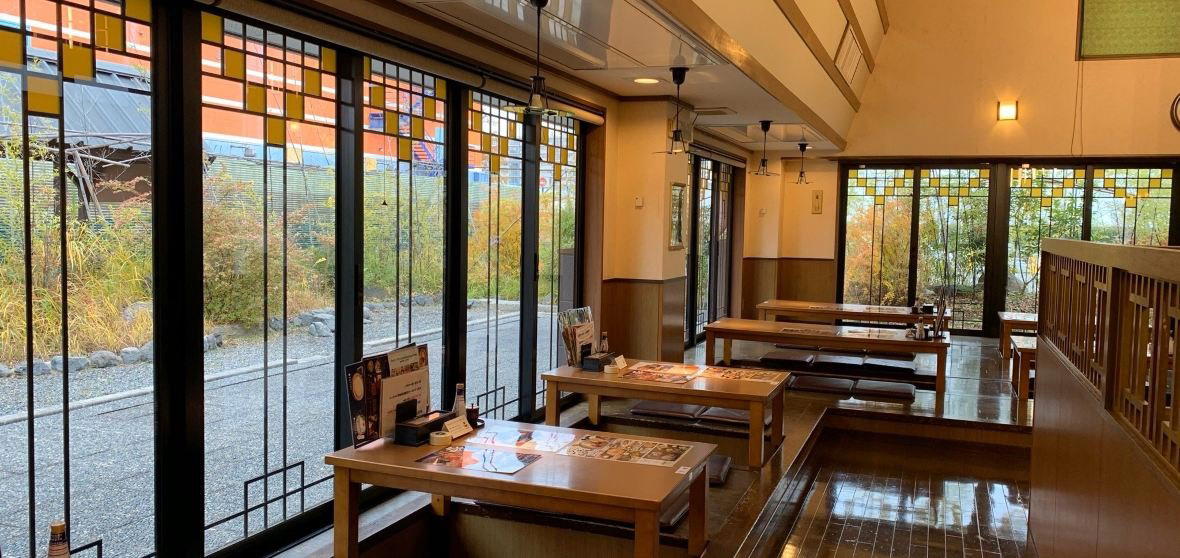

Bars in Osaka
Browse all →
Hotels in Osaka
Browse all →


Wineries in Osaka
Browse all →
At a Glance
- Cozy
- Lively
- Classic
- Casual Hangout
- Family
- Group Dining
- Solo
- After Work
- Late Night
- Standalone
- Beer Program
Current opening hours
- Monday
- Closed
- Tuesday
- 11:30 AM–11 PM
- Wednesday
- 11:30 AM–11 PM
- Thursday
- 11:30 AM–11 PM
- Friday
- 11:30 AM–11 PM
- Saturday
- 11:30 AM–11 PM
- Sunday
- 11:30 AM–11 PM
Hours can change for holidays and private events. Last verified .
A compact, homey local spot inside a residential-style mall, with counter seats and low tables around built-in griddles, casual lighting, and the lively sizzle of okonomiyaki cooked right in front of guests.