
A compact Kitahorie ramen counter with 12 seats, no reservations, and repeated Tabelog 100 Ramen Osaka selections in 2023, 2024, and 2025. Menya Taku belongs to Osaka’s serious everyday ramen tier: low spend, counter rhythm, homemade noodles, tonkotsu-seafood broth, tsukemen, and a format built for solo diners as much as small groups.
Pearl is the En Primeur Club membership app — saves, bookings, and concierge access live there. Same editors, same standards.
- Address
- 3 Chome-5-2 Kitahorie, Nishi Ward, Osaka, 550-0014, Japan
- Phone
- +81 6-6534-0251
- Website
- food-league.com
 Saves & bookings on Pearl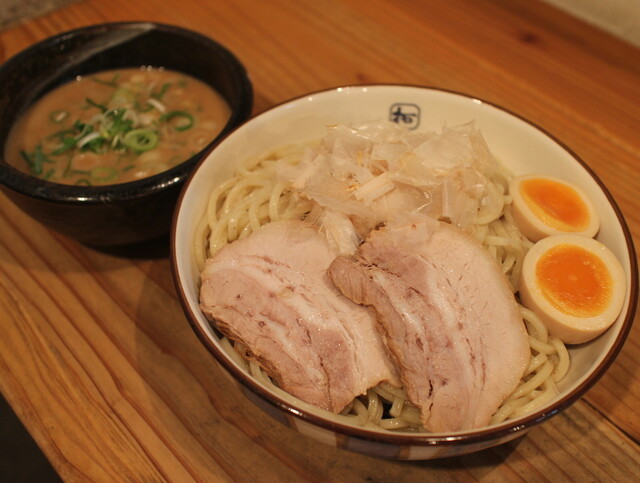
Kitahorie’s quieter side streets shift the tempo from Shinsaibashi retail glare to something more local: bicycles outside small storefronts, compact counters, and regulars who know exactly what they came for. Here, ramen is not theatre but choreography: noodles, broth, tare, ticket or counter order, quick reset, another seat filled. Menya Taku works inside that grammar, with a 12-seat counter and a menu language between ramen and tsukemen rather than izakaya sprawl.
Osaka’s noodle culture is often framed through udon, takoyaki-adjacent snacking, and late-night bowls near transport hubs, but its ramen scene has its own hierarchy. Serious shops are small, specialised, and judged by repeatability rather than luxury cues. Selection for Tabelog 100 Ramen Osaka in 2023, 2024, and 2025 puts this address in a peer group defined by consistency across years, not one burst of attention. That matters in a category where novelty can draw a queue and lose it just as quickly when the broth slips.
Kitahorie ramen with a counter-first rhythm
The useful way to read this shop is through format. Counter seating makes ramen service transparent: kitchen and front-of-house overlap, timing is exposed, and the meal moves at noodle-cooking pace rather than dining-room ceremony. The team dynamic is practical, not performative. In a 12-seat room, handoff matters: the bowl must land fast, the next guest be seated cleanly, and the counter accommodate solo diners without making small groups feel obstructive.
The category listing is narrow enough to mean something: ramen and tsukemen. Ramen asks for harmony in the bowl; tsukemen tests noodle texture and dipping-broth concentration more directly. The stated house emphasis is homemade noodles with a rich pork-bone broth balanced by seafood, a profile matching a familiar Kansai preference for depth without blunt-force fat. A shirunashi soba direction is also noted around kombu and niboshi concentration, placing the shop near contemporary dry-noodle ramen culture without making the room feel like a trend lab.
This is Osaka’s everyday dining intelligence: a low-spend counter can show more discipline than a linen dining room with a reservation book. The measure is whether the format keeps its promise under pressure. A place selected across three consecutive Tabelog 100 Ramen Osaka lists has cleared a local recognition threshold especially useful for travellers, because ramen recommendations age badly when they rely only on social-media heat.
How it fits Osaka's small-shop food map
Kitahorie is not the obvious first stop for visitors building meals around Dotonbori signage or Umeda station convenience. That is part of the point. The district supports smaller, design-conscious food rooms and neighbourhood counters that benefit from regular traffic rather than one tourist corridor. In Osaka terms, this ramen feels closer to a daily habit than a planned event.
Price positioning changes the comparison. In the same city, Curry & Spice Warung and Patisserie Rechercher sit in a modest casual-spend band, while Kirschblute occupies an even lower listed bracket. ASIAN KITCHEN ChaiChai and Mrs. Yun move higher, into meals needing a different appetite and time commitment. Menya Taku belongs to the quick, specialised end of that spectrum, where the question is not range but focus: does it do enough within a narrow category to justify choosing it over the next counter?
For a broader Osaka day, this ramen works as an anchor rather than a finale. Pair it with other casual formats and the contrasts sharpen: pork buns at 551 Horai (551蓬莱), bakery precision at 52CHO-ME BAKERY, coffee-room pacing at .cafe, pizza craft at 99 Pizza Napoletana Gourmet, and Italian cooking at a canto (Italian). The pattern is clear: Osaka’s casual dining strength is not one cuisine, but the density of small formats with defined points of view.
Who should prioritise this bowl
This is strong for travellers who value ramen as a craft category rather than a comfort-food checkbox. The absence of private rooms and the counter-led setup suit solo diners, pairs, or small parties comfortable with a compact meal. Families are accommodated, but the rhythm remains a noodle counter, not a long, lingering restaurant booking.
The practical read is simple: this is not a place to build a formal evening around. It is a precise Nishi Ward stop for a concentrated bowl, especially when the day includes galleries, shopping, cafés, or a cross-city subway move. Credit cards are not accepted, reservations are unavailable, and Wednesday closure matters, so treat timing as part of the experience rather than a fixed appointment.
For wider city mapping, start with Our full Osaka restaurants guide, then layer in sleep, drinks, bottles, and cultural time through Our full Osaka hotels guide, Our full Osaka bars guide, Our full Osaka wineries guide, and Our full Osaka experiences guide. For broader Japan and Japanese-food reference points beyond Osaka, compare the casual-specialist logic with -Grilled beef Sukiyaki- KAMAKURA TANUKIAN 鎌倉 たぬき庵 in Kamakura. 鮪と炭火焼き うお炭 秋葉原店 in Tokyo.know in Kumamoto, (Shoku) Vietnam in Kawasaki, [Curry Senmon Ten] Maruyama Kyoju. in Sapporo, [ki:] in Kyoto, plus overseas Japanese-leaning formats such as Jōdo Saké Bar in Los Angeles and Onigiri Time in Pasadena.
The verdict is not about rarity. It is about fit. Menya Taku makes sense when the brief is a serious Osaka ramen counter with recognised consistency, a narrow noodle focus, and enough neighbourhood remove to feel part of the city’s working food culture rather than a sightseeing errand.
Recognition Snapshot
Comparable venues by cuisine and category.
| Venue | Cuisine | Price | Notes |
|---|---|---|---|
| Menya TakuThis venue — the venue you are viewing | Ramen shop specializing in pork-and-seafood W Soup | $ | Not listed |
| Jyonetsu Don Hokuto | Udon and curry udon shop | $ | Nishi |
| Buttah | Japanese Curry | $ | Chūō |
| Tachinomi Tekken | Japanese tachinomi (standing izakaya) | $ | Naniwa |
| Tachinomi Sakaba Kakedashi | Japanese standing izakaya & sake bar | $ | Chūō |
| Columbia8 Kitahama honten | Osaka spice curry counter | $ | Chūō |
Recognition history
Dated appearances from independent guides and award organizations, with the underlying list record or original source where available.
Tabelog 100 #44 · No. 44
Tabelog · Tabelog 100 - Ramen - OSAKA - 2025
Continue exploring
More in Osaka
Restaurants in Osaka
Browse all →




Bars in Osaka
Browse all →


Hotels in Osaka
Browse all →



Wineries in Osaka
Browse all →
At a Glance
- Cozy
- Lively
- Solo
- Casual Hangout
- Late Night
- Family
- Standalone
Current opening hours
- Monday
- 11 AM–3 PM, 6–9:30 PM
- Tuesday
- 11 AM–3 PM
- Wednesday
- Closed
- Thursday
- 11 AM–3 PM, 6–9:30 PM
- Friday
- 11 AM–3 PM, 6–9:30 PM
- Saturday
- 11 AM–3 PM, 6–9:30 PM
- Sunday
- 11 AM–3 PM, 6–9:30 PM
Hours can change for holidays and private events. Last verified .
Casual, compact counter ramen-ya with a warm but bustling atmosphere, focused on quick solo or small-party meals rather than lingering, with guests often lining up for rich bowls of tonkotsu-based ramen.