Okdongsik

New York Times Best Restaurants in New York City
Our verdict
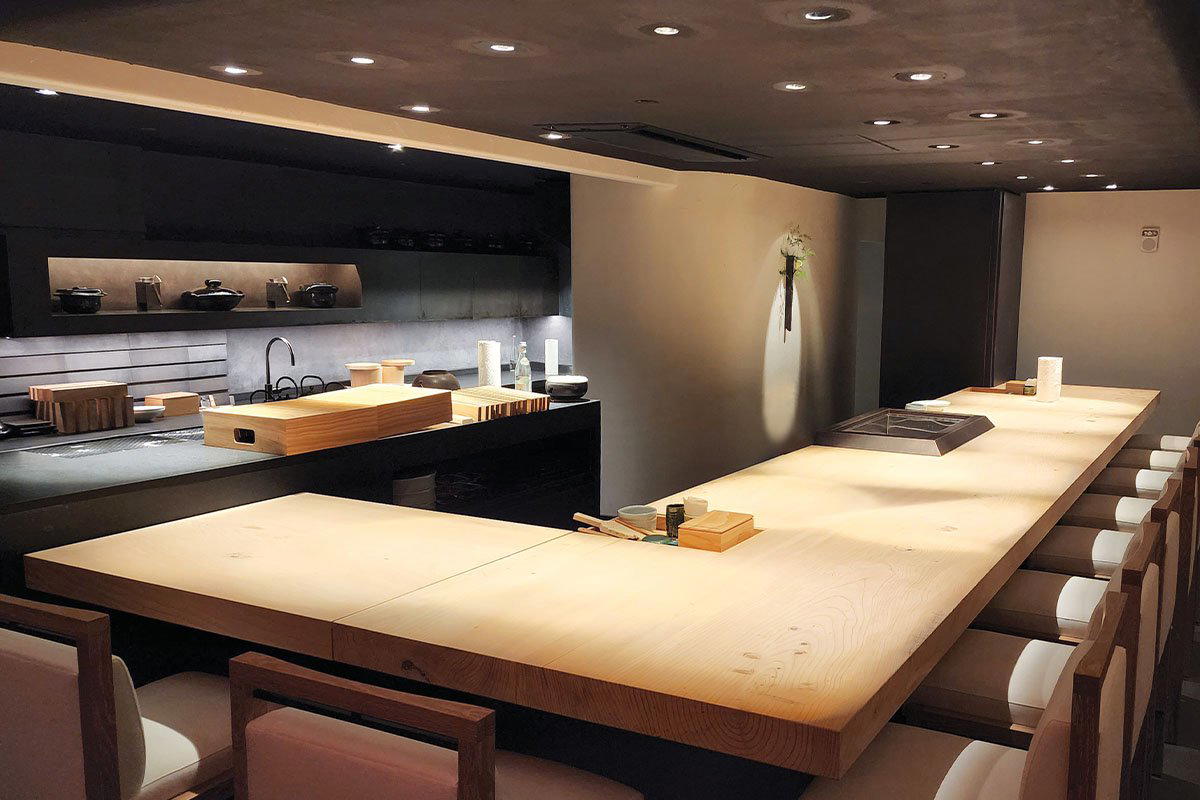
Thirteen seats, one broth, and a reputation built entirely on dweji gomtang. Okdongsik on East 30th Street transplants a Seoul pork-soup counter to the edge of Manhattan's Koreatown, serving clear heritage-pork broth with near-translucent slices of pork shoulder, bronze bowls of rice, and a single supporting act: pork mandu. The menu is two items. The precision is absolute.

Pearl is the En Primeur Club membership app, where members save venues, book tables and use the concierge.
One Bowl, Thirteen Seats, No Distractions
Thirteen seats. That number tells you almost everything you need to know about Okdongsik before you arrive. The counter on East 30th Street, one floor above street level and a short walk from the denser commercial strip of Manhattan's Koreatown, operates at the scale of a specialist practice rather than a restaurant. In a city where Korean dining increasingly means either the banchan abundance of a full-service barbecue hall or the tasting-menu ambition of places like Atomix, Okdongsik stakes its position on radical compression: a two-item menu built around dweji gomtang, a pork-based variation on Korea's long-simmered gomtang tradition.
That compression is not a gimmick. It reflects a culinary discipline that runs through Seoul's most respected single-dish counters, where decades of iteration on one preparation produce a depth that multi-page menus rarely approach. Chef Ok Dongsik, whose Seoul restaurant gave this New York outpost its name, brings that specialist framework to a Manhattan address that could not be further from the tasting-menu circuit. Where Eleven Madison Park or Per Se frame their authority through accumulated courses and formal service hierarchies, Okdongsik frames its authority through the opposite logic: the fewer variables you introduce, the harder it becomes to hide a flaw.
The Architecture of the Meal
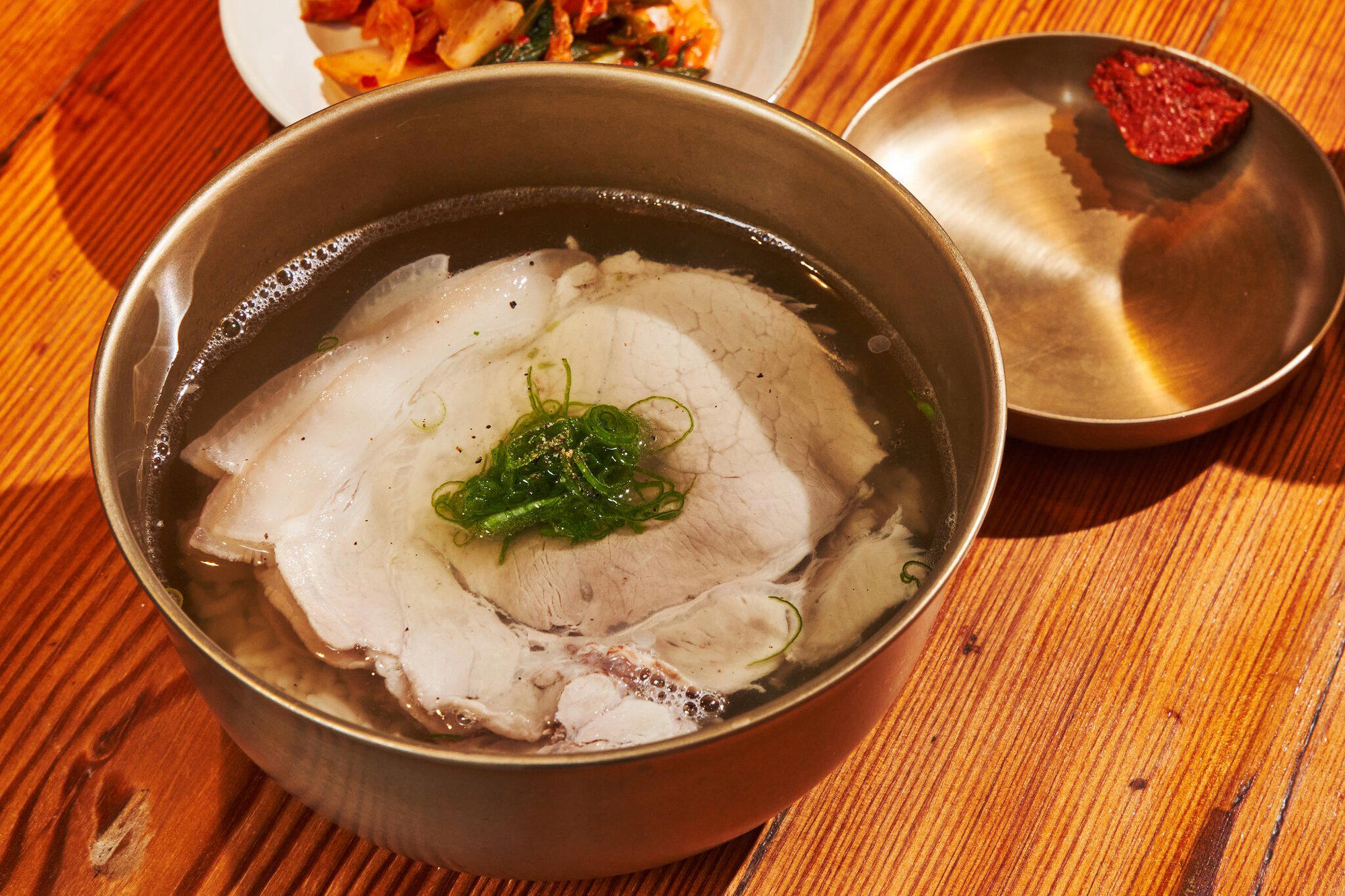
Dweji gomtang begins with bones and time. The broth that arrives at Okdongsik is clear rather than milky, which separates it immediately from the more familiar seolleongtang, where beef bones are cooked at a rolling boil until the collagen turns the liquid opaque white. Pork gomtang demands lower heat and longer patience to preserve that transparency while still drawing sufficient depth from the bones. The result in the bowl is a broth that reads visually light but carries the kind of savory, mineral weight that accumulates over hours of careful simmering.
The sequence of the meal, such as it is, runs briefly. The bronze bowl of broth arrives with near-translucent slices of fatty heritage pork shoulder arranged across the surface, a scattering of scallions providing the only textural contrast and the only color. A separate bowl of rice accompanies. Salt and fermented condiments typically sit within reach for self-seasoning, which is standard practice at gomtang counters in Seoul, where the broth is intentionally under-salted so the diner controls the finish. The eating is unhurried and iterative: broth, rice spooned in, more broth, the pork worked slowly through both.
The second menu item, mandu stuffed with pork, glass noodles, and tofu, functions as a supporting note rather than a parallel course. At single-dish counters of this format, a supplementary dumpling offering is common, giving regulars a small variation while keeping the kitchen's focus intact. The mandu here are accomplished, but the gap in weight between them and the gomtang is considerable. Ordering both is reasonable; ordering only the mandu is a misreading of what the counter is actually for.
Where This Fits in New York's Korean Dining Arc
New York's Korean dining has expanded significantly in range and ambition over the past decade. The city now holds representation across multiple tiers of the cuisine, from the street-level lunch counters of 32nd Street to ambitious modern Korean tasting menus that draw direct comparisons with the multi-course programs at Le Bernardin or Masa in terms of price point and reservation difficulty. Okdongsik sits outside both of those poles.
The specialist single-dish counter format is common in Seoul, less so in New York, where the economics of small-format operations demand either high price points or high turnover. Okdongsik's thirteen seats and narrow menu suggest the latter model: fast, focused service with a lunch-counter rhythm. The comparison set is not the tasting-menu Korean restaurants, nor the barbecue halls. The closer parallel is the ramen-ya model imported from Japan, where a single preparation, refined over years, becomes the entire identity of the business. Counters operating on that logic in New York, whether for ramen, soba, or now dweji gomtang, tend to develop loyal return clientele rather than one-time occasion diners.
That positioning also distances Okdongsik from the high-design Korean cooking visible elsewhere in the city. The spare, functional counter format is itself a statement of priorities, one that aligns with the gomtang tradition in Seoul, where the oldest and most respected shops often occupy modest, utilitarian spaces. The authority comes from the broth, not the room.
Getting There and Planning Your Visit
Okdongsik occupies the first floor of a building at 13 East 30th Street, between Fifth and Madison Avenues, close enough to Koreatown's main strip on 32nd Street to share its neighborhood context but physically removed from its heavier foot traffic. The address puts it within easy reach of the 6 train at 28th Street or the B/D/F/M/N/Q/R/W lines at 34th Street-Herald Square, making it accessible from most of Manhattan without a transfer. For visitors building a broader New York itinerary, our full New York City restaurants guide covers the city's dining range in detail, and our New York City hotels guide can help with accommodation in proximity to this part of Midtown.
Given the thirteen-seat capacity, timing matters more than it would at a larger venue. Arriving early in a service, or during off-peak hours between lunch and dinner rushes, gives a better chance of walking in without a wait. The format of the meal, a single bowl with minimal accompaniments, also means turnover is relatively fast by restaurant standards; the constraint is seat count, not service pace. Those planning evenings around broader Midtown or downtown programs can supplement with the New York City bars guide or experiences guide for post-meal options.
For context on how single-focus specialist restaurants operate across different American cities, the comparison extends beyond New York. The discipline visible at Okdongsik has parallels at tightly formatted operations like Lazy Bear in San Francisco or the seasonal precision at Single Thread Farm in Healdsburg, though the price tiers and formats differ sharply. Closer in spirit, perhaps, is the kitchen focus visible at Alinea in Chicago, where a controlling editorial hand over every variable on the plate defines the experience. At Okdongsik, that same controlling hand operates over two dishes rather than twenty, which is, depending on your view, either a simpler or a harder version of the same ambition.
Frequently asked questions
What part of town is Okdongsik in?
Okdongsik is located at 13 E 30th St 1st floor, New York, NY 10016, New York City.
Is Okdongsik Michelin-listed?
Okdongsik has received recognition including: ★★ Restaurants that perfect one dish and raise it to an art form are rare in Manhattan, and certainly singular when that dish is a humble bowl of pork soup. At Okdongsik, a 13-seat counter on the edge of Koreatown, the chef Ok Dongsik repli….
What do people recommend at Okdongsik?
The dweji gomtang is the reason people come: a clear pork bone broth served in bronze bowls with near-translucent slices of fatty heritage pork shoulder and scallions over rice. The menu also includes pork, glass noodle, and tofu mandu, which the counter's own award text describes as delicious but distinctly secondary to the soup. With only two items on offer, there is no real decision to make.
How hard is it to get a table at Okdongsik?
Okdongsik holds 13 seats on the first floor of 13 East 30th Street, which puts capacity well below demand for a counter that draws serious attention in New York's Korean dining scene. Arriving early or checking for walk-in availability at off-peak hours is the practical approach, as the format does not support large parties or lingering tables.
What is Okdongsik known for?
Okdongsik is known for dweji gomtang, a pork-based variation on Korean gomtang that chef Ok Dongsik brought from his Seoul restaurant to a 13-seat Koreatown counter on East 30th Street. The broth is clear rather than milky, topped with fatty heritage pork shoulder and scallions, and has been recognised by critics as an example of a single dish executed with uncommon depth. The menu has exactly two items.
What if I have allergies at Okdongsik?
The menu at Okdongsik centres entirely on pork: the dweji gomtang broth is built from pork bones, and the mandu contains pork, glass noodles, and tofu. Anyone with a pork allergy or strict dietary restriction will find no alternatives on the menu. Contacting the restaurant directly before visiting is advisable, as the counter's two-item format leaves no substitution room.
Is Okdongsik in New York the same as the original Seoul restaurant?
Yes, chef Ok Dongsik opened the Manhattan counter at 13 East 30th Street as a direct extension of his Seoul restaurant, replicating the same dweji gomtang speciality. The New York location follows the same single-dish focus, serving the clear pork broth in bronze bowls alongside mandu as the sole supporting item. That continuity from Seoul to Koreatown Manhattan is what gives the counter its credibility in a city with broad Korean dining representation.
Comparable Spots
Comparable venues nearby, for context on price, style, and recognition.
| Venue | Cuisine | Price | Awards | Notes |
|---|---|---|---|---|
| OkdongsikThis venue (the venue you are viewing) | Southern Korean Pork Bone Soup | $30–50 | New York Times Best Restaurants in New York City | Not listed |
| Kisa | Traditional Korean Baekban | $30–50 | James Beard Award Semi Finalist | Lower East Side |
| Unidentified Flying Chickens - JH | Korean Fried Chicken | $20–30 | Not listed | Elmhurst |
| Geo Si Gi Gamjatang | Korean Gamjatang Specialist | $20–30 | Not listed | Murray Hill-Broadway Flushing |
| Jongro BBQ | Korean BBQ | $50–100 | Not listed | Midtown South-Flatiron-Union Square |
Recognition history
Dated appearances from independent guides and award organizations, with the underlying list record or original source where available.
New York Times Best Restaurants in New York City
New York Times