Pocha 32
Pocha 32 occupies the second floor of a West 32nd Street address in the heart of Koreatown, where the pocha format — Korea's informal street-tent drinking culture — finds a Manhattan translation. The menu centers on the anju tradition of food designed to accompany alcohol, making it a reliable option for groups working through soju and beer combinations in a setting that runs later than most of its neighbors.
Pearl is the En Primeur Club membership app — saves, bookings, and concierge access live there. Same editors, same standards.
- Address
- 15 W 32nd St 2nd floor, New York, NY 10001
- Phone
- +1 212 279 1876
- Website
- pocha32nyc.com
- Directions
- Get directions
 Saves & bookings on Pearl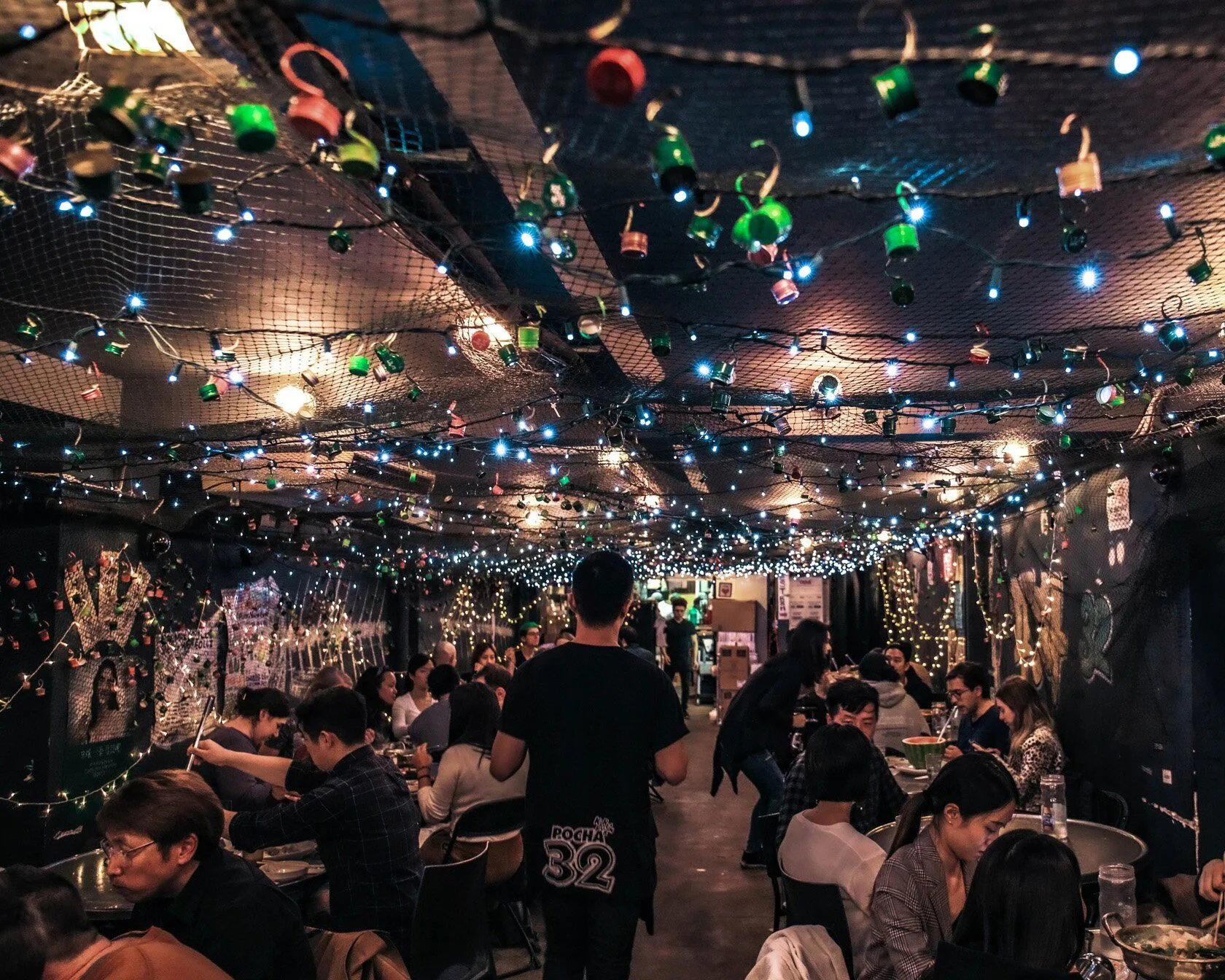
Koreatown's Drinking Culture and the Pocha Tradition
Manhattan's 32nd Street corridor between Fifth and Sixth Avenues has functioned as the city's Korean commercial spine for decades. The block's restaurants and bars compress a range of Korean regional formats into a single walkable stretch, and the competition for positioning is acute: the address alone signals category before a diner walks through any door. Within that corridor, the pocha format occupies a specific cultural register — informal, alcohol-forward, and built around the Korean practice of anju, the art of pairing food with drink rather than treating the two as separate occasions.
The pocha concept traces its roots to pojangmacha, the canvas-covered street carts that became fixtures of Korean nightlife in the mid-twentieth century. These carts served working people who wanted something hot and filling alongside their makgeolli or soju, and the informality was the point: no reservation, no ceremony, no sequence. That democratic, late-night sensibility has now travelled far outside Korea — to Los Angeles, Toronto, and New York, where it functions partly as nostalgia for Korean-American diners and partly as novelty for those encountering it fresh. The New York iterations tend to sit upstairs, which is itself part of the convention: second-floor dining in Koreatown signals a particular type of operation, one that relies on word of mouth and neighborhood foot traffic rather than street-level visibility.
The Second Floor Address and What It Signals
Pocha 32 occupies the second floor at 15 West 32nd Street, a placement that puts it in a recognizable subcategory of Koreatown dining. The city's Korean restaurant clusters, whether in Flushing or on 32nd Street, have long used upper floors as lower-overhead spaces for format-specific concepts that would struggle to pay street-level rent while maintaining accessible pricing. That structural logic connects directly to the anju model: if the food exists to extend and enhance a drinking session rather than to be the primary spend, price points need to accommodate multiple rounds, and second-floor real estate helps make that arithmetic work.
This positioning also reflects a broader pattern in how Korean drinking culture has transplanted to American cities. The formats that have traveled most successfully, KBBQ, pocha, chimaek (fried chicken and beer) spots, all share an emphasis on communal consumption over individual dining. They resist the American restaurant convention of a timed table turn, instead accommodating groups that arrive, settle in, and stay. For operators, that requires a different spatial and pricing logic than a standard Manhattan restaurant, and Pocha 32's second-floor address in the middle of K-town is consistent with that approach.
Anju and the Sustainability Argument for Drinking Food
The anju tradition carries an implicit sustainability argument that rarely gets articulated but deserves consideration. Korean drinking food, the categories of soups, pancakes, grilled items, and spicy preparations that accompany alcohol, tends to rely on secondary cuts, fermented or preserved components, and high-vegetable preparations that generate less waste per dish than protein-centered Western bar food. Kimchi-based dishes use fermentation to extend the life of seasonal vegetables; sundubu jjigae (soft tofu stew) and egg-based preparations carry nutritional density without the sourcing overhead of premium meat cuts. This is practical kitchen logic, not programmatic ethics, but the outcome aligns with what more deliberately sustainability-framed operations aim for.
The pocha format also reduces food waste structurally. Menus are shorter and more stable than tasting-format restaurants, which means ingredient turnover is predictable and purchasing can be calibrated tightly. Shared plates reduce over-ordering because groups self-regulate portions across communal dishes. These are not unique to Korean drinking culture, Spanish tapas bars and Taiwanese night market stalls operate by similar logic, but the anju model makes them particularly coherent because the entire format is organized around the idea that food and drink are one continuous experience, not sequential courses.
Drinking in Koreatown: Where Pocha 32 Sits
New York's bar scene has diversified considerably over the past decade. The cocktail program arms race that defined 2010s Manhattan, the era of clarified drinks, Japanese whisky allocations, and bitters libraries, has settled into a more varied market where format and cultural specificity compete alongside technical ambition. Angel's Share in the East Village represents the Japanese-influenced precision end of that spectrum; Attaboy NYC occupies the no-menu, bartender-guided tier; and Superbueno and Amor y Amargo anchor distinct niches in agave-forward and amaro-focused drinking respectively.
Pocha 32 does not compete in those categories. Within that subset, the pocha model offers something the sit-down Korean BBQ restaurants do not: a lower-commitment entry point, a shorter menu, and an atmosphere that indexes more toward the late-night, drinking-primary experience of the Korean original rather than the American dinner-primary adaptation. For New Yorkers who have spent time in Seoul's Hongdae or Itaewon neighborhoods, that distinction carries weight.
Comparisons extend nationally, too. The format shares DNA with the deliberate craft posture of Kumiko in Chicago in its commitment to a specific drinking culture's logic, even if the aesthetic and price tier differ substantially. And relative to operations like Bar Leather Apron in Honolulu, Jewel of the South in New Orleans, Julep in Houston, ABV in San Francisco, Allegory in Washington, D.C., or The Parlour in Frankfurt, Pocha 32 represents a category where cultural authenticity rather than technical ambition is the primary organizing principle.
For a broader map of where Pocha 32 sits within New York's dining and drinking options, see our full New York City restaurants guide.
Know Before You Go
- Address: 15 W 32nd St, 2nd Floor, New York, NY 10001
- Neighborhood: Koreatown, Midtown Manhattan
- Format: Pocha-style (anju food with soju and beer focus)
- Floor: Second floor, look for signage at street level
- Booking: Walk-in format typical for the pocha category; confirm current policy before visiting
- Leading for: Groups, late-night eating alongside drinking, Korean-format bar sessions
Booking and Cost Snapshot
| Venue | Price |
|---|---|
| Pocha 32This venue — the venue you are viewing | This venue |
| The Long Island Bar | World's 50 Best |
| Superbueno | World's 50 Best |
| Amor y Amargo | World's 50 Best |
| Angel's Share | World's 50 Best |
Continue exploring
More in New York City
Bars in New York City
Browse all →
Restaurants in New York City
Browse all →
Hotels in New York City
Browse all →




At a Glance
- Lively
- Energetic
- Trendy
- Late Night
- Group Outing
- Casual Hangout
- Standalone
- Seated Bar
- Booth Seating
- Craft Cocktails
Current opening hours
- Monday
- 5 PM–2 AM
- Tuesday
- 5 PM–2 AM
- Wednesday
- 5 PM–2 AM
- Thursday
- 5 PM–3 AM
- Friday
- 5 PM–5 AM
- Saturday
- 5 PM–5 AM
- Sunday
- 5 PM–2 AM
Hours can change for holidays and private events. Last verified .
Lively and energetic Korean pub atmosphere with string lights, wall screens, upbeat music, and lively decor.
Know Before You Go
- Getting there
- 15 W 32nd St 2nd floor, New York, NY 10001