
Oisi stand puts Osaka’s tachinomi culture into a Namba second-floor room rather than a station-side squeeze. The format is casual and drink-led, with sake, shochu and wine framing a creative Italian-Japanese menu, and its selection for Tabelog 100 Tachinomi 2025 places it within a recognized tier of Japanese stand-up bars.
Pearl is the En Primeur Club membership app — saves, bookings, and concierge access live there. Same editors, same standards.
- Address
- 大阪府大阪市中央区難波千日前9-1 佐々木ビル 2F
- Phone
- +818038528842
- Website
- tabelog.com
 Saves & bookings on Pearl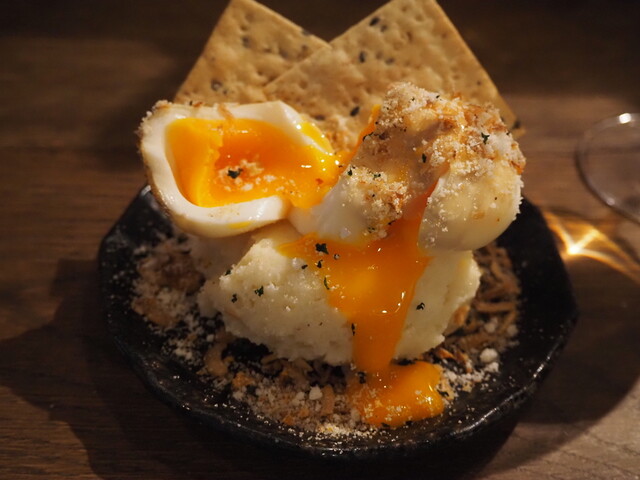
In Namba, the drinking scene often announces itself before the meal: narrow stairwells, compact counters, the quick rhythm of after-work groups, and menus designed around the glass rather than the other way around. Oisi stand belongs to that Osaka tradition, but its second-floor setting shifts the mood from street-level bustle to a more contained stand-up bar format. The useful comparison is not fine dining; it is tachinomi, the Japanese standing-bar culture where pace, proximity and drink choice carry as much weight as the cooking.
Osaka has always been unusually good at low-ceremony eating. The city’s casual spectrum runs from pork buns at 551 Horai (551蓬莱) to bakeries such as 52CHO-ME BAKERY, coffee rooms like .cafe, and pizza counters such as 99 Pizza Napoletana Gourmet. Against that background, tachinomi matters because it refuses the false choice between serious food and casual access. A standing bar can be technically minded without becoming formal.
Namba tachinomi, with Italian-Japanese cooking in the drinking seat
The strongest reading of Oisi stand is as part of Osaka’s new casual hybrid category: not an izakaya in the old checklist sense, not a wine bar with small plates as an afterthought, and not a restaurant trying to dress down. Its stated range moves between creative Italian and Japanese cooking, with seasonal ingredients used in a daily-changing format. That mix fits Namba, where the eating culture rewards flexibility more than purity.
The drink program gives the format its spine. Sake, shochu and wine are all part of the listed focus, which tells experienced diners how to read the room: order in rounds, let the food follow the glass, and avoid expecting a linear tasting-menu arc. Tachinomi is built for appetite in motion. The counter, the standing format and the compact service style are not compromises; they are the grammar of the genre.
Recognition matters here because standing bars can be difficult to judge from the outside. Oisi stand was selected for Tabelog 100 Tachinomi 2025, and carries a Tabelog score of 3.55. In Japan’s restaurant culture, where user scoring can be conservative, that combination is a meaningful signal inside a category that is often under-read by visitors chasing sushi counters or kaiseki rooms. It places the venue in a recognized national conversation about tachinomi rather than simply in a neighborhood drinking list.
Within the Osaka comparison set, the pricing tier also positions it clearly. Sakanaya Hidezou Tachinomi ten sits in a higher band, while Chitose Honten and NEXT Shikaku occupy a lower one; THE BUTCHER overlaps the same general bracket. The restaurant therefore reads as an accessible Namba choice with enough editorial signal to justify attention from travelers who usually spend their research time on more formal bookings.
The room favors pace, short arcs and close-range drinking
The physical setup matters. Forty seats, counter seating and a stand-up bar structure make this a social room rather than a hushed dining room. The experience is likely strongest when treated as a focused stop within an evening, not as a long destination dinner with ceremony attached. That is not a downgrade. In Osaka, some of the sharpest meals happen in places where the format keeps the tempo brisk and the bill within reach.
There is also a useful contrast with the city’s Italian dining tier. A restaurant such as a canto (Italian) asks to be read through the lens of restaurant craft, sequencing and table service. The restaurant belongs to a different mode: Italian elements are folded into a drinking bar vocabulary, alongside Japanese dishes and a drinks list that does not force a single cultural lane. That is where Osaka’s casual dining intelligence shows itself. The city absorbs outside techniques, then tests whether they survive standing, sharing and drinking.
For travelers building a Namba evening, this is the sort of address that works around other plans rather than replacing them. The neighborhood can carry a full itinerary, from quick food to late drinks, and the broader Osaka edit is easier to map through Our full Osaka restaurants guide, Our full Osaka bars guide, Our full Osaka hotels guide, Our full Osaka wineries guide and Our full Osaka experiences guide. The point is sequencing: stand-up bars reward energy, not overplanning.
How to read it within Japan's casual-drinking map
Japan’s casual formats are increasingly varied, and the useful traveler knows the difference between convenience, craft and scene. A sake-led address such as Jōdo Saké Bar in Los Angeles interprets Japanese drinking culture abroad, while Onigiri Time in Pasadena frames Japanese comfort food through a focused snack format. In Japan itself, the spread is broader: [ki:] in Kyoto.know in Kumamoto, (Shoku) Vietnam in Kawasaki, [Curry Senmon Ten] Maruyama Kyoju. in Sapporo. 鮪と炭火焼き うお炭 秋葉原店 in Tokyo and -Grilled beef Sukiyaki- KAMAKURA TANUKIAN 鎌倉 たぬき庵 in Kamakura all show how tightly defined formats can carry a meal without broad menus or luxury cues.
The restaurant’s appeal sits in that same logic. It does not need a chef biography to explain itself, and the absence of grand framing is part of the case. The venue opened in 2022, operates in Ura-Namba, and has already entered a Tabelog 100 Tachinomi selection for 2025. Those facts are enough to place it: a young Osaka standing bar working inside a drink-first tradition, using Italian-Japanese flexibility to make the format feel current without losing the speed and closeness that make tachinomi worth seeking out.
Budget Reality Check
Comparable venues by cuisine and category.
| Venue | Cuisine | Price | Notes |
|---|---|---|---|
| Oisi standThis venue — the venue you are viewing | Not listed | $ | Not listed |
| Chaos Spice Diner Yotsubashi amerikamura ten | Not listed | $$ | Nishi, Spice curry & Asian fusion dining bar |
| Asian Kitchen Cafe Momofuku | Nishi, Asian Fusion Cafe | $$ | Not listed |
| Spice Ryori Nallamanam | Not listed | $$ | Chūō, Modern South Asian–inspired spice curry & banana-leaf bento |
| Boulangerie & cafe gout | Chūō, French-style bakery & cafe | $ | Not listed |
| Madam Curry | Chūō, Japanese Curry | $ | Not listed |
Recognition history
Dated appearances from independent guides and award organizations, with the underlying list record or original source where available.
Tabelog 100 #3 · No. 3
Tabelog · Tabelog 100 - Tachinomi - 2025
Continue exploring
More in Osaka
Restaurants in Osaka
Browse all →




Bars in Osaka
Browse all →


Hotels in Osaka
Browse all →



Wineries in Osaka
Browse all →
At a Glance
- Trendy
- Cozy
- Lively
- Modern
- Intimate
- After Work
- Casual Hangout
- Solo
- Date Night
- Group Dining
- Late Night
- Standalone
- Design Destination
- Sake Program
- Beer Program
- Local Sourcing
A cozy, stylish standing bar on the second floor in Ura-Namba with a relaxed but lively atmosphere, counter-focused layout, and a casual, social drinking vibe geared to solo visitors, dates, and small groups.